
Private Label Sunglasses: Multi-Country Reorder Systems
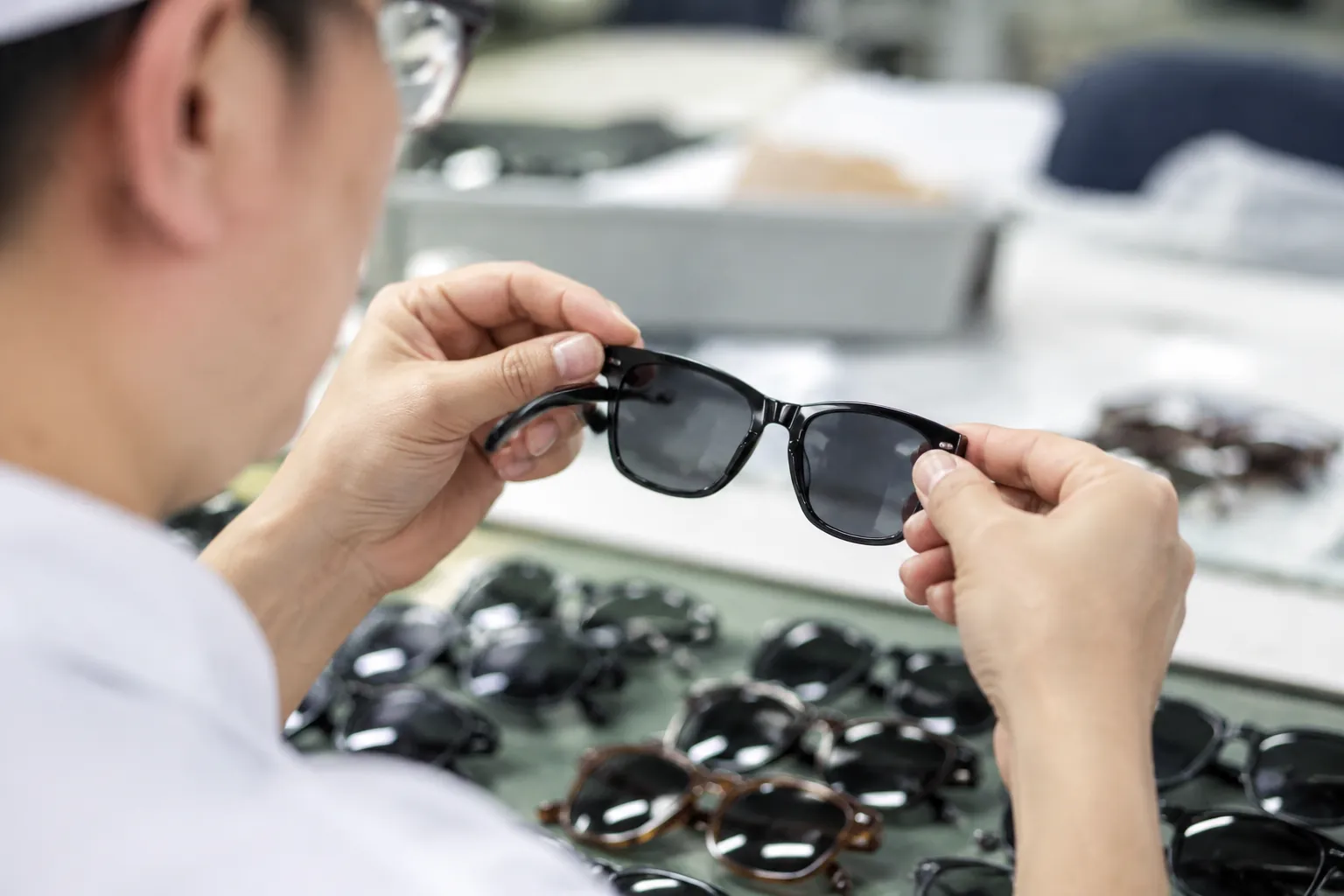
For distributors, importers, and retailers, the hard part of a private label sunglass program is rarely the frame shape. It is building a product and document system that can be reordered across countries without drift in fit, finish, labeling, testing, or cost. Get that system right and reorders move faster. Get it wrong and every market becomes a new development cycle.
1) Start with the operating model, not the frame
Most sunglass programs do not fail because the shape was a bad choice. They fail because the product definition was too loose.
One account wants matte black with polarized lenses. Another wants the same front with a lighter tint, a different logo position, and country-specific packaging text. If those variables are not controlled at the start, every reorder turns into a partial redevelopment job.
Build a controlled program, not a loose design concept. Fix the base frame platform, lens construction, decoration method, packaging format, and compliance route first. Then identify the few items that may change by market, such as language, importer details, warning statements, or lens category where appropriate.
This is the point. Repeatability depends on fixed inputs. If the frame material, dimensions, lens type, logo method, and pack format are not locked in writing, a buyer may think they are reordering the same product while the factory is working from a different assumption. That is how you get approval delays, carton errors, inconsistent appearance, and avoidable margin loss.
For multi-country distribution, the goal is not maximum flexibility. It is controlled flexibility around a stable core product.
2) Build a spec sheet that survives reorders
A distributor spec sheet should be complete, unambiguous, and revision-controlled. It should let a new buyer, a factory planner, and a QC team identify the exact product without relying on memory or notes like "same as last time."
At minimum, lock these fields:
- Frame material: injected plastic, acetate, metal, or mixed construction
- Lens type: UV400, polarized or non-polarized, and the intended lens category where applicable
- Dimensions: lens width, bridge, temple length, front width, and lens height
- Tolerances: define acceptable production variation for critical dimensions
- Finish: gloss, matte, translucent, rubberized, two-tone, or coated finish
- Decoration: laser engraving, pad printing, hot stamping, metal plate, or embossing
- Packaging: polybag, pouch, box, insert card, barcode format, and master carton count
- Compliance target: CE EN ISO 12312-1, ANSI Z80.3, AS/NZS 1067, REACH, FDA registration where relevant, plus market-specific labeling requirements
Do not write "color as per buyer request" without a reference. Use an approved physical sample, an agreed color standard, or both. For acetate, some pattern variation is inherent because the material is cut from sheet. For injected parts, color consistency depends on material control and process discipline. If a painted, printed, or coated element is brand-critical, define the approval basis early rather than relying on photos alone.
Logo position should be measured from a fixed reference point, such as the hinge centerline or temple end. Same rule for lens tint, packaging copy, and barcode placement. Eyeballing it is not enough.
Every approved version should carry a revision number and date. If the lens changes, the carton text changes, or the decoration method changes, issue a new revision. Reorders should use the same code only when the product is truly unchanged.
3) Match the build to the market, not just the price
Multi-country programs can look efficient on paper and get expensive fast if the build was chosen on opening unit cost alone. A frame that works in one market may need different labeling, a different lens category, different packaging text, or a different quality perception in another.
The lowest quote is not always the lowest program cost. Relabeling, retesting, and rework erase savings quickly.
| Build option | Best use | Pros | Watch-outs |
|---|---|---|---|
| Injection molded frame | High-volume, price-sensitive programs | Efficient for scale, repeatable shapes, broad color options | Perceived value may be lower than acetate; process control affects consistency |
| Acetate frame | Retail-led programs and thicker, more premium silhouettes | Premium feel, visual depth, strong presentation | More labor-intensive; natural pattern variation must be understood and approved |
| Mixed build with metal logo plate | Brand-led accounts and higher-margin distributor lines | Stronger branding surface, more visual impact | More components to manage; alignment and attachment quality matter |
| Lightweight performance-oriented build | Activewear, travel, and value-premium programs | Comfortable wear, lower weight, broad commercial appeal | Material behavior under heat, stress, and repeated handling should be validated |
Compliance is where market planning becomes real. In the EU, sunglasses are commonly evaluated against EN ISO 12312-1, and chemical obligations such as REACH may also apply depending on materials and market role. In the US, buyers often use ANSI Z80.3 as a performance reference, and FDA registration may matter in supplier qualification or import handling depending on product classification and commercial setup. In Australia and New Zealand, AS/NZS 1067 is the standard to review.
Be careful with the phrase "one model for all countries." It works only if the compliance file, labeling method, and product specification have already been mapped market by market.
4) Use MOQ and pricing to enforce reorder discipline
Private label programs get unstable when every reorder is treated like a new sourcing event. Prices get reopened. Packaging changes by email. Products that were supposed to stay fixed start drifting.
Set rules early. Align MOQ, quotation structure, and reorder controls from the start.
MOQs vary by factory, construction, and decoration method. Some suppliers can support small pilot runs. Others need higher minimums to make production viable. Do not focus only on the lowest opening MOQ. Ask how pricing changes at higher quantity bands and which features trigger added cost. Typical triggers include custom packaging, molded logos, metal trims, special lens treatments, or separate labeling for different countries.
A practical reorder strategy is to separate the program into three lanes:
- Trial lot: small-volume order to validate demand, fit, and documentation
- Regional run: larger order for a country, chain, or importer group
- Core replenishment: repeat orders for proven SKUs with stable demand
This structure helps buyers avoid launching too many low-volume variants at once. Wide assortments look good during development. Later they create fragmented inventory and weak reorder visibility.
Ask the supplier to define a reorder code system in writing. The same frame, lens, logo method, and packaging configuration should use the same internal reference. Any meaningful change should create a new SKU or revision level. That keeps forecasting, costing, and claims handling cleaner over time.
If the supplier is certified to ISO 9001, that can support stronger document control and change management. If the supplier is audited under BSCI, that may help buyers who need social compliance records for vendor approval. Useful signals, not substitutes for product testing.
5) Treat branding as a production control point
Branding is where many private label sunglass programs lose consistency. A logo can look fine in an approval photo and still fail in production because the surface finish changed, the print area was too small, or the attachment method was weak.
Common branding methods include:
- Laser engraving: generally durable and clean, but usually tone-on-tone and dependent on substrate suitability
- Pad printing: supports color logos and fine graphics, but performance depends on surface preparation, ink system, and curing
- Metal logo plates: premium appearance and strong shelf presence, but require tight control of placement and attachment
For repeatable programs, standardize the branding method where possible. Every extra decoration method adds another approval point and another failure mode. A pad print approved on a gloss temple may not perform the same way on a matte or rubberized version of the same shape.
Use one integrated pre-production sample that combines the final frame color, lens, logo execution, and packaging artwork. Approving those items separately raises the risk that the final assembled product will miss the commercial target.
For multi-country distribution, separate permanent branding from market-specific text. Keep visible product branding stable. Put importer details, warnings, language variants, and barcode data in controlled packaging areas such as the insert card, sticker, or carton panel defined in the spec.
6) Define lead times from fixed inputs
Lead time means very little if the starting point is vague. In eyewear programs, delays often come from late artwork approval, unresolved packaging text, sample revisions, or missing compliance inputs rather than from assembly itself.
When comparing suppliers, ask them to state lead time against specific milestones:
- Sample stage: counted from receipt of a complete brief, artwork, and any required references
- Bulk stage: counted from final approval of the production sample, confirmed packaging, and agreed commercial terms
- Buffer: added for translation checks, label updates, carton corrections, and export document review
For multi-country accounts, keep a master spec pack for each approved style. That file should include the final product spec, approved sample photos, artwork files, pack copy, barcode requirements, compliance references, and revision history. If a second country later wants the same model, the team should be able to work from that pack rather than rebuild the product definition from scattered emails.
Also separate product lead time from total landed lead time. Production may finish while transit, customs clearance, or document corrections still delay delivery to the final warehouse. For styles expected to replenish regularly, safety stock is often cheaper than repeated urgent freight decisions.
7) Run QC like a program manager
Quality control should protect the whole program, not just the look of one shipment. A buyer who checks only for scratches or crooked temples can still miss the issues that cause repeat problems across markets: wrong barcode, incorrect warning statement, inconsistent lens build, or drift from the approved branding method.
Use QC checkpoints that follow the production flow:
- Incoming materials: frame materials, lenses, hinges, screws, logo components, pouches, cartons, and printed inserts
- In-process checks: symmetry, assembly condition, hinge function, lens fit, decoration quality, and finish consistency
- Pre-pack checks: logo position, tint appearance, lens cleanliness, accessory count, and pack-out accuracy
- Final audit: SKU verification, barcode match, carton count, labeling, traceability marks, and outer-carton condition
Make the criteria measurable wherever possible. Do not write "logo looks centered." Define the location and the allowed variation. Do not write "packaging correct." Define the exact barcode format, language version, and warning statement by SKU or destination market.
For distributor programs, document control is part of QC. The inspection team should confirm not only that the product is assembled correctly but also that the correct revision of the spec, artwork, and packaging is in use. That matters even more when one frame platform is sold into several countries with small but critical labeling differences.
If the supplier operates under ISO 9001, ask how nonconformities, change records, and corrective actions are documented. That gives the buyer a better read on whether the supplier can support consistent repeat orders, not just an acceptable first sample.
8) Launch for the second order
A private label sunglass program works when the second order is easier than the first. If reorder discussions reopen color, packaging, logo position, or compliance paperwork, the program was not fully built.
Use this launch checklist:
- Approve one master sample with final frame, lens, logo, and packaging configuration
- Lock the SKU code and revision number
- Confirm the target compliance route for each destination market in writing
- Document the MOQ and quantity breaks for repeat pricing
- Define who controls all future spec changes
- Store artwork, packaging files, and compliance references in one master record
Set decision rules before launch. For example, define what sales threshold moves a style from a trial lot to a repeat program, what return-rate threshold triggers review, and which product or packaging changes require a new approval cycle.
The commercial goal is simple: create a product definition that can be reordered with the same appearance, the same documentation path, and the same costing logic across multiple markets.
Have a custom sunglasses project in mind?
Send us your styles, target market and quantities and we will return a detailed quote with MOQ, lead time and a sample plan.
Get a QuoteWhy source this from Wenzhou with LumiShades
Wenzhou in Zhejiang Province is widely regarded as China’s eyewear manufacturing capital, producing a large share of the world’s sunglasses. That concentration matters to buyers: a deep local supply chain for acetate sheet, hinges, lens blanks, plating and packaging means shorter component lead times, easier color and material matching, and a workforce with decades of eyewear-specific skill. LumiShades has manufactured in this ecosystem since 2009, and our vertical integration — in-house injection molding, acetate cutting, CNC milling, lens tinting, decoration and quality control — means no part of your order is quietly subcontracted to a workshop you cannot audit.
For international buyers, that vertical control translates into accountability. When a single factory owns every step, defects are traced and fixed at source rather than bounced between vendors, and your specifications survive intact from first sample to bulk. We back this with 15+ years of experience, shipments to 60+ countries, more than 5 million pairs produced per year and a 98.5% on-time delivery rate. Our certifications — CE EN ISO 12312-1, FDA registration, ANSI Z80.3, AS/NZS 1067, REACH, ISO 9001 and BSCI audit — mean the compliance documentation your market requires already exists. Explore our manufacturing capabilities and quality control process to see how this works in practice.
Frequently asked questions
What is the minimum order for a private label sunglass design? There is no universal MOQ. It depends on the supplier, frame construction, lens type, branding method, and packaging complexity. Ask each factory for: 1) MOQ by style, 2) MOQ by color, 3) MOQ by logo method, and 4) whether custom packaging has a separate minimum. Also ask for price breaks at higher volumes so you can compare pilot-run pricing with true reorder pricing.
How long do samples and bulk orders take? Lead times vary by supplier and by how complete the brief is. When asking for timing, request separate timelines for prototype sample, pre-production sample, bulk production, and packaging completion. Confirm exactly when the clock starts: ideally after the supplier has the final artwork, approved specifications, and any required compliance inputs. For landed planning, also add transit time, customs clearance, and a buffer for labeling or document corrections.
Which compliance standards should distributors check for sunglasses? For many programs, the core references are CE EN ISO 12312-1 for the EU, ANSI Z80.3 for the US, AS/NZS 1067 for Australia and New Zealand, and REACH for relevant chemical compliance obligations in Europe. FDA registration may also need to be reviewed in US supply chains depending on the product type and how the supplier is set up commercially. Buyers should confirm the exact regulatory pathway with their importer, compliance team, or qualified testing partner before placing production.
What branding methods are most practical for repeat orders? Laser engraving, pad printing, and metal logo plates are all common, but the best choice depends on substrate, desired appearance, durability expectations, and placement tolerance. For repeat programs, ask the factory for a sample made on the actual production material and finish, not a similar substitute. Also define logo position from a fixed measurement point and confirm whether any artwork change will create a new SKU or revision.
How do I reduce reorder mistakes across countries? Use one master spec sheet, one approved reference sample, and one controlled revision history for each style. Keep unchanged products under the same reorder code, and require a new revision whenever the lens, logo method, packaging, warning text, barcode, or destination-specific labeling changes. Store the final artwork, packaging files, compliance references, and sample photos in a single shared record so commercial, QC, and logistics teams are working from the same version.
Ready to start?
Explore our round sunglasses or request a quote — our sales team replies within 12 hours.
Request a Quote