
RX-Ready Sunglasses: Pre-Production Checks
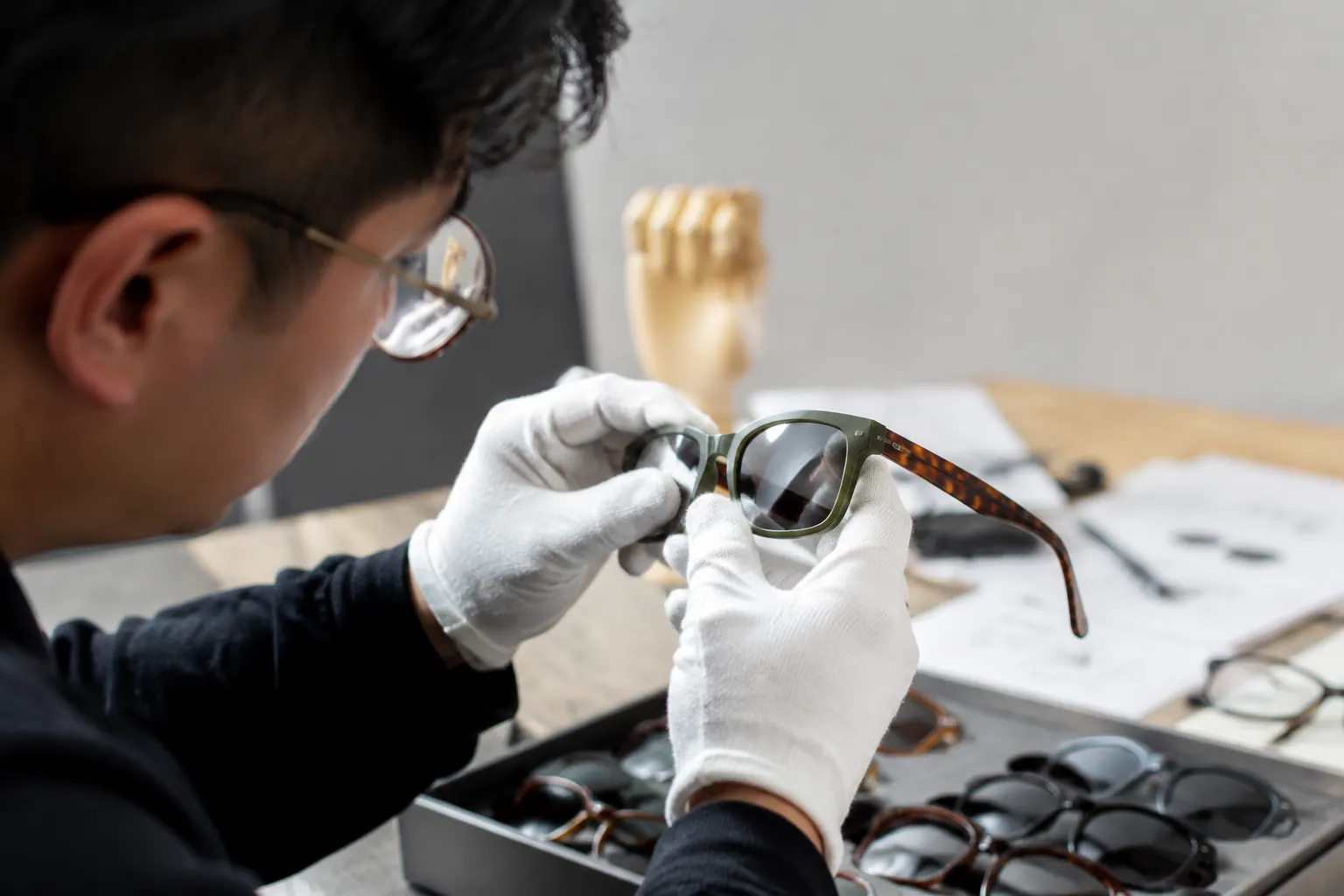
This guide is for brands, importers, distributors, and retailers that want one sunglass style to work in both plano and prescription programs. The risk is not cosmetic. It is finding out too late that the frame geometry, base curve, groove, or material stack will not support prescription glazing in the lab. Check the right specifications before tooling and sample approval. That cuts remakes, avoids lab complaints, and keeps launch timing under control.
Start with the RX use case, not the sample look
Many sunglass projects start with styling, target FOB, and MOQ. Fine. But if the style also needs to support prescription lenses, the first technical discussion should be about the final RX use case. A frame that looks good with a plano sun lens can still fail as an RX style when the lab tries to fit a surfaced lens with a different edge profile, center thickness, or wrap compensation requirement.
Define the intended prescription window before final sample sign-off. A fashion sun style for low single-vision powers is a different job from a frame expected to carry stronger single-vision powers, polarized prescription lenses, or progressive lenses with enough fitting height. That early decision affects eye size, B measurement, bridge shape, pantoscopic angle, front curvature, and whether the style still looks right after edged lenses are installed.
Oversized fronts are harder to fit as power increases, especially on minus lenses. Edge thickness climbs fast. Very wrapped fronts are also harder for routine optical labs. If the retail partner expects broad RX acceptance, design around a moderate front curve and a controlled effective diameter. Do not approve an aggressive sunglass look first and hope the lab can solve it later.
- Define RX range: State whether the frame is for low single vision, broader single vision, or progressive compatibility.
- Set lens material plan: Note whether later RX conversion will use CR-39, polycarbonate, Trivex, or high-index materials.
- Identify lab channel: In-store edging, central lab, and wholesale optical labs do not all accept the same geometries.
- Approve use limits in writing: If the style only supports limited powers, put that in the tech pack and sales brief.
LumiShades can complete standard samples in 7-10 days and bulk production in roughly 25-35 days once specifications are locked. That is fast enough for fashion timelines, but RX suitability must be settled before tooling freeze and before decoration approval. Revising eye wire geometry after mold work, acetate CNC programs, trim placement, or logo tooling is where costs start to climb.
Frame geometry decides whether the style is RX-ready
The frame front is the first real checkpoint. Ask for full optical dimensions, not the size printed on the temple. At minimum, request eye size, bridge width, temple length, A and B measurements, effective diameter, frame PD range, front base curve, groove depth, groove width, and bevel position. Without those numbers, "RX-ready" is too vague to trust.
High-wrap sunglass shapes can look strong at retail, but they narrow the lens options a lab can use. In practice, moderate wrap gives better conversion yield and fewer remakes. A flatter front usually supports a wider prescription range, more lens materials, and better cosmetics because the lens needs less compensation.
For plastic fronts, serious buyers should also ask for dimensional tolerances. Typical control points include left-right A size symmetry within +/-0.20 mm, groove depth within +/-0.10 mm, eye wire thickness within +/-0.15 mm, and bridge symmetry tight enough to avoid lens decentration problems. Those numbers vary by construction, but if the supplier cannot discuss tolerance control, the RX claim is weak.
| Geometry item | Lower-risk target | Higher-risk condition | Why it matters for RX |
|---|---|---|---|
| Base curve | Base 4 to 6 | Base 8 and above | Lower to moderate curves are easier for routine prescription surfacing and edging |
| Effective diameter | 56-62 mm | 64 mm+ | Larger ED increases blank waste, lens cost, and edge thickness risk |
| B measurement | 36-44 mm | Too shallow for progressives | Insufficient depth can limit progressive lens fitting options |
| Frame rigidity | Stable front with controlled flex | Front twists during insertion | Too much flex can cause lens pop-out, stress marks, or poor retention |
Material construction changes how those dimensions behave in production. Injection-molded fronts can be consistent if cavity balance, cooling, and shrinkage are controlled. Acetate fronts often give a wider design window for RX, but barrel polishing, hand polishing, and groove finishing can alter edge geometry if process control is loose. Mixed-material constructions add more risk because decorative brow bars, logo plates, or laminated overlays can change how the eye wire opens during glazing.
Approve lens curve, thickness, and material together
Do not approve the frame and lens separately. Approve them as one system. The same front can behave very differently depending on whether the final program uses plano TAC polarized lenses, CR-39 RX sun lenses, polycarbonate, Trivex, or high-index materials. Each lens material changes edging behavior, minimum thickness, impact performance, tinting route, and cosmetic outcome.
For many fashion sun programs, the cleanest path is a plano launch with a moderate front that has already been validated for later single-vision RX conversion. Problems start when the plano sample uses a thin, easy-to-fit stock lens and the future RX lens is thicker, flatter, or has a different bevel shape. That mismatch often shows up only after bulk production, when labs report stress whitening, poor seating, or a visible gap at the eyewire.
CR-39 offers strong optics and is widely used in optical applications, while polycarbonate is commonly chosen where impact resistance and lighter weight matter. High-index materials can help reduce edge or center thickness in stronger prescriptions, but they cost more and usually demand tighter cosmetic control in wrapped sunglass shapes. If polarization is required for RX, confirm availability and lead time before release. Polarized prescription supply chains are not always the same as standard plano sun lenses.
| Lens option | Typical use | RX suitability | Key trade-off |
|---|---|---|---|
| Plano TAC polarized | Fashion sunglasses, stock programs | Not used for prescription surfacing | Good cost control, but a separate RX lens strategy is still required |
| CR-39 | Single-vision optical sun lenses | Common for lower to moderate wrap | Good optics, but less impact resistant than polycarbonate |
| Polycarbonate | Active styles, safety-minded retail programs | Widely accepted for RX sun | Impact resistant, but scratch resistance depends on coating quality |
| High-index optical lens | Stronger prescriptions, thinner profile targets | Possible in flatter sunglass styles | Higher material cost and tighter cosmetic control needed |
If the launch plan is "plano now, RX later," say that clearly in the tech pack. Otherwise, the factory may optimize only for stock lens assembly and not for future optical glazing. That is how a frame passes sample review but fails once the prescription program starts.
Lock groove design and glazing tolerances before tooling
This is where many programs create avoidable rework. The lens groove must be designed for real glazing conditions, not just for easy sample assembly. A frame may hold a plano demo lens during development, yet create excessive insertion stress when a surfaced RX lens with a different edge geometry is installed later.
Request written confirmation of groove width, groove depth, bevel position, eye wire opening tolerance, and left-right consistency. For many plastic frames, groove depth around 0.5-0.7 mm and stable bevel seating are common starting points, but the exact target must match the intended lens thickness and bevel profile. What matters is not a generic number. What matters is the fit between that frame and the actual RX lens family the retail program expects to use.
Pre-production approval should include actual glazing trials, not only plano inserts. Build a small pilot run using the target base curve and representative prescription powers, then check insertion force, seating line, stress marks, retention, and front deformation after assembly. If the style uses spray coating, rubber paint, hydro-dip, metal insert decoration, hot foil, or pad printing around the front, repeat the check after those processes because heat and coating thickness can change eye wire behavior.
- Approve target lens material, thickness range, and base curve.
- Match groove geometry to that lens stack.
- Glaze real test lenses in pre-production samples.
- Inspect for whitening, gap, rotation, and retention failure.
- Repeat after decoration, coating, or heat exposure if the front process can affect fit.
LumiShades handles injection molding, acetate cutting, CNC milling, lens tinting, decoration, and QC in-house. That shortens feedback loops, but buyers still need tolerance approval in writing. If the brief only says "RX-ready," without groove or material details, the factory and the lab will each make their own assumptions. That creates batch-to-batch inconsistency.
Material and decoration affect RX yield
Not every fashionable construction is lab-friendly. Thick acetate fronts often provide a broad RX glazing window because they allow controlled groove placement and stable lens retention, provided the front remains symmetrical after tumbling and polishing. Injection frames can also perform well in large-volume programs, but resin grade, mold polish, cooling balance, and cavity consistency matter. If one cavity runs tighter than another, the problem may not appear until stores begin fitting prescription lenses across a mixed batch.
Mixed-material frames need extra review. Decorative metal brow bars, shield overlays, laminated acetate caps, or glued logo plates may restrict local flex at the eye wire. That can make insertion harder and push stress into the lens edge. The same is true for heavy paint stacks, mirror film edges, or decorative rivets placed too close to the groove. These are small styling choices that become expensive when a lab rejects part of the shipment or when stores report lens pop-out after glazing.
Ask the supplier to explain the full process route. For an injection style, that may mean molding, cooling, gate trimming, lens groove verification, hinge fitting, front alignment, painting, pad printing, lens assembly, and final QC. For acetate, it may mean sheet cutting, CNC shaping, manual beveling, barrel polishing, hand polishing, groove finishing, hardware assembly, fitting, and inspection. Every step is a chance for dimensional drift, especially after polishing or heat-based decoration.
- Injection molding: Efficient for volume, but watch shrinkage control, cavity matching, and warpage after cooling.
- Acetate cutting and CNC: Flexible and premium, but groove consistency depends on machining and polishing discipline.
- Pad printing and hot foil: Low-profile decorations, but still worth rechecking if applied near the eye wire.
- Metal trims and logo plates: Good for branding, but can create hard points that reduce glazing tolerance.
If the frame is meant to support broad RX use, the safest design is often the least dramatic one: controlled front curve, stable material, moderate eye size, and decoration that does not interfere with the eyewire.
Check compliance for both the plano and RX builds
For plano sunglasses, confirm the correct market standard before ordering. Common references in sunglass sourcing include CE EN ISO 12312-1, ANSI Z80.3, AS/NZS 1067, REACH, FDA registration, ISO 9001, and BSCI. They do not all apply the same way to every product or sales channel. Request current reports tied to the material construction or model family you are actually buying.
For an RX-ready sunglass frame, remember that the compliance file for the plano sun version does not automatically validate every later prescription lens combination. Once lens material, tint, transmittance, mirror coating, or polarization changes, the finished RX build may need its own review depending on the destination market and retail channel. The frame may be compatible with glazing, but the finished prescription sun lens still has to meet applicable performance and labeling requirements.
Check whether any design change between sampling and bulk requires revalidation. A new tint category, a different mirrored coating, a resin change, or a shift from standard paint to rubber finish can alter the final compliance position or at least trigger a file review. Do not assume that one older test report covers a modified build.
- CE EN ISO 12312-1: Common reference for plano sunglasses in many export markets.
- ANSI Z80.3: Important for performance expectations in the U.S. market.
- AS/NZS 1067: Relevant for Australia and New Zealand programs.
- REACH: Covers chemical compliance for applicable materials and finishes.
- FDA registration: Should be verified together with the buyer's own import and labeling obligations.
Ask for the current test file, confirm whether your exact lens and frame specification matches it, and ask in writing whether changes to tint, coating, or construction trigger retesting.
Build the cost and tech pack around RX risk
RX capability changes cost both directly and indirectly. Direct costs include tighter front tolerances, extra engineering time, more pre-production samples, and sometimes a different material choice. Indirect savings come from fewer remakes, lower lab rejection, and fewer store complaints. Buyers who compare only the first FOB often choose the wrong version of the frame.
LumiShades works from an MOQ of 50 pairs per design, which can suit pilot retail programs or lab validation runs. Pricing usually improves more clearly at 300 pairs, 1000 pairs, and 5000+ pairs because tooling utilization, lens purchasing, and decoration setup become more efficient. Volume programs can approach about $2.10 per pair on basic constructions, but an RX-ready frame is rarely the cheapest version of a fashion sunglass if it needs tighter eye wire control, upgraded resin, thicker acetate, or extra glazing trials.
Lead time also changes once RX-readiness is part of the brief. Samples in 7-10 days and bulk in 25-35 days are realistic for standard approved programs. Add time if you need real glazing trials, alternate lens-material checks, or compliance review after a design change. An extra week spent validating groove fit and prescription compatibility before PO release usually saves more than that later in avoided rework.
The tech pack should be explicit. Include frame dimensions, A/B size, ED, frame PD, base curve, groove depth and width targets, material specification, intended lens materials, target prescription range, tint category, polarization requirement, destination-market compliance file, decoration method, and sampling gates. If the style only supports mild prescriptions, say so clearly. If it is expected to carry a broad RX range, write that too. Define the limits before production, not after stores start selling.
Have a custom sunglasses project in mind?
Send us your styles, target market and quantities and we will return a detailed quote with MOQ, lead time and a sample plan.
Get a QuoteWhy source this from Wenzhou with LumiShades
Wenzhou in Zhejiang Province is widely regarded as China’s eyewear manufacturing capital, producing a large share of the world’s sunglasses. That concentration matters to buyers: a deep local supply chain for acetate sheet, hinges, lens blanks, plating and packaging means shorter component lead times, easier color and material matching, and a workforce with decades of eyewear-specific skill. LumiShades has manufactured in this ecosystem since 2009, and our vertical integration — in-house injection molding, acetate cutting, CNC milling, lens tinting, decoration and quality control — means no part of your order is quietly subcontracted to a workshop you cannot audit.
For international buyers, that vertical control translates into accountability. When a single factory owns every step, defects are traced and fixed at source rather than bounced between vendors, and your specifications survive intact from first sample to bulk. For procurement review, buyers can request process records, approved samples, quality checkpoints and project-specific compliance files before placing a bulk order. Required testing and documentation are confirmed against the destination market and product specification rather than assumed from a generic certificate list. Explore our manufacturing capabilities and quality control process to see how this works in practice.
Frequently asked questions
Can any sunglass frame be called RX-ready if the lab is willing to try? No. A lab may glaze some borderline styles, but that does not make the frame dependable for RX programs. Base curve, effective diameter, groove design, front stability, and the intended prescription range need to be defined and validated before production. Ask for a sample glazed with the actual lens family, not just a plano insert.
What is the biggest reason RX-ready sunglass programs fail after sample approval? The sample was approved with plano lenses only. Later, the actual prescription lens material, thickness, bevel shape, or wrap compensation requirement does not match the frame, causing stress, poor retention, visible gap, or bad cosmetics. Validate the exact RX lens family before tooling freeze.
Should I choose acetate or injection for an RX-ready retail program? Both can work. Acetate often gives more flexibility for premium styling and groove adjustment, while injection can be efficient for higher-volume programs. The better choice depends on tolerance control, symmetry, groove consistency, and how much front flex the design allows during glazing. Ask which construction has the better track record for your target lens material and curve.
Do I need new testing if I change from plano sun lenses to prescription sun lenses? Often, yes, or at least a formal review. The plano sunglass compliance file does not automatically cover every prescription sun build, especially if lens material, tint, transmittance, polarization, or destination-market requirements change. Before release, confirm whether the finished build matches the existing reports or needs retesting.
How many units should I plan for a trial program? A 50-pair MOQ can work for an early validation run or limited retail test, especially if you want to check lab acceptance first. Use those pairs to glaze representative powers, inspect retention, and collect feedback from the lab and store team. Buyers looking for better pricing and steadier production usually move to 300 pairs or more after the first test succeeds.
Ready to start?
Explore our sport wrap sunglasses or request a quote — our sales team replies within 12 hours.
Request a Quote