
Build Sunglasses Assortments by Price Tier
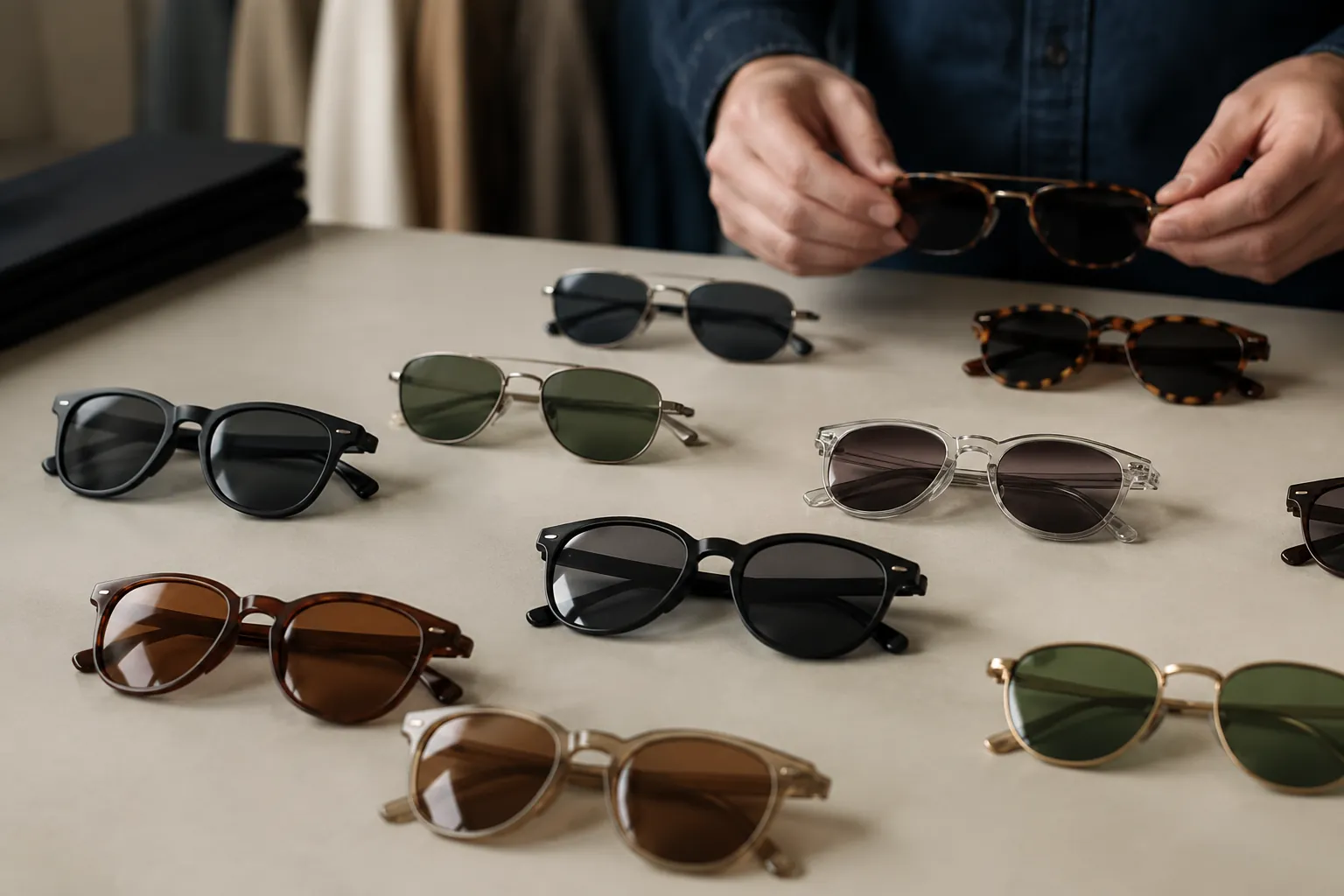
A sunglasses assortment should not be a pile of unrelated styles. It needs clear price tiers, real spec differences, workable MOQs, and enough depth to support reorders without trapping cash in slow stock. This guide shows how to build entry, mid, and premium ranges with practical sourcing logic: FOB spacing, material choices, decoration methods, compliance checks, and sample-to-bulk timing. The goal is simple. Fewer weak SKUs, tighter margin control, and a range that gives buyers a clear reason to trade up.
Start with the job each tier must do
A price-tier assortment is not just "good, better, best." Each tier needs a job. Entry tier drives traffic, fills promo demand, and protects the opening price point. Mid-tier should carry the most units and the best repeat margin. Premium tier raises perceived brand value, supports a higher average order value, and adds halo to the rest of the range.
For most B2B sunglasses programs, a practical starting mix is 20-30% entry, 55-65% mid-tier, and 10-15% premium by SKU count. By unit volume, mid-tier usually does even more of the work. A convenience-heavy chain may push entry closer to 35% of units. A fashion-led boutique group may give premium up to 20% of display space, but usually not 20% of inventory depth.
Define the buying trigger before you define the frame. Is the shopper replacing a lost pair, adding a car pair, buying a seasonal color, or grabbing a giftable item under a set retail threshold? Those triggers shape the right material, lens feature, and logo spend. If the purchase is casual and price-sensitive, a complicated acetate story adds little. If the buyer wants a hero style for a premium rack, a basic printed logo on a low-spec frame will not hold the ticket.
Most assortment mistakes start the same way: too much variety, not enough depth. Ten shapes at shallow depth split MOQs and weaken replenishment. Three to five shape families per tier, with controlled color and lens options, usually turn better and make open-to-buy decisions easier.
Use a clear three-tier spec ladder
The best price ladders are easy to read. Keep the silhouette language connected, then make the material and finish upgrade obvious. A shopper should be able to see the difference. And feel it. If tiers use unrelated shapes and inconsistent specs, the price gap looks arbitrary.
| Tier | Typical FOB target | Common build specification | MOQ logic | Main buyer objective |
|---|---|---|---|---|
| Entry | $2.10-$3.20/pair at volume | Injection frame, TAC lens, standard hinge, pad print or simple laser mark | Test at 50 pairs/design; pricing improves materially at 300+ pairs | Traffic, promo volume, opening price point |
| Mid | $3.30-$6.50/pair | Upgraded injection or acetate, polarized or mirrored options, better coating and finish control | Usually works best at 300-1000 pairs/SKU | Core sell-through, repeat margin, widest shape mix |
| Premium | $6.80-$12.00+/pair | Heavier acetate, CNC detail, metal trim, tighter polish and hinge feel | Keep SKU count tight; depth only after proven demand | Brand image, higher AOV, assortment halo |
These are FOB planning bands, not retail rules. Final cost depends on frame material, lens type, polarization, logo application, packaging, and order size. Keep a meaningful landed-cost gap between tiers. If entry and mid-tier land too close, there is little reason to trade up. If premium is overloaded with hidden cost but little visible benefit, it turns into slow inventory.
One useful method is to carry a shape family across all three tiers. For example, a square navigator can appear as an entry injected frame, a mid-tier acetate-look frame with polarized lens, and a premium acetate version with bevel detail and metal logo insert. The silhouette stays familiar. The value step becomes clear.
Build entry tier for volume and clean economics
Entry tier is not the place for sloppy decisions. Low cost still has to meet destination-market compliance, survive packing, and look acceptable at first touch. If the frame feels flimsy, scratches fast, or shows uneven lens tint, the whole assortment loses credibility.
Keep the design count narrow. One square, one soft cat-eye, and one sport wrap can cover a broad commercial base. Injection-molded frames are usually the right tool here because they support consistency and speed. Standard TAC lenses are common because they balance optics and cost. Decoration should stay simple and repeatable: one-color pad print, temple laser mark, or a small applied metal plate only if the brand truly needs stronger badging.
Control colorways hard. Two to four frame colors per silhouette are usually enough: black, tortoise or brown, transparent smoke, and one seasonal option if the account can support it. Too many novelty tints raise sample cost, split MOQ volume, and leave behind awkward inventory that cannot be replenished cleanly.
- Keep lens story simple: one base tint family per tier.
- Use common hardware across styles to reduce replacement complexity.
- Approve logo position from an actual worn sample, not just artwork.
- Check first-touch feel: sharp mold parting lines kill perceived value fast.
For a new entry style, a 50-pair test order is a practical way to check shape, fit, and merchandising response. At that size, setup cost, decoration prep, and material waste are spread across very few units, so the unit price will be higher. At 300 pairs, the economics usually improve. At 1000 pairs and above, the line can move toward the lower end of the FOB band if the spec stays tight. The trade-off is simple: lower price requires fewer options, simpler decoration, and larger runs.
Make mid-tier the margin engine
Mid-tier is where most private-label and importer programs make their money. It gives you room for better materials, stronger finishing, and upgraded lens options without taking on the slow-turn risk of an oversized premium range. This tier usually deserves the widest shape architecture and the closest process control.
Acetate works well here because it gives a better hand feel and richer surface depth than a basic injected frame. For brands that need lower cost or lighter weight, upgraded injection can also work if hinge quality, coating, and finish are visibly better. Polarized lenses often belong here, but only if the retail ladder can absorb the extra cost and the shopper understands the benefit.
Mid-tier should carry the core shape mix: square, rounded, oversized, narrow retro, and light sport. Keep the options disciplined. Three frame colors, two lens choices, and one or two approved logo executions per shape family are usually enough. More than that, and each SKU starts acting like its own tiny production problem.
This is also the tier where factory process matters most. If the supplier controls lens tinting, cutting, decoration, and final QC in-house, lead times and defect rates are easier to predict. If key steps are outsourced, every handoff adds risk. Ask direct questions. Where are the lenses cut? Where is the logo applied? Who handles polishing?
On pre-production samples, inspect the issues that drive returns: left-right lens tint consistency, temple alignment, hinge resistance, and visible front symmetry. Small cosmetic flaws that may survive at entry tier do more damage here because the customer expects a clear quality step-up.
Use premium to raise value across the range
Premium sunglasses should not be expensive by accident. They need visible and tactile reasons to cost more: heavier acetate, cleaner bevel transitions, more precise milling, tighter lens fit, richer material patterning, and subtler but better branding. If premium looks almost the same as mid-tier, it will struggle.
This is the right tier for deeper laser engraving, embedded or plated metal logos, multi-step polishing, custom temple cores, and tighter acetate pattern selection. But premium does not mean overdecorated. In eyewear, quiet precision usually reads as more expensive than extra trim.
Inventory discipline matters most here. Premium units tie up more cash, take longer to sample, and move slower unless the account already has proven demand. Keep premium SKU count low and use it to create halo, not to dominate open-to-buy. One or two winning shape families usually do more commercial work than a broad premium spread with weak depth.
Sample approval standards should also be stricter. Check lens seating under light pressure, open-close feel over repeated cycles, polish consistency around edges and bridge transitions, and whether logo hardware sits flush without lift or glue shadow. At premium price points, small mechanical or cosmetic faults are much harder to excuse.
Match compliance and materials to the market
Compliance belongs in the first quotation, not at the end of the buy. Requirements depend on destination market and sales channel, not on whether the style sits in entry or premium. Real programs often reference CE EN ISO 12312-1, ANSI Z80.3, AS/NZS 1067, REACH, FDA registration status, ISO 9001, and BSCI depending on market and buyer needs. Request only the documents relevant to the target market, then tie them to the final approved specification.
CE EN ISO 12312-1 is central for EU non-prescription sunwear. ANSI Z80.3 is commonly referenced for the U.S. market. AS/NZS 1067 matters for Australia and New Zealand. REACH covers restricted substances in the EU supply chain and is especially relevant for coatings, plastics, and decorative parts. FDA registration may be requested by U.S. buyers for filekeeping, but it is not the same as product certification.
Material and finish choices affect performance as much as perception. Acetate often gives stronger perceived value and richer color layering, but it also exposes polish defects more clearly. Injection offers consistency and lower cost, but poor mold cleanup or weak surface finish makes the frame feel cheap at once. Mirror coatings, soft-touch coatings, and plated logo parts can improve perceived value, but each adds process risk and should be approved with wear and rub expectations in mind.
Do not let entry-tier cost pressure push the program into weak compliance records or unverified material substitutions. A cheap pair that misses the standard is not a bargain. It is delayed inventory, a claim risk, or a customs problem.
Plan MOQ, lead time, and color as one system
MOQ, lead time, and color count are linked. Every extra color, lens finish, or logo treatment adds setup, approvals, and delay risk. Assortment planning gets better when buyers treat those choices as one system instead of three separate conversations.
- Choose 3-5 commercial silhouettes per tier.
- Limit each silhouette to 2-4 proven colorways.
- Use one lens story per tier unless there is a clear margin reason to split.
- Book samples 7-10 days before review deadlines.
- Plan bulk production at 25-35 days, then add freight and customs buffer.
Lead time depends on spec stability, factory capacity, and order complexity. Sample timing is often shorter than bulk timing, but any change to mold detail, logo placement, temple hardware, lens coating, or polarization can trigger a new approval round. Lock the key details before bulk starts, especially if the assortment is tied to a seasonal delivery window.
A practical buying model is simple: use 50 pairs as a market test, 300 pairs as a first committed reorder, and 1000+ pairs only after the style proves itself through sell-through. That protects cash while still giving the factory a realistic path to better costing. If a shape cannot justify itself in a 50-pair test, it probably does not belong in the mainline range yet.
Color strategy should follow data, not taste. If the program usually sells 60% black, 25% tortoise, and 15% everything else combined, the PO should reflect that concentration. Balanced color buys often create unbalanced inventory.
Use sell-through data to cut weak SKUs fast
The best sunglasses assortment is not the broadest one. It is the one that turns at an acceptable margin. After launch, review performance by tier, silhouette, color, and lens option. Do not stop at gross sales. Look at reorder speed, markdown pressure, return reasons, and whether one option is carrying the whole family.
Three signals matter most. First, color concentration: if black sells out and blue sits, black is the hero and blue is noise. Second, fit and quality returns: if one shape keeps drawing complaints about narrow temples, excessive lens darkness, or loose hinge feel, fix the spec before the next order. Third, trade-up performance: if customers never move from entry to mid-tier, the quality jump is too weak or the price gap is too wide.
For many B2B buyers, the safest structure is simple: one entry family, one core mid-tier family, and one small premium family. Expand only the styles that reorder at full margin. Cut weak SKUs early, even if development cost is already spent. That money is gone. The only useful question is whether the style deserves more inventory cash.
Buyer takeaway: Give each price tier a clear job, make the specification ladder obvious, match compliance to the destination market, and use MOQ and lead-time logic to control risk. Then let sell-through data decide what earns more depth.
Have a custom sunglasses project in mind?
Send us your styles, target market and quantities and we will return a detailed quote with MOQ, lead time and a sample plan.
Get a QuoteWhy source this from Wenzhou with LumiShades
Wenzhou in Zhejiang Province is widely regarded as China’s eyewear manufacturing capital, producing a large share of the world’s sunglasses. That concentration matters to buyers: a deep local supply chain for acetate sheet, hinges, lens blanks, plating and packaging means shorter component lead times, easier color and material matching, and a workforce with decades of eyewear-specific skill. LumiShades has manufactured in this ecosystem since 2009, and our vertical integration — in-house injection molding, acetate cutting, CNC milling, lens tinting, decoration and quality control — means no part of your order is quietly subcontracted to a workshop you cannot audit.
For international buyers, that vertical control translates into accountability. When a single factory owns every step, defects are traced and fixed at source rather than bounced between vendors, and your specifications survive intact from first sample to bulk. For procurement review, buyers can request process records, approved samples, quality checkpoints and project-specific compliance files before placing a bulk order. Required testing and documentation are confirmed against the destination market and product specification rather than assumed from a generic certificate list. Explore our manufacturing capabilities and quality control process to see how this works in practice.
Frequently asked questions
How many SKUs should I launch per price tier? Start with 3-5 styles per tier, then limit each style to 2-4 colorways with proven demand. That usually gives enough choice to test the market without fragmenting MOQ volume or creating unnecessary inventory risk.
What is the safest MOQ for a new sunglass style? A 50-pair test order is a practical low-risk starting point because it checks shape, fit, and demand without overcommitting cash. If the style sells through, move to around 300 pairs for better pricing, then scale further only after reorder performance is proven.
Which tier should carry polarized lenses? Usually mid-tier and premium. Polarization adds cost and needs a clear retail reason, so it works best where the price ladder can absorb the upcharge and the shopper understands the benefit. Entry tier can carry it only if the whole program is built around that feature.
Do entry and premium tiers need different certifications? No. Certifications and compliance documents depend on the destination market and product specification, not on price tier. For example, EU sunwear may require CE EN ISO 12312-1 and REACH alignment, while U.S. buyers commonly reference ANSI Z80.3 and may ask for FDA registration status on file.
How should I balance frame materials across the range? Use injection-molded frames for entry, upgraded injection or acetate for mid-tier, and heavier acetate with more refined milling or hardware detail for premium. The goal is a clear visual and tactile step-up between tiers, not just a higher cost.
Ready to start?
Explore our aviator sunglasses or request a quote — our sales team replies within 12 hours.
Request a Quote