
Polarized Sunglasses OEM Sourcing Guide
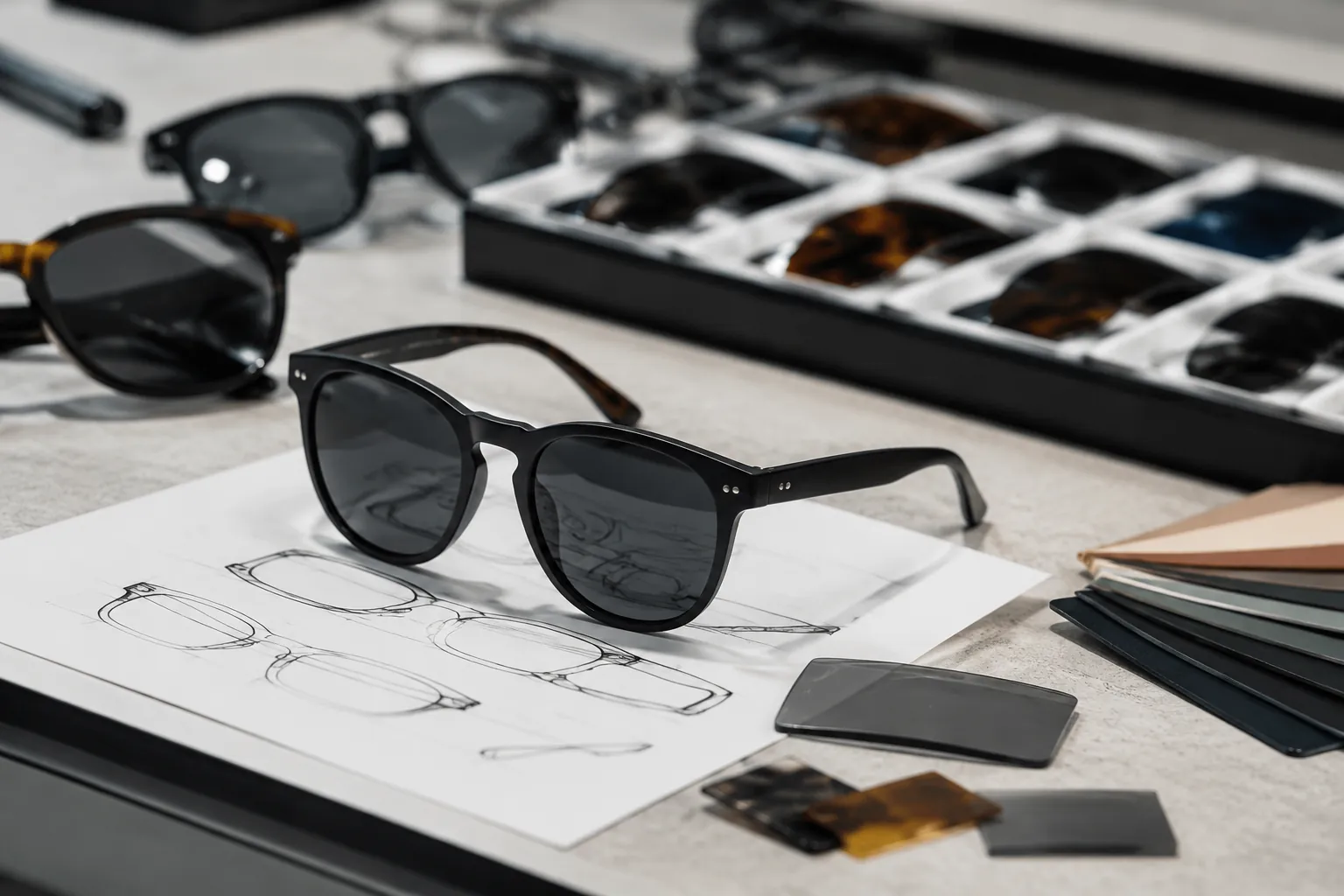
Polarized lenses are not a default upgrade. For private label buyers, they make sense when the product is aimed at glare-heavy use cases, the retail price supports the added cost, and the factory can prove the polarization is consistent across batches. This guide is for brands, importers, distributors, and retailers buying sunglasses in volume. It shows how to decide whether polarization is worth it, how to specify it correctly, and what to verify before you approve samples.
When polarized lenses are worth paying for
Polarization addresses a specific problem: reflected glare from water, roads, snow, glass, and wet surfaces. It is most useful when the customer spends time in reflective environments, not when sunglasses are worn only as a fashion accessory. Fishing, boating, driving, cycling, hiking, and premium everyday eyewear are the clearest use cases. In those categories, polarized lenses can support a higher retail price because buyers can see and feel the difference.
In a low-ticket fashion program, the economics are different. If the retail price leaves little room for a higher landed cost, polarized lenses can reduce margin without improving sell-through. That is why "better" is not the same as "better for the program." A polarized lens is a functional upgrade, but it only works commercially when the use case and price point match the feature.
| Program type | Polarized makes sense? | Typical buying logic | Buyer risk if skipped |
|---|---|---|---|
| Fishing / boating | Yes | Strong glare control on water is a clear benefit | Product feels incomplete versus competing SKUs |
| Driving / commuting | Usually yes | Road, windshield, and dashboard reflections are common | Lower perceived quality and weaker conversion |
| Sport / outdoor retail | Yes | Function can justify a premium and stronger merchandising claim | Missed differentiation in a crowded category |
| Fashion / promo | Sometimes no | Retail price may not support the added lens cost | Margin pressure with limited customer payoff |
| Entry-level giveaway | No | Feature is usually wasted at very low price points | Higher landed cost with little buyer value |
A useful sourcing rule is to match lens sophistication to the commercial tier. For a simple promotional style, a standard tinted lens may be enough. For a premium private label program, polarized lenses are easier to justify because the feature can support a higher average selling price and a stronger product story. The key question is not whether polarization is good in general; it is whether the expected sell-through covers the incremental landed cost at your actual order tier.
What to specify in the lens spec sheet
"Polarized" is too vague for an OEM brief. A usable spec sheet should define the lens material, the optical target, the construction tolerances, and the acceptance criteria. If the spec is loose, the factory will make assumptions, sample revisions will multiply, and you will compare samples that are not built to the same standard.
Start with the lens substrate. TAC is commonly used for polarized sunglasses because it is lightweight and optically clear for many retail programs. PC can be appropriate when impact resistance matters, but it needs good process control to avoid warping or stress marks. Glass offers strong optical clarity, but it is heavier and less suitable for some fashion frames. The material should follow the use case and the frame design.
Your spec should also include measurable targets. A good brief can define lens thickness tolerance, tint darkness target, base curve, and surface finish. For example, a wrapped sports frame may need a steeper base curve than a flat fashion frame, and a mismatch can create fit issues or visible distortion. The tolerance band should be narrow enough that both lenses look and perform like a matched pair.
- Lens material: TAC, PC, or glass, selected by use case and retail tier.
- Polarization axis: vertical orientation only, with both lenses aligned consistently.
- Visible light transmission: define the target tint range by style and market.
- Base curve: confirm the curvature required by the frame geometry.
- Thickness tolerance: specify an acceptable range to avoid optical mismatch.
- Scratch resistance: define hard-coat performance and wear expectations.
- Optional treatments: anti-reflective, hydrophobic, or mirror finishes only if they are requested, quoted, and tested.
Ask the factory how it verifies the polarization angle, how it checks tint consistency, and what it does when paired lenses differ in darkness or hue. If the supplier cannot describe the reject criteria for haze, bubbles, edge chips, or color mismatch, the process is not mature enough for a controlled private label program.
A practical rule helps keep the spec usable: if you cannot inspect it with a gauge, a light-box check, a rotation test, or a side-by-side comparison, the requirement is too vague.
How polarized lenses are made in factory terms
Most buyers do not need the chemistry lesson, but they do need the process map. In a typical OEM workflow, the lens starts as a base material sheet or molded component, then a polarization layer or film is introduced, after which tinting, coating, cutting, edging, and assembly follow. Each stage can affect optical clarity and batch consistency.
That sequence matters because the defect mode changes from step to step. If the polarization layer is uneven, glare reduction may look acceptable in a showroom but perform poorly in reflective conditions. If tinting is inconsistent, the left and right lenses may not match closely enough for a premium buyer. If cutting pressure or edging speed is wrong, micro-chips and stress whitening can appear at the rim. If decoration uses too much heat, surface coatings can haze or distort.
For buyers, the key question is not whether the factory can make polarized lenses. It is whether the factory can repeat the same polarization level, tint level, and fit tolerance across the same design over multiple production runs. That is where production quality lives.
Ask for evidence of process control in three places: before polarization or lamination, after tinting or coating, and at final assembly. If a supplier only checks the finished lens visually, that is not enough for a serious custom program.
Also ask how the factory handles nonconforming parts. A good answer should cover segregation, rework rules, and final inspection before shipment. If those steps are not defined, quality control depends too much on individual judgment.
Cost logic and MOQ breakpoints
Polarized lenses add cost in material, labor, yield loss, and inspection time. The premium is real, but it should be modeled instead of guessed. Unit economics depend on order volume because setup costs and reject risk are spread differently at each tier.
| Order level | Typical buying logic | Cost effect | Operational note |
|---|---|---|---|
| 50 pairs/design | Sample or pilot run | Highest unit cost | Useful for testing, not margin-optimized |
| 300 pairs/design | First commercial run | Better spread of setup cost | Good point to validate sell-through |
| 1000 pairs/design | Core replenishment | Material and labor cost usually improve versus smaller runs | Worth tightening QC and packaging spec |
| 5000+ pairs/design | Volume program | Best unit economics | Requires stable forecasting and clear approvals |
Buyers should also account for hidden cost drivers. Polarized programs can increase reject rates if tint, lens curvature, or frame groove dimensions are not stable. They can add cost if samples are revised repeatedly because the buyer changes lens color, logo position, and temple decoration in the same round. Every revision restarts validation. If you want clean pricing, freeze the design early and keep the variables under control.
Lead time follows the same logic. A clear spec can keep samples within a reasonable turnaround window, while bulk production usually takes longer and depends on order size, finishing complexity, and current factory load. If the buyer is still deciding between smoke gray and brown, or between pad print and laser engraving, the schedule will slip. Good sourcing is not just negotiating the lowest cost; it is reducing uncertainty so the factory can quote and build accurately.
If the supplier gives a price, ask what is included: lens type, coating, decoration, packaging, and carton configuration. A useful quote is itemized enough that you can compare one factory against another on the same basis.
Sample approval checks buyers should not skip
Samples are where most polarized programs succeed or fail. A sample can look attractive under showroom lighting and still underperform once it faces real reflections. If polarization is weak, lens pairing is off, or distortion is visible, the problem will show up in customer complaints, not in a catalog photo.
Start with a structured approval routine and use it on every style. Compare the lens against a reflective surface such as a phone screen, glossy desktop, wet pavement, or a car windshield in daylight. Then rotate one lens 90 degrees and confirm that glare reduction changes predictably. The change should be obvious. If the effect is subtle, the lens may not be polarized strongly enough or the axis may be off.
Physical inspection should cover more than glare. Check whether both lenses match in color temperature and darkness, whether text viewed through the lens warps unnaturally, whether the edges seat cleanly in the groove, and whether the coating has dust, haze, or micro-scratches under angled light. For wrapped frames, inspect the lens edge and curvature carefully because a small mismatch can create visible stress or assembly gaps.
It also helps to define a repeatable test pack for the vendor. Ask for one daylight glare photo, one rotation test video, one close-up of lens pairing, and one image of the frame fit. That documentation is not a substitute for physical checking, but it gives you a consistent audit trail across suppliers and seasons.
Use the same sample criteria for all polarized styles in the program. Consistency matters more than personal preference. If you approve one sample on loose standards and reject another on strict standards, the approval process is not standardized.
Compliance and market access checks
Polarization does not replace compliance. Buyers still need the correct market standards for the region, channel, and use case. Keep the compliance scope limited to the certifications and registrations that actually apply to the finished product and target market.
For sunglasses programs, the commonly used references are CE EN ISO 12312-1 for the European market, ANSI Z80.3 for the U.S. market, AS/NZS 1067 for Australia and New Zealand, REACH for chemical restrictions in the EU, FDA registration where applicable in the U.S., plus ISO 9001 and BSCI as factory-level management and social audit references. A factory certificate does not automatically cover every lens tint, coating stack, or decoration method.
What you ask for should depend on where the product will be sold. In the EU, confirm how the finished style aligns with CE EN ISO 12312-1 and what documentation supports the claim. In the U.S., check whether the supplier has the relevant FDA registration status and whether the product is positioned in a way that fits the intended eyewear category. For Australia and New Zealand, ask specifically how the style relates to AS/NZS 1067. For materials and decorations, confirm REACH-relevant considerations for coatings, components, inks, adhesives, and metal details.
The important sourcing principle is that compliance is style-specific, not factory-generic. A black polarized lens and a mirrored polarized lens can share a frame platform but still require separate final-product review. If the buyer changes a lens tone, mirror layer, or logo plate material, that change can alter the compliance picture and should be treated as a new approval point.
Ask for documents that match the exact finished article: test reports, declaration references, and material confirmations tied to the actual SKU. That is especially important for private label buyers who plan to launch multiple colorways under one frame family.
How to work with a factory on a polarized program
If you are sourcing a polarized program, keep the brief specific and complete. State the target market, frame material, lens color, polarization requirement, logo method, and target order quantity in one package. That gives the factory the information it needs to choose the right process route and quote accurately on the first pass.
Use the factory's capabilities strategically. Injection molding supports consistent frame volume for larger programs. Acetate cutting and CNC milling help with frame geometry, edge quality, and fit tolerance. In-house tinting is valuable because it keeps lens color tighter from sample to bulk. Decoration choices such as laser engraving, pad printing, hot stamping, and metal logo plates should be fixed early, because each method has different cost, lead-time, and surface-quality implications.
From a sourcing perspective, the best time to make decoration decisions is before sample approval. Laser engraving gives a clean and durable mark but can be limited by surface material and finish. Pad printing is flexible and cost-effective but can wear differently depending on ink and coating. Metal logo plates can look premium but add assembly complexity and may affect temple balance or adhesion risk. Each choice affects the build.
Lead time depends on design stability and production load. If the buyer changes frame color, lens tint, polarization target, or logo method midstream, the timeline will extend. That is not a separate issue; it is a specification problem.
The practical workflow is simple: confirm the design, freeze the lens spec, approve the sample, then release bulk against the same references. For private label programs that need to scale from test order to repeat replenishment, that sequence reduces rework, protects margin, and keeps the product consistent across shipments.
Buyer decision checklist
Use this checklist before you approve a polarized sunglasses sample or issue the PO:
- Is polarization needed for the actual use case, not just for marketing?
- Does the target selling price support the added lens cost and QC burden?
- Are lens material, tint, thickness, and polarization direction clearly written in the spec?
- Has the factory explained how it checks optical consistency and reject rates?
- Do sample tests show glare reduction, matched lenses, and acceptable distortion?
- Are the correct market compliance documents tied to the exact finished style?
- Has decoration been locked before bulk production starts?
If you can answer yes to most of those points, polarized is probably worth it. If not, you are likely paying for a feature that adds cost faster than it adds value.
FAQs
Q: What is the biggest mistake buyers make with polarized sunglasses?
A: They treat "polarized" as a marketing label instead of a production specification. The fix is to define lens material, tint target, polarization alignment, and acceptance criteria before sampling starts.
Q: At what order size does polarized pricing usually improve?
A: Pricing usually becomes easier to absorb as volume increases because setup and inspection costs are spread over more pairs. In practice, ask the factory to quote at 50, 300, 1000, and 5000+ pairs so you can compare the price breakpoints for your exact style.
Q: How long should a custom polarized sample take?
A: Ask the supplier for a written sample lead time based on the finished specification, not a verbal estimate. The clock should start only after the frame design, lens color, polarization requirement, and decoration method are frozen.
Q: What should I test before approving the sample?
A: Test glare reduction, lens-to-lens color match, rotation response, visual distortion, coating quality, edge fit, and frame alignment. If possible, test the sample in the environment where customers will actually wear it.
Q: Which compliance items matter most for export?
A: Use the standards tied to the target market and the finished SKU: CE EN ISO 12312-1 for the EU, ANSI Z80.3 for the U.S., AS/NZS 1067 for Australia and New Zealand, REACH for EU chemical restrictions, and FDA registration where applicable in the U.S. Also ask for ISO 9001 and BSCI if you need factory-level management and social audit references.
Q: Is polarized always better than non-polarized?
A: No. Choose polarized only when glare reduction is useful to the buyer and the price point can absorb the extra cost. For low-price fashion programs, a non-polarized lens can be the better commercial choice.
Q: What decoration method is safest for polarized lens programs?
A: There is no single safest choice for every frame. The practical rule is to lock decoration early and ask the factory how it affects surface quality, fit, and lead time. Laser engraving is durable, pad printing is flexible, and metal logo plates add premium appeal but also more assembly complexity.
Have a custom sunglasses project in mind?
Send us your styles, target market and quantities and we will return a detailed quote with MOQ, lead time and a sample plan.
Get a QuoteWhy source this from Wenzhou with LumiShades
Wenzhou in Zhejiang Province is widely regarded as China’s eyewear manufacturing capital, producing a large share of the world’s sunglasses. That concentration matters to buyers: a deep local supply chain for acetate sheet, hinges, lens blanks, plating and packaging means shorter component lead times, easier color and material matching, and a workforce with decades of eyewear-specific skill. LumiShades has manufactured in this ecosystem since 2009, and our vertical integration — in-house injection molding, acetate cutting, CNC milling, lens tinting, decoration and quality control — means no part of your order is quietly subcontracted to a workshop you cannot audit.
For international buyers, that vertical control translates into accountability. When a single factory owns every step, defects are traced and fixed at source rather than bounced between vendors, and your specifications survive intact from first sample to bulk. We back this with 15+ years of experience, shipments to 60+ countries, more than 5 million pairs produced per year and a 98.5% on-time delivery rate. Our certifications — CE EN ISO 12312-1, FDA registration, ANSI Z80.3, AS/NZS 1067, REACH, ISO 9001 and BSCI audit — mean the compliance documentation your market requires already exists. Explore our manufacturing capabilities and quality control process to see how this works in practice.
Frequently asked questions
What is the biggest mistake buyers make with polarized sunglasses? They treat polarized as a label instead of a production specification. Define lens material, tint target, polarization alignment, and acceptance criteria before sampling starts.
At what order size does polarized pricing usually improve? Ask the factory to quote at 50, 300, 1000, and 5000+ pairs so you can compare the actual price breakpoints for your style. The main driver is how setup and inspection cost are spread across volume.
How long should a custom polarized sample take? Request a written sample lead time after the frame design, lens color, polarization requirement, and decoration method are frozen. That is the only way to get a reliable timeline.
What should I test before approving the sample? Check glare reduction, lens-to-lens color match, rotation response, visual distortion, coating quality, edge fit, and frame alignment. If possible, test it in the customer's real use environment.
Which compliance items matter most for export? Use the standards tied to the target market and the finished SKU: CE EN ISO 12312-1 for the EU, ANSI Z80.3 for the U.S., AS/NZS 1067 for Australia and New Zealand, REACH for EU chemical restrictions, FDA registration where applicable in the U.S., plus ISO 9001 and BSCI as factory-level references.
Ready to start?
Explore our sport wrap sunglasses or request a quote — our sales team replies within 12 hours.
Request a Quote