
Polarized Bulk Sunglasses: B2B Buying Guide
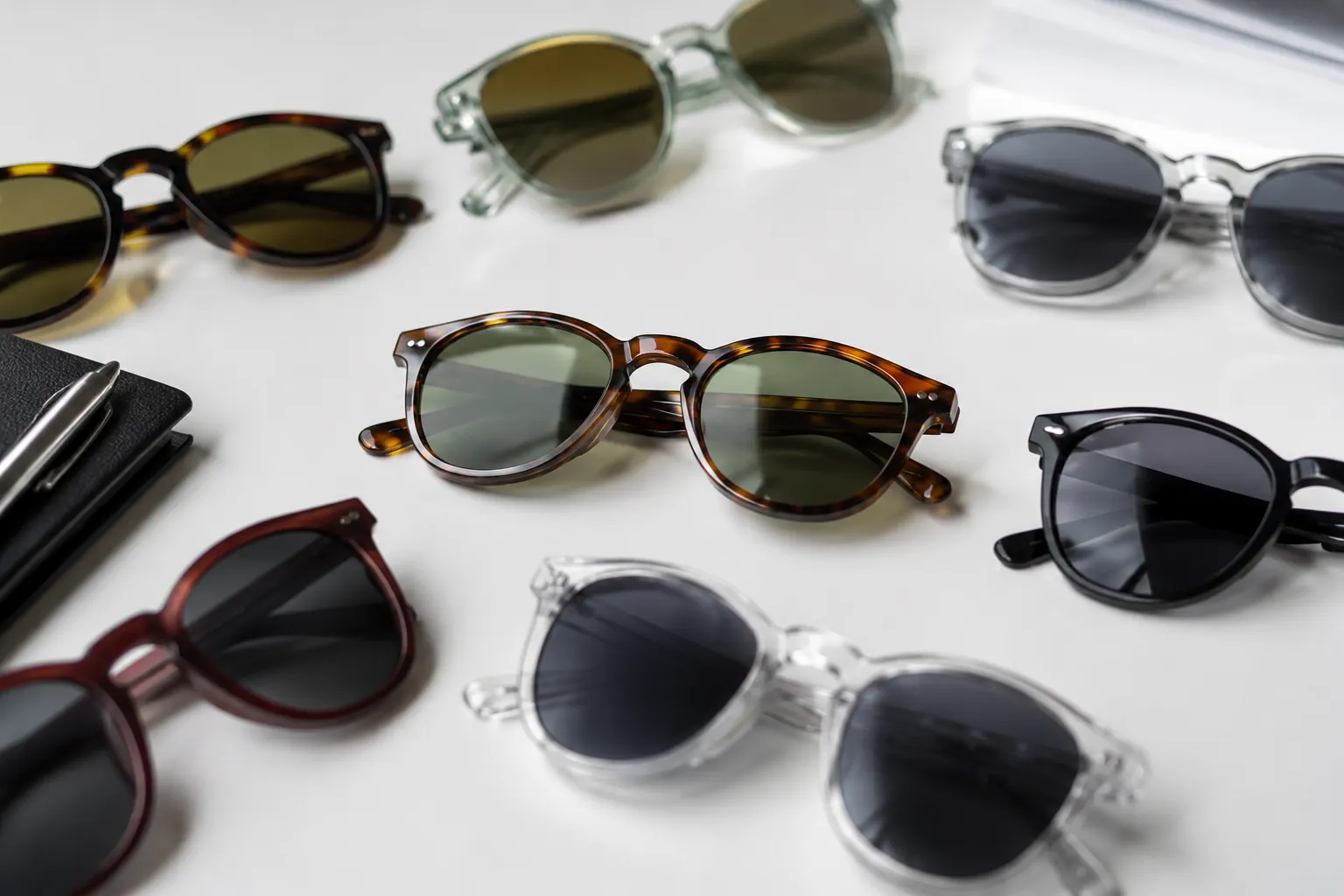
This guide is for overseas brands, importers, distributors, and retail buyers deciding whether polarized lenses justify the extra cost over standard UV400 lenses. The goal is simple: know which channels can support the upgrade, define the lens clearly, verify performance before bulk release, and reduce returns caused by vague claims or rushed inspection. From the factory side, polarization affects more than lens price. It can change material sourcing, lens cutting, axis control, frame fitting, coating checks, packaging wording, inspection time, MOQ planning, and lead-time risk.
UV400 First, Polarized Where It Pays
Standard UV400 lenses and polarized lenses solve different problems. UV400 is a protection requirement: the lens should block ultraviolet radiation up to 400 nm, including UVA and UVB. Polarization is a glare-control feature. It uses a filter to reduce reflected glare from roads, water, snow, glass, and other flat surfaces.
For B2B buyers, polarized should be treated as an upgrade on top of UV400 protection. Not a replacement.
The commercial question is not whether polarized is always better. It is not. The question is whether the end customer will notice the glare reduction and pay for it. Polarized lenses are easier to justify for fishing, boating, driving, beach retail, travel retail, and selected outdoor programs. They are harder to justify for low-cost giveaways where the buyer mainly needs logo exposure, basic comfort, and a compliant UV400 lens.
Polarized lenses also have known limits. They may make some LCD screens, dashboards, fuel-pump displays, phones, and instrument panels look darker or uneven at certain angles. They can also reveal stress patterns or rainbow effects in tempered glass and some vehicle windshields. These effects are normal polarization behavior. Do not treat them as defects unless they fall outside the approved standard.
For a clean specification, describe the product as UV400 plus polarization. Then check the finished sunglasses against the destination-market requirement. Common references include CE EN ISO 12312-1, ANSI Z80.3, AS/NZS 1067, REACH, FDA registration where applicable, ISO 9001 factory quality management, and BSCI social compliance. The lens claim, lens category marking, packaging text, and test documents must match the product being shipped.
Channel Fit and Assortment Logic
| Sales Channel | Polarized Fit | Recommended Lens Direction | Main Factory Risk |
|---|---|---|---|
| Driving and travel retail | Strong | Grey or brown polarized lenses; category 2 or 3 depending on tint and market requirement. | Screen visibility complaints, lens color variation, or unsupported driving-performance claims. |
| Fishing, boating, beach | Very strong | Brown, grey, green, or mirror polarized lenses with a clear glare-reduction demonstration. | Mirror coating defects, edge color shift, weak polarization effect, or lenses that are too dark for intended use. |
| Outdoor sports | Selective | PC or another suitable lens material where light weight or impact resistance matters; avoid unnecessary over-dark tints. | High-wrap frames can create stress marks, optical distortion, or poor lens fit if curve and groove are not matched. |
| Fashion retail | Selective | Use polarization on premium SKUs, acetate styles, or key colorways where the feature supports the retail price. | The added feature may not improve sell-through if shoppers mainly buy by shape, color, and brand story. |
| Promotional giveaways | Weak to moderate | Use polarized lenses only for premium campaigns, travel gifts, outdoor-event packs, or retail-quality promotional sets. | Budget pressure often favors standard UV400 lenses and simpler packaging. |
A practical assortment usually mixes lens types. A retailer may use standard UV400 smoke lenses for entry fashion colors, then reserve grey or brown polarized lenses for driving, fishing, beach, or travel styles. This keeps the range commercial. Not every SKU carries the upgrade cost, but the buyer still gets a credible mid-tier or premium option.
MOQ planning should follow the same logic. Small test quantities help check style acceptance, lens color, packaging, and retail price. Higher quantities usually improve unit cost because material purchasing, logo setup, packaging preparation, and inspection work are spread across more units. Ask the supplier to quote by exact specification and quantity tier. Do not assume one fixed polarized price.
Cost Drivers Inside the Factory Quote
Polarized lenses cost more because the lens blank and inspection process are different from standard tinted UV400 lenses. The polarizing film must be laminated cleanly. The axis must be controlled. The lens must be cut without edge delamination and mounted without excessive stress.
A poor polarized lens can look fine in a product photo. Later, it may create complaints about wavy vision, peeling edges, uneven tint, visible coating defects, or weak glare reduction.
The price difference is not one fixed number. A simple PC polarized lens in an injected frame is different from a TAC polarized lens with mirror coating in a high-wrap sports frame. Buyers should expect the factory to price the real specification, not the word "polarized" alone.
- Frame material: PC and TR90 injection frames are usually cost-efficient for volume programs. Acetate adds cutting, polishing, and hand adjustment time. Metal or combination frames add plating, screws, nose pads, soldering or assembly checks, and more handling risk.
- Lens material: TAC is widely used for retail polarized sunglasses because it offers stable lamination and good visual clarity when properly made. PC is light and impact-resistant, but surface hardening, coating adhesion, and optical distortion need careful control.
- Lens curve: Flat and moderate curves are easier to control. High-wrap sports lenses require tighter matching among base curve, frame groove, cutting size, and mounting pressure.
- Coatings: Mirror, gradient, hard coating, anti-scratch coating, and special colors can raise cost and defect risk. Approve mirror lenses under outdoor light because color shifts and edge effects may not show clearly indoors.
- Decoration: Laser engraving, pad printing, hot stamping, and metal logo plates add handling steps. Each step increases scratch, placement, and adhesion risk if trays, jigs, and process flow are weak.
- Packaging: Pouches, microfiber cloths, retail boxes, barcodes, insert cards, polarized tester cards, warning text, and country-specific wording all affect cost, lead time, and approval workload.
The cleanest RFQ states frame material, lens material, lens color, lens category, coating, logo method, packaging, target market, compliance requirement, and quantity per design. That gives the supplier enough detail to quote the actual product and suggest cost-saving alternatives before sampling starts.
Lens Specs to Lock in the Purchase Order
A strong purchase order removes guesswork. "UV400 polarized sunglasses" is not enough. Several different products can sit under that phrase.
For retail or distributor programs, the PO should lock down measurable details, approved samples, packaging wording, and the inspection basis. Start with lens material. TAC polarized lenses are widely used for fashion, driving, beach, fishing, and general retail sunglasses. PC polarized lenses are useful when light weight or impact resistance matters, such as sports or children's styles. With PC, pay close attention to optical distortion, coating quality, and stress after mounting. Nylon or other specialty materials may suit higher-end sports programs, but they can involve higher MOQ, longer sourcing time, or fewer color options.
Next, define lens category and color. Grey is a safe all-purpose color because it keeps color perception relatively neutral. Brown can improve perceived contrast and is common for outdoor and fishing channels. Green can work for lifestyle and driving styles. Category 3 lenses are common for bright outdoor sunglasses, while category 2 may be better for softer tint or broader daily use. Very dark lenses should be checked against the destination-market rules and the exact product claim.
For fit, the PO should specify no lens rattle, no forced fitting, no visible rim gap, no temple imbalance, and no obvious stress marks after mounting. For many injection frames, a practical inspection requirement is clean rim fit with no gap visible at normal inspection distance and no lens movement under light finger pressure. For logo placement, agree on tolerance before production. It depends on the logo method, artwork size, frame surface, and fixture accuracy.
Documentation should match the destination market and the buyer's import requirements. The PO can reference CE EN ISO 12312-1, ANSI Z80.3, AS/NZS 1067, REACH, FDA registration where applicable, ISO 9001, BSCI, or other agreed documents from the approved compliance list. Even if the supplier handles frame, lens, decoration, and QC in-house, require signed samples and written specifications. Every production team needs the same approved standard.
Testing Before Bulk Release
Polarization is easy to demonstrate and easy to under-test. A basic factory check uses a polarized test card or a known polarized reference lens. The inspector rotates the sunglass lens about 90 degrees and confirms the expected darkening effect. Then both left and right lenses should be checked together to confirm that the polarizing axes are consistent. If the axes are mismatched, the wearer may experience uneven vision even if each lens looks acceptable on its own.
That check is only the start. A complete pre-shipment method should include UV400 verification, tint consistency, visible scratches, coating defects, chips at the lens edge, optical distortion, frame alignment, hinge movement, screw tightness, lens rattle, packaging accuracy, and stress after mounting. Stress matters most for high-wrap or tight-rim frames. A lens forced into the frame can show uneven patterns, distortion, or wavy viewing.
For volume orders, agree on the inspection plan before production. A practical structure is incoming lens inspection, in-process assembly check, final AQL inspection, and packing audit. Incoming inspection can check lens color, coating surface, polarization effect, and UV blocking before lenses enter assembly. In-process inspection can catch forced fitting, rim gaps, temple imbalance, loose screws, and logo scratches. Final inspection should compare the goods against the signed production control sample, not only a digital mockup.
Factory rule: do not approve polarized bulk production from a product photo only. Approve physical samples under outdoor light, through a phone screen or LCD display, against a polarized test card, with the intended logo method, and inside the final retail package.
Lead Time, MOQ, and Sampling Gates
Polarized projects run better when the lens specification is stable early. Lead time depends on frame material, lens material, coating, tooling status, logo method, packaging complexity, testing requirements, and order quantity. Most delays come from late changes to lens color, mirror coating, logo position, hinge style, packaging artwork, claim wording, or compliance documents.
A lens color change is not always minor. Moving from grey polarized to blue mirror polarized may require a new lens sample, a new outdoor approval, and sometimes a different coating schedule. If the frame has a strong curve, the mirror color can look different near the edge. The approval sample must represent the real production construction.
Use MOQ as a risk-control tool. Small trial orders can validate channel response, lens color, decoration, packaging, and return risk before a larger commitment. For repeat or higher-volume orders, the signed sample should become the production control sample stored by both buyer and factory. Larger programs should add clearer inspection gates: incoming material check, first-article assembly approval, mid-production inspection, final AQL inspection, and carton-mark audit.
A good schedule has three gates: lens approval, complete product approval, and pre-shipment inspection. Skip one, and the risk does not disappear. It moves downstream, where rework, repacking, and freight delays cost more.
Decoration and Packaging Details That Affect Returns
Decoration looks simple on a quote sheet. It is not. It affects handling, scrap rate, and customer perception.
Laser engraving works well for subtle temple logos and durable branding on suitable surfaces. Pad printing is efficient for larger logos and color marks, but adhesion and rub resistance should be checked on the actual frame material. Metal logo plates can raise perceived value, but they add placement tolerance, glue or pin checks, and extra scratch-prevention steps.
For polarized programs, the factory should protect lenses during every decoration stage. Logo work after lens assembly can scratch finished lenses if fixtures are poor. For higher-value orders, require controlled trays, defined handling flow, lens protection where suitable, and final cleaning before packing.
Packaging also needs discipline. A polarized tester card is useful because it makes the glare-reduction feature visible to retail buyers and end customers. But it is not proof of UV protection or regulatory compliance. Retail packaging should avoid unsupported medical, safety, or driving-performance claims. Safer wording is specific and test-supported, such as "polarized lenses reduce reflected glare from water and roads" and "UV400 protection" when testing supports the claim.
Barcode labels, country-of-origin marks, warning text, lens category information, importer details, and market-specific packaging requirements should be finalized before bulk packing. Late label or artwork changes can delay shipment even when the sunglasses are finished.
Factory-Ready RFQ Checklist
The fastest way to get an accurate quote is to send a precise RFQ. It does not need to be long. It must describe the product well enough for the factory to price the same item the buyer expects to receive.
- Quantity: state pairs per design and total order volume, and ask for price breaks only where the specification stays unchanged.
- Frame: material, color, shape, hinge type, size, and whether the order uses an existing style, adjusted tooling, or a new mold.
- Lens: TAC, PC, or other material; UV400 requirement; polarized requirement; color; category; curve; coating; and optical or UV test requirement.
- Branding: laser engraving, pad printing, metal logo plate, temple logo size, color, artwork file, position, and agreed placement tolerance.
- Compliance: target market and required documentation, such as CE EN ISO 12312-1, ANSI Z80.3, AS/NZS 1067, REACH, FDA registration where applicable, ISO 9001, or BSCI.
- Packing: pouch, cloth, retail box, barcode, insert card, polarized tester card, carton mark, warning text, lens category information, and country-specific wording.
- Timeline: sample deadline, approval date, deposit date, bulk delivery window, inspection date, and the latest acceptable date for artwork or specification changes.
Polarized sunglasses run smoothly when the upgrade is specified as a controlled product feature, not added casually at the end of development. Before bulk materials are purchased, buyer and supplier should align on the lens, frame, claim, package, test method, inspection standard, and approved production sample.
Have a custom sunglasses project in mind?
Send us your styles, target market and quantities and we will return a detailed quote with MOQ, lead time and a sample plan.
Get a QuoteWhy source this from Wenzhou with LumiShades
Wenzhou in Zhejiang Province is widely regarded as China’s eyewear manufacturing capital, producing a large share of the world’s sunglasses. That concentration matters to buyers: a deep local supply chain for acetate sheet, hinges, lens blanks, plating and packaging means shorter component lead times, easier color and material matching, and a workforce with decades of eyewear-specific skill. LumiShades has manufactured in this ecosystem since 2009, and our vertical integration — in-house injection molding, acetate cutting, CNC milling, lens tinting, decoration and quality control — means no part of your order is quietly subcontracted to a workshop you cannot audit.
For international buyers, that vertical control translates into accountability. When a single factory owns every step, defects are traced and fixed at source rather than bounced between vendors, and your specifications survive intact from first sample to bulk. For procurement review, buyers can request process records, approved samples, quality checkpoints and project-specific compliance files before placing a bulk order. Required testing and documentation are confirmed against the destination market and product specification rather than assumed from a generic certificate list. Explore our manufacturing capabilities and quality control process to see how this works in practice.
Frequently asked questions
Should every UV400 sunglasses order be upgraded to polarized? No. Use polarized lenses where glare reduction is a clear selling point, such as driving, fishing, boating, beach, travel, and selected outdoor sports. For low-cost promotional programs or fashion styles bought mainly for shape and color, standard UV400 lenses may protect margin better. A safer approach is to test one or two polarized SKUs first, compare sell-through and return feedback, then expand only where the feature supports the retail price.
What MOQ should a buyer use for testing a polarized sunglasses design? Use the smallest quantity that can produce a real commercial signal without creating unnecessary inventory risk. For a new style, test the exact lens color, logo method, packaging, and retail price you plan to sell. Do not rely on a simplified sample that cannot represent bulk production. Before increasing volume, confirm the signed production sample, lens category, packaging claim, inspection checklist, and any required documents for the destination market.
Does polarized mean the sunglasses automatically pass CE or ANSI tests? No. Polarization is a glare-control feature, not a full compliance result. The finished sunglasses still need to meet the relevant destination-market requirements, such as CE EN ISO 12312-1, ANSI Z80.3, AS/NZS 1067, REACH, FDA registration where applicable, ISO 9001 factory quality management, or BSCI social compliance documentation. Buyers should ask which documents apply to the product and market, then make sure packaging claims match the test evidence.
How can a buyer check polarized quality before shipment? Require UV400 verification, polarization effect checks, left-right axis consistency checks, tint comparison against the approved sample, coating and scratch inspection, edge-chip inspection, lens fit inspection, and stress checks after mounting. A polarized tester card is useful for demonstration, but it is not enough by itself. Final inspection should compare bulk goods with the signed production control sample and approved packaging.
Will polarized lenses increase lead time? Polarized lenses do not always increase lead time, but they add more points that must be approved and controlled. Delays usually happen when buyers change lens color, mirror coating, lens category, logo placement, frame hardware, packaging artwork, or compliance wording after sampling. To control timing, approve the lens first, approve the complete product next, then perform pre-shipment inspection before goods leave the factory.
What lens colors are safest for polarized retail programs? Grey and brown are the safest starting points for most retail programs. Grey keeps color perception relatively neutral and works well for driving, travel, and general outdoor use. Brown can improve perceived contrast and is popular for fishing, beach, and outdoor channels. Mirror coatings can sell well, but they need stricter sample approval under outdoor light and closer inspection for coating defects, edge color shift, and color consistency across production.
Ready to start?
Explore our cat-eye sunglasses or request a quote — our sales team replies within 12 hours.
Request a Quote