
Polarized vs Non-Polarized Sunglasses: Bulk Guide
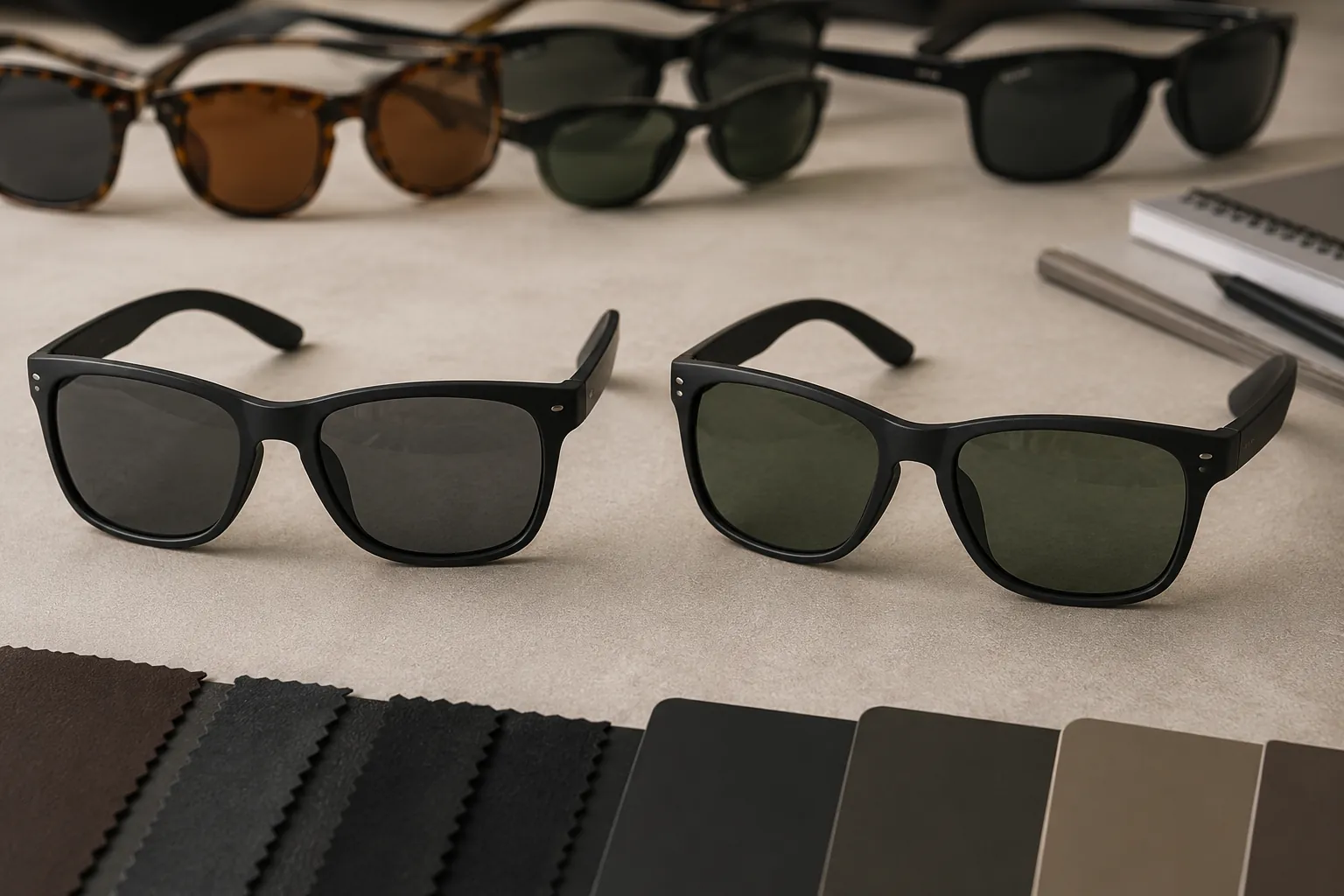
This guide is for brands, importers, distributors, and retailers deciding whether polarized lenses belong in a bulk sunglasses program. The choice is commercial and technical. Match the lens to the sales channel, target customer, retail price, compliance route, and inspection risk before tooling, sampling, or packaging is locked. Polarization can raise perceived value in the right channel. It also adds cost, tighter specification control, and more QC work.
The Buyer Rule That Simplifies the Choice
Use polarized lenses when the customer has a real glare problem and will pay to reduce it. Fishing, boating, driving, resort retail, golf, snow travel, and outdoor work channels often justify polarized lenses because the benefit is easy to show.
Use non-polarized lenses when the sale is driven by style, speed, or price. Fashion racks, festival promotions, giveaway programs, and short seasonal drops often cannot recover the added lens cost. If the buyer mainly wants a trend color, novelty shape, or low opening price, polarization may not improve sell-through enough to matter.
Run the math before upgrading the lens. Compare the added lens cost against realistic retail price and margin after freight, duty, warehousing, retailer margin, and markdown risk. At very low retail prices, polarization can eat too much margin unless the frame is simple and volume is strong. In mid-price programs, it can work when packaging or sales staff explain the benefit clearly. At higher retail prices, customers often expect a functional lens story. Polarization is easier to defend there.
Do not treat polarized as a safety upgrade. It is not. Polarization reduces reflected glare. It does not automatically provide UV protection, impact protection, or compliance with a market standard. Both polarized and non-polarized sunglasses still need the correct UV performance, visible light transmission category, labeling, and documentation for the destination market.
What Polarization Changes in the Lens Stack
A polarized sunglass lens is not just a tinted lens with a different label. It normally uses a polarizing film inside the lens structure or bonded as part of the lens assembly. The construction depends on lens material, curve, tint, coating, target price, and factory process.
TAC polarized lenses are common in commercial sunglasses because they are lightweight, thin, and cost-effective for many fashion and outdoor programs. PC polarized lenses are often used for sportier styles or products that need higher toughness, although final performance still depends on design, coating, thickness, and testing. Nylon lenses can support premium programs, but material and processing costs are usually higher. The lens material affects price, optical consistency, coating choice, durability expectations, and inspection requirements.
Polarization also adds an axis requirement. The polarizing film must be oriented correctly so the finished lens reduces horizontal glare as intended. If the axis is wrong or inconsistent, the lens may look fine in a tray and still perform poorly in use. Buyers should require the supplier to define axis tolerance, inspection method, and acceptance criteria before production. Common QC checks include verifying orientation, confirming left-right lens matching, and comparing production lenses against the approved sample.
Batch control matters. A factory or sourcing partner should be able to trace lens material, tint, coating, lens category, and polarized or non-polarized specification by SKU. If finished lenses come from multiple outside sources without clear batch control, the risk of tint mismatch, axis inconsistency, and left-right variation rises fast.
MOQ, Pricing, and Lead-Time Logic
Polarization adds material cost, handling time, inspection time, and possible scrap. The cost gap depends on lens material, tint, curve, coating, frame construction, decoration, packaging, and order quantity. Buyers should assume polarized lenses need enough volume and a clear retail story to price well.
LumiShades supports an MOQ of 50 pairs per design. That can help with market testing, influencer seeding, buyer presentations, or early channel validation. Better price breaks usually depend on stable specifications and higher order volume. When comparing quotes, keep the frame, lens color, coating, logo method, packaging, and carton specification the same for both polarized and non-polarized versions. Otherwise, the cost comparison is weak.
| Order Situation | Non-Polarized Lens | Polarized Lens | Buyer Note |
|---|---|---|---|
| 50 pairs per design | Best for market tests and content samples | Possible, but unit cost is usually higher | Use when the retail story or buyer interest is already clear |
| 300 pairs per design | Better unit cost and easier color management | Reasonable for niche outdoor, travel, or resort SKUs | Approve a physical sample before packaging is printed |
| 1,000 pairs per design | Strong fit for fashion chains and mixed retail | Often viable for driving, water, and sport channels | Request axis checks, tint records, and SKU-level QC results |
| 5,000+ pairs per design | Lowest cost for mass fashion and promotional programs | Best balance when the channel can sell the feature | Lock lens spec, carton spec, labeling, and golden sample tightly |
Lead time is often driven more by approval speed and material availability than by polarization alone. Standard samples may be possible in about 7 to 10 days when materials and tooling are ready. Bulk production is usually planned after sample approval and deposit, but the actual schedule must be checked against the exact frame, lens, decoration, packaging, and testing needs. New lens colors, mirror coatings, special curves, or retailer-specific packaging can add days. Sometimes weeks. Do not approve a polarized style from photos alone.
Channel Fit: Where Polarized Sells
The sales channel often matters more than frame shape. A buyer supplying marina stores or fishing shops is selling a problem-solution product. A fast-fashion retailer at the checkout counter is selling impulse, color, and price. Same frame. Different trigger.
- Marine, fishing, and beach retail: polarized is usually worth evaluating because water glare is obvious and easy to demonstrate.
- Driving and travel: polarized can work well, but check readability on dashboards, phones, navigation screens, and infotainment displays with the actual lens color.
- Sport and outdoor: polarized can support a higher price when the frame, fit, lens material, and durability expectations match the claimed use.
- Fashion boutiques: use polarized on selected hero SKUs where the feature supports the retail price and can be explained at point of sale.
- Promotional gifts: non-polarized usually wins because budget, logo visibility, and delivery timing often matter more than lens features.
- Kids and novelty: prioritize fit, material safety, UV protection, labeling, and compliance before adding lens upgrades.
Use a simple sales test. Can the team explain the benefit in one accurate sentence? Polarized lenses reduce reflected glare from surfaces such as water, roads, snow, and glass. If that sentence does not help the customer choose the product, keep polarization limited to the SKUs where it clearly supports the purchase decision.
Compliance and Documentation for Bulk Orders
For bulk buyers, the key issue is not whether the lens is polarized. The issue is whether the finished sunglass meets the applicable requirements in the destination market. Relevant compliance references may include CE EN ISO 12312-1 for Europe, ANSI Z80.3 for the United States, FDA registration for US import handling, AS/NZS 1067 for Australia and New Zealand, REACH for chemical restrictions, ISO 9001 for quality management systems, and BSCI for social compliance auditing.
Use precise language in buying files and packaging approvals. CE EN ISO 12312-1 and ANSI Z80.3 are performance standards for sunglasses. AS/NZS 1067 applies to sunglasses and fashion spectacles in Australia and New Zealand. FDA registration is not a product performance test. REACH relates to restricted chemicals in materials and finishes. ISO 9001 and BSCI describe management or audit systems. They do not replace product testing.
Polarized and non-polarized versions of the same frame may need separate review if lens material, tint category, coating, visible light transmission, or labeling changes. A category 3 smoke polarized lens is not the same technical file as a gradient fashion lens. Keep SKU-level records for frame material, lens material, tint, lens category, UV claim, coating, logo method, packaging warning, test report reference, and approved sample version.
Before production, ask the supplier for current documents that match the product and destination market. Do not print compliance marks, UV claims, lens categories, or performance statements unless the supporting file confirms them for the exact SKU or approved product family.
QC Checks That Prevent Returns
Most polarized-lens quality issues come from poor specification control, weak axis inspection, tint inconsistency, left-right mismatch, lens stress, or unclear sample approval. On molded frames, lens seating pressure can create stress marks if lens curve, groove depth, and frame tension are not aligned. On acetate frames, bevel accuracy and hand finishing matter because the lens must sit cleanly without twist, edge lift, or pressure distortion.
A good QC plan checks lens performance and physical fit. Inspect lenses under outdoor light, indoor light, and against a screen because some polarized lenses can interfere with screen visibility depending on screen type and lens orientation. Use a white background to reveal color mismatch. Use a gray background to show left-right variation and tint imbalance. The factory should confirm film orientation, lens pairing, and lens seating before cartons are sealed.
- Approve one physical pre-production sample in daylight, indoor light, and against phone or dashboard-style screens.
- Check UV protection and visible light transmission against the target market standard and required lens category.
- Verify polarization axis on every production batch using a defined inspection method and acceptance limit.
- Compare left and right lens color on white and gray backgrounds under consistent lighting.
- Inspect for edge chips, film bubbles, delamination, coating defects, rainbow stress, loose lenses, and frame distortion.
- Keep one signed golden sample with the factory and one with the buyer for production comparison.
For custom programs, connect the approved sample, production specification, inspection checklist, and packing standard in one buying file. This reduces disputes when a defect appears. The factory and buyer can compare the shipment against the same physical sample and written acceptance criteria.
Retail Price and Packaging Strategy
Polarized sunglasses need packaging language that is clear, accurate, and supportable. A hangtag, pouch print, or insert card may state that the lenses are polarized, describe the intended benefit, identify UV protection only if verified, and include lens category or use restrictions when required by the destination market. Marketing copy should not go beyond the test report or approved technical file.
At low retail prices, spend first on fit, hinge quality, UV performance, clean finishing, and compliant labeling. A weak frame with polarized lenses still feels weak. In the mid-price band, polarization can help justify an upgraded SKU when the feature is visible at point of sale. At higher retail prices, the full package must hold together: lens performance, frame material, finish quality, scratch-resistance expectations, barcode control, carton consistency, and presentation.
Decoration choices affect perceived value. Laser engraving, pad printing, and metal logo plates can strengthen brand presentation, but they do not improve optical performance. Mirrored polarized lenses can look strong in retail photography, but mirror coatings may show scratches, fingerprints, and handling marks more readily than some standard tints. If the product will pass through distributors before reaching stores, confirm inner packaging, carton strength, barcode placement, and handling expectations before production.
A Practical First-Order Sourcing Path
For a first polarized program, do not start with too many frame shapes and lens colors. Start narrow. Choose two or three frames that already match the customer profile, then test polarized and non-polarized versions side by side. The goal is not just to approve attractive samples. The goal is to learn which SKU earns space in the purchase order and which one should stay non-polarized.
A sensible launch may use 50 to 300 pairs per design for validation, then move to larger quantities once sell-through, buyer feedback, or distributor interest is clear. If the channel is already proven, the order can scale faster. Still, the approved sample and technical file must be locked before production. A complete sourcing brief should include target country, retail price, frame reference, lens material, polarized or non-polarized requirement, tint color, lens category target, UV claim, coating, logo method, packaging, carton requirement, barcode needs, and applicable compliance route.
The simpler and more complete the brief, the fewer surprises during sampling, testing, production, and shipment. Buyers who control lens specification, decoration, packaging, and documentation early usually protect margin better later.
Simple rule: buy polarized where glare reduction helps the customer choose the product. Buy non-polarized where price, style, and fast turnover matter more.
Have a custom sunglasses project in mind?
Send us your styles, target market and quantities and we will return a detailed quote with MOQ, lead time and a sample plan.
Get a QuoteWhy source this from Wenzhou with LumiShades
Wenzhou in Zhejiang Province is widely regarded as China’s eyewear manufacturing capital, producing a large share of the world’s sunglasses. That concentration matters to buyers: a deep local supply chain for acetate sheet, hinges, lens blanks, plating and packaging means shorter component lead times, easier color and material matching, and a workforce with decades of eyewear-specific skill. LumiShades has manufactured in this ecosystem since 2009, and our vertical integration — in-house injection molding, acetate cutting, CNC milling, lens tinting, decoration and quality control — means no part of your order is quietly subcontracted to a workshop you cannot audit.
For international buyers, that vertical control translates into accountability. When a single factory owns every step, defects are traced and fixed at source rather than bounced between vendors, and your specifications survive intact from first sample to bulk. For procurement review, buyers can request process records, approved samples, quality checkpoints and project-specific compliance files before placing a bulk order. Required testing and documentation are confirmed against the destination market and product specification rather than assumed from a generic certificate list. Explore our manufacturing capabilities and quality control process to see how this works in practice.
Frequently asked questions
Does polarized automatically mean UV400? No. Polarization and UV protection are different properties. Polarization reduces reflected glare. UV protection depends on lens material, additives, coating, and verified performance. Specify the required UV claim and test the finished sunglass to the applicable market standard, such as CE EN ISO 12312-1, ANSI Z80.3, or AS/NZS 1067.
Should every color in a sunglasses range be polarized? Usually not. Use polarized lenses on SKUs where glare reduction supports the sale, such as driving, beach, fishing, boating, travel, snow, or outdoor retail. Keep price-sensitive fashion colors non-polarized unless the channel, packaging, and retail price can recover the added lens cost.
Will polarized lenses increase lead time? They can, especially if the program uses a new tint, mirror coating, special curve, nonstandard lens material, or extra testing. For repeat styles with available materials, the difference may be small. Confirm sample timing, bulk production timing, testing schedule, and packaging approval dates in writing before placing the order.
What should I check before approving a polarized sample? Approve a physical sample, not only photos. Check glare reduction, UV performance, visible light transmission category, lens color match, polarization axis, screen readability, lens fit, coating quality, frame stress, packaging claims, and labeling. Keep the approved sample as the golden sample for production inspection.
Can I start with a small polarized order? Yes. A small order can help with buyer meetings, retail testing, content creation, or distributor validation. LumiShades supports 50 pairs per design, but unit cost is usually better at higher quantities. Keep the first order focused. Limit frame shapes, lens colors, and decoration changes so the test produces clear commercial results.
Ready to start?
Explore our wayfarer sunglasses or request a quote — our sales team replies within 12 hours.
Request a Quote