
Polarized Sunglasses Wholesale: Best Channels to Sell
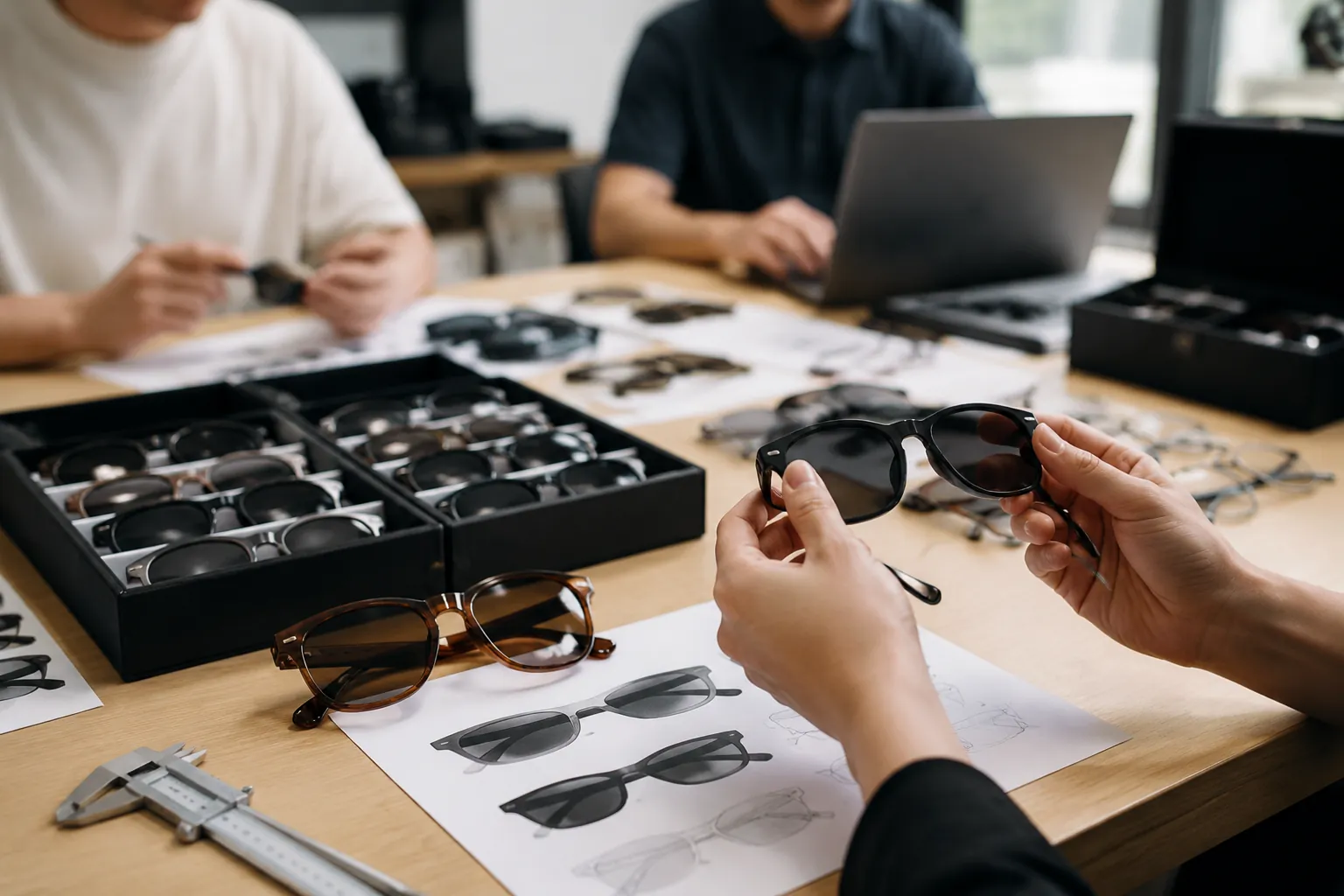
Polarized lenses are not always the better buy. For brands, importers, distributors, and retailers, the real question is simple: will polarization improve sell-through, support a higher retail price, or reduce returns in a specific channel? This guide shows where polarized sunglasses usually work well, where they often miss, and how to weigh the extra lens cost against margin, MOQ, lead time, and compliance risk. It also shows how a factory like LumiShades can build a polarized spec without adding avoidable cost or complexity.
What polarization changes
Polarization reduces glare by filtering horizontally reflected light. It helps on water, roads, wet pavement, snow, and glass. A tinted lens cuts brightness. A polarized lens does more.
That difference matters in wholesale. The benefit has to be easy to explain. In fishing, driving, and outdoor channels, shoppers usually notice it fast. In fashion-only channels, the value can be harder to sell. If the story is weak, conversion slips.
Polarization is also a production spec, not a style option. The polarizing film has to be aligned, bonded, and finished correctly. If the orientation is off, the lens may look fine and still perform badly. Buyers should ask for clear sample approval, repeatable QC, and consistent output across the full build. That matters even more with custom tint, coating, or decoration.
LumiShades can build polarized programs alongside injection molding, acetate cutting, CNC processing, lens tinting, and decoration. That is useful because the frame and lens specs should be developed together. A strong lens in a weak frame still feels weak. And a premium frame with poor lens consistency will bring complaints.
Channels that usually justify the cost
Polarized sunglasses sell best where glare is obvious and the customer already expects a functional lens. In those channels, the product story does part of the selling.
- Outdoor and sport retailers: fishing, boating, golf, cycling, hiking, and mountain use all benefit from reduced glare.
- Travel and duty-free: shoppers often buy for driving, vacations, beach use, and long sun exposure.
- Optical and eyewear distributors: the upgrade is easier to explain to trade buyers and downstream accounts.
- Workwear and safety-adjacent programs: glare reduction fits roads, water, and reflective surfaces.
In these channels, the premium is easier to defend because the benefit is concrete. Sales teams can say "better for driving" or "cuts glare on the water." That is stronger than "premium lens." Online, the same message should appear in product copy, images, or a short FAQ.
Fashion retail can still work. But the assortment has to stay disciplined. If the program is frame-led and price-sensitive, adding polarized versions too early can blur the pricing ladder. One base style and one polarized version is often cleaner. Clear step-up. Clear use case.
Where polarized often misses
Polarized lenses do not win every channel. In some programs, they slow movement because the extra cost is real and the value is not obvious. That usually happens when the shopper buys on fashion, color, or price instead of performance.
| Channel | Why polarization helps | Where it can hurt | Buyer takeaway |
|---|---|---|---|
| Fishing / boating | Glare reduction is easy to see on water and wet surfaces | Higher unit cost and tighter lens/frame fit requirements | Usually worth it if the retail price can support the step-up |
| Driving / travel | Visible benefit on roads, glass, and bright travel conditions | Some shoppers cannot compare lens types in store | Good mid-tier polarized category with clear signage and product education |
| Fashion retail | Can support premium pricing on stronger frame stories | Many customers buy by shape and color first | Use on better-margin styles with shelf or PDP education |
| Promotion / volume programs | Can strengthen the product story without changing the frame silhouette | Extra cost can break entry-price targets | Non-polarized often wins when the brief is pure value |
There is another point buyers should not ignore: polarized lenses can make some LCD screens, dashboards, and instrument displays harder to read at certain angles. That is expected. Not a defect. For driving-focused programs, it does not rule out the product. It does mean the lens should be tested in real viewing conditions before volume approval.
The rule is simple. If the shopper needs a functional reason to buy, polarized is easier to sell. If the shopper only wants a look, the added lens cost may not improve margin.
How added cost affects margin
Factory cost depends on lens material, tint, coating, polarizing film, order size, and frame complexity. A polarized lens usually costs more than a plain tinted lens because it adds another functional layer and more process control. The gap is usually bigger on small orders and smaller at volume.
At LumiShades, MOQ starts at 50 pairs per design, with better pricing at higher quantities. That matters because polarization should be judged by SKU, not assumed to fit every style. A mirrored polarized lens with custom decoration will generally cost more than a standard polarized lens in a simple frame. Each added process adds time. And risk.
The decision should be made at the product level. If the retail price does not change, a polarized version has to earn its place through higher conversion, fewer returns, or a stronger margin mix. If it does none of those things, the extra cost is dead weight.
A practical sourcing rule is to model landed cost before approving the spec:
- Estimate the retail step-up the channel can accept.
- Review landed margin after freight, duty, packaging, and expected waste.
- Compare forecast sell-through against the non-polarized alternative.
- Polarize only the styles with the clearest use case and strongest margin support.
For larger assortments, a mixed strategy is usually safer. Polarize the styles with a real functional reason. Keep the rest simple. That protects entry price and keeps one weak SKU from pulling down the whole range.
Spec choices that change performance
Polarized sunglasses are not one spec. Lens color, base curve, thickness, frame material, and finish all affect performance, comfort, and perceived quality. Treat them as one build. Not separate boxes.
Gray polarized lenses are the most neutral choice because they preserve color more evenly. Brown and amber polarized lenses often feel stronger in contrast-heavy conditions and are common for driving or field use. Green can work in lifestyle assortments too, but the final choice should match the channel and the brand position.
Wrap and curvature matter as well. A moderate base curve usually fits mainstream retail. Deeper wraps can improve side coverage for sport or outdoor use. As the curve increases, lens fit, edge finishing, and frame tolerance matter more. Small deviations are easier to see on higher-wrap frames.
Frame material changes the production picture too. Injection frames are usually better for repeatability and volume pricing. Acetate supports a stronger fashion look and a richer surface finish, but it needs tighter cutting and polishing control. Metal and mixed-material frames may need more precise tolerances, especially when lens thickness or curvature changes.
- Mirror over polarized: adds a premium look, but finish consistency needs close control.
- Anti-scratch coating: helps perceived durability, especially in travel and outdoor programs.
- Case or pouch: supports retail value and reduces post-sale damage risk.
Ask for sample approval on lens tint, polarization effect, symmetry, hinge feel, optical clarity, and coating appearance. Check the sample in bright light, on a real face, and with the intended packaging. A lens that looks fine on a bench may behave differently once it is mounted and worn.
Compliance and testing to request
Polarized does not replace compliance. You still need the right documents for the market you sell into, and the test basis must match the exact production build. LumiShades lists these certifications and standards where relevant to the program: CE EN ISO 12312-1, FDA registration, ANSI Z80.3, AS/NZS 1067, REACH, ISO 9001, and BSCI.
Keep the process specific. First, confirm which standard applies to the destination market and channel. Second, make sure the tested sample matches the intended production spec for lens material, tint, coatings, frame construction, and decoration. Third, freeze the build before mass production so the factory does not change materials or finishes in a way that changes the result.
That last step matters. Compliance follows the bill of materials, not just the product name. A different lens tint, coating, frame finish, or decoration method can affect light transmission, impact behavior, or chemical compliance. If the order includes private label printing, mirror finish, or a new lens color, ask whether those changes were in the test basis.
REACH matters for material restriction control in the EU supply chain. ANSI Z80.3 and AS/NZS 1067 matter when those standards are required by the customer or market. FDA registration is often requested by U.S. buyers, but it is not a substitute for product conformity. Treat all required documents as one compliance file, not as a set of marketing badges.
If you are buying custom polarized sunglasses, request the test basis in writing before mass production. That protects both sides if the shipment is later audited or questioned by a distributor.
Sampling and production timing
Polarized programs need a clean sample process because small errors are easier to miss in photos than in wear. At LumiShades, samples typically take 7 to 10 days. Bulk production usually takes 25 to 35 days, depending on frame type, decoration method, and order size. The schedule is manageable. But only if the spec is locked before the purchase order is released.
The most reliable process is to sequence the job like this:
- Confirm the target market, use case, and retail price band.
- Choose polarized or non-polarized by SKU, not by assumption.
- Approve frame material, lens color, and decoration method.
- Check sample fit, glare reduction, coating appearance, and packaging.
- Freeze the BOM and move to bulk with the same approved build.
Decoration method matters because it can affect both lead time and rejection risk. Pad printing is efficient for simple logos, but it may not suit every surface or finish. Laser marking can create a cleaner look on metal or premium surfaces, though it can require more setup. Hot-stamp and metallic transfers can look more premium, but they need stable surface preparation and process control. If the order uses multiple frame materials or lens colors, ask whether the decoration method is consistent across the range.
Do not assume a polarized sample will match bulk if the production lot changes colors, coatings, or materials. A sample is an approval reference. It is not a guarantee. The real test is whether the factory can repeat the same orientation, finish, and assembly quality at volume.
Buying rule of thumb
Polarized lenses make sense when the channel sells utility, the customer can see the benefit quickly, and the retail price can carry the extra cost. They are weaker when the buyer is chasing the lowest entry price or when the merchant cannot explain why the lens is different.
Use polarized when:
- the channel includes driving, water, outdoor sport, or travel;
- you can charge more than the non-polarized version;
- you need a clearer functional story without changing the frame;
- your quality control and compliance file are already tight.
Stay with non-polarized when:
- the program is pure price;
- the style is mostly fashion-led;
- you need to keep inventory risk low across many SKUs;
- you cannot support extra product education at retail.
For most B2B buyers, the best answer is a mixed assortment. Polarize the styles with a clear use case. Keep the rest simple. That usually delivers better margin discipline than forcing every frame into the same spec.
With a supplier like LumiShades, the advantage is control: in-house manufacturing, known lead times, documented compliance scope, and MOQ that does not force excess inventory. Buy polarization where it earns its keep. Not where it only looks premium on a spec sheet.
Have a custom sunglasses project in mind?
Send us your styles, target market and quantities and we will return a detailed quote with MOQ, lead time and a sample plan.
Get a QuoteWhy source this from Wenzhou with LumiShades
Wenzhou in Zhejiang Province is widely regarded as China’s eyewear manufacturing capital, producing a large share of the world’s sunglasses. That concentration matters to buyers: a deep local supply chain for acetate sheet, hinges, lens blanks, plating and packaging means shorter component lead times, easier color and material matching, and a workforce with decades of eyewear-specific skill. LumiShades has manufactured in this ecosystem since 2009, and our vertical integration — in-house injection molding, acetate cutting, CNC milling, lens tinting, decoration and quality control — means no part of your order is quietly subcontracted to a workshop you cannot audit.
For international buyers, that vertical control translates into accountability. When a single factory owns every step, defects are traced and fixed at source rather than bounced between vendors, and your specifications survive intact from first sample to bulk. For procurement review, buyers can request process records, approved samples, quality checkpoints and project-specific compliance files before placing a bulk order. Required testing and documentation are confirmed against the destination market and product specification rather than assumed from a generic certificate list. Explore our manufacturing capabilities and quality control process to see how this works in practice.
Frequently asked questions
Which sunglasses channels benefit most from polarized lenses? The strongest fit is usually fishing, boating, driving, travel, golf, and outdoor retail. In those channels, glare reduction is easy to explain and the customer can feel the benefit quickly. If your channel is more fashion-led, test the price premium before expanding the range.
Do polarized lenses always improve sales? No. Polarization helps only when the buyer values glare reduction enough to pay more or when it reduces returns. If the shopper is choosing mainly by style or price, the premium may not convert. The safest approach is to test one polarized SKU and compare sell-through against a non-polarized control.
What MOQ should I expect for custom polarized sunglasses? MOQ depends on the supplier and the build. For LumiShades, MOQ starts at 50 pairs per design, and pricing improves at higher volumes. Ask for a quote by exact frame, lens, coating, and decoration spec so you can compare true landed cost.
How long do samples and bulk production take? At LumiShades, samples typically take 7 to 10 days and bulk production usually takes 25 to 35 days, depending on the frame type, decoration method, and order size. To keep timing accurate, freeze the BOM before production starts and avoid late changes to lens color, coating, or logo method.
Which compliance documents should I request for polarized eyewear? Request the standards that apply to your market and channel, plus proof that the tested sample matches the production build. Relevant examples include CE EN ISO 12312-1, FDA registration, ANSI Z80.3, AS/NZS 1067, REACH, ISO 9001, and BSCI where applicable to the program.
Should I polarize every SKU in a launch? Usually not. A better approach is to polarize only the styles with a clear functional reason, then keep the rest non-polarized to protect entry price and reduce inventory risk. That gives you a cleaner assortment and makes the premium easier to defend.
Ready to start?
Explore our rimless sunglasses or request a quote — our sales team replies within 12 hours.
Request a Quote