
Pilot Orders for Custom Sunglasses: Qualify First
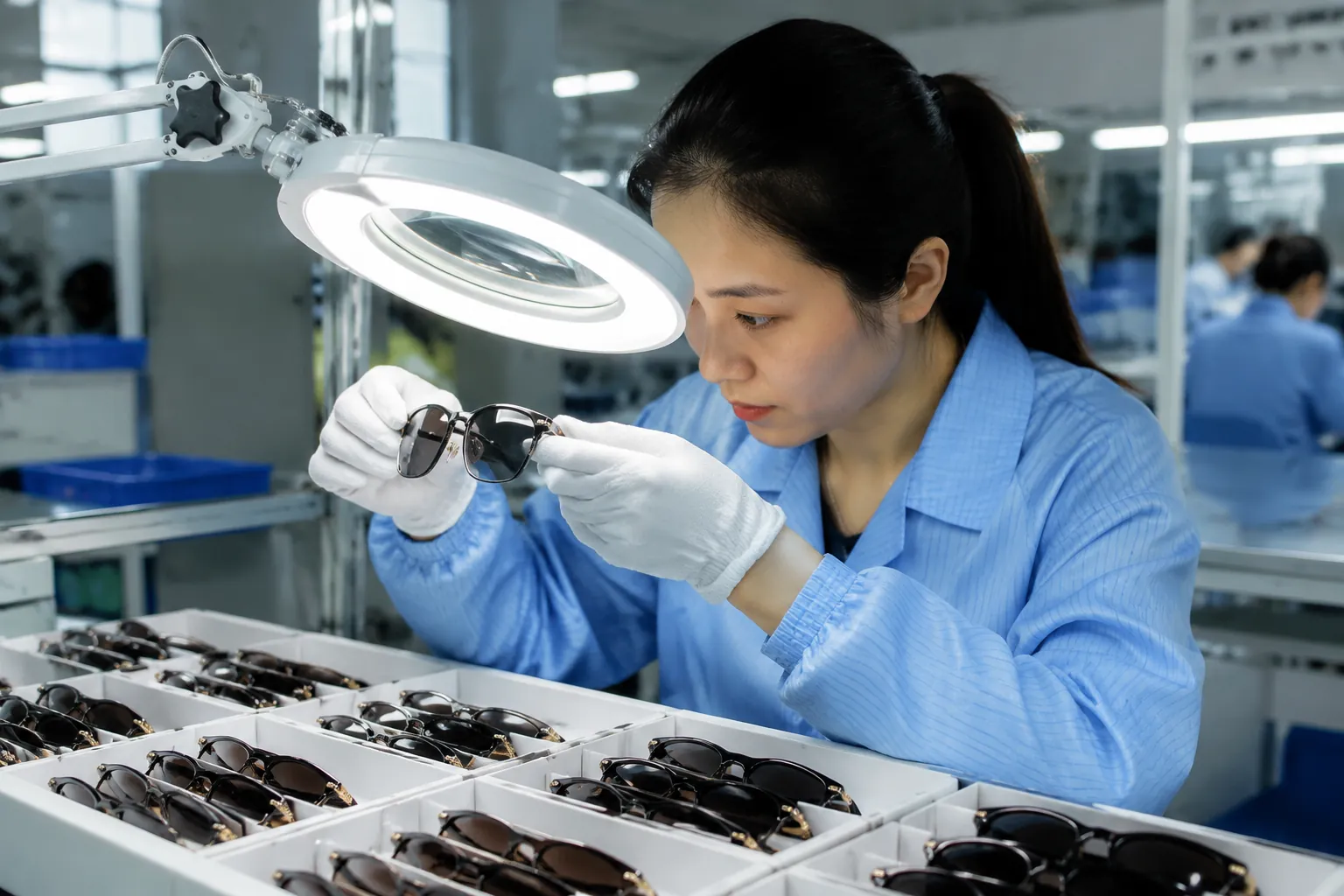
This guide is for brand owners, importers, distributors, and retailers buying custom sunglasses in volume. A pilot order is not a price exercise. It is a controlled production run used to verify whether a supplier can make the approved product consistently, document what it made, and deliver it in the agreed packaging and timeline. Done properly, a pilot shows you the real risks before you commit more cash, more SKUs, and harder launch dates.
What a pilot order should prove
A pilot order should answer one practical question: can this supplier make the approved sunglasses repeatedly, control the process, and ship exactly what was confirmed in writing?
In custom eyewear, failures rarely stay in one area. A decent frame can still arrive with the wrong barcode, weak lens documentation, or sloppy pack-out. That is the point of the pilot. It tests the whole chain, not just the sample look.
- Workmanship: hinge fit, lens seating, temple alignment, front symmetry, logo position, finish consistency, and scratch protection during assembly and packing.
- Compliance control: whether the production lens and labeling match the requirements of your target market, and whether the supplier can provide relevant test documentation or support testing.
- Packaging execution: barcode content, carton marks, accessory count, warning labels, inner-pack quantity, and SKU separation.
- Delivery discipline: whether approvals, material preparation, assembly, inspection, and shipment happen on the dates confirmed in writing.
For sunglasses, the pilot also needs to show repeatability. Not one good pair. Repeated good pairs. Decoration placement should stay consistent. Assembly should stay stable. Appearance should hold from carton to carton.
If a supplier cannot control a small run, do not expect better control at higher volume.
Ask direct questions about the operating setup. Which processes are done in-house? Which are outsourced? If molding, lens tinting, decoration, packaging, and final QC are split across multiple subcontractors, traceability gets slower and corrective action gets harder. That does not rule the supplier out. It does mean you need tighter documentation and clearer milestone control.
Choose a pilot size that creates real production pressure
A pilot should be big enough to move past sample-room handling and into normal production control. Too small, and the factory can hand-finish the order and hide weak processes. Too large, and you may pay for a large mistake.
| Pilot size | Best use | What it tests well | What it does not test well |
|---|---|---|---|
| 50 pairs | Early supplier screen | Basic fit, logo application, lens appearance, general finish | Line stability, packaging accuracy, repeatability across cartons |
| 100-300 pairs | Most first custom orders | Production consistency, packaging discipline, communication, milestone control | Peak-season capacity across multiple lines |
| 500-1000 pairs | Pre-scale validation | Material planning, batch control, bulk QC, shipping coordination | Full stress test of very large programs |
| 3000+ pairs | Scale order, not pilot | Commercial efficiency and mature output | Low-risk first qualification |
For many overseas buyers, 100 to 300 pairs per design is the practical range. It usually forces real scheduling, accessory preparation, packaging print work, and final inspection. It also gives you enough units to inspect by carton, not just by a few handpicked pieces.
Use lead time as part of the test. The exact schedule depends on tooling status, material availability, lens treatment, packaging complexity, and season. Do not accept a fast quote at face value. Ask the supplier to break the timeline into milestones: sample approval, packaging confirmation, material readiness, assembly, final inspection, and shipment booking.
A supplier that can explain its lead time clearly is usually lower risk than one that only promises a short total number of days.
Build the pilot specification so the factory cannot guess
Weak purchase orders create avoidable defects. If the specification is vague, the supplier fills the gaps with assumptions about material, finish, packaging, or inspection standard. Your pilot PO should read like a build sheet, not a rough description.
- Frame material: injected polycarbonate (PC), TR90, acetate, metal, or combination construction. State the intended material clearly and identify any visual or functional requirements that matter to the product.
- Lens material and function: PC, nylon, or TAC polarized if used. Define tint type, lens category if applicable, UV requirement, and the destination-market standard such as CE EN ISO 12312-1, ANSI Z80.3, or AS/NZS 1067.
- Dimensions and tolerance: lens width, bridge, temple length, front width, and any fit-critical dimensions. If you have tolerance requirements, state them in writing. If you do not, disputes become harder to resolve later.
- Decoration method: pad print, laser engraving, hot stamping, foil, or metal logo insert. State the artwork revision, color reference, exact position from a fixed point, and any adhesion or rub-resistance expectation.
- Packaging pack-out: polybag or unit box, pouch, cleaning cloth, leaflet, barcode format, carton quantity, and master-carton marks.
- Inspection rule: AQL level if used, critical defects, major defects, minor defects, and any required 100% checks such as hinge function, barcode verification, or lens scratch inspection.
Be precise. A logo can look acceptable in a photo and still fail at retail. Write requirements in measurable language tied to a fixed reference point on the product. Do the same for carton quantity, barcode placement, and accessory count.
The material process matters too. If the product uses acetate, ask how the supplier controls sheet selection, machining, polishing, and color consistency. If it is injected, ask how it controls resin batches, mold maintenance, color matching, and trimming.
Specific questions expose weak process ownership fast.
Use the pilot to test process control, not just appearance
A clean-looking finished pair can still come from a weak process. The pilot should test whether the supplier has checkpoints that stop defects before they become bulk failures.
- Pre-production control: approved sample, approved artwork, approved barcode file, and packaging artwork locked before release.
- Incoming inspection: frame components, hinges, screws, lenses, pouches, cloths, and cartons checked against the approved specification.
- In-line control: first-piece approval for decoration, lens-fitting checks, hinge and screw consistency, opening-and-closing feel, and pack-out verification.
- Final QC: cosmetic defects, symmetry, hinge function, accessory count, barcode scan, and carton-mark verification.
Ask for evidence at each step: a short report, dated photos, or packing records. It does not need to look polished. It does need to show discipline and traceability. If updates stop after deposit payment, that is useful qualification data too.
For regulated markets, document control matters as much as physical product control. The supplier should be able to explain what test reports already exist, what testing still needs to be arranged, and how labeling will match the destination market.
Keep the categories separate. CE EN ISO 12312-1, ANSI Z80.3, and AS/NZS 1067 relate to sunglass performance and labeling requirements in relevant markets. REACH concerns chemical compliance for applicable materials. They are not interchangeable. If the factory mentions ISO 9001 or BSCI, treat those as management or social-compliance indicators, not proof that the sunglasses themselves meet lens-performance requirements.
Score the pilot with a weighted pass-fail framework
Do not judge a pilot on gut feel. Use a scorecard so one attractive sample does not hide repeated execution failures. Weight the issues that create the most cost and disruption for your business.
| Category | What to measure | Pass mark | Weight |
|---|---|---|---|
| Workmanship | Alignment, hinge action, lens fit, finish defects, logo placement | Within agreed inspection standard; no critical functional failures | 35% |
| Packaging accuracy | Accessories, labels, barcodes, carton counts, carton marks | Zero critical packing errors | 20% |
| Compliance/documentation | Test reports, labeling, declarations, file traceability | Complete and appropriate for the target market | 20% |
| Communication | Response speed, issue escalation, revision control, milestone updates | Meets agreed communication rules | 10% |
| On-time delivery | Sample and bulk shipment against confirmed dates | Meets agreed timeline or approved revision | 15% |
Set the pass rule before production starts. For example, you may require a minimum total score and automatic failure if there is a critical compliance gap, a barcode error that blocks retail intake, or repeated workmanship defects outside the agreed standard.
Tell the supplier that the order is a qualification run. Good factories usually respond better when they know process discipline is under review, not just product appearance.
Common pilot-order failures and what they usually mean
Not every defect means the factory is unusable. What matters is the pattern, the likely root cause, and whether the corrective action is credible and documented.
Failure mode: sample looks good, but bulk logo print shifts between pairs.
Likely cause: weak fixture control, missing first-piece approval, or inconsistent operator setup during production.
Failure mode: frame color varies within the same PO.
Likely cause: inconsistent material control, color matching issues, or poor batch segregation.
Failure mode: lenses scratch during packing or transport.
Likely cause: poor handling, inadequate protection, dirty work surfaces, or rushed final packing.
Failure mode: outer carton is correct, but inner labels or barcodes are wrong.
Likely cause: weak packaging verification, file-revision confusion, or lack of scan checks before sealing cartons.
Failure mode: shipment misses the confirmed date with little warning.
Likely cause: sales confirmed a date without production alignment, or the supplier has weak scheduling control.
If the supplier catches the issue internally, isolates the affected quantity, and gives you a clear corrective and preventive action plan, that is a good sign. If it argues over visible defects, cannot identify where the error entered the process, or keeps changing the story, scaling up is risky.
What to inspect before releasing the next PO
When the pilot arrives, inspect by carton and by unit. Do not rely on the top layer or a single display sample.
- Count unit packs against the packing list and carton marks.
- Scan barcodes to confirm readability and SKU match.
- Inspect a meaningful sample of pairs for symmetry, temple spread, lens seating, and visible finish defects.
- Open and close hinges repeatedly to compare screw tension and movement feel.
- Review logo position and print quality across multiple units under consistent lighting.
- Check accessory count: pouch, cloth, leaflet, sticker, tag, or insert card.
- Compare random production pairs against the approved sample and approved specification sheet, not memory.
If you supply retail chains, also test shelf-readiness. Confirm that unit labels, barcode formats, carton labels, and warning labels match the retailer's intake requirements. Many first-order failures happen in packaging and labeling, not in frame production.
Document every issue with photos, carton number, affected quantity, and severity. Then ask for a corrective action report covering root cause, containment, and prevention. A supplier that can do this well is usually a safer long-term partner than one that only offers a discount after a problem appears.
How to scale after a successful pilot
If the pilot passes, do not jump straight into a large mixed order with new colors, new packaging, and new lens treatments all at once. Scale one variable at a time.
A practical progression is:
- Step 1: repeat the same approved design at a higher quantity to confirm consistency.
- Step 2: add only one controlled change, such as a second frame color or upgraded packaging.
- Step 3: expand to multiple SKUs once documentation control, QC reporting, and delivery performance remain stable.
Keep the approved specification pack frozen during the first scale-up. Last-minute changes to logo artwork, pouch material, carton quantity, barcode format, or lens tint create confusion and can erase what the pilot actually proved.
Also verify the supplier's operating structure before expanding. If it claims ISO 9001, ask which site the certificate covers. If it presents BSCI, confirm which entity was audited. If the product will enter the US market and the supplier mentions FDA registration, confirm what is registered and whether that registration is relevant to your product category.
Administrative credentials support qualification. They do not replace product review, inspection, or testing.
Have a custom sunglasses project in mind?
Send us your styles, target market and quantities and we will return a detailed quote with MOQ, lead time and a sample plan.
Get a QuoteWhy source this from Wenzhou with LumiShades
Wenzhou in Zhejiang Province is widely regarded as China’s eyewear manufacturing capital, producing a large share of the world’s sunglasses. That concentration matters to buyers: a deep local supply chain for acetate sheet, hinges, lens blanks, plating and packaging means shorter component lead times, easier color and material matching, and a workforce with decades of eyewear-specific skill. LumiShades has manufactured in this ecosystem since 2009, and our vertical integration — in-house injection molding, acetate cutting, CNC milling, lens tinting, decoration and quality control — means no part of your order is quietly subcontracted to a workshop you cannot audit.
For international buyers, that vertical control translates into accountability. When a single factory owns every step, defects are traced and fixed at source rather than bounced between vendors, and your specifications survive intact from first sample to bulk. We back this with 15+ years of experience, shipments to 60+ countries, more than 5 million pairs produced per year and a 98.5% on-time delivery rate. Our certifications — CE EN ISO 12312-1, FDA registration, ANSI Z80.3, AS/NZS 1067, REACH, ISO 9001 and BSCI audit — mean the compliance documentation your market requires already exists. Explore our manufacturing capabilities and quality control process to see how this works in practice.
Frequently asked questions
Is 50 pairs enough for a first factory test? Usually only for an early screen. A 50-pair run can help you check general finish, logo execution, and whether the product broadly matches the sample. It usually does not test packaging discipline, repeatability across cartons, or normal production control. If your goal is supplier qualification rather than sample approval, 100-300 pairs per design is typically more useful because it forces the supplier to run a more realistic process. Ask yourself what you need to prove: appearance only, or actual execution.
What standards should I ask about for sunglasses sold in different markets? Start with the destination market, then request the relevant lens-performance and labeling standard. Common references are <strong>CE EN ISO 12312-1</strong> for applicable European-market requirements, <strong>ANSI Z80.3</strong> for the US market, and <strong>AS/NZS 1067</strong> for Australia and New Zealand. Separately, ask about <strong>REACH</strong> if chemical compliance is relevant to your materials or market. If the supplier shows <strong>ISO 9001</strong> or <strong>BSCI</strong>, understand that those do not replace sunglass performance testing. Action step: ask the supplier to send the exact report, declaration, and labeling format it plans to rely on for your SKU, not a generic company certificate.
How fast should a factory deliver samples and a pilot bulk order? There is no universal timeline for every project because lead time depends on mold status, lens treatment, decoration method, packaging complexity, and season. A better approach is to ask for a milestone schedule: sample confirmation, artwork approval, packaging approval, material readiness, production start, inspection date, and shipment date. Then require the supplier to confirm which steps are already prepared and which are still assumptions. Action step: do not compare suppliers only by total days quoted; compare how clearly they explain the schedule and whether they hit the agreed milestones.
Should I use the pilot order to test custom packaging too? Yes. If your final program includes custom unit boxes, pouches, cloths, barcodes, carton marks, warning labels, inserts, or retail stickers, include them in the pilot. Packaging and labeling errors are a common cause of destination rework, retailer chargebacks, and warehouse delays. A plain-product pilot leaves a major risk untested. Action step: send final barcode files, carton-mark format, and pack-out rules before pilot production starts, then inspect the received goods against those files carton by carton.
What is the biggest warning sign after a pilot order goes wrong? The biggest warning sign is the supplier's response. If it cannot explain what failed, where in the process the failure started, how much quantity was affected, and what control will prevent it from happening again, the risk of repetition is high. A good corrective action should identify root cause, immediate containment, and a specific preventive change such as fixture revision, an added inspection point, or stronger file-revision control. Action step: before placing the next PO, require a written corrective action report and check whether the new control has actually been put in place.
Ready to start?
Explore our rimless sunglasses or request a quote — our sales team replies within 12 hours.
Request a Quote