
ODM vs OEM Sunglasses: Risk, Speed, and Margin
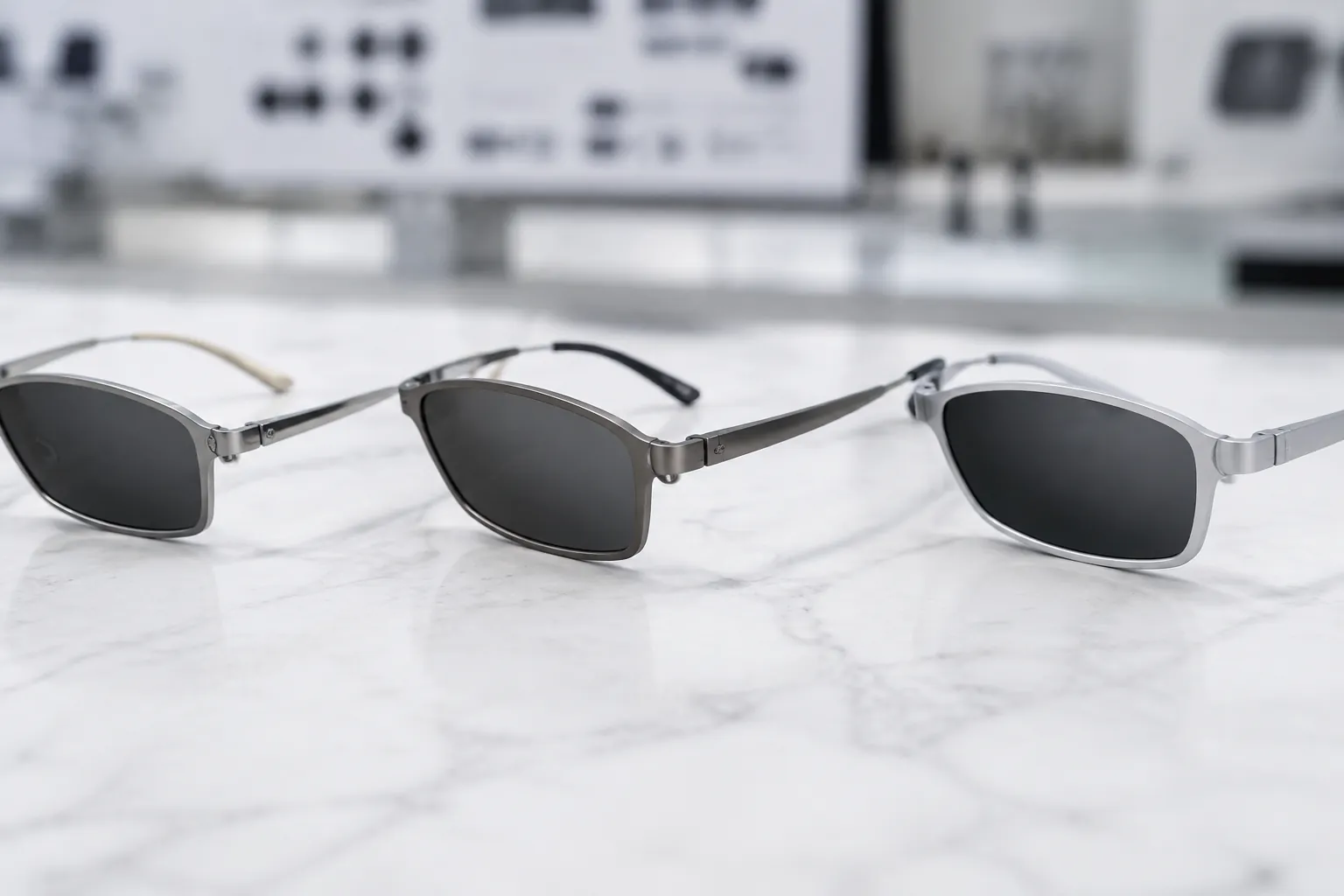
This guide is for brand owners, importers, distributors, and retail buyers choosing between an existing factory platform and a fully custom frame. The choice is commercial first. Not creative first. Pick the wrong model and you can burn time in development, commit cash too early, or end up with a product that does not stand out. Pick the right one and you match development effort to expected volume, target price, sales channel, and compliance needs. The comparison below focuses on unit economics, process risk, lead time, customization limits, and the quality checks that should drive the decision.
Start with the business case, not the sketch
Many buyers start with mood boards, color chips, and reference images. That is backward. The first question is commercial: are you optimizing for speed, lower risk, or a frame shape that is central to your brand?
ODM usually means choosing an existing factory frame platform and customizing around it. The base structure already exists. The front shape, lens groove, hinge position, and main production process are already set. Changes are usually limited to color, lens tint, logo application, packaging, labels, and selected hardware finishes.
OEM usually means the frame is developed to the buyer's specification. That may include a new mold for an injected style, a custom acetate cut, a revised temple profile, a different bridge fit, a custom metal part, or a unique lens shape. OEM makes more sense when shape, fit, or structural detail is part of the product promise.
The real difference is simple. Under ODM, the platform stays the same. Under OEM, it changes. ODM removes variables because the platform is already known. OEM adds variables. That can raise cost and extend lead time, but it can also create stronger differentiation.
Before you ask for quotes, define four basics: expected order volume per style, required ship date, target retail or wholesale price, and the standards required for the destination market. Those four points usually decide the sourcing model.
Where ODM wins and where OEM earns its keep
| Factor | ODM | OEM |
|---|---|---|
| Launch speed | Usually faster because the factory starts from an existing frame platform and proven process. | Usually slower because prototypes, engineering review, and approval rounds are needed before mass production. |
| Upfront cost | Lower. Costs are commonly tied to sampling, artwork setup, packaging development, and freight. | Higher. Costs can include prototype development, tooling or mold charges, special hardware development, and additional sample rounds. |
| MOQ fit | Often better for lower-volume tests or broader assortment trials. | Usually easier to justify when repeat orders or higher volumes are expected. |
| Brand differentiation | Moderate. Differentiation comes mainly from color, lens treatment, branding, packaging, and merchandising. | Higher. Shape, fit, trim, construction, and material combinations can be designed around the brand. |
| Technical risk | Lower because the construction is already in use. | Higher because new geometry or new parts may need adjustment during development and first production. |
| Margin protection | Often stronger when the market values speed, accessible pricing, and acceptable styling over exclusivity. | Often stronger when customers recognize and pay for product identity, fit, and details that are harder to copy. |
| Repeatability | Generally strong when materials, lens specifications, and decoration methods stay consistent. | Can be strong after validation, but early runs usually require closer quality control because the design is newer. |
If you sell into value retail, promotions, travel retail, seasonal programs, or fast assortment refreshes, ODM often fits better. If you are building a premium private label, selling through boutiques or optical channels, or relying on a signature silhouette, OEM usually has the stronger long-term case.
What you can change under each model
Buyers often misread the limits. They assume ODM is too rigid and first-time OEM should be heavily customized. Both assumptions cause trouble. The practical question is whether the structural frame platform changes.
- Typical ODM customization: frame color, acetate pattern where the platform supports acetate, standard lens tints such as smoke, brown, green, or blue, gradient lenses, mirror treatments, polarized lens upgrades where available, logo print, laser marking where suitable, packaging, hangtags, barcode labels, and selected hardware finishes.
- Typical OEM customization: new front shape, different eye size and bridge size, temple thickness, bevel profile, logo recesses built into tooling, custom metal trim, hinge construction changes, custom lens contour, custom nose-pad geometry, and a different material route such as injection, TR, metal, or acetate.
- Changes that often trigger extra engineering: very flat fashion fronts, deep wrap curves, thin sections that approach material limits, oversized lenses, mixed materials, or decorative parts that add weight or assembly complexity.
Material choice matters because it changes both cost and production behavior. Injection-molded frames can be efficient at volume once tooling is set, but structural changes often require mold changes. Acetate gives a premium feel and deeper pattern variation, but it usually needs more machining, polishing, and fitting. Metal styles create a different look and lighter visual profile, but they bring extra considerations around plating quality, solder points, alignment, and nose-pad assembly.
Decoration also needs to match actual use. Pad printing is common and cost-effective, but it can wear faster in high-contact areas. Laser marking can last longer on suitable surfaces, but the visual effect is different. Applied logo plates can look premium, but they add assembly steps and demand precise placement. A good supplier should tell you not only what is possible, but what is likely to last.
Cost structure: piece price is not the whole story
Separate piece price from development cost. Do not mix them. Many sourcing mistakes start there. ODM usually lowers development cost because the platform already exists. OEM can still make sense, but only if expected demand or pricing power can absorb the added setup.
On an ODM project, common added costs include sample making, branding setup, packaging development, and logistics. On an OEM project, added costs may include technical drawing or CAD work, prototype rounds, tooling or mold fabrication, custom hardware development, and correction rounds after fit or cosmetic review.
Quote comparison needs discipline. A lower quote is not automatically a better buy. The gap may come from materials, lens type, hinge quality, finishing standard, packaging specification, inspection level, or who pays for testing. Two sunglasses that look similar in photos can perform very differently in lens quality, cosmetic consistency, durability, and compliance support.
When you review quotations, ask the supplier to break out at least these points: frame material, lens material, lens treatment, polarization if applicable, logo method, packaging specification, sample cost, tooling cost if any, testing support if required, and inspection standard. That is the only way to compare offers fairly.
If the project is a first market test, lower sunk cost usually matters more than theoretical unit savings at higher volume. If the project is meant to become a repeat core style, then development cost should be spread across the expected life of the program, not judged only on the first order.
Lead time: delays usually start before production
Factories do not usually miss dates because final assembly takes too long. Delays more often come from slow approvals, incomplete artwork, packaging revisions, material substitutions, or compliance issues raised too late. That is the pattern.
- Style selection or design brief: timing depends on buyer readiness. It moves faster when target price, target customer, and channel requirements are already clear.
- Sample making: timing varies by construction and customization level. ODM samples are usually faster than OEM prototypes because less engineering is involved.
- Buyer review and corrections: cosmetic changes usually move faster than structural changes. Physical approval samples are safer than photo approval for color-critical or premium programs.
- Bulk production: production starts only after final approval of product details, packaging, and any required testing path. Complex assortments and mixed materials usually add time.
- Pre-shipment inspection and packing: this stage can expand if retailer labeling, assortment ratios, or claim verification is required.
OEM stretches the schedule because a new construction has to be proven. A new temple profile may need hinge torque adjustment. A new acetate front may need more polishing review. A new lens shape may affect insertion yield or visual alignment. None of this is unusual. It just takes time.
For campaign-driven launches, build in buffer. Eyewear is tolerance-sensitive. Final approval often takes longer than buyers expect once packaging, labeling, and compliance documents are included.
Compliance and quality checks that should shape the model
Sunglasses are regulated consumer products. Not just fashion items. Your sourcing model should reflect the destination market and the claims made about the product.
Common standards, registrations, and management frameworks relevant to sunglasses programs include CE EN ISO 12312-1, ANSI Z80.3, AS/NZS 1067, REACH, FDA registration, ISO 9001, and BSCI. These are not interchangeable. Product standards address performance or market access. Systems such as ISO 9001 and BSCI relate to quality management or social compliance. They do not prove optical performance.
For buyers, the useful checkpoints are straightforward:
- UV protection and lens performance: confirm the lens specification matches the market requirement and intended lens category.
- Tint and category consistency: lens color and darkness should stay consistent between the approved sample and bulk production.
- Mechanical robustness: hinges, screws, symmetry, and assembly quality should hold up under handling and normal use.
- Restricted substances compliance: frame materials, coatings, prints, and packaging should be checked against destination-market requirements such as REACH where applicable.
- Documentation: ask what test reports, declarations, or registration details are available for the target market before confirming the order.
- Cosmetic consistency: logo placement, polishing, mirror uniformity, and frame-to-lens fit should match the approved standard.
An ODM style can reduce risk if the platform has already been used successfully for the same target market and a similar lens specification. An OEM style may require fresh testing or validation when geometry, materials, lens category, or coatings change. That does not make OEM a bad choice. It means testing and compliance review must be budgeted and scheduled from the start.
Simple rule: if your channel is compliance-sensitive and your delivery window is tight, a proven platform is usually safer. If your market rewards distinct product identity and you can support a longer development cycle, OEM may be worth the extra work.
Failure modes buyers underestimate
Most sourcing problems are predictable. They usually come from a mismatch between the concept, the budget, and the channel.
- ODM mistake: choosing a widely available shape and expecting the frame itself to support premium pricing. If the platform is common, margin usually has to come from branding, packaging, speed, or channel execution.
- OEM mistake: making the first order too ambitious. Thin sections, heavy decorative parts, unusual wrap geometry, or strict cosmetic targets can raise scrap risk and slow approval.
- Material mismatch: selecting a finish or color that makes normal process marks more visible without accepting the related quality risk or tighter sorting standard.
- Decoration mismatch: using a logo method in an area that gets heavy rubbing, bending, or skin contact.
- Approval failure: approving from photos only when lens tint, acetate pattern, plating tone, or finish level matters to the sale.
- Channel mismatch: investing in a highly customized frame for a market that mostly compares price, basic styling, and delivery speed.
If demand is still uncertain, a complex OEM frame is often the wrong place to start. A disciplined ODM assortment can give you better data on price point, best-selling colorways, and customer response. If a specific shape is core to the brand, then budget for OEM properly instead of forcing a custom brief into an ODM process that cannot support it.
A practical decision framework
Before requesting quotations, run through a simple sequence.
- Estimate realistic volume per style. If demand is uncertain or the program is mainly a market test, ODM is usually the lower-risk route.
- Set the true launch deadline. If the ship window is fixed, ODM is generally safer because the construction is already established.
- Define where the brand actually differentiates. If customers buy mostly on color, price, packaging, and trend relevance, ODM may be enough. If shape, fit, and signature details are central, OEM deserves serious review.
- Match material to the target price tier. Do not specify acetate, metal trim, or complex lens treatments unless the selling price can support them.
- Confirm compliance requirements early. Identify which of CE EN ISO 12312-1, ANSI Z80.3, AS/NZS 1067, REACH, or FDA-related requirements are relevant before finalizing the sample.
- Request a like-for-like quote package. Ask each supplier to quote the same material, lens type, logo method, packaging level, testing responsibility, and inspection requirement.
- Plan the next stage before launch. Many buyers start with ODM to validate the market, then move into OEM only after a style, price point, or fit direction has been proven.
The right answer is not ideological. It depends on volume confidence, launch timing, target margin, channel expectations, and how much uniqueness your customer will actually notice and pay for.
Have a custom sunglasses project in mind?
Send us your styles, target market and quantities and we will return a detailed quote with MOQ, lead time and a sample plan.
Get a QuoteWhy source this from Wenzhou with LumiShades
Wenzhou in Zhejiang Province is widely regarded as China’s eyewear manufacturing capital, producing a large share of the world’s sunglasses. That concentration matters to buyers: a deep local supply chain for acetate sheet, hinges, lens blanks, plating and packaging means shorter component lead times, easier color and material matching, and a workforce with decades of eyewear-specific skill. LumiShades has manufactured in this ecosystem since 2009, and our vertical integration — in-house injection molding, acetate cutting, CNC milling, lens tinting, decoration and quality control — means no part of your order is quietly subcontracted to a workshop you cannot audit.
For international buyers, that vertical control translates into accountability. When a single factory owns every step, defects are traced and fixed at source rather than bounced between vendors, and your specifications survive intact from first sample to bulk. We back this with 15+ years of experience, shipments to 60+ countries, more than 5 million pairs produced per year and a 98.5% on-time delivery rate. Our certifications — CE EN ISO 12312-1, FDA registration, ANSI Z80.3, AS/NZS 1067, REACH, ISO 9001 and BSCI audit — mean the compliance documentation your market requires already exists. Explore our manufacturing capabilities and quality control process to see how this works in practice.
Frequently asked questions
Can I start with ODM and later move the same concept into OEM? Yes. That is a common way to reduce risk. Start with an ODM style to test demand, target price, color preference, and return rate. If the concept performs well, build an OEM brief using real sales data instead of assumptions. Before making that move, document what worked and what did not: frame shape, size, bridge fit, temple branding, lens color, packaging, and customer feedback. Then ask the supplier which elements can stay the same and which require new tooling, new samples, or new testing.
What order size usually justifies OEM development? There is no fixed cutoff. It depends on tooling cost, material choice, selling price, and the likelihood of repeat orders. OEM is easier to justify when at least one of these is true: the frame shape is strategically important to the brand, the style is expected to repeat across seasons, the margin can absorb development cost, or channel buyers are sensitive to common market platforms. Ask for a cost split showing prototype charges, tooling if any, and estimated unit prices at more than one quantity so you can model payback over the expected life of the style.
How much can I change on an ODM sunglasses style? Usually more than many buyers expect, but the structural platform normally stays the same. Common changes include frame color, selected acetate patterns, lens tint, gradient or mirror finish, polarized lens upgrade where available, logo application, packaging, and labels. Ask the supplier to confirm in writing which changes are cosmetic and which would alter the underlying construction. If you want to change the front geometry, bridge shape, temple profile, hinge layout, or lens contour, the project is likely moving into OEM and should be quoted that way.
Does OEM always mean longer lead time? In most cases, yes. Even if bulk production timing is similar after final approval, OEM adds development stages before production can start. Those stages may include technical review, prototype making, fit corrections, hardware confirmation, cosmetic revisions, and sometimes testing on the final configuration. To manage timing, ask the supplier for a milestone plan that separates prototype time, revision rounds, testing time if required, and bulk production time. Do not build your launch plan around the factory's mass-production window alone.
Which certifications should I ask about for export sunglasses? Ask based on destination market and product claim, not from a generic checklist alone. For many programs, the relevant references may include CE EN ISO 12312-1 for Europe, ANSI Z80.3 for the United States market, AS/NZS 1067 for Australia and New Zealand, REACH for restricted substances where applicable, and FDA registration where relevant to the product route and market expectations. Also separate product compliance from factory systems: ISO 9001 and BSCI do not replace product testing. The practical step is to give the supplier your target market, lens category, materials, and claims, then ask what reports, declarations, or registration details are available and whether fresh testing is needed for your exact specification.
Ready to start?
Explore our aviator sunglasses or request a quote — our sales team replies within 12 hours.
Request a Quote