
Which Sunglasses Samples Buyers Must Approve
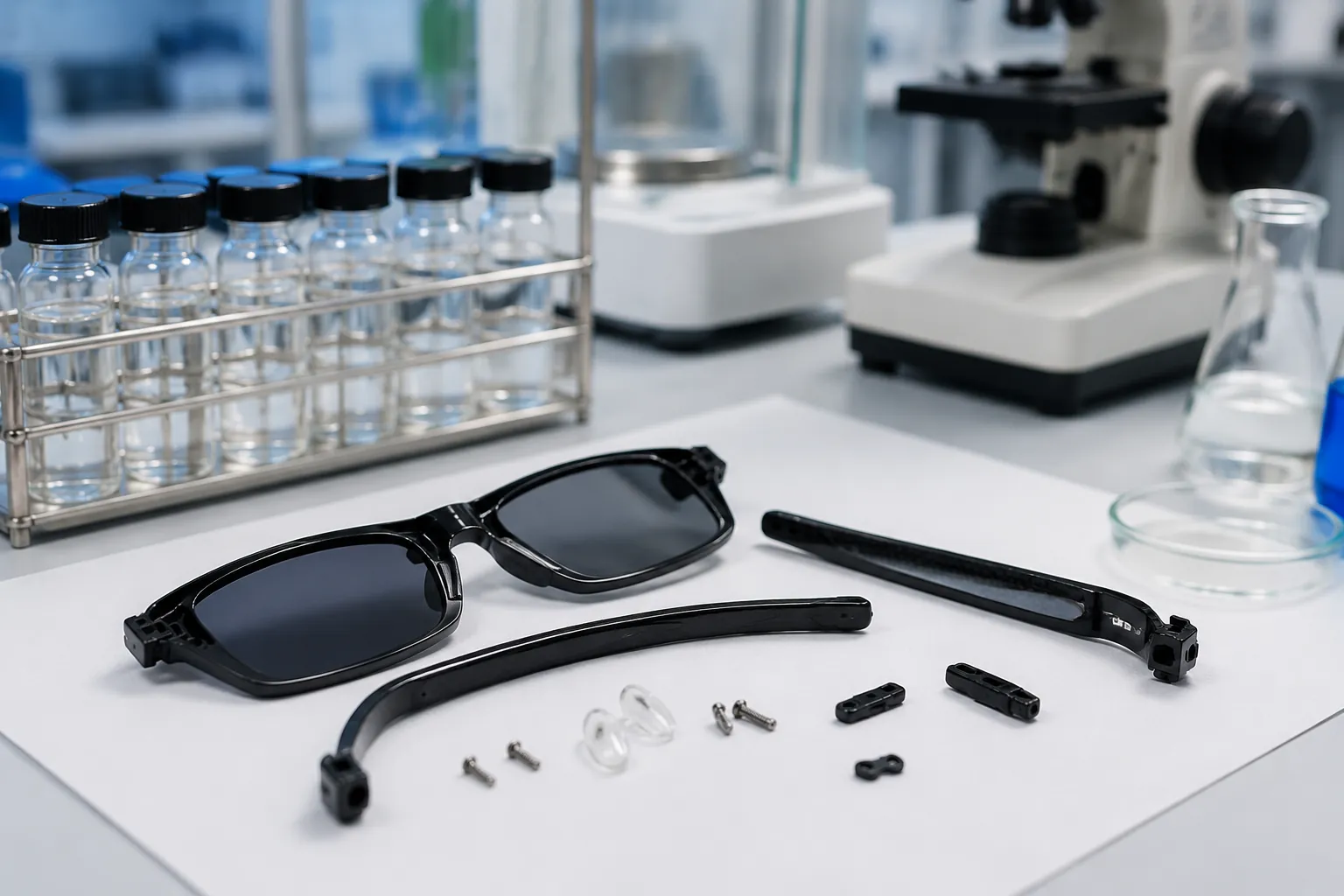
This guide is for brand owners, importers, distributors, and retailers buying custom sunglasses in volume. Sampling is not about collecting nice-looking references. It is about reducing risk at specific points in development and production. Prototype, pre-production, and shipment samples are not the same thing. Each stage should answer a different approval question. Define that purpose early. Record approvals clearly. Bulk production gets easier to control, and disputes get easier to settle.
Start with the risk, not the sample
Many sample problems start with a vague request: "Please send sample." That tells the supplier almost nothing. What decision is the sample meant to support? In custom sunglasses, each sample stage should have one job. Prototype asks, Is this the right design direction? Pre-production asks, Is this the exact build we approve for mass production? Shipment sample asks, Does the finished lot match the approved standard?
For sunglasses, the usual risk points are fit, color, decoration, lens performance, assembly quality, and packaging accuracy. A frame can look fine in photos and still fit badly in hand if alignment is off or geometry shifts. A logo can look right on one early sample and fail in production because the print method, surface prep, or curing process is unstable. A lens tint can look close and still miss the approved shade, polarization requirement, or documentation needed for the target market.
Process route matters too. Injection-molded plastic, acetate, and CNC-machined parts do not behave the same way in sampling or in bulk production. Acetate can vary in pattern and polish response from sheet to sheet. Injection parts depend on tool condition, molding control, and finishing consistency. CNC samples can show shape well, but they may not predict a final molded part. Ask how the sample was made before you treat it as proof of what bulk will look like.
Supplier capability matters. Approval discipline matters more. A factory may hold ISO 9001, pass BSCI audits, or run molding, decoration, and QC in-house. Good signs, yes. Not enough. You still need clear records, signed samples, and written tolerances.
What each sample stage is actually for
| Sample stage | Main purpose | What to check | What not to assume |
|---|---|---|---|
| Prototype sample | Confirm design direction and basic construction | Frame shape, key dimensions, hinge type, lens color direction, logo position, basic wear feel | Do not assume final material behavior, exact color stability, final packaging, or production-level consistency |
| Pre-production sample | Approve the exact production build before bulk starts | Actual materials, final finish, decoration method, lens specification, labeling, packaging, measurements, compliance details | Do not skip it just because the prototype looked good or because the order volume is modest |
| Shipment sample | Verify bulk output matches the approved standard | Random finished-unit appearance, function, packing accuracy, carton marking, defect levels | Do not use it to change tooling, revise artwork, or reopen core design decisions |
Think of these as three separate filters. Prototype cuts design risk. Pre-production cuts manufacturing and documentation risk. Shipment sample cuts delivery risk.
Lead times vary by supplier, material, order size, testing needs, and packaging complexity. So do not rely on guesswork. Ask the supplier to confirm the target schedule for each milestone: prototype, revision round if needed, pre-production approval, production start, inspection window, and shipment release. Delays usually come from incomplete or conflicting approvals, not just factory timing.
- Use prototype to approve design direction only.
- Use pre-production to freeze the mass-production standard.
- Use shipment sample to verify execution, not redesign the order.
Prototype samples: approve the concept, not the order
A prototype sample is the first physical proof that the design can work. It helps confirm visual direction, basic sizing, and core construction choices. That is its role. Nothing more. Do not treat it as the final contractual standard unless both sides have agreed that it uses final materials, final process, and final pack-out.
- Frame measurements: eye size, bridge, temple length, overall width, and front curve
- Material route: injected plastic, acetate, metal-plastic combination, or CNC-machined construction
- Lens appearance: tint family, gradient direction, mirror effect, and base curve
- Branding layout: pad print, laser marking, hot stamping, metal logo application, or inner temple print location
- Basic hinge feel: opening resistance, left-right symmetry, and closing alignment
At this stage, focus on geometry, design intent, and obvious usability issues. Also ask whether the prototype was made from substitute material, hand-finished parts, temporary tooling, or final production tooling. That answer changes how much weight the sample should carry. A hand-made acetate sample may confirm silhouette well but say little about consistency in bulk. A CNC sample may be dimensionally clean and still differ from an injection-produced order. A prototype with placeholder branding or lenses should not be used to approve decoration durability or compliance labeling.
Keep prototype feedback simple. Record approved dimensions, mark corrections on photos, and send one consolidated revision list. Not five versions from five people. Fragmented comments create extra sample rounds and avoidable confusion. If compliance testing is expected later, identify the target market early so the design path does not drift away from the likely tested configuration.
Pre-production samples: the approval that controls bulk
The pre-production sample is the most important sample in the order. Treat it as the master reference for production, inspection, and disputes. Do not approve bulk through scattered email comments, screenshots, or memory. That is weak control. A physical pre-production sample backed by a written approval sheet is much safer.
A true pre-production sample should use the actual frame material, actual lens material, actual tint or coating route, actual decoration process, and final packaging components. If the order includes barcode labels, polybags, cleaning cloths, EVA cases, boxes, warning labels, or carton marks, review those here too. Packaging errors can cause receiving, compliance, and retail problems even when the sunglasses themselves are acceptable.
- Match color to the approved standard under consistent lighting conditions.
- Measure critical dimensions and record the accepted tolerance in millimeters.
- Confirm lens category, UV claim, and market-specific labeling requirements.
- Check logo size, position, orientation, and application quality.
- Review hinge alignment, opening feel, and temple symmetry.
- Approve full pack-out method from individual unit to export carton.
Decoration deserves close review. Pad print quality depends on ink, curing, and surface preparation. Laser marking may stay clear on some materials and look weak on others. Metal logos can improve appearance but add placement and attachment risk. Hot stamping can look premium, but check consistency and legibility on the actual substrate.
| Feature | Typical control point | Common failure in bulk | Buyer action at PP stage |
|---|---|---|---|
| Lens tint | Visual match and required category or specification | Tint drift between lots or left-right lens mismatch | Approve exact tint target and confirm the intended market requirement |
| Logo print | Position, orientation, legibility, and adhesion expectation | Smearing, weak adhesion, shifted placement | Confirm artwork file, location drawing, and acceptance standard |
| Acetate polish | Uniform gloss and edge smoothness | Over-buffing, edge inconsistency, uneven pattern exposure | Approve finish level on a physical sample, not on photos alone |
| Hinge assembly | Balanced opening feel and secure assembly | Loose feel, misalignment, uneven temple position | Check left-right balance and repeat opening and closing by hand |
This is also the right stage to align product documentation. If the target market requires CE EN ISO 12312-1, ANSI Z80.3, or AS/NZS 1067, the tested and documented configuration should match what will actually ship. If REACH conformity is required, identify which materials and components are covered, such as plastics, coatings, inks, or metal parts. If the supplier mentions FDA registration for the US market, keep the meaning straight: registration is an administrative status, not proof that a sunglass style meets optical or performance requirements.
Shipment samples: verify, then release
Once production is complete, or close to it, shipment samples should confirm that the finished lot matches the approved pre-production sample. This stage is for verification. Not negotiation. If buyers try to change shape, decoration method, or packaging concept after goods are packed, delay follows fast.
Shipment samples should come from real production goods. Ideally, they are pulled from packed units or from finished goods taken across the lot, not from a separately prepared display set. For large or multi-carton orders, ask the supplier or inspector to sample across different cartons or production periods. Otherwise you may end up checking only the best units.
- Compare to the signed pre-production sample, not the prototype.
- Inspect visible defects: scratches, haze, sink marks, print issues, color inconsistency, or packaging mistakes.
- Inspect function: loose hinges, lens movement, temple imbalance, sharp edges, or poor closing alignment.
- Inspect pack-out: quantity per box, barcode accuracy, carton mark, accessories, and assortment ratio.
If a third-party inspection company is involved, send the inspector the approved sample, approved artwork, packing list, and your defect definitions before the visit. A generic checklist may catch obvious damage and still miss brand-specific requirements such as logo orientation, color reference, or retailer labeling format.
Review shipment samples with the final shipping documents. Check that SKU names, carton marks, barcodes, quantities, and required labels match the purchase order and approved sample file. Many downstream problems are not product failures at all. They are document and packing mismatches that should have been caught here.
How sample strategy changes with order size and complexity
| Order size | Typical buyer priority | Recommended sample approach | Commercial logic |
|---|---|---|---|
| Small trial order | Control development cost while confirming basic accuracy | 1 prototype, 1 pre-production sample, optional shipment confirmation | Even a small order can become expensive if branding or fit is wrong |
| Mid-size branded order | Protect branding, color, labeling, and packaging details | 1 prototype, 1 signed pre-production sample, shipment sample or inspection | Brand-facing errors often cost more than the unit value of the product |
| Large repeatable order | Lock consistency before scale and across cartons | Prototype if changes exist, pre-production sample, shipment sample, formal QC checklist | An approval mistake can multiply across the full lot |
| High-volume or multi-SKU program | Prevent drift across longer runs and style variations | Full staged sampling plus in-line checks and pre-shipment inspection | Complexity increases the need for standardized approval control |
Do not base sample strategy on quantity alone. Complexity matters just as much. A simple frame with stock lenses and basic branding may need fewer review cycles than a style with custom acetate colors, polarized lenses, multiple decoration steps, retailer-specific packaging, or market-specific documentation. Even a repeat order may need fresh pre-production approval if the supplier changes material source, tooling, lens coating route, decoration process, or packaging vendor.
If you manage multiple SKUs, use one standard approval sheet across every order. Include frame material, lens material, lens feature, color reference, decoration method, packaging list, target market, required documents, critical dimensions, and reference photos. Standard records reduce mistakes when several styles move through sampling and production at the same time.
The checks buyers should put in writing
If a requirement matters, write it down before bulk starts. Simple rule. Verbal expectations are hard to enforce because each side may remember them differently. A complete approval file should travel with the purchase order and stay available to sales, production, QC, and inspection teams.
At minimum, include:
- Reference photos of the approved sample from front, side, top, and logo-detail angles
- Exact measurements in millimeters with critical tolerances clearly marked
- Material callouts for frame, temples, lens, nose pads, and metal trim
- Lens specification including tint, category, polarization status, coating type, and required market standard
- Decoration method with artwork code, placement size, and color reference
- Packaging breakdown from single-unit pack to export carton mark
- Defect rules defining critical, major, and minor issues
Be exact with compliance language. If the SKU is intended for CE EN ISO 12312-1, ANSI Z80.3, or AS/NZS 1067, name the exact standard and target market on the approval sheet. If REACH conformity is required, identify the relevant materials or finishes. If the supplier operates under ISO 9001 or has passed a BSCI audit, those are useful supplier-management references, but they are not substitutes for product-specific approval or product-specific test evidence. If FDA registration is mentioned, record it accurately and do not treat it as equal to optical or performance certification.
A practical approval flow is straightforward: send a complete tech pack or marked reference sample, approve one prototype for design direction, revise only what is necessary, approve one pre-production sample as the bulk master, release production, and then review shipment sample results or inspection findings before final shipment release. Keep one approved physical sample with the buyer and one with the supplier. Photos help. Physical references settle disagreements faster.
Prototype approves the idea. Pre-production approves the build. Shipment sample verifies the result.
Have a custom sunglasses project in mind?
Send us your styles, target market and quantities and we will return a detailed quote with MOQ, lead time and a sample plan.
Get a QuoteWhy source this from Wenzhou with LumiShades
Wenzhou in Zhejiang Province is widely regarded as China’s eyewear manufacturing capital, producing a large share of the world’s sunglasses. That concentration matters to buyers: a deep local supply chain for acetate sheet, hinges, lens blanks, plating and packaging means shorter component lead times, easier color and material matching, and a workforce with decades of eyewear-specific skill. LumiShades has manufactured in this ecosystem since 2009, and our vertical integration — in-house injection molding, acetate cutting, CNC milling, lens tinting, decoration and quality control — means no part of your order is quietly subcontracted to a workshop you cannot audit.
For international buyers, that vertical control translates into accountability. When a single factory owns every step, defects are traced and fixed at source rather than bounced between vendors, and your specifications survive intact from first sample to bulk. We back this with 15+ years of experience, shipments to 60+ countries, more than 5 million pairs produced per year and a 98.5% on-time delivery rate. Our certifications — CE EN ISO 12312-1, FDA registration, ANSI Z80.3, AS/NZS 1067, REACH, ISO 9001 and BSCI audit — mean the compliance documentation your market requires already exists. Explore our manufacturing capabilities and quality control process to see how this works in practice.
Frequently asked questions
Do I need all three sample stages for a repeat order? Not always, but decide based on what changed. If the frame, lens, decoration, packaging, supplier, and production method are all unchanged, some buyers skip the prototype and move straight to a pre-production confirmation plus shipment inspection. If any material, color, logo method, coating, labeling, or packaging element changes, request a new pre-production sample at minimum. Ask the supplier to confirm in writing whether the repeat order uses the same tooling, same component sources, and same packaging configuration as the previous approved order.
What is the most common mistake buyers make with pre-production samples? Approving from photos only. Photos rarely show true color, hinge feel, lens fit, edge finish, minor alignment problems, or pack-out accuracy. A better process is to approve a physical sample, sign and date the approval sheet, attach the artwork and packing references, and send one signed master back to the supplier or confirm the exact retained sample by code. If you cannot receive a physical sample in time, document that the approval is provisional and require physical confirmation before shipment release.
How many pre-production samples should I ask for? One can work for a simple order, but two or three is safer. A practical setup is one retained by the factory as the production master, one retained by the buyer, and one reserved for inspection, compliance review, or internal approval. If the style has multiple colorways, ask whether you need a pre-production sample for every color or whether one master color plus approved color swatches is enough. Put that decision in writing so there is no confusion later.
Should shipment samples be taken before or after packing? After packing is usually more useful because it shows the actual shipped condition, including packaging, barcode, carton mark, accessories, and assortment accuracy. If a full post-pack sample is not possible, ask for a combination: finished product checks before packing plus carton-level verification after packing. For third-party inspections, state clearly whether you want the sample drawn from packed goods, how many cartons should be opened, and which SKUs or colorways must be checked.
How do certifications and compliance requirements affect sample approval? They determine which exact build must be frozen before bulk production and testing. If your market requires CE EN ISO 12312-1, ANSI Z80.3, or AS/NZS 1067, the approved sample should reflect the same lens type, tint, coating, frame construction, and labeling intended for shipment. If REACH is required, identify the relevant materials and request supporting declarations or test evidence as appropriate. If a supplier mentions FDA registration, verify what is registered and do not confuse that administrative status with product performance compliance. Before approving the pre-production sample, ask for a document list showing which records apply to the exact SKU and configuration you plan to import.
Ready to start?
Explore our aviator sunglasses or request a quote — our sales team replies within 12 hours.
Request a Quote