
Source Promotional Sunglasses Without Quality Complaints
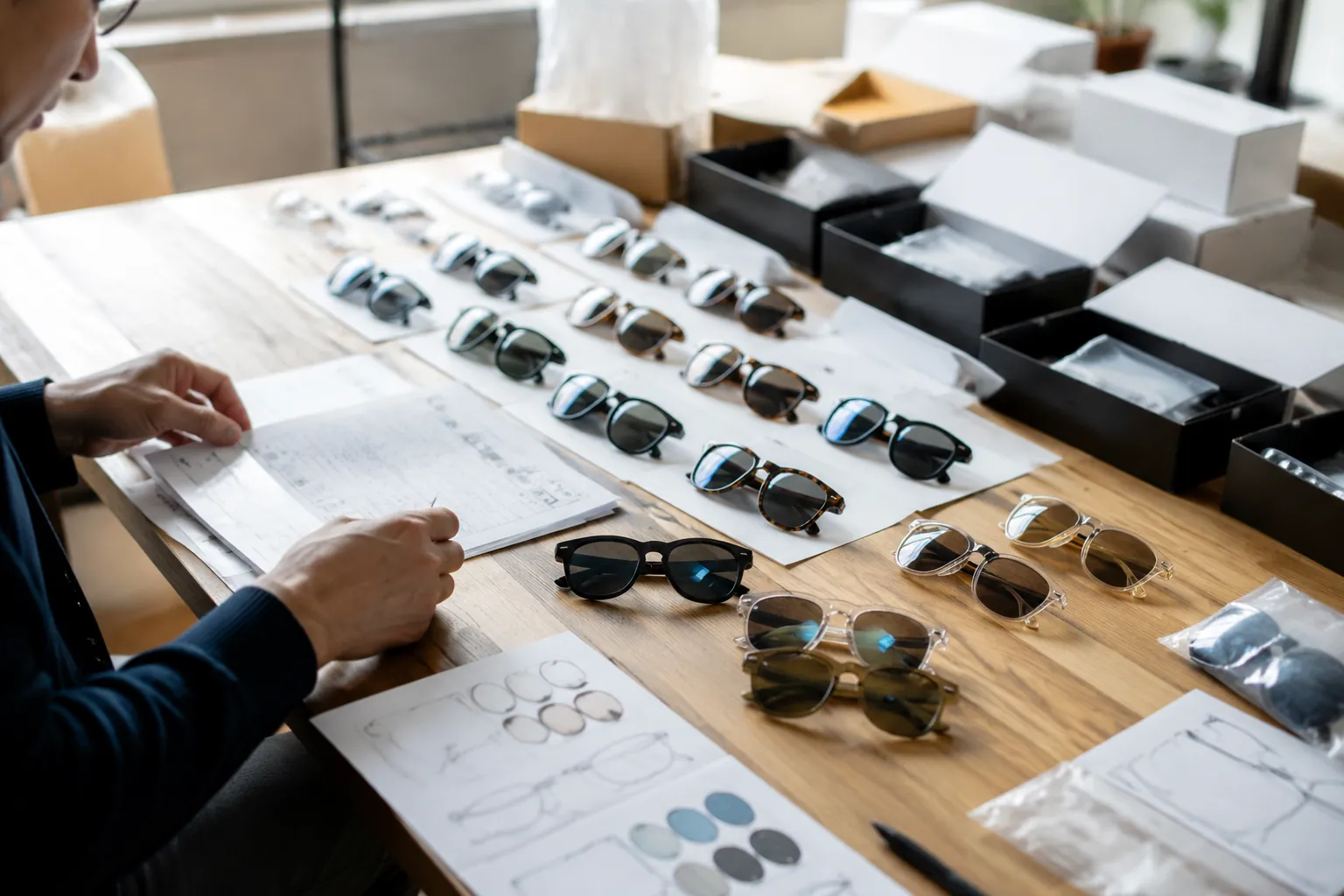
This guide is for buyers sourcing sunglasses for trade shows, festivals, retail promotions, staff kits, and branded giveaways. The quoted unit price is rarely the real problem. The real problem is approving the wrong spec too late, then paying for rework, rush freight, or replacements. To reduce complaints, define the use case, deadline, decoration method, and compliance requirements before you request quotes. Then lock the approved spec in writing before mass production begins.
Start with complaint risk, not unit price
Promotional sunglasses fail in predictable ways. Hinges loosen. Decoration rubs off. Lens tint drifts between lots. Frames look fine in a carton and weak in use. Buyers may accept simple. They do not accept visible defects on an item with their logo.
Before you ask for pricing, rank the order against four risks:
- Deadline risk: event date, approval time, and freight buffer.
- Visibility risk: how important the logo is in person and in photos.
- Use risk: one-day giveaway, repeated staff wear, retail promo, or resale.
- Compliance risk: novelty-only item or functional sunglasses in a regulated market.
That ranking should drive the build. A basic injection-molded frame with one-color pad printing can work for a short-term giveaway. The same build can be a bad fit if staff wear it daily or if the logo must hold up in campaign photography. Price alone will not tell you that.
Start simple. Existing frame shape. Standard tinted lenses. One branding method. Documented QC before shipment. That will not remove every issue, but it cuts avoidable variation.
Choose the build for the campaign
Samples can mislead. A first sample is often handled with more care than bulk production. The real question is whether the same result can be repeated across the full order.
| Option | Best use | Typical trade-off | Lead-time impact |
|---|---|---|---|
| Injection-molded plastic frame | Large giveaways, entry-level custom programs, repeat promotions | Usually lower perceived value than acetate, but easier to scale consistently | Often the fastest option when based on an existing style |
| Acetate frame | Retail-style promotions, gift-with-purchase, premium campaigns | Higher cost and more manual finishing | Usually longer due to cutting, polishing, fitting, and color control |
| Pad-printed logo | Low-cost temple branding and simple artwork | Durability depends on surface prep, ink system, and curing | Minimal impact |
| Laser engraving | Subtle, durable branding on compatible surfaces | Can be less visible on dark colors or certain finishes | Minimal impact |
| Metal logo plate | Higher perceived value and stronger logo presence | Extra component cost and another assembly step | Adds process time |
Material behavior matters. Injection-molded frames are common in promo runs because they scale well and stay consistent when the process is controlled. Acetate can look more premium and feel richer, but it takes more manual work. For lenses, standard tinted lenses are usually easier to control than mirrored or fashion tints.
If one supplier handles molding, decoration, and final QC, fewer handoffs can mean fewer errors. Not always. But often.
For budget-sensitive campaigns, an existing injection-molded style is usually the lowest-risk start. If the program needs a better finish, review decoration, print contrast, and packaging before moving to a more complex frame build.
Use MOQ and variant count carefully
Two common mistakes drive cost up fast: ordering too few pairs to justify setup, or splitting the order across too many colors and logo versions. Both make production harder to control.
MOQ is rarely one number. It can change by design, color, decoration method, and packaging. Check MOQ by design, by color, and by logo version. Do not assume one headline MOQ covers every combination.
Plan quantity like this:
- Small pilot run: useful for internal review, a VIP event, or early market testing. Confirm that custom decoration and packaging still meet the supplier's minimums.
- Mid-volume order: usually the most practical level for a standard branded giveaway.
- High-volume order: better unit economics, if the spec stays simple enough to run cleanly.
- Multi-variant program: use only if the campaign value clearly justifies the extra setup, sorting, and packing work.
If budget is tight, cut complexity before you cut core quality. Fewer frame colors. One lens tint. One branding method. That is easier to control than many small variants.
Ask one blunt question: does each extra variant improve the campaign enough to justify the extra sampling, approvals, and QC? If not, remove it.
Work backward from the in-hand date
Promotional sunglasses are deadline products. If they arrive late, the quote does not matter. Work backward from the date the goods must be in hand.
Lead time changes with style, customization, sample revisions, factory load, and shipping method. Ask the supplier to confirm sample lead time and bulk lead time in writing for the exact build being quoted. Treat those dates as estimates unless they are committed in the order documents. Add freight, customs clearance, and local delivery.
- Week 1: send artwork, target quantity, destination market, intended use, lens requirement, and packaging requirement.
- Week 2: review the sample for fit, finish, lens appearance, logo size, logo position, and consistency.
- Week 3: approve or request revision. Every revision cuts schedule room.
- Production stage: bulk starts only after final approval of sample, artwork, and purchase order details.
- Buffer: add time for freight, customs, and delays before the event date.
If the deadline is tight, keep the order simple. Existing frame styles, standard lenses, one logo method, and standard packaging carry less timing risk than custom tooling or mixed decoration.
Rule: do not ask for a firm delivery promise until the spec is frozen. Late artwork changes cause a lot of the delays.
Make the logo visible and durable
Many promo sunglasses have a logo. Fewer have a logo that stays visible and intact after handling. Visibility depends on placement, size, contrast, and method. Durability depends on material match, surface prep, curing, and packing.
The outer temple is usually the most practical branding area. It stays visible when worn and gives enough length for a compact logo. Specify logo width in millimeters, placement from a fixed point such as the hinge, and the allowed left-right variation.
Ask for these checks:
- Print size: confirm the approved logo width in millimeters.
- Placement tolerance: define the reference point and the allowed left-right variation.
- Rub resistance: ask what curing method is used and request the supplier's internal adhesion or rub check result.
- Contrast review: check the sample in daylight and in photos, not only under office lights.
Pad printing is often the most practical low-cost choice. Laser engraving can wear better on suitable materials, but it may be less visible on some finishes. Metal plates can look better, but they add cost and another assembly step. Choose the method that fits the campaign. Not the one that sounds best.
Watch for placement drift. A logo can stay within tolerance and still look off in photos if the sides do not align well. Approve placement from a measured sample, not from artwork alone.
Define QC checks that prevent avoidable returns
Promotional does not mean no QC. Buyers still get complaints about crooked temples, scratched lenses, loose hinges, weak decoration, and bad packing. The goal is not perfect. The goal is to catch the defects that matter.
A supplier should be able to explain what is checked before shipment and how it is recorded. Practical controls include:
- Hinge function: opening and closing feel, screw security where applicable, and left-right consistency.
- Frame symmetry: no obvious front twist or imbalance on a flat surface.
- Lens fitting: no obvious gaps, looseness, or stress marks.
- Tint consistency: visual match to the approved sample, especially for mirrored or fashion-tinted lenses.
- Decoration inspection: correct logo position, no smudging, and no missing or misapplied branding.
- Packing inspection: count accuracy, correct packing materials, and carton condition for transport.
Turn expectations into written tolerances where you can. Define logo position from the hinge. State which cosmetic marks are acceptable. Say how the approved sample will be used as the QC reference. If the supplier cannot explain the inspection standard clearly, expect interpretation problems later.
Pre-shipment photos help. They are not enough. Ask for photos of packed goods, carton markings, and random production pieces, not just polished sample shots.
Treat compliance as part of the spec
Do not assume low-cost giveaway sunglasses are outside compliance rules. If the item is sold, distributed, or imported as functional eyewear, the destination market may require testing, labeling, or documents.
Tell the supplier where the product will be sold or distributed before you place the order. Depending on the market and product type, relevant standards or systems may include CE EN ISO 12312-1, ANSI Z80.3, AS/NZS 1067, REACH, FDA registration, ISO 9001, and BSCI. These are not the same thing. Product standards, chemical rules, and factory audits solve different problems.
Ask which documents apply to your exact model, lens configuration, and market before paying a deposit. If the product uses dark, mirrored, or fashion-tinted lenses, confirm early whether extra test attention is needed. If the product is novelty merchandise only, state that clearly and verify whether labeling or import treatment changes.
One report does not cover every variation. A test report may apply to one model or lens type only. A careful supplier should be able to separate product-specific documents from factory-level records.
Do not treat compliance as a late paperwork task. That is how shipments get stuck.
Lock the order before production starts
Many complaint-heavy orders come from incomplete specs, not bad manufacturing. Before you approve the purchase order, freeze every important detail in writing.
- Frame reference: approved sample code or exact existing style number.
- Material: frame material and approved color reference.
- Lens spec: lens color, finish, and any market-specific compliance requirement.
- Decoration: method, approved artwork version, logo width in millimeters, and measured placement reference.
- Quantity split: by color, by logo version, and by pack configuration where relevant.
- Packing: individual bag, pouch, barcode, carton marks, and retailer packing instruction.
- Inspection standard: approved sample reference, appearance limits, and count requirements.
- Timeline: sample approval date, production start condition, shipment window, and agreed Incoterms if applicable.
Keep the order simple enough to control: one approved frame, one lens treatment, one branding method, one realistic timeline. That is usually the safest route for promotional sunglasses that need to arrive on time and work as expected.
Before payment, confirm who owns sample approval, production approval, inspection sign-off, shipping, and compliance document review. Clear ownership cuts disputes.
Have a custom sunglasses project in mind?
Send us your styles, target market and quantities and we will return a detailed quote with MOQ, lead time and a sample plan.
Get a QuoteWhy source this from Wenzhou with LumiShades
Wenzhou in Zhejiang Province is widely regarded as China’s eyewear manufacturing capital, producing a large share of the world’s sunglasses. That concentration matters to buyers: a deep local supply chain for acetate sheet, hinges, lens blanks, plating and packaging means shorter component lead times, easier color and material matching, and a workforce with decades of eyewear-specific skill. LumiShades has manufactured in this ecosystem since 2009, and our vertical integration — in-house injection molding, acetate cutting, CNC milling, lens tinting, decoration and quality control — means no part of your order is quietly subcontracted to a workshop you cannot audit.
For international buyers, that vertical control translates into accountability. When a single factory owns every step, defects are traced and fixed at source rather than bounced between vendors, and your specifications survive intact from first sample to bulk. We back this with 15+ years of experience, shipments to 60+ countries, more than 5 million pairs produced per year and a 98.5% on-time delivery rate. Our certifications — CE EN ISO 12312-1, FDA registration, ANSI Z80.3, AS/NZS 1067, REACH, ISO 9001 and BSCI audit — mean the compliance documentation your market requires already exists. Explore our manufacturing capabilities and quality control process to see how this works in practice.
Frequently asked questions
What is the safest minimum order for a promotional sunglasses test run? The safest test run is the smallest quantity that still lets you judge decoration, assembly, and packing across multiple units, not just one sample. Ask the supplier for MOQ by design, color, and logo version, then order enough pieces to review random units from the run. For a real campaign, a slightly larger run is usually more useful than a token quantity because it shows whether the approved sample can be repeated.
Which logo method is best for low-cost giveaways? Pad printing is usually the most practical low-cost choice for temple branding. It is common, clear, and efficient. Make it specific: state the logo width in millimeters, define placement from a fixed point such as the hinge, ask what curing method is used, and request the supplier's internal rub-resistance or adhesion check result on the approved sample before bulk production starts.
How much time should I allow before my event? Allow time for artwork, sample making, sample review, at least one revision if needed, bulk production, inspection, freight, customs clearance, and local delivery. Do not rely on a generic lead time. Ask the supplier to confirm timing for the exact frame, lens, decoration, and packaging you are buying. Work backward from the in-hand date and keep a buffer for delays.
Can promotional sunglasses still need compliance documents? Yes. If the sunglasses are imported, sold, or distributed as functional eyewear, the destination market may require standards or documentation. Tell the supplier the country of sale or distribution and ask which of these are relevant: CE EN ISO 12312-1, ANSI Z80.3, AS/NZS 1067, REACH, FDA registration, ISO 9001, and BSCI. Then check which documents are product-specific and which are factory-level.
What causes the most quality complaints on giveaway sunglasses? The main complaints are decoration wear, logo misplacement, crooked assembly, loose hinges, scratched lenses, and unclear specs that leave too much open to interpretation. To prevent them, approve a physical sample, record the exact logo size and placement, keep the build simple, define packing clearly, and ask for a documented inspection standard tied to the approved sample.
Ready to start?
Explore our sport wrap sunglasses or request a quote — our sales team replies within 12 hours.
Request a Quote