
PC vs TAC Polarized Lenses: What Buyers Must Specify
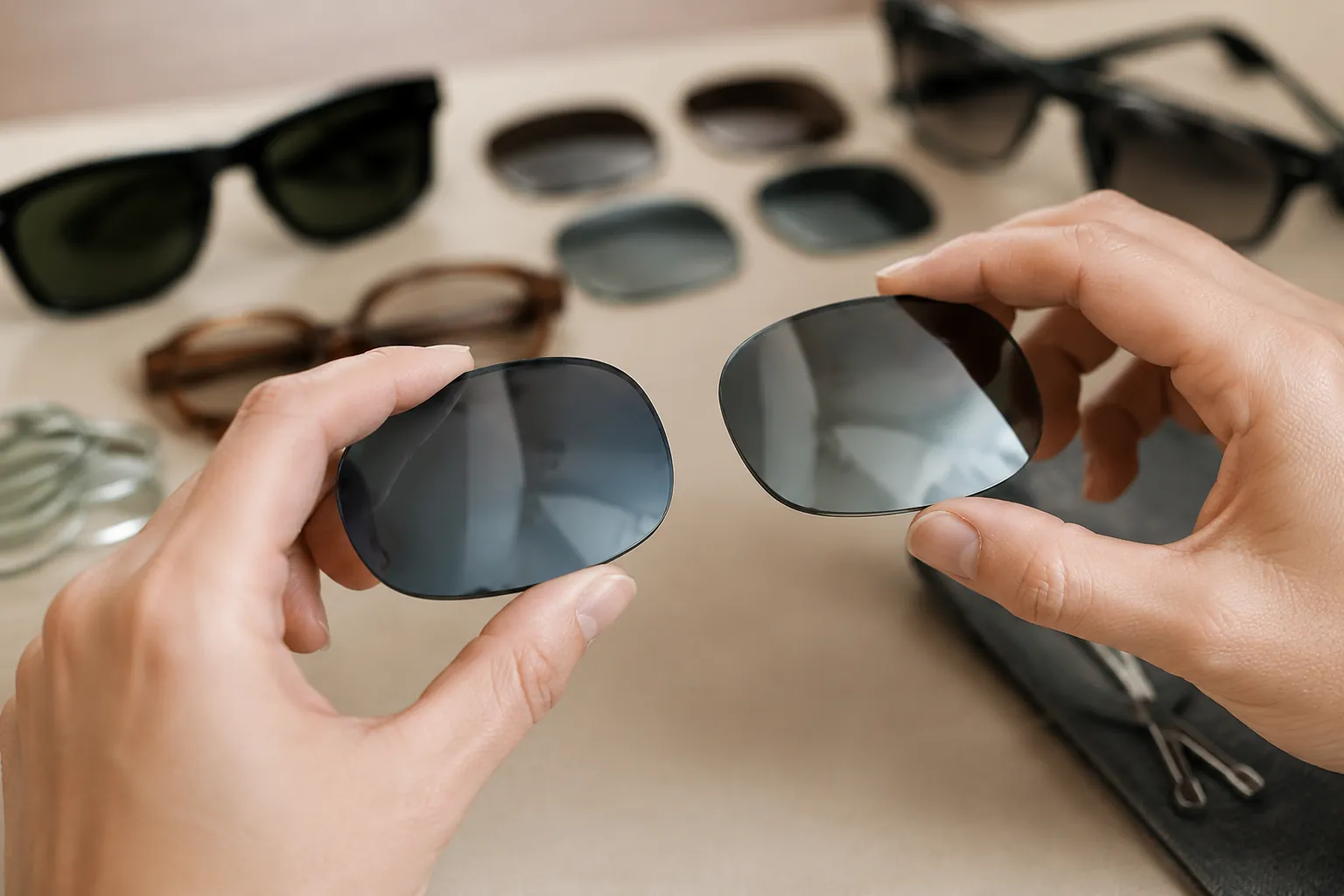
This guide is for brand owners, importers, distributors, and retail buyers sourcing polarized sunglasses at volume. The goal is simple: compare PC and TAC polarized lenses in terms of construction, performance, defect risk, cost, and channel fit. In production, vague lens specs cause predictable problems later: quotation gaps, mismatched samples, assembly stress, cosmetic rejects, and returns tied to durability or appearance. Tight specs fix that. The more clearly the lens is defined before sampling and PO confirmation, the easier it is to compare suppliers and control outcomes.
Start with construction, not just the word "polarized"
Many supplier quotations still describe the lens only as polarized. That is not enough. Buyers need to confirm whether the lens is PC polarized or TAC polarized, because the build, process controls, and common failure modes are different.
PC polarized usually refers to a polycarbonate lens construction chosen where impact resistance matters. The exact manufacturing route varies by supplier, so do not assume all PC polarized lenses are made the same way. Get the lens structure and finishing process in writing.
TAC polarized refers to triacetate cellulose polarized lens construction. In commercial production, TAC polarized lenses are usually laminated, multi-layer structures that include a polarized film. That means material quality, lamination control, and edge finishing all matter. Review the approved sample. Review the supplier's inspection method too.
At PO stage, do not stop at lens color and UV claim. Specify at minimum:
- Construction: PC polarized or TAC polarized
- Nominal thickness: as required by the frame design and lens construction
- Base curve: for example base 4, base 6, or base 8
- Color and visible light transmission target: tied to the approved sample
- Surface finish: hard coat, mirror, flash mirror, gradient, or other required finish
- Polarization requirement: including left-right consistency
- Compliance market: EU, US, AU/NZ, or multi-market
- Packing method: unit packing, barcode, carton labeling, and outer-carton requirements
A PO that says only "polarized smoke lens" leaves too much open. One supplier may quote TAC. Another may quote PC. A third may change thickness or finishing assumptions. Then the quotations are no longer comparable.
PC vs TAC: performance, risk, and cost logic
| Factor | PC Polarized | TAC Polarized | Buyer takeaway |
|---|---|---|---|
| Impact resistance | Generally higher than TAC | Generally lower than PC | PC is usually preferred where drops, flexing, or rough handling are expected |
| Optical presentation | Can perform well when molding and finishing are well controlled | Commonly used in fashion and lifestyle programs with a clean visual presentation | Judge by approved sample and test evidence, not by material name alone |
| Typical defect pattern | Warping, surface variation, or stress-related issues if process control is weak | Delamination, bubbles, edge lift, or adhesive-related issues if lamination control is weak | Ask how the supplier checks process stability before assembly |
| Frame-fit sensitivity | Requires correct edging and insertion control | Requires correct edging and edge protection, especially on laminated structures | Frame-lens compatibility matters for both types |
| Cost position | Often higher than TAC in comparable commercial programs | Often more cost-efficient in mainstream retail programs | Confirm actual quotation basis instead of assuming price from lens name |
| Best-fit channels | Sport, outdoor, fishing, youth, active-use programs | Fashion, resort, optical house brands, promotional and lifestyle programs | Match lens type to use case and return history |
The basic logic is straightforward. PC polarized is usually specified where durability and impact resistance come first. TAC polarized is often chosen where appearance and cost control carry more weight.
Neither is automatically better. The right choice depends on intended use, retail price position, and the most likely failure point. For sport or rough handling, the higher cost of PC may be justified. For fashion or resort styles sold mainly on look and price, TAC is often the more practical choice.
Where production fails: the defect modes buyers actually see
Most lens complaints come from repeatable process failures, not random accidents. Buyers should know the pattern before bulk starts.
- Delamination: More common in laminated TAC constructions. It may start at the edge and can be linked to weak lamination control, contamination, or heat exposure during storage or transport.
- Warping: Can appear in PC programs if molding, coating, storage, or handling are not controlled well. Warpage can affect optics, lens insertion, or overall fit.
- Polarization mismatch: If left and right lenses are not aligned consistently, the wearer may notice uneven glare reduction or visual discomfort.
- Edge stress cracks: Often caused by poor lens-frame fit, incorrect beveling, or too much insertion force during assembly.
- Cosmetic rejects: Typical issues include scratches, coating dust, mirror streaks, color inconsistency, and handling marks.
Ask direct process questions. Is polarization direction checked before assembly? Is color matched to an approved reference under controlled lighting? Is there an inspection after lens insertion to check for edge stress, lift, or surface damage?
For practical tolerance control, many buyers define internal acceptance standards such as:
- Left-right color consistency against the approved sample under defined lighting
- Lens thickness controlled to the agreed nominal specification and supplier-stated tolerance
- Lens shape and edging controlled to avoid forced insertion
- Cosmetic inspection at a defined viewing distance under defined lighting conditions
Do not rely on terms like "good quality" or "export standard." They mean very little in production. Define how consistency will be judged and at what stage the checks happen.
What to put on the spec sheet so quotes match
If the RFQ does not define the lens clearly, the quotations will drift. Different suppliers will make different assumptions about construction, thickness, finishing, or testing scope, and each may still claim to have quoted "polarized lenses."
- Name the construction: PC polarized or TAC polarized.
- State nominal thickness: based on frame design, use case, and approved sample.
- Define lens geometry: base curve, lens size, and whether the frame is full-rim, semi-rimless, or rimless.
- Define appearance: smoke, brown, green, custom tint, gradient, flash mirror, full mirror, or no mirror.
- Set the functional target: UV performance, polarization requirement, and intended use.
- List the compliance markets: CE EN ISO 12312-1, ANSI Z80.3, AS/NZS 1067, REACH, or other required documents.
- Clarify decoration method: laser logo, pad print, hot stamp, metal logo plate, or foil.
- Clarify packaging: pouch, polybag, barcode sticker, care card, gift box, inner carton, and outer-carton markings.
Decoration details matter because they affect handling, scrap risk, and production order. A simple print is usually easy. A metal logo plate adds parts, adhesive curing, and extra handling. If the product is entering the US, some buyers also ask the supplier to confirm FDA registration status during document review. Treat that as a supplier document item only. It is not proof that the finished sunglasses meet market performance requirements.
Cost, MOQ, and lead time: where lens choice changes the numbers
Lens construction affects cost and lead time because it changes the material route, processing steps, inspection load, and reject risk. The exact price gap between PC and TAC varies by supplier, finish, frame design, order size, and packaging. Do not plan around a fixed percentage unless it comes from current quotes on the same specification.
In many commercial programs, TAC polarized is the more cost-efficient option. PC polarized often prices higher, especially when the product also needs tighter cosmetic control, sport styling, mirrored finishes, or more demanding frame-lens assembly.
Lead time shifts too. Polarized-lens production involves more than basic lens output. Common control points include polarization alignment, color verification, coating inspection, scratch prevention during handling, and final cosmetic checks after assembly.
Buyers should confirm the following directly with each supplier:
- Sample lead time: based on the exact lens construction and finish
- Bulk lead time: counted from approved sample and confirmed deposit or PO release, according to supplier terms
- MOQ by color and by style: especially where custom lens colors or packaging are involved
- Cost impact of finishes: mirror, gradient, logo decoration, or premium packaging
A common pricing trap is combining low MOQ + premium lens construction + custom packaging + multiple colorways. That raises unit cost fast. It can also slow production. If margin is tight, buyers often get better results by simplifying the color program, standardizing packaging, and locking one approved lens specification across more than one frame option.
Match the lens to the sales channel
Lens selection should follow channel requirements, handling conditions, and actual return risk. Personal preference is not a sourcing method.
| Channel | Usually better fit | Why |
|---|---|---|
| Sport and outdoor specialty | PC polarized | Better aligned with active use and durability expectations |
| Fishing, boating, cycling | PC polarized | Users are more likely to value impact resistance and functional performance |
| Fashion retail chains | TAC polarized | Often a better match for style-led assortment planning and cost control |
| Resort and tourist retail | TAC polarized | Visual appeal and price are often more important than high-impact performance |
| Kids and teens | PC polarized | Rougher handling makes impact resistance more important |
| Corporate promotional programs | TAC polarized or standard PC | Specification usually depends on budget and claimed performance level |
If returns are mainly about breakage or active-use complaints, PC is often the better direction. If the main pressure is margin, cosmetic presentation, and accessible shelf price, TAC is often the more practical commercial choice.
Also check seasonality and replenishment risk. For a short selling window, delivery reliability and spec discipline may matter more than paying for a lens construction the market will not clearly reward.
Compliance, testing, and approval workflow that cuts rework
Material choice alone does not determine compliance. Both PC and TAC polarized sunglasses can be developed for the target market if the design, lens category, labeling, and testing are handled correctly.
Common reference points include CE EN ISO 12312-1 for Europe, ANSI Z80.3 for the US, and AS/NZS 1067 for Australia and New Zealand. Chemical documentation may include REACH. Supplier system or audit documents may include ISO 9001 and BSCI. If relevant to supplier file review, buyers may also request confirmation of FDA registration.
The rule is simple: request documents and reports that match the actual frame and lens configuration being purchased, or get written confirmation of how that configuration will be validated before shipment. A generic report from another style is not enough.
A practical approval flow looks like this:
- Define the target channel, intended use, and market destination.
- Issue a full spec sheet with lens construction, thickness, color, frame details, decoration, and packaging.
- Approve one sample for structure, lens fit, and assembly compatibility.
- Approve one sample for final color and cosmetic appearance.
- Confirm the compliance document list required for the destination market.
- Agree the cosmetic standard and inspection method before bulk production starts.
- Retain a signed reference sample linked to the final PO.
Specific comments reduce sample loops. "Lens not good" does nothing. "Color slightly off" does very little. State the issue clearly: color depth, mirror uniformity, polarization consistency, edge fit, or visible defect under the agreed inspection condition.
Short buying rule: For active-use programs, start with PC polarized. For fashion-led or value-sensitive programs, start with TAC polarized. Then confirm with sample review, testing requirements, and the real return risk of the channel.
Have a custom sunglasses project in mind?
Send us your styles, target market and quantities and we will return a detailed quote with MOQ, lead time and a sample plan.
Get a QuoteWhy source this from Wenzhou with LumiShades
Wenzhou in Zhejiang Province is widely regarded as China’s eyewear manufacturing capital, producing a large share of the world’s sunglasses. That concentration matters to buyers: a deep local supply chain for acetate sheet, hinges, lens blanks, plating and packaging means shorter component lead times, easier color and material matching, and a workforce with decades of eyewear-specific skill. LumiShades has manufactured in this ecosystem since 2009, and our vertical integration — in-house injection molding, acetate cutting, CNC milling, lens tinting, decoration and quality control — means no part of your order is quietly subcontracted to a workshop you cannot audit.
For international buyers, that vertical control translates into accountability. When a single factory owns every step, defects are traced and fixed at source rather than bounced between vendors, and your specifications survive intact from first sample to bulk. We back this with 15+ years of experience, shipments to 60+ countries, more than 5 million pairs produced per year and a 98.5% on-time delivery rate. Our certifications — CE EN ISO 12312-1, FDA registration, ANSI Z80.3, AS/NZS 1067, REACH, ISO 9001 and BSCI audit — mean the compliance documentation your market requires already exists. Explore our manufacturing capabilities and quality control process to see how this works in practice.
Frequently asked questions
Is TAC polarized always lower quality than PC polarized? No. TAC is not automatically lower quality. It is a different lens construction with different strengths and risks. PC is generally preferred where impact resistance and rough handling matter most. TAC is widely used where visual presentation and cost efficiency matter more. Judge quality by the exact construction, the approved sample, and the test or compliance documents tied to that specific style.
What should I write on a PO so the supplier cannot switch lens construction? State the exact construction in the PO and approved specification, for example: "Lens construction: TAC polarized" or "Lens construction: PC polarized." Then add nominal thickness, base curve, lens color, visible light transmission target if required, mirror or non-mirror finish, compliance market, and approved sample reference or sample code. Also state that substitutions require buyer approval in writing. If the PO says only "polarized lens," the supplier still has room to interpret the construction.
Which lens type is safer for kids' sunglasses? PC polarized is usually the safer starting point for kids' sunglasses because polycarbonate is generally more impact resistant than TAC. That said, buyers still need to confirm that the complete finished product suits the target market and intended use, including frame fit, lens retention, and any required testing or compliance documents. Do not choose based on lens material alone.
Can the same frame use either PC or TAC polarized lenses? Sometimes, but not by default. Switching from TAC to PC, or the reverse, can affect thickness, beveling, groove fit, insertion force, and base-curve compatibility. Before approving a change, ask the supplier whether the frame tooling or edging parameters need adjustment and request a new fitted sample. Never assume one frame spec will run both lens types without risk.
How do polarized lenses affect lead time? They can add time through alignment, finishing, inspection, and handling controls. Ask each supplier for lead time based on the exact lens construction and finish, especially if the order includes mirror coatings, gradients, logo decoration, or custom packaging. The practical fix is to lock the lens specification early, approve one final reference sample, and avoid changing lens construction after sampling.
Ready to start?
Explore our wayfarer sunglasses or request a quote — our sales team replies within 12 hours.
Request a Quote