
PC vs TR90 vs Acetate: Best Nose Comfort All Day
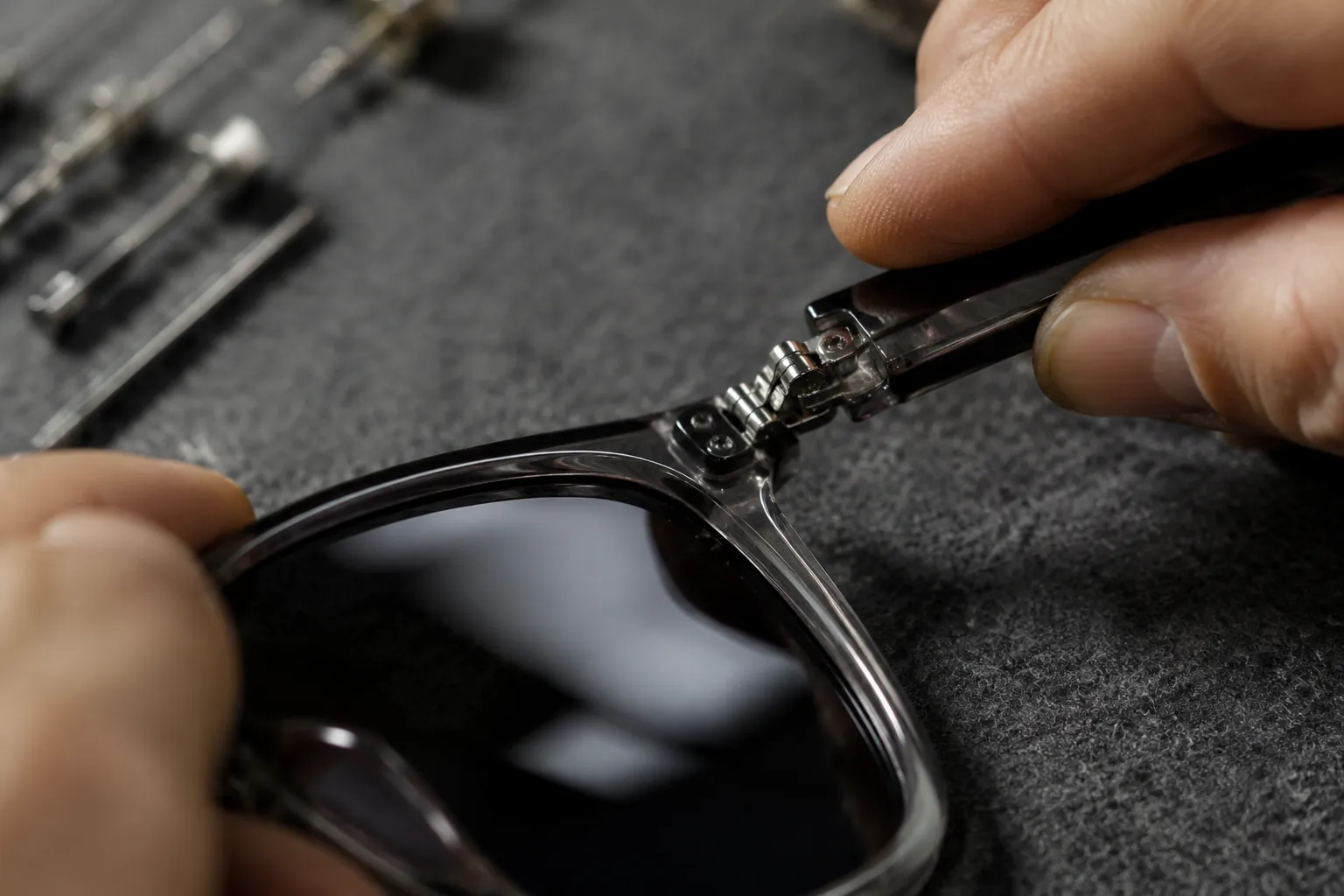
This guide is for buyers developing repeat-wear sunglasses for brands, retailers, distributors, and private-label programs. It looks at a common cause of complaints and reorder loss: how the frame feels on the nose after hours of wear. PC, TR90, and acetate can all pass a sample review and still perform very differently once bridge geometry, frame weight, balance, surface finish, heat, and production consistency come into play. The goal is simple: help buyers judge what each material is likely to feel like in use, which specs matter most, and what to confirm before sample approval and bulk production.
Start with the nose-contact problem, not the material name
Buyers often start with appearance, breakage risk, or target cost. For sunglasses meant to be worn often, nose comfort needs to sit near the top of the approval list. A frame can meet the style brief and lens spec and still create avoidable complaints if it pinches, slips, or leaves pressure marks after a few hours.
Nose comfort usually comes down to four factors working together: total frame weight, bridge contact area, surface friction at the nose-contact zone, and how the frame behaves as skin gets warm or damp. The principle is straightforward. A lighter frame with a broad, even saddle usually feels easier on the nose than a heavier frame with a narrow or peaked bridge.
Bridge width alone will not tell you enough. Buyers need to review saddle width, bridge depth, and the actual contact pattern on the nose. Two frames can share the same listed bridge size and feel completely different if one spreads pressure evenly and the other lands on two small points.
That is why comfort decisions need to happen before bulk production. Once injection tools are approved for PC or TR90, or acetate fronts are approved for CNC milling and polishing, changes get slower and more expensive. Suppliers that control molding or machining, finishing, assembly, and QC are usually better at identifying whether a comfort issue comes from geometry, weight balance, polish level, or alignment.
What buyers should expect from PC, TR90, and acetate
| Material | Typical finished frame weight | Typical nose feel | Heat and sweat behavior | Process and sourcing note |
|---|---|---|---|---|
| PC | Often lighter to mid-weight, depending on front thickness, lens type, and overall construction | Can feel firm on the bridge if the contact area is narrow or the front is imbalanced | Generally dimensionally stable in normal wear; smooth or high-gloss contact areas may feel more slippery when skin is warm or damp | Common for cost-sensitive, high-volume molded programs where repeatability matters |
| TR90 | Often used for lightweight casual, sport-lifestyle, and active constructions | Usually feels lighter and less tiring over extended wear when the geometry is correct | Often performs well in active use because lower mass can reduce perceived nose load over time | Frequently chosen for repeat-wear styles where comfort is a priority |
| Acetate | Often heavier than comparable molded frames, depending on sheet thickness, lens size, and hardware | Can feel smooth and solid when polished well, but excess front weight becomes obvious during long wear | Can feel comfortable when balanced correctly; if front-heavy, warm conditions make the weight more noticeable | Usually involves sheet cutting, CNC milling, tumbling, polishing, assembly, and hand finishing, with more variation to control across process steps |
For all-day comfort, TR90 is often the best starting point. Less weight usually means less pressure on the bridge over time. For driving, commuting, walking, travel, or daily outdoor use, it is often the first material worth sampling.
PC can also work well, especially in cost-sensitive programs. But it is less forgiving. If bridge geometry is weak or the front is poorly balanced, a molded frame that feels fine in a quick indoor try-on can become uncomfortable later.
Acetate is different. It often gives a strong first impression because it feels smooth and substantial when polished properly. That benefit fades fast if the front is too heavy or poorly balanced for the target fit. For premium retail styles, acetate can still be the right call. Just test weight distribution and wear time more carefully than you would on a lighter molded frame.
Pressure points start with geometry, then weight makes them worse
Most nose complaints start with geometry. Material and weight then make the problem worse. Buyers sometimes blame the resin or acetate sheet when the real issue is a bridge that is too peaked, too flat, or too narrow for the intended wearer group. In repeat-wear programs, three failure modes show up often:
- Narrow contact patch: The bridge touches a small area and concentrates pressure. Even a fairly light frame can feel sharp if the load sits on limited contact points.
- Front-heavy balance: Thick rims, oversized lenses, mirrored lenses, or decorative metal parts can pull weight forward and increase downward force on the nose.
- Low-friction slip surface: An overly slick bridge surface can slide downward with sweat, sunscreen, or natural skin oil, forcing the wearer to keep readjusting the frame.
TR90 helps because lower mass reduces the load the bridge has to carry. PC can perform well too, but it usually demands tighter control of bridge design and finishing. Acetate needs close attention to both total weight and front-to-temple balance. Adding temple weight can help balance in some cases. It does not fix a frame that is simply too heavy overall.
For sample approval, ask for actual measurements and inspection standards, not just eye size-bridge-temple shorthand. A useful approval record includes total frame weight, bridge width, bridge depth, front width, and checks for left-right balance and front alignment. Warpage matters. So does asymmetry. A twisted front changes how the bridge lands on the face even when the listed dimensions look fine.
Heat, sweat, and long wear show the real result
Real wear conditions expose what a sample-room review often misses. Indoor try-ons hide problems that show up during commuting, walking, resort use, or long outdoor wear. The key question is blunt: does the frame still feel fine after several hours?
TR90 often keeps its comfort advantage in warm conditions because lower mass keeps working in its favor as wear time increases. That is one reason buyers often look at it for travel sunglasses, hot-climate programs, and everyday sport-lifestyle lines. If the end user is likely to wear the frame for much of the day, TR90 is usually one of the lower-risk starting points.
PC can still be the right choice, but the result depends more on execution. If a frame relies on tighter temples to reduce slipping instead of fixing the bridge contact issue, the wearer may get less nose movement but more side-head pressure. That trade-off is common when fit tuning happens too late.
Acetate behaves differently again. It can feel excellent against the skin when polished well and balanced correctly. But it is less forgiving if front weight is too high. Small fitting or assembly changes can shift where that weight is felt, so premium acetate styles need careful post-assembly checks before approval.
A simple wear protocol helps. Ask evaluators to wear the sample indoors for an extended period, then outdoors during light movement if that matches the intended use. Recheck bridge marks, slipping behavior, and wearer feedback in warm conditions or with sunscreen if the product is aimed at summer or resort markets.
How the manufacturing method affects comfort and consistency
Material choice and process choice are tied together. PC and TR90 are commonly injection molded. Acetate is usually cut from sheet, CNC milled, tumbled, polished, assembled, and hand-finished. Different process routes create different comfort risks and different control points.
- Molded PC and TR90: Once tooling and process settings are correct, bridge geometry can be highly repeatable across production. That helps reorder consistency. It also means a design flaw will repeat just as consistently unless it is fixed before approval.
- Acetate cutting and CNC milling: This route supports premium shape detail, bevel work, and color pattern, but it also adds more process steps where weight, symmetry, and polish can drift if controls are weak.
- Decoration methods: Pad printing and laser engraving usually have little effect on comfort. Metal logo plates or decorative trims can improve perceived value, but buyers should still check whether added hardware changes front balance.
- Surface finishing: High polish can improve first-touch feel and appearance, but too much slickness at the nose-contact area may increase slippage. Test the contact surface in wear, not just in hand.
- QC checkpoints: Bridge symmetry, front warpage, hinge alignment, left-right temple spread, and finished frame weight should be checked before packing. Cosmetic inspection alone is not enough for repeat-wear styles.
For buyers, this matters because comfort defects often look like material defects at first. They usually are not. An overweight acetate front, uneven polishing in the bridge area, or a molded sample with poor saddle geometry can all lead to complaints that are really process-control or specification problems.
Cost, MOQ, and lead-time logic for repeat-wear programs
Comfort still has to fit the business model. For pilot launches or retailer tests, low initial MOQs can help buyers validate fit and wear response before scaling up. At that stage, the key sourcing question is not just unit price. It is whether the style can perform in real use without creating avoidable complaints or returns.
As volume grows, the cost logic gets clearer. PC is often used where cost efficiency and molding repeatability matter most. TR90 may run higher than basic PC in some programs, but buyers often accept that if repeat wear and complaint reduction matter. Acetate usually comes in higher on both material and labor because of sheet processing, machining, polishing, and hand finishing.
Pricing, MOQ, and lead time vary widely by frame design, lens spec, decoration, packaging, tooling status, and compliance requirements. Generic market numbers are not enough. A style-specific quotation tells you more. In practice, complaint-adjusted cost per sellable pair is the better comparison than FOB price alone.
Lead times also follow the process route. Molded PC and TR90 programs often move efficiently once tooling and approvals are locked. Acetate projects usually need closer checks on color, polishing standard, weight, and balance before bulk approval, so sampling decisions can have a bigger effect on launch timing.
For repeat programs, the most useful commercial spec sheet includes MOQ tier, tooling status, sample lead time, bulk lead time, frame weight target, weight-control standard, logo method, lens specification, and packaging. That helps prevent comfort-critical differences between the approved sample and the production version.
A practical approval framework before bulk sign-off
If the SKU is meant for daily or extended wear, approve it against real use conditions, not appearance alone. Define success before bulk production: intended wear duration, likely climate, acceptable slip level, target weight range, and the wearer group the fit is built for.
- For budget fashion or promotions: Consider PC when expected wear time is shorter, price pressure is high, and the bridge has already been checked on more than one face shape.
- For active or all-day wear: Start with TR90, especially for driving, commuting, travel, or outdoor movement where extended wear is likely.
- For premium retail looks: Use acetate when the visual and tactile value supports the added cost, but control front weight and confirm balance through wear trials.
- For hot-climate markets: Test slipping behavior with sweat or sunscreen exposure, not only in dry indoor try-on conditions.
- For high-volume reorders: Lock bridge dimensions, frame weight target, finish standard, decoration method, and lens configuration in the approved sample record.
Compliance should be reviewed in the same workflow as comfort approval. Depending on the target market and product type, buyers may need to check CE EN ISO 12312-1, ANSI Z80.3, AS/NZS 1067, REACH, and FDA registration where applicable. Factory and social compliance records such as ISO 9001 and BSCI may also be part of supplier qualification. These documents do not confirm comfort. They still need to be checked alongside comfort specifications so product performance and compliance stay aligned.
If a buyer needs a practical default for a repeat-wear SKU with broad appeal, the sourcing logic is simple: start with TR90 when comfort is the top priority, move to PC when cost pressure is higher, and choose acetate when the premium look justifies tighter control of weight, balance, and finishing.
Have a custom sunglasses project in mind?
Send us your styles, target market and quantities and we will return a detailed quote with MOQ, lead time and a sample plan.
Get a QuoteWhy source this from Wenzhou with LumiShades
Wenzhou in Zhejiang Province is widely regarded as China’s eyewear manufacturing capital, producing a large share of the world’s sunglasses. That concentration matters to buyers: a deep local supply chain for acetate sheet, hinges, lens blanks, plating and packaging means shorter component lead times, easier color and material matching, and a workforce with decades of eyewear-specific skill. LumiShades has manufactured in this ecosystem since 2009, and our vertical integration — in-house injection molding, acetate cutting, CNC milling, lens tinting, decoration and quality control — means no part of your order is quietly subcontracted to a workshop you cannot audit.
For international buyers, that vertical control translates into accountability. When a single factory owns every step, defects are traced and fixed at source rather than bounced between vendors, and your specifications survive intact from first sample to bulk. We back this with 15+ years of experience, shipments to 60+ countries, more than 5 million pairs produced per year and a 98.5% on-time delivery rate. Our certifications — CE EN ISO 12312-1, FDA registration, ANSI Z80.3, AS/NZS 1067, REACH, ISO 9001 and BSCI audit — mean the compliance documentation your market requires already exists. Explore our manufacturing capabilities and quality control process to see how this works in practice.
Frequently asked questions
Which material usually gets the fewest all-day comfort complaints? TR90 is often the safest first material to sample for long-wear sunglasses because lower weight can reduce pressure on the bridge over time. Buyers still need to verify bridge shape, balance, and slipping behavior in wear trials, but for commuting, travel, walking, or extended outdoor use, TR90 is usually the lowest-risk starting point.
Is acetate always more comfortable because it feels premium? No. Acetate often feels smoother and more solid at first touch, but that does not guarantee better all-day comfort. Ask for finished frame weight, review front-to-temple balance, and run a real wear test instead of approving on appearance alone. If the front feels heavy after extended wear, the premium material will not offset the comfort problem.
Can PC work for a repeat-order program? Yes. PC can work well in repeat programs when the bridge contact area is broad enough, the frame is not front-heavy, and the nose-contact finish does not become too slippery in use. For approval, ask for a stable sample record that covers bridge geometry, frame weight, alignment, and finish standard so production matches the tested sample.
What should we check on a sample before bulk approval? At minimum, check bridge contact pattern, total frame weight, front alignment, left-right balance, slipping during movement, and wearer feedback after extended use. Ask the supplier to record the approved bridge dimensions, frame weight target, finish standard, lens specification, and logo method on the sample sheet. If the frame is meant for warm-weather wear, repeat the trial with sunscreen or light sweat exposure.
How do MOQ and lead time affect material choice? MOQ and lead time affect how much fit risk you can test before scaling. For a new style, use the first run to validate comfort and complaint risk rather than chase the lowest unit cost. Ask each supplier for style-specific sample lead time, bulk lead time, tooling status, and MOQ by material. Molded PC and TR90 programs often scale efficiently once approved, while acetate programs usually need closer control during sampling because weight, color, and finishing details have more effect on the final feel.
Ready to start?
Explore our shield & oversized sunglasses or request a quote — our sales team replies within 12 hours.
Request a Quote