
PC vs TAC vs Nylon Polarized Lenses: Buyer Guide
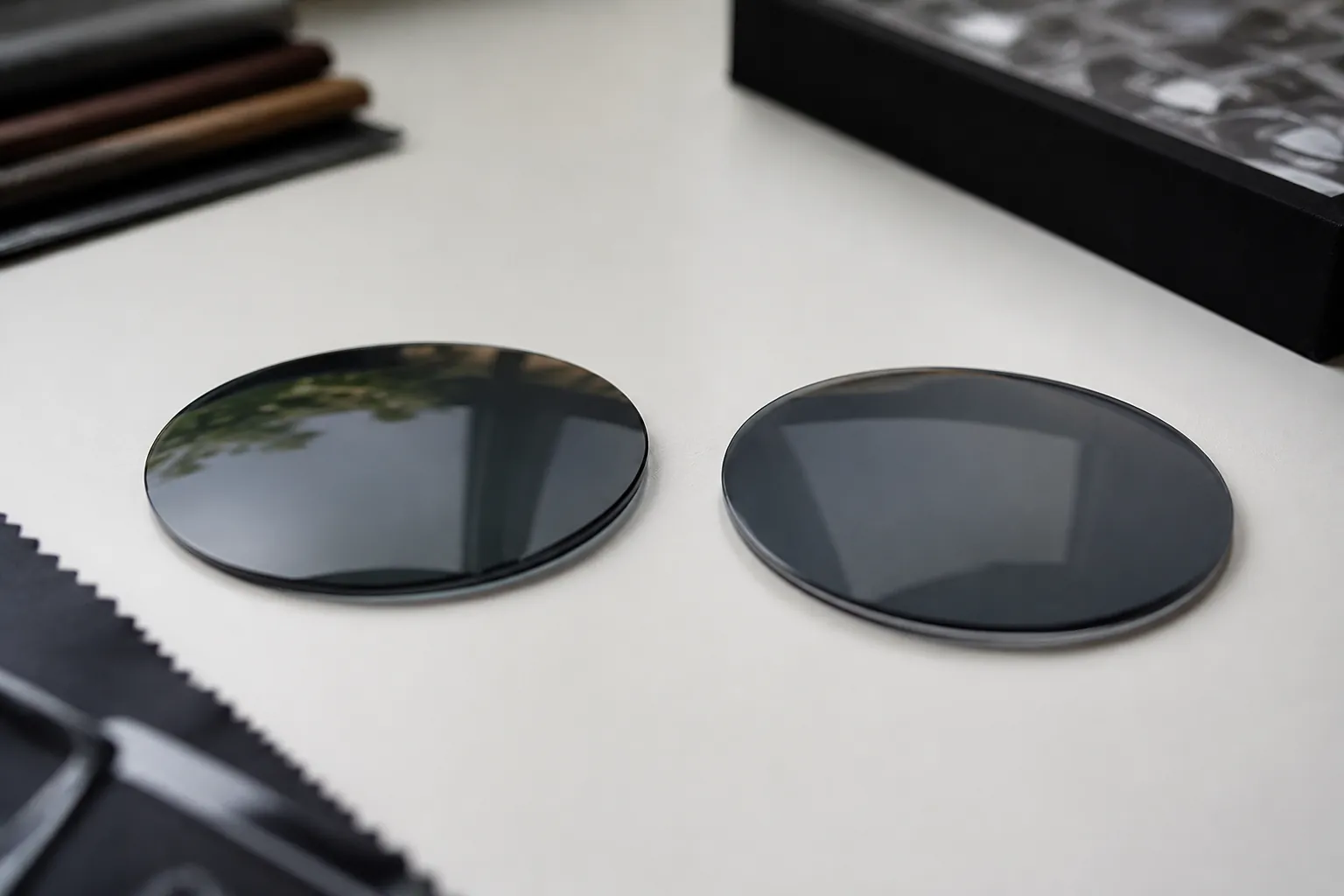
This guide is for brand owners, importers, distributors, and retail buyers sourcing polarized sunglasses at volume. The first decision is not which lens sounds premium. It is which lens construction fits the target price, product positioning, and risk level of the sales channel. PC, TAC, and nylon polarized lenses all have valid commercial use, but they differ in impact behavior, optical performance, scratch resistance, edge stability, and processing demands. If you lock the lens spec too early without checking channel, frame geometry, and compliance needs, the cost often shows up later through sample revisions, higher reject rates, or avoidable warranty claims.
Start with channel economics, not material preference
Many buyers start by asking which polarized lens is best. In sourcing terms, that is usually the wrong question. Start with the sales channel. Then work backward to the lens.
A low-price promo program does not need the same lens as a performance style sold through fishing shops, cycling dealers, or outdoor specialty retail. Entry-level programs usually need acceptable optics, decent durability, and tight cost control across the full landed-cost model. Performance channels care more about clarity, comfort, low distortion, and stable behavior in wrapped shapes. Those priorities narrow the lens choice fast.
- PC polarized is often the first option for price-sensitive retail, youth styles, tourist channels, and casual use where low weight and impact resistance matter.
- TAC polarized is widely used in fashion, gift, department-store, and distributor programs because it offers a familiar balance of appearance and cost.
- Nylon polarized is more often considered for marine, cycling, fishing, driving, and performance outdoor channels where wearers are more likely to notice optical quality, weight, and comfort in wrapped frames.
At factory level, lens choice also changes how the order runs. It affects edging behavior, mounting pressure, cosmetic inspection points, and the risk of stress marks or assembly rejects. Lens material is not just a line on the tech pack. It changes how repeatable the product is in bulk production.
Head-to-head: cost, optics, durability, and process behavior
PC, TAC, and nylon polarized lenses are not direct substitutes. Each brings a different balance of optical performance, toughness, scratch sensitivity, and process tolerance during edging and assembly.
| Lens type | Typical thickness | Key strengths | Main risks | Relative cost |
|---|---|---|---|---|
| PC polarized | Often used in thin plano sunglass constructions; exact thickness depends on design and performance target | Good impact resistance, low weight, and broad commercial usability for cost-sensitive programs | Scratch performance depends heavily on hard-coat quality; optics may be less refined in some high-wrap applications | Lowest to lower-mid |
| TAC polarized | Usually supplied as a laminated construction; total thickness varies by supplier and lens design | Commercially versatile, visually familiar, and widely used across fashion and general retail | Laminated structure can be vulnerable to edge stress, heat exposure, or delamination if process control is weak | Mid |
| Nylon polarized | Common in sport and wrap applications; thickness varies with curve, design, and supplier specification | Strong optical performance, light weight, and good suitability for performance-oriented wrapped frames | Higher cost and tighter processing demands during edging and mounting | Highest |
The cost spread shows up early in quotation and sample review. A factory may accept low MOQs for development or trial orders, but unit economics shift as volume rises because setup time, handling, material yield, and reject allocation are spread across more units.
That matters when the retail target is tight. In many programs, nylon is ruled out first because the upgrade is hard to justify on opening-price product. TAC often sits in the middle. PC is usually reviewed first for the most cost-sensitive builds. Still, buyers should confirm with live factory quotations. Cost hierarchy alone does not decide the right lens.
One more point. Buyers should separate polarization from base lens material. Polarization comes from a functional film or polarized layer within the lens system. Final performance depends on the full construction, including substrate, coatings, curvature, tint, optical quality, and the way the lens is mounted into the frame.
Where each lens wins and where it fails in real orders
PC polarized is often chosen for simple commercial reasons. It fits programs where rough handling is likely and where the price structure leaves little room for premium lens options. It can work well for casual retail, travel retail, and lower-price volume programs. The trade-off is clear: buyers chasing premium visual performance may find it less convincing in demanding wrapped styles or direct side-by-side comparisons with higher-performance materials.
TAC polarized remains common because it is commercially balanced and widely available. It can suit many fashion and general retail programs if the supplier has stable lamination quality and good assembly control. The main caution is structural, not cosmetic. Because TAC is laminated, poor edge finishing, excess heat, or too much mounting stress can lead to bubbling, edge lift, stress marks, or delamination.
Nylon polarized is more often justified when the wearer is likely to notice optical performance during real use. Performance outdoor, marine, and cycling channels may value lower visual fatigue, lower distortion, and better comfort in wrapped geometries enough to support the added cost. If the retail story and target margin do not support that upgrade, nylon is usually the wrong choice. Simple as that.
For many buying teams, the practical sequence is straightforward:
- If the project is price-first, start with PC.
- If the project is balancing price and presentation, start with TAC.
- If the project is performance-first, start with nylon.
Then test the sample against the actual selling environment. A lens that looks fine on a desk can behave differently after mounting, shipping, storage, or repeated wear in the target channel.
Factory controls buyers should ask about during sampling
Lens material changes production behavior. Good buyers ask process questions early. That reduces the risk of approving a sample that looks acceptable but cannot be reproduced consistently in bulk.
For PC lenses, key controls include polarization orientation, hard-coat consistency, surface cleanliness before coating, and cosmetic inspection after mounting. If hard-coat performance is weak or inconsistent, scratch complaints can appear fast.
For TAC lenses, lamination quality is critical. Buyers should ask how the factory controls film alignment, bond cleanliness, edge finishing, and assembly pressure. Excess heat or mechanical stress can damage the laminated structure even if the first sample looks fine. QC should cover bubbles, edge lift, delamination, warpage, and visible stress patterns.
For Nylon lenses, geometry and fit control matter most, especially in wrapped frames. Ask how the factory manages bevel depth, groove accuracy where applicable, mounting pressure, and lens-to-frame fit validation. Better-run production treats the lens and frame as a system, not as separate parts.
Specific process detail matters here. Buyers should request the supplier's actual inspection points for lens appearance, polarization verification, post-mount fit, and color consistency against the approved sample. If the frame includes decoration such as pad printing, hot foil, laser marking, or metal logo application, confirm the production sequence too. Decoration timing affects handling risk and rework exposure.
Lead time needs the same discipline. Sample timing and bulk timing vary by factory, order complexity, coating requirements, and packaging. Get written confirmation of the sample schedule, approval cutoff, and bulk production window. Do not rely on verbal estimates.
What the MOQ and price breaks really mean
Most buyers know that higher volume can lower unit cost. Fewer look closely at why. With polarized sunglasses, price breaks usually come from setup efficiency, material planning, labor distribution, packaging efficiency, and the factory's ability to absorb rejects over a larger run.
- 50 pairs: useful for development samples, market testing, internal review, or small pilot runs, but unit cost is usually high because setup and handling are spread over very few units.
- 300 pairs: often a practical level for distributor trials or smaller retail tests where packaging and assembly become easier to standardize.
- 1000 pairs: often a more stable commercial level for brand programs because material planning and production scheduling become more efficient.
- 5000+ pairs: usually gives the factory more room to optimize purchasing, production flow, and decoration sequencing across colorways and SKUs.
| Volume band | Best-fit lens options | Commercial logic | Main buyer caution |
|---|---|---|---|
| 50-299 pairs | PC, TAC | Sampling, trial orders, and low-risk channel tests | Avoid specifying a premium lens before confirming the channel can support it |
| 300-999 pairs | PC, TAC, selective nylon | Useful for distributor launches and regional retail tests with better cost control | Confirm reject policy, color approval standard, and packaging details early |
| 1000-4999 pairs | TAC, PC, nylon for stronger channels | Better basis for optimizing ex-factory cost and supply planning | Lock lens spec, decoration method, and compliance target before deposit |
| 5000+ pairs | All three, depending on channel | Best leverage for pricing and scheduling if the specification is already proven | Do not cut target cost so far that coating, lamination, or QC control gets weaker |
The cheapest lens is not always the cheapest program. Small BOM savings disappear quickly if the result is delayed approvals, repacking, high reject rates, or field complaints tied to scratches, distortion, or structural failure.
Compliance requirements and documentation discipline
Polarized sunglasses still need to meet the rules of the destination market. A dark tint or a polarization demo card is not proof of compliance. Buyers should match documentation to the exact product configuration being ordered.
Common references include CE EN ISO 12312-1 for Europe, ANSI Z80.3 as a common US sunglass standard reference, AS/NZS 1067 for Australia and New Zealand, and REACH for relevant chemical-substance controls. Some buyers also ask about FDA registration in the US context, but it is not a substitute for product-level performance or safety testing. Factory-system references such as ISO 9001 and social compliance frameworks such as BSCI can help with supplier evaluation, but they do not replace test reports for the finished product.
The core sourcing rule is specificity. A report for one lens construction, tint, or finish may not automatically cover another. If the order changes from TAC to nylon, from one tint category to another, or from a non-mirrored lens to a mirrored finish, buyers should confirm whether the existing documentation still matches the production spec.
Before bulk release, confirm in writing which reports will be supplied, which market they are meant for, and whether the tested sample matches the approved production sample in lens construction, tint, and finish. Also confirm whether any packaging warnings, carton marks, or user information are required for the destination market.
A practical decision framework before placing the PO
Many avoidable disputes start with incomplete lens specifications. A clear buying framework cuts that risk.
- Set the price architecture first. If the ex-factory target is tight, begin with PC or TAC and upgrade only if the channel economics support it.
- Define the real sales channel. Casual retail and promo programs usually reward cost control, while sport and marine channels are more likely to reward optical performance.
- Rank the likely failure modes. Scratch complaints, delamination, distortion, and fit-related stress do not carry the same commercial impact in every program.
- Sample only the most relevant constructions. In many cases, comparing two lens options is enough to make a sound buying decision.
- Write an approval specification. Confirm lens material, polarization requirement, tint, mirror or flash treatment, compliance target, logo method, packaging, and any coating requirement in writing.
- Stress-test the approved sample. Check mounted-lens fit, appearance after handling, visual clarity, packaging durability, and behavior after storage or heat exposure where relevant.
Before deposit, buyers should also confirm the following in writing:
- Lens material: PC, TAC, or nylon
- Polarization requirement and how it will be checked
- Tint color, mirror treatment, and acceptable color tolerance to approved sample
- Hard-coat requirement and scratch-performance expectation
- Frame-to-lens fit method for the selected construction
- Destination-market standards and required reports
- Approved decoration method such as pad print, hot stamp, laser, or metal logo
- Packaging specification and carton marking details
MOQ flexibility can help if it is managed carefully. A low initial quantity can test demand before scale-up, while larger quantity breaks create a path to better pricing once the lens construction is proven. The right first order is not always the cheapest sample run. It is the order that can be repeated with the same quality and without preventable surprises.
A practical sourcing rule: approve the lens and frame as a system, not as separate components. Many lens complaints start with poor assembly fit or excessive mounting stress, not with the raw lens material alone.
Have a custom sunglasses project in mind?
Send us your styles, target market and quantities and we will return a detailed quote with MOQ, lead time and a sample plan.
Get a QuoteWhy source this from Wenzhou with LumiShades
Wenzhou in Zhejiang Province is widely regarded as China’s eyewear manufacturing capital, producing a large share of the world’s sunglasses. That concentration matters to buyers: a deep local supply chain for acetate sheet, hinges, lens blanks, plating and packaging means shorter component lead times, easier color and material matching, and a workforce with decades of eyewear-specific skill. LumiShades has manufactured in this ecosystem since 2009, and our vertical integration — in-house injection molding, acetate cutting, CNC milling, lens tinting, decoration and quality control — means no part of your order is quietly subcontracted to a workshop you cannot audit.
For international buyers, that vertical control translates into accountability. When a single factory owns every step, defects are traced and fixed at source rather than bounced between vendors, and your specifications survive intact from first sample to bulk. We back this with 15+ years of experience, shipments to 60+ countries, more than 5 million pairs produced per year and a 98.5% on-time delivery rate. Our certifications — CE EN ISO 12312-1, FDA registration, ANSI Z80.3, AS/NZS 1067, REACH, ISO 9001 and BSCI audit — mean the compliance documentation your market requires already exists. Explore our manufacturing capabilities and quality control process to see how this works in practice.
Frequently asked questions
Which polarized lens is usually best for a low-price retail program? PC is usually the first lens to evaluate for a low-price retail program because it is widely used, lightweight, and often the easiest starting point for cost-sensitive builds. TAC may also work if the target retail price leaves more room. Ask the supplier to quote both constructions against the same frame, packaging, and decoration so you can compare real ex-factory cost rather than rely on material assumptions.
Is TAC always better than PC for polarized sunglasses? No. TAC is not automatically better than PC. TAC is often chosen for its familiar balance of appearance and cost, but it is a laminated construction and can be more sensitive to edge stress, heat, and process inconsistency. PC is often the safer starting point when impact resistance, rough handling, or strict cost control matters more than premium optical positioning. The practical way to decide is to review mounted samples, check scratch-performance expectations, and confirm how the factory controls lamination or coating quality.
When should a buyer pay more for nylon polarized lenses? A buyer should usually consider nylon when the sales channel can clearly reward better optical performance, lower weight, and comfort in wrapped or sport-oriented frames. Typical examples include fishing, cycling, marine, driving, and outdoor specialty programs. Before approving the upgrade, confirm three things: the retail margin supports it, the frame geometry actually benefits from it, and the supplier has experience processing nylon in the required curve and shape.
What is the biggest QC risk with polarized lenses in bulk orders? The biggest QC risk depends on the lens construction, so the inspection plan should match the material. For PC, a common issue is weak or inconsistent hard-coat performance. For TAC, the main risks are lamination-related defects such as bubbles, edge lift, stress marks, or delamination. For nylon, the key risks are fit accuracy, edging consistency, and stress from mounting in wrapped frames. Ask the supplier to show the exact in-line and final QC checks used for the lens type you are buying.
How should I match compliance paperwork to my order? Request documents that match the final product configuration as closely as possible, including lens construction, tint, finish, and destination market. Ask the supplier to identify which reports apply to the specific SKU and whether they are based on the same sample approved for production. Common references buyers may review include CE EN ISO 12312-1, ANSI Z80.3, AS/NZS 1067, REACH, FDA registration where relevant, ISO 9001, and BSCI, but only product-relevant documentation should be used to support the shipment.
Ready to start?
Explore our wayfarer sunglasses or request a quote — our sales team replies within 12 hours.
Request a Quote