
Why Polarized Sunglasses Get Returned
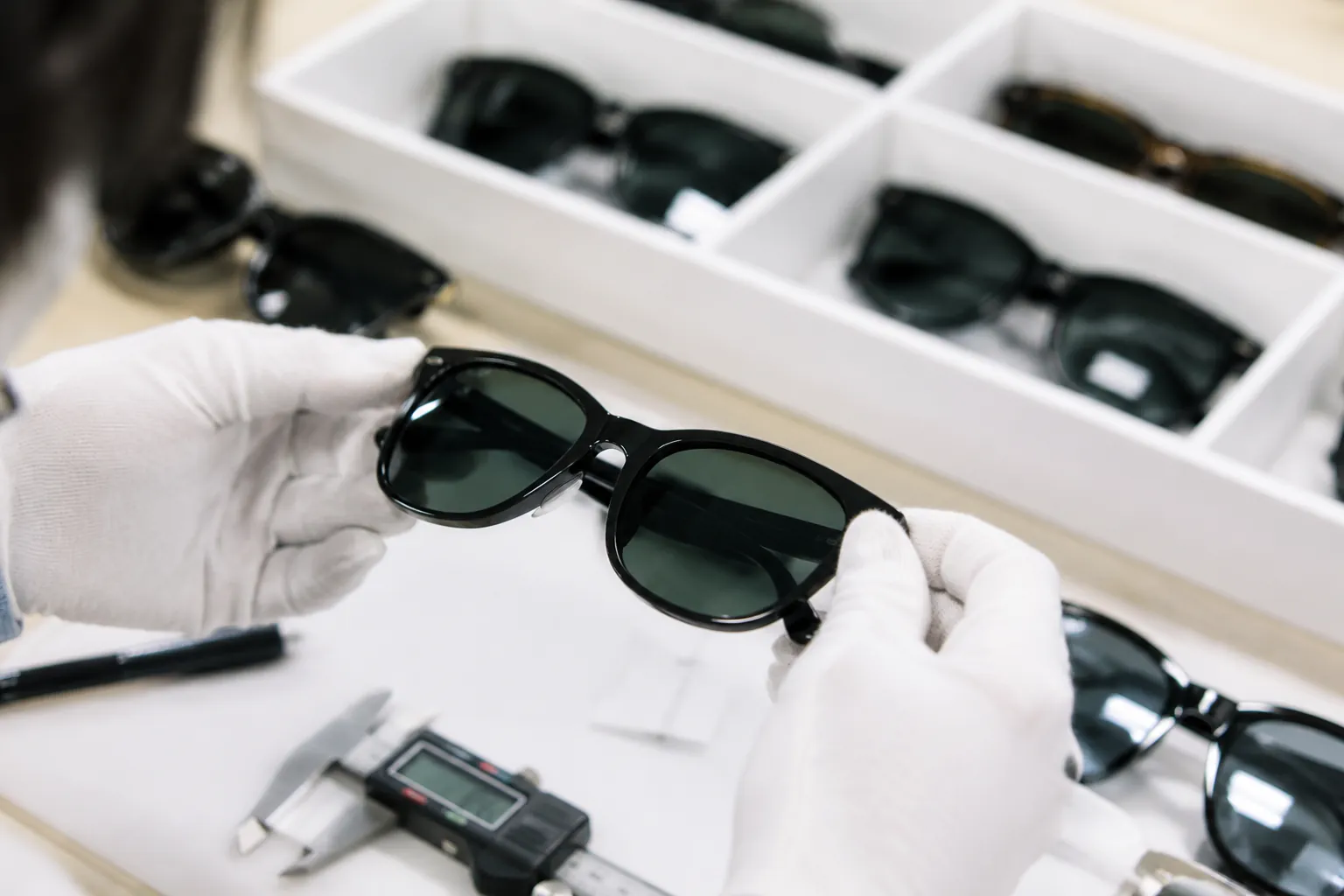
This article is for brand owners, importers, distributors, and retail buyers sourcing polarized sunglasses in volume. It focuses on the decisions made before production that later show up as returns, bad reviews, and channel mismatch. The goal is operational: fewer complaints, tighter specs, and a better match between lens performance, price point, and end use. If you buy polarized eyewear on MOQ, sample, and bulk timelines, most avoidable problems begin long before mass production starts.
The return problem starts in the purchase order
Most polarized sunglasses returns do not come from one factory defect. They start with a weak sourcing brief. A buyer writes polarized lens on the purchase order and stops there. No channel. No visible light transmission target. No lens category. No cosmetic tolerance. No note about side effects. Then the factory builds to a broad commercial assumption, and the complaints arrive after launch: too dark for daily wear, awkward in mixed light, wrong for the intended activity, or visibly inconsistent under inspection.
Polarization solves one problem. It cuts glare from flat reflective surfaces such as roads, water, snow, car hoods, and pavement. That is useful. It is not universal. It can reduce readability on LCD dashboards, phone screens, aircraft displays, fuel pump screens, and some retail POS devices. So one polarized lens spec rarely fits every channel. A marina shop, a golf account, a driving-focused ecommerce store, and a mass fashion retailer may each need a different lens stack even if the frame is identical.
Start with the sales channel. Then define the lens stack. Then state the inspection rule. For example: mass retail fashion SKU, TAC polarized gray lens, category 3 target, VLT 12% to 18%, no backside AR, optional silver mirror, not positioned for glacier use, and a screen-interference notice on the packaging. That is different from a fishing-store SKU with a brown polarized lens, a contrast-oriented tint, and a different merchandising message.
A capable manufacturer can execute a spec. It cannot guess the trade-offs you will accept at your price point.
Treat polarization as a full lens spec
Buyers often write polarized lens in the tech pack as if that settles the job. It does not. Polarization is one part of a larger optical system. You still need to specify lens material, tint, lens category, visible light transmission target, base curve, coating stack, mirror treatment, and cosmetic grade.
Different constructions behave differently in production and in the field. TAC polarized lenses are common in private label programs because they support broad color options and tighter cost control. They are often used in fashion and mid-price retail, but the laminate structure needs process control. Heat, poor edge finishing, or bad storage can raise the risk of warpage or delamination. PC polarized lenses are used more often in sport or impact-focused programs because they are lighter and more impact resistant, but they can be more sensitive to scratch visibility, mold stress, and coating consistency. CR-39 can deliver strong optical clarity in selected programs, but it is less common in value-driven sunglass runs because of weight, cost, and process fit.
| Lens option | Typical buyer reason | Main advantage | Common complaint risk |
|---|---|---|---|
| TAC polarized | Private label fashion and mid-price retail | Good cost control, broad tint and mirror options | Delamination or edge instability if process control is weak |
| PC polarized | Sport, youth, and impact-focused programs | High impact resistance and lighter weight | Scratch visibility, stress marks, coating inconsistency |
| CR-39 polarized | Higher-perceived optics in selected premium runs | Good visual clarity and stable tint appearance | Higher cost, heavier feel, less common for value MOQ runs |
| Gray category 3 | General outdoor use | Neutral color perception and broad market acceptance | Customers expecting brighter indoor-outdoor crossover use |
| Brown category 3 | Driving, fishing, contrast preference | Higher perceived contrast for many users | Mismatch when customers expect a neutral gray view |
Write the lens as a full stack, not a buzzword. Example: TAC polarized, 1.1 mm construction, gray tint, category 3 target, VLT 14% plus or minus 2%, UV protection suitable for the market, silver mirror, hard coat, no backside AR, cosmetic grade A front-surface inspection at 40 cm under 600 to 1000 lux. That gives sourcing, sampling, and QC something measurable.
Check screen interference before customers do
This is one of the most predictable polarized-lens complaints, and buyers still miss it during development. Polarized sunglasses can interact with LCD and LED screens at certain angles. Users may see dark zones, color shift, or full blackout when they tilt their head. That can happen on car dashboards, center infotainment displays, marine electronics, aircraft instruments, phones, tablets, payment terminals, and kiosk screens.
That does not mean the lens is defective. It means the product-channel fit may be wrong, or the customer was not warned. If you sell through auto accessory stores, driving-focused ecommerce, travel retail, or resort channels where customers often look at screens outdoors, check this during sampling. Do not wait for the return wave.
- Test samples on at least three screen types: phone, car display, and POS or kiosk screen.
- Rotate the frame through normal head angles from 0 to roughly 45 degrees.
- Check readability in daylight, not only under office lighting.
- Record whether one lens orientation creates stronger blackout than another.
- Decide in advance whether a warning label, insert card, or product-page note is required.
Many returns come from expectation failure, not non-compliance. A lens can meet CE EN ISO 12312-1, ANSI Z80.3, or AS/NZS 1067 and still disappoint a customer who expects perfect screen visibility in a car. That is a merchandising and communication decision. Own it early. Customer service cannot fix a predictable use-case conflict after launch.
Choose color and finish with use in mind
Polarized programs are often approved from a top-view sample photo or a counter sample seen under office light. That is weak. Lens color changes how customers judge comfort, brightness, contrast, and intended use. Finish choices affect both appearance and return risk.
Gray is usually the safest commercial choice for broad distribution because it reads neutral and familiar. Brown often works well for driving and fishing users who want stronger perceived contrast. Green can fit some classic or heritage programs, but it is less universal in many commercial channels. Mirror finishes can improve shelf appeal and cut some front-surface glare, but they also raise cosmetic inspection sensitivity. Pinholes, hairline scratches, coating dust points, and left-right color mismatch become easier to spot once a mirror is applied.
At the sample stage, ask for side-by-side lens evaluation under three conditions: daylight outdoors, indoor retail light, and white-background inspection. If the program includes multiple colorways, confirm whether all SKUs use the same base tint under different mirror colors. Otherwise customers compare two frames side by side and assume one is darker, sharper, or better quality even when both technically pass spec.
Factories with in-house lens tinting can usually control bulk color more tightly, but only if you approve a master standard with a target range. Do not stop at smoke lens similar to sample. Define the approved sample, the target category, and the acceptable variance. Without that, every restock becomes a debate.
Do not cut price at the expense of complaints
Price breaks are real, and MOQ logic matters. A supplier may offer low MOQs such as 50 pieces per color or design for a market test, with better pricing at 300, 1000, and 5000 pieces. On basic private label polarized programs, unit price improves as tooling, decoration, and setup cost spread across volume. But polarized returns do not care about purchasing logic. They show up where cost cutting touched the customer experience.
| Order volume | Typical unit-price logic | What usually improves | What buyers should protect |
|---|---|---|---|
| 50 pairs | Highest unit cost due to setup spread | Low commitment, fast market test | Sample-to-bulk color match and realistic approval standard |
| 300 pairs | Noticeable cost improvement | Better decoration efficiency and packing stability | Left-right polarization consistency and lens darkness match |
| 1000 pairs | More competitive mainstream pricing | More stable production planning and material allocation | Coating quality, scratch inspection, and packaging accuracy |
| 5000+ pairs | Best economics on basic builds | Lowest per-unit overhead and smoother line scheduling | Compliance paperwork, carton traceability, and bulk QC discipline |
Lead time matters too. Sample development may take 7 to 10 days for a standard colorway, while bulk lead time often runs 25 to 35 days after approval and deposit, depending on material readiness and decoration complexity. If you cut cost by changing lens construction, dropping hard-coat quality, or loosening cosmetic criteria after sample signoff, you raise the odds of a return problem at the exact moment when schedule pressure is highest.
Protect four items first on a polarized program: lens construction, left-right visual match, coating quality, and final QC criteria. Decoration methods such as pad printing, laser engraving, hot stamping, or metal logo application matter to branding, but they rarely drive lens-led returns. If the budget has to move, protect the lens before the logo plate.
Approve samples with a real-use test plan
Too many buyers approve samples by appearance only. For polarized eyewear, that is not enough. A sample phase is useful only if it follows a repeatable checklist that reflects how the product will actually be sold and worn.
- Check polarization effect outdoors near road glare, water reflection, or bright pavement.
- Compare left and right lens darkness against a white card in daylight.
- Inspect mirror or hard-coat uniformity under strong side light.
- Wear the frame for 15 to 20 minutes to assess visual comfort and distortion.
- Test screen visibility on common customer devices and at multiple head angles.
- Review lens markings, warning copy, barcode, and packaging claims for the target market.
Turn this into a signoff sheet if you can. Pass or fail. Not a loose email that says sample approved. Buyers should also define inspection conditions. For example: cosmetic check at 40 cm, under diffused white light, no obvious front-surface defects visible in normal wearing position; left-right tint difference not obvious to the naked eye; branding centered within agreed artwork tolerance; hinges and screws checked after 5-cycle open-close handling. These are not lab tolerances, but they create a practical standard for factory QC and incoming inspection.
If the bulk lead time is only 25 to 35 days, the sample approval window is where real risk control happens. After mass production starts, changes to tint, mirror effect, or coating stack can affect scrap rate, remake time, and shipment timing. Factories with in-house injection molding, acetate cutting, CNC milling, lens tinting, decoration, and QC can correct faster than traders relying on multiple subcontractors. Still, vague approval criteria produce vague output.
Keep claims and compliance aligned
Compliance mistakes cause a different kind of return problem. Sometimes the product is acceptable, but the claims are sloppy or the paperwork does not match the SKU. Buyers mix market requirements, overstate performance, or reuse packaging from a non-polarized style without checking whether the tested lens stack is still the same.
For sunglasses programs, confirm which market standard applies to the shipment and whether the test report matches the actual lens construction, tint, and category being sold. Relevant standards may include CE EN ISO 12312-1, ANSI Z80.3, and AS/NZS 1067. Chemical and product-control obligations may also involve REACH, FDA registration where relevant to the business context, and factory system controls such as ISO 9001 or BSCI. Those system certifications are not a substitute for product testing, but they do affect process reliability and documentation discipline.
Keep claims factual. Avoid wording such as best for driving in all conditions. Do not use one test report across visibly different lens categories without verification. A category 3 gray polarized lens and a lighter category 2 fashion tint should not be treated as interchangeable on packaging just because the frame is the same. The documentation file should tie together the purchase order, approved sample, lens spec, packaging artwork, and test record. That matters for distributors and importers, because one documentation mismatch can affect a full shipment, retailer compliance review, or customs event.
Use a buyer-side control framework
If you want fewer post-sale complaints, build a control framework before deposit payment and repeat the key checks before shipment.
- Define the channel. Fashion retail, driving, fishing, resort, sport, or general ecommerce. Each channel tolerates different trade-offs.
- Write the full lens stack. Material, tint, category target, VLT range, mirror or no mirror, and coating requirements.
- Approve with real-use tests. Outdoor glare, screens, comfort, left-right consistency, and cosmetic inspection under defined light.
- Lock compliance scope. Confirm which standards, warnings, and paperwork apply to that exact SKU and destination market.
- Set QC language. State acceptable cosmetic tolerance, logo position, lens match standard, and packaging checks in writing.
- Scale carefully. Use 50-pair or 300-pair runs to test the channel before moving to 1000 or 5000-plus.
That last point matters. MOQ flexibility is useful only if you use it to learn. A small run can reveal whether complaints come from tint darkness, screen interference, mirror sensitivity, or simple customer education. Once the complaint pattern is clear, you can scale with better confidence and better unit economics.
Polarized returns are often caused by the spec, the sample review, or the sales claim rather than the lens manufacturing step alone.
Buy like an operator. The return rate usually follows the quality of the sourcing brief.
Know when polarized is the wrong fit
Not every sunglasses line should be polarized. In some fashion-led or screen-heavy channels, non-polarized styles fit customer expectations better and create fewer complaints. That is especially true when the product is meant mainly as an accessory rather than a function-led outdoor tool.
Use polarization where glare reduction is part of the value proposition: driving, fishing, boating, bright outdoor wear, and similar settings. If the channel depends on frequent screen viewing, or if buyers expect a purely fashion use case, make sure the merchandising message is explicit. The right answer is not always to add polarization. The right answer is to match the lens to the selling context.
The lowest return risk comes from a product that does what the buyer promised.
Have a custom sunglasses project in mind?
Send us your styles, target market and quantities and we will return a detailed quote with MOQ, lead time and a sample plan.
Get a QuoteWhy source this from Wenzhou with LumiShades
Wenzhou in Zhejiang Province is widely regarded as China’s eyewear manufacturing capital, producing a large share of the world’s sunglasses. That concentration matters to buyers: a deep local supply chain for acetate sheet, hinges, lens blanks, plating and packaging means shorter component lead times, easier color and material matching, and a workforce with decades of eyewear-specific skill. LumiShades has manufactured in this ecosystem since 2009, and our vertical integration — in-house injection molding, acetate cutting, CNC milling, lens tinting, decoration and quality control — means no part of your order is quietly subcontracted to a workshop you cannot audit.
For international buyers, that vertical control translates into accountability. When a single factory owns every step, defects are traced and fixed at source rather than bounced between vendors, and your specifications survive intact from first sample to bulk. We back this with 15+ years of experience, shipments to 60+ countries, more than 5 million pairs produced per year and a 98.5% on-time delivery rate. Our certifications — CE EN ISO 12312-1, FDA registration, ANSI Z80.3, AS/NZS 1067, REACH, ISO 9001 and BSCI audit — mean the compliance documentation your market requires already exists. Explore our manufacturing capabilities and quality control process to see how this works in practice.
Frequently asked questions
Should every sunglasses line include a polarized option? No. Add polarized styles only where glare reduction is a real benefit, such as driving, fishing, boating, or strong outdoor use. In fashion-led or screen-heavy channels, a non-polarized option can fit customer expectations better and reduce complaints. Decide by channel, not by habit.
What is the biggest sample-stage mistake with polarized lenses? Approving by appearance only. Buyers should test glare reduction outdoors, compare left-right lens match against a white background, inspect coating quality under strong light, and check screen visibility before confirming bulk production. If any of those checks fail, revise the spec before ordering mass production.
How can I reduce risk on a new polarized SKU? Start with a smaller run, such as a 50-pair MOQ or a 300-pair trial, and treat it as a controlled market test. Review whether complaints relate to tint darkness, screen interference, coating appearance, or customer education, then adjust the spec before scaling to 1000 or 5000-plus units.
Do compliance reports guarantee customer satisfaction? No. Standards such as CE EN ISO 12312-1, ANSI Z80.3, and AS/NZS 1067 address defined safety and performance points. They do not prevent complaints caused by screen interference, wrong tint choice, poor channel fit, or unclear claims. Compliance is necessary, but it is not a substitute for product-market fit.
What should I put in the purchase order besides 'polarized lens'? Specify lens material, tint color, lens category target, visible light transmission range, coating stack, mirror finish if any, compliance requirement for the destination market, packaging claims, and cosmetic QC standard. If possible, include the approved master sample reference and a clear sample-to-bulk matching requirement.
Ready to start?
Explore our cat-eye sunglasses or request a quote — our sales team replies within 12 hours.
Request a Quote