
PC vs TAC vs Nylon Polarized Lenses: Buyer Guide
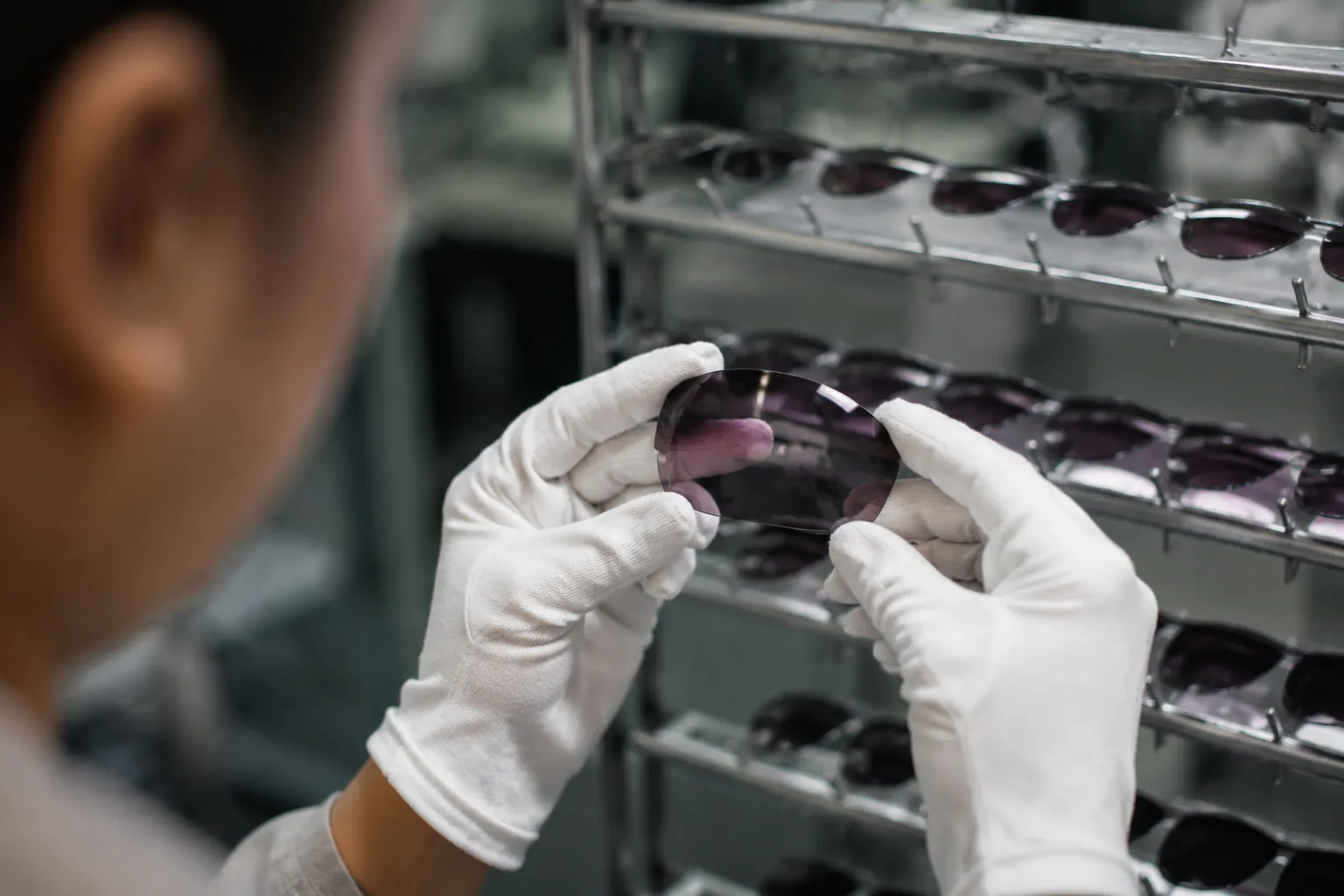
For sunglasses buyers, polarized lens material affects more than the spec sheet. It changes impact behavior, scratch performance, optical consistency, edging yield, complaint risk, and margin. PC, TAC, and nylon can all work. The right choice depends on channel, price point, use conditions, and compliance target. This guide compares thickness, coatings, common failure risks, MOQ logic, lead times, and QC checkpoints so you can choose the right lens construction without overspending or under-specifying the product.
Start With Channel, Price Point, and Use Conditions
Many buyers start by naming a lens material. That is usually the wrong first step. Start with the sales channel, target retail price, expected use conditions, and destination market. A low-cost promo sunglass, a chain-store fashion style, and a performance outdoor SKU do not need the same lens construction.
Lens choice quickly affects three business outcomes: complaint rate, perceived quality, and unit economics. TAC is common in fashion, promo, and mass-market polarized programs because it fits a tighter cost structure. PC is often chosen when impact resistance and rough handling matter more. Nylon usually sits at a higher cost and fits sport or outdoor programs where lower weight, flexibility, and premium positioning support the spend.
Buyer rule: choose for the use case first. Then make sure the material story fits the brand position and compliance target.
A buyer sourcing for youth, travel, boating, fishing, or cycling should care about edge durability, coating performance, lens retention, and how the lens behaves under flex or impact. A buyer sourcing for a seasonal promotion may care more about tint consistency, acceptable polarization, and delivered cost. Different job. Different spec.
This is also where process control matters. Matching the lens to the frame material, base curve, and product claims is easier when one supplier manages tinting, edging, decoration, assembly, and QC under a single process plan. Fewer handoffs usually mean fewer avoidable errors such as left-right tint mismatch, chipped bevels, or coating damage during assembly.
PC, TAC, and Nylon: What Buyers Actually Get
PC, TAC, and nylon are not interchangeable. They differ in construction, edging behavior, coating needs, and field performance. Buyers should compare them on practical factors: finished thickness, optical quality, impact tolerance, scratch sensitivity, and process stability.
| Lens material | Typical finished spec | Main strengths | Main drawbacks | Best fit |
|---|---|---|---|---|
| PC | Commonly around 1.0-1.5 mm as a single-piece lens with hard coat; mirror or flash coating optional | High impact resistance, light weight, widely available, suitable for active use | Scratch performance depends heavily on coating quality; optical quality varies by grade and process | Sport, kids, travel, active retail, impact-conscious programs |
| TAC | Commonly around 1.0-1.2 mm laminated construction with a polarizing film between outer layers | Commercial cost, good polarization effect, suitable for flat and fashion-oriented styles, efficient for volume programs | Lamination quality is critical; edges can be more vulnerable if trimming or beveling is poor; less suitable for rough abuse | Promo, mass retail, seasonal fashion, distributor volume programs |
| Nylon | Commonly around 1.0-1.5 mm, often used in sport lenses with coating options depending on tint and mirror finish | Light weight, flexibility, good fit for wrap frames, strong premium sport positioning | Higher cost, tighter processing requirements, consistency depends on supplier control | Premium sport, outdoor, cycling, fishing, performance eyewear |
PC is often the safer choice when breakage complaints would cost more than a modest material upcharge. TAC is often the most economical route for polarized programs with a hard cost target. Nylon is usually chosen when the buyer wants a performance story backed by lower weight, flexibility, and a more technical wearing feel.
That is the real test. Not which material sounds best, but which one supports the sales promise without pushing the bill of materials past what the channel can carry.
Optics, Coatings, and Polarization Control
Polarization quality is not just about adding a polarizing layer. It depends on material grade, lamination quality, coating stack, tint consistency, lens curvature, edging quality, and inspection discipline. When control is weak, the same problems show up again and again: haze near the edge, left-right color mismatch, visible stress patterns, uneven mirror effect, or batch-to-batch tint drift.
TAC is common because its laminated structure can deliver stable polarization at a competitive cost. A typical TAC lens uses protective outer layers around the polarizing film, then surface treatments as needed. The main risk is poor lamination control. If heat, pressure, trimming, or storage conditions drift, buyers may see delamination, edge lift, or visible bonding lines, especially near the bevel or other stressed areas.
PC is mechanically tough, but coating discipline matters. A lot. Without a solid hard coat, scratch complaints usually appear long before structural failure. For retail programs, buyers should ask for the exact coating stack: hard coat, mirror, flash, anti-reflective back coating if used, and any hydrophobic or oleophobic top layer. Every added treatment affects appearance, cost, and yield risk.
Nylon often gives wrapped sport frames a more technical feel, but premium channels usually expect tighter color and appearance control. Approved master samples should define lens color, visual density, and the cosmetic standard for mirror or flash effects. QC should inspect lenses under consistent lighting and verify left-right matching before assembly.
- Ask for the exact lens stack: base material, polarizing layer or construction method, hard coat, mirror or flash layer, and any hydrophobic or oleophobic finish.
- Approve color on a finished lens, not on a raw resin chip or digital image.
- Confirm whether tinting and coating are controlled internally or outsourced.
- Require left-right lens matching and edge inspection before assembly.
Less outsourcing usually makes consistency easier to hold across tint, edging, and final appearance. Do not assume that control exists. Ask how it is checked.
Durability, Edge Quality, and Common Failure Modes
Most lens complaints come from a short list of repeatable failures. They are usually not random. They start with a weakness in coating, lamination, cutting, beveling, assembly fit, or post-coating handling.
- Scratch complaints: often linked to weak hard-coat performance or poor handling after coating. Scratch resistance is mostly a coating and process-control issue.
- Delamination or edge lift: mainly a TAC risk if bonding, trimming, beveling, or storage are not well controlled.
- Edge chipping: more likely when lenses are edged too aggressively, when brittle constructions are forced into tight frames, or when groove tolerances are poor.
- Warp or uneven curvature: can affect fit, appearance, and optical comfort, especially in high-volume production with weak process control.
- Color mismatch: commonly caused by tint variation, inconsistent coating application, or mixed lots during assembly.
Buyers should ask for clear QC criteria, not generic promises. Useful checkpoints include scratch inspection method, allowable edge-chip standard, bubble or particulate limit, mirror uniformity standard, and acceptable left-right color variance. Even if the supplier uses internal criteria, those standards should be written into the order file or approved sample record.
Process detail matters. CNC-edged lenses usually give better bevel consistency than loosely controlled manual finishing. Decoration matters too if branding is placed on the lens or frame. Common methods include screen printing, pad printing, laser marking, and foil or hot-stamp effects where suitable. Every added process step creates another rejection risk, so decoration should match the product value and the channel's tolerance for defects.
Bottom line: lens quality depends on more than the raw material. It depends on the final cut, coating, frame fit, and release standard.
Cost, MOQ, and Lead-Time Logic by Program Type
Lens cost only makes sense in context. Review it with MOQ, decoration complexity, packaging, and annual volume. Small trial runs usually carry higher unit cost because setup, lens preparation, sample matching, QC planning, and packing flow still have to be built, even for limited quantities.
As volume rises, the cost structure usually improves because setup and inspection effort spread across more units. TAC programs are often the easiest way to commercialize entry-level polarized projects. PC and nylon programs may need tighter process control, especially if the design uses wrapped lenses, mirror finishes, or stricter cosmetic standards.
| Channel | Typical lens choice | Commercial logic | Lead-time pattern |
|---|---|---|---|
| Promo | TAC | Often the most cost-efficient way to offer polarized function at scale | Usually easiest to schedule with simple tints and uncomplicated branding |
| Mass retail | TAC or PC | Balances appearance, claims, and complaint risk across wider volume | Lead time depends on sample approval, coating complexity, and packaging |
| Sport / outdoor | PC or nylon | Higher durability and performance expectations can justify higher unit cost | May require additional approvals if mirror, flash, or technical coatings are used |
| Premium branded | Nylon or upgraded PC | Supports premium positioning and lower tolerance for optical or cosmetic defects | Usually benefits from stricter pre-production confirmation |
Sample timing and bulk timing vary by supplier capacity, material availability, finishing steps, and packaging complexity. Ask for written lead times for sampling, pre-production approval, and bulk production. Not a rough estimate. If multiple colorways or custom packaging are involved, add more buffer to the launch plan.
For cleaner sourcing comparisons, ask suppliers to separate pricing by lens construction, decoration, packaging, and compliance-related documentation where relevant. That makes TAC, PC, and nylon quotes easier to compare on real terms.
Compliance, Labeling, and Market Access
Do not source polarized lenses without a destination-market compliance review. Common references in eyewear sourcing include CE EN ISO 12312-1, ANSI Z80.3, AS/NZS 1067, REACH, FDA registration, ISO 9001, and BSCI. Buyers need to know what each one covers and whether it applies to the finished product, the factory system, or supply-chain practices.
For sunglasses sold into relevant markets, CE EN ISO 12312-1, ANSI Z80.3, and AS/NZS 1067 relate to product performance and labeling expectations. REACH covers restricted substances that may affect coatings, dyes, inks, adhesives, and other production inputs. FDA registration often comes up in U.S. sourcing, but buyers should confirm the exact U.S. product and importer requirements for their channel. ISO 9001 is a quality management system standard, not a product-performance certificate. BSCI is a social compliance audit framework, not a lens-safety or product-performance standard.
Buyers shipping to multiple markets should request a compliance map by SKU. It should identify the frame, lens construction, coating stack, intended lens category or transmission range where relevant, product labeling requirements, and the standards the finished product is intended to meet. This matters even more when one collection mixes TAC fashion styles with PC or nylon sport styles, because the same labeling and test path may not apply to every model.
Also confirm channel-specific labeling and document control. A U.S. distributor may ask for support tied to FDA registration and ANSI Z80.3 expectations. A European retailer may focus on CE EN ISO 12312-1-related documentation and labeling. Australia and New Zealand programs may require AS/NZS 1067 alignment. Compliance is not end-stage paperwork. It is a product-development decision.
How to Choose the Right Construction
If you need a fast decision, rank the program on three axes: target selling price, expected use conditions, and tolerance for returns or complaints. That usually points to the right lens family quickly.
- Choose TAC when price control, commercially acceptable polarization, and broad fashion or promotional appeal matter more than maximum impact performance.
- Choose PC when the customer expects higher impact resistance, travel durability, or youth-friendly toughness.
- Choose nylon when selling into cycling, fishing, outdoor, or premium sport channels that can support a higher lens cost.
- Choose PC or nylon for wrap frames, active-use programs, and products marketed for tougher handling.
- Choose TAC for large seasonal runs where margin control and faster commercialization are the top priorities.
A practical sourcing method is to test the same frame with two lens constructions before locking the bulk order. Compare TAC versus PC on scratch visibility, assembly yield, and groove fit. Or compare PC versus nylon on comfort, weight perception, and flex behavior in a wrapped frame. A controlled side-by-side sample review is far cheaper than learning after launch that the lens does not match the channel promise.
Before placing the PO, finalize six items: lens material, tint or lens category target, coating stack, branding method, destination-market compliance requirements, and QC defect limits. Once those six points are documented, quoting and production become much easier to control.
Buyer Checklist Before PO Approval
Use this checklist before approving any quote, sample, or purchase order for polarized sunglasses.
- Confirm the exact lens material: PC, TAC, or nylon.
- Confirm finished lens thickness, polarization construction, and tint target.
- Request coating details, including hard coat, mirror, flash, anti-reflective back coating if used, and hydrophobic or oleophobic options.
- Approve a finished master sample for color, appearance, and left-right matching.
- Define defect limits for scratches, chips, bubbles, haze, mirror inconsistency, and color variance.
- Confirm decoration method on frame or lens, plus artwork placement tolerance.
- Ask for MOQ, volume price-break structure, sample lead time, and bulk lead time in writing.
- Match the SKU to required compliance support for CE EN ISO 12312-1, ANSI Z80.3, AS/NZS 1067, REACH, FDA registration, ISO 9001, and BSCI as relevant to the product, factory, or supply chain.
Keep the spec sheet short, but not vague. A good order file tells the supplier what to make and tells QC what to reject. That protects margin, cuts rework, and makes repeat orders easier to scale.
Have a custom sunglasses project in mind?
Send us your styles, target market and quantities and we will return a detailed quote with MOQ, lead time and a sample plan.
Get a QuoteWhy source this from Wenzhou with LumiShades
Wenzhou in Zhejiang Province is widely regarded as China’s eyewear manufacturing capital, producing a large share of the world’s sunglasses. That concentration matters to buyers: a deep local supply chain for acetate sheet, hinges, lens blanks, plating and packaging means shorter component lead times, easier color and material matching, and a workforce with decades of eyewear-specific skill. LumiShades has manufactured in this ecosystem since 2009, and our vertical integration — in-house injection molding, acetate cutting, CNC milling, lens tinting, decoration and quality control — means no part of your order is quietly subcontracted to a workshop you cannot audit.
For international buyers, that vertical control translates into accountability. When a single factory owns every step, defects are traced and fixed at source rather than bounced between vendors, and your specifications survive intact from first sample to bulk. We back this with 15+ years of experience, shipments to 60+ countries, more than 5 million pairs produced per year and a 98.5% on-time delivery rate. Our certifications — CE EN ISO 12312-1, FDA registration, ANSI Z80.3, AS/NZS 1067, REACH, ISO 9001 and BSCI audit — mean the compliance documentation your market requires already exists. Explore our manufacturing capabilities and quality control process to see how this works in practice.
Frequently asked questions
Which lens material is usually the lowest cost for polarized sunglasses? TAC is usually the lowest-cost option for polarized sunglasses because it is widely used in commercial laminated polarized constructions for promo, fashion, and mass-market programs. To compare quotes properly, ask the supplier to break out lens construction, coating stack, decoration, packaging, and testing or documentation costs. A low TAC quote can look less competitive once mirror coating, premium packaging, or strict cosmetic standards are added.
Which lens material is best for sport eyewear? There is no single best option for every sport program. Nylon is often used in premium sport eyewear because it is light, flexible, and well suited to wrap frames and higher-end positioning. PC is also common in sport and active programs because it offers strong impact resistance and usually lower cost than nylon. If the program depends on wrapped fit, premium feel, or lower return risk, compare the same frame in both PC and nylon before locking the spec.
Do PC polarized lenses scratch easily? PC can scratch more easily than buyers expect if the hard coat is weak or if handling after coating is poor. The material is valued for impact resistance, but scratch performance depends heavily on the surface treatment. Ask the supplier which hard-coat system is used, whether added top coats are applied, and what cosmetic inspection standard is used before packing.
How fast can custom polarized samples be made? Sample timing depends on lens material, tint development, logo method, frame readiness, and packaging requirements. Simple repeat programs may move quickly, while new custom projects with mirror coatings or multiple color approvals usually take longer. Ask for a written sampling schedule that covers artwork approval, lens-color approval, pre-production sample timing, and bulk production timing instead of relying on a verbal estimate.
What should I ask a supplier for on compliance? Ask for compliance documents matched to the exact SKU and destination market, not a generic certificate pack. At minimum, confirm which standard applies to the finished sunglass model, what labeling is required, whether the lens category or transmission range has been defined where relevant, and whether supporting documents match the actual construction you are buying. Common references include CE EN ISO 12312-1, ANSI Z80.3, AS/NZS 1067, REACH, and FDA registration. Also separate factory-level items such as ISO 9001 and BSCI from product-performance documents so nothing is misunderstood.
What order size usually gets better pricing? Pricing usually improves as volume increases because setup, color control, QC planning, and packing labor are spread across more units. The exact breakpoints vary by supplier, frame design, lens construction, and packaging. Ask for a tiered quote at several quantity levels and make sure each tier states what is included: lens type, coatings, logo method, packaging, and compliance-related documentation if applicable. That is the most reliable way to see the real price advantage of a larger order.
Ready to start?
Explore our cat-eye sunglasses or request a quote — our sales team replies within 12 hours.
Request a Quote