
Choosing Gradient, Solid, Flash, and Mirror Lenses
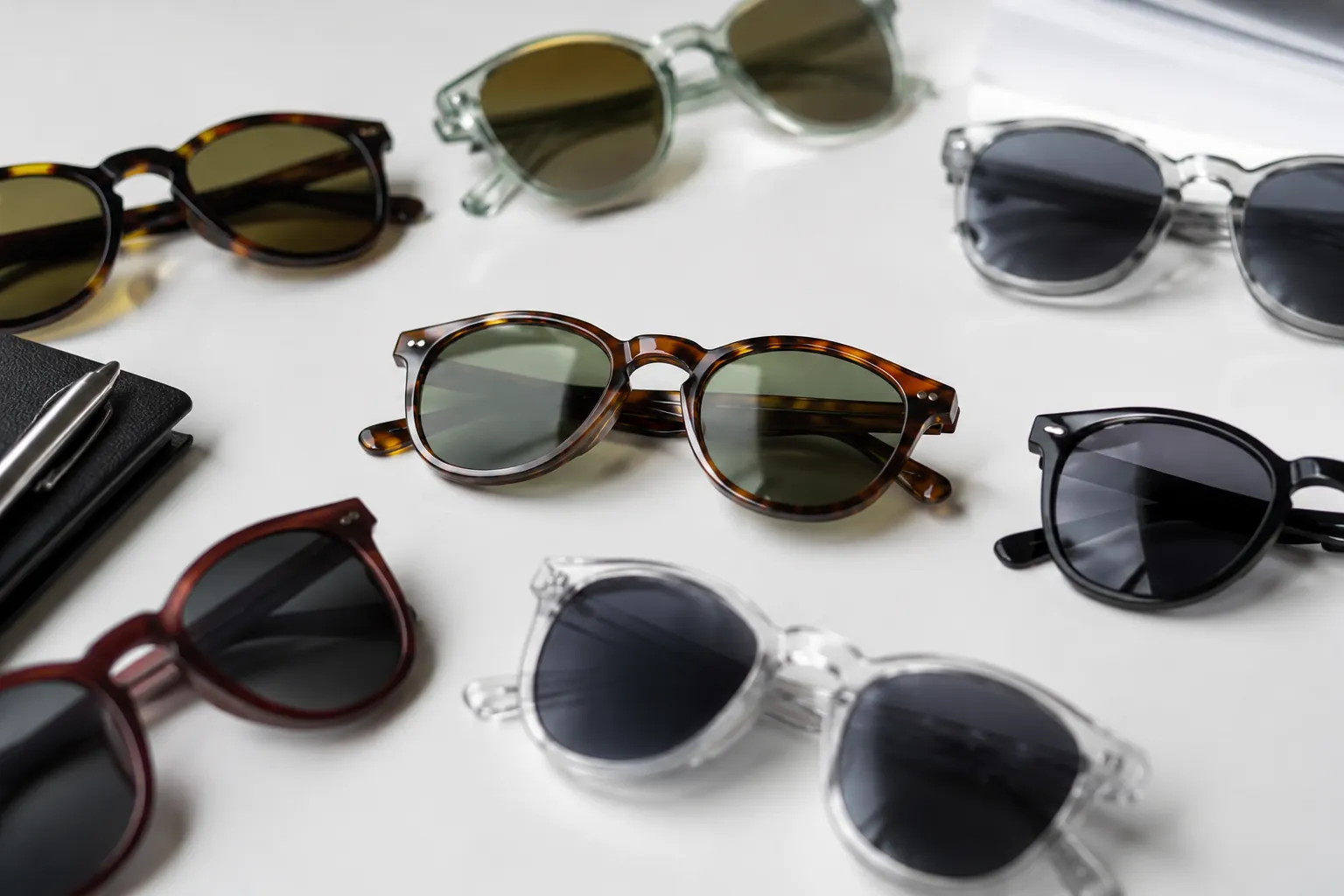
This guide is for brand owners, importers, distributors, and retail buyers selecting lens finishes for custom sunglass programs. The wrong finish can increase cosmetic claims, complicate repeat orders, and create avoidable approval delays. The right choice depends on sales channel, price point, lens material, handling conditions, compliance requirements, and the level of visual variation your customer will accept. Below is a practical framework focused on retail appeal, wearability, process risk, and reorder control.
Start with channel, not color
Many buyers start with appearance: blue mirror, brown gradient, gold flash. In production terms, that is usually the wrong starting point. The first question is where the product will sell and how much cosmetic or claim risk that channel can absorb.
For mass retail, promotional programs, school or corporate uniform projects, and repeat core styles, solid tint is usually the lowest-risk finish. It is easier to explain, easier to approve against a retained sample, and generally easier to repeat in later production. In channels where the product may be handled heavily, cleaned casually, and replenished in multiple batches, that matters more than novelty.
Gradient often fits fashion boutiques, department-store accessories, and optical sidewall displays where try-on influences conversion. It can soften facial appearance and keep the eyes more visible through the lower area of the lens. Flash and mirror finishes are stronger visual statements and usually fit trend-led assortments, seasonal drops, resort retail, beach shops, festival merchandise, and sport-oriented ranges where immediate shelf impact is important.
Channel also determines tolerance for variation. A short seasonal capsule may accept minor lot-to-lot visual movement if the product sells through quickly. A replenishment program usually will not. If a buyer expects repeatability over multiple production dates, some finishes are inherently easier to control than others.
- Mass retail, promo, and uniforms: prioritize solid tint when complaint prevention and reorder consistency matter most.
- Fashion boutiques and optical accessories: gradient and lighter flash finishes can improve try-on appeal while remaining commercially wearable.
- Beach, resort, and sport channels: mirror and stronger flash can add impact, but cosmetic expectations and handling standards should be agreed early.
- E-commerce-first brands: choose finishes that photograph predictably, and tighten sample approval because reflectivity and hue can look different online than in person.
In short, do not ask which finish looks best under sample-room lighting. Ask which finish fits the channel's handling conditions, return risk, and repeat-order requirements.
What each finish really does in production
These four finishes are not just styling options. They involve different production methods, different inspection points, and different failure modes.
| Finish type | Typical process | Best channel fit | Wearability | Defect and reorder risk |
|---|---|---|---|---|
| Solid tint | Uniform tinting or a uniformly colored lens substrate across the full lens | Mass retail, promo, replenishment | Most predictable visual experience | Lowest risk; generally easiest to match to an approved sample |
| Gradient | Controlled top-to-bottom density fade, commonly achieved by tinting or coating methods that require height control | Fashion retail, optical accessories | Good daily wear if the fade is even and suitable for the product category | Medium risk; fade height and left-right matching are critical |
| Flash | Light reflective coating applied over a base lens tint | Trend-led lifestyle, youth, resort | Usually wearable if the base lens remains balanced | Medium to high risk; coating hue and cosmetic appearance can vary by batch |
| Mirror | Heavier reflective coating applied over a base lens tint | Sport, seasonal capsules, high-impact retail | Can feel visually stronger; the base tint still determines much of the actual viewing comfort | Highest risk; cosmetic defects and color mismatch are more visible |
Material choice affects this. TAC polarized lenses can offer good value in many programs, but lamination quality, edge finishing, and polarization consistency still need control. PC lenses are common in lightweight sport or active styles, but coating appearance and scratch visibility can differ from acrylic or CR-39-type lenses. Larger, flatter fashion lenses tend to make gradient alignment easier to see. Wrapped sport lenses can make reflective coatings and edge pullback near the bevel more noticeable.
Even small visual differences can matter. On a large lens, a slight gradient height shift may be visible in-store. On a smaller lens, the same shift can change the look of the style more dramatically. On mirror programs, minor wipe marks or coating pinpoints that are not obvious on a dark solid lens may become visible under retail lighting.
That is why the same frame can become two very different sourcing projects depending on lens finish. A basic frame with solid smoke lenses is a different QC exercise from the same frame with blue mirror lenses and a tighter cosmetic expectation.
Retail appeal versus actual wearability
Visual impact helps sell first impression. Wearability affects customer satisfaction after purchase.
Solid gray and solid brown remain commercially dependable sunglass lens colors because they are widely acceptable across frame colors, age groups, and end uses. They also tend to generate fewer complaints from wearers who are sensitive to unusual color perception. Green can work well in classic or heritage assortments, but buyers often review it more critically because small tone differences are easier to notice.
Gradient lenses usually perform well in try-on settings. The darker upper area can reduce glare, while the lighter lower area can make the face look more open. For daily wear, buyers generally want a clean, even fade without a distracting transition line in the main viewing area.
Flash lenses are useful when a brand wants added surface interest without the stronger statement of a full mirror finish. A light flash over a balanced base tint can update a simple frame while remaining commercially wearable. Mirror lenses create the strongest shelf statement, but they should not be specified by topcoat color alone. A mirror finish still depends on the underlying base tint, and an attractive sample can still perform poorly if the final lens category or visual balance is not correct for the intended use.
For first orders, a practical sequence is usually:
- Broad-age, giftable, promotional, or entry-price programs: start with solid tint.
- Fashion-led and try-on dependent programs: compare gradient against solid on the same frame.
- Need added visual impact without the highest cosmetic exposure: trial flash before mirror.
- Sport-oriented or seasonal programs: mirror can work well, but only with stricter cosmetic QC and realistic handling expectations.
A finish is not good or bad in isolation. It has to match the selling environment, end-user expectations, and the care the product is likely to receive in stores and after sale.
Where defect risk actually shows up
Each finish has a different defect profile. Knowing the likely failure modes before sampling reduces disputes and shortens approval cycles.
For solid tint, common concerns include density variation, left-right mismatch, haze, and uneven color if the substrate or process is unstable. For gradient, the main risks are inconsistent fade position, uneven top density, visible left-right height mismatch, and asymmetry across the pair. On shields, wraps, and high-base curves, keeping a visually balanced gradient across both lenses is usually harder than on standard fashion shapes.
Flash and mirror create more exposed cosmetic surfaces. Typical concerns include pinholes, tiny coating voids, interference color effects at some angles, edge pullback near the bevel, wipe marks, coating scuffs, and lot-to-lot hue variation. In these finishes, the lens may still be functional while failing the buyer's cosmetic expectation.
At factory level, control points should include incoming substrate inspection, control of tinting or coating parameters, retention of approved samples, left-right pair matching, and final cosmetic inspection under consistent lighting. Fixed white-light inspection is preferable to casual workshop lighting because reflective defects can appear or disappear depending on angle and intensity.
- Approve a retained golden sample for every finish, not only a color description such as "smoke" or "blue mirror."
- Approve the lens on the final frame shape, because bevel, curve, and lens height affect appearance.
- Define cosmetic standards early for scratches, pinholes, wipe marks, and edge appearance.
- Apply stricter review to mirror finishes, where natural defect visibility is higher.
From a sourcing standpoint, buyers should confirm who controls lens finishing and final QC, and how nonconforming lenses are segregated before assembly. That point matters more on reflective finishes than on simple solid tints.
Reorder consistency and tolerance control
Reorder consistency is where many private-label programs become difficult. The first order may look acceptable; the repeat order reveals whether the finish was actually controllable.
Solid tint is generally the easiest to repeat. With an approved physical sample and a clear performance target, it is usually the most stable option for replenishment programs. Gradient can also repeat well, but only if the approval records more than the color family. The factory needs the fade depth, start point, top density, final lens height, and lens geometry. A gradient approved on one lens height may not look the same on a revised height unless the process is adjusted and reapproved.
Flash and mirror are more sensitive to batch conditions, substrate differences, and coating variation. This becomes more visible when buyers split demand into multiple small repeats produced on different dates. If a buyer expects very close mirror matching across separate lots, that expectation should be discussed before price and approval are finalized.
Program structure matters. Larger continuous runs generally make it easier to maintain visual consistency than fragmented repeat runs, because fewer lot changes and fewer restart points reduce variation risk. Best practice is to tie repeat approval to three items: a physical signed sample, a written tolerance note, and a rule that any lens geometry change triggers fresh approval.
Buyers should also confirm how retained samples are stored, how lot identification is recorded, and whether repeat production is checked against the original approved sample or only against the most recent run. That process difference can materially affect long-term consistency.
Cost, lead time, and approval impact by finish
Finish choice affects more than appearance. It changes approval complexity, QC exposure, and how safely a buyer can estimate margin and launch timing.
| Finish type | Sampling complexity | Relative defect exposure | Typical cost effect | Lead-time effect |
|---|---|---|---|---|
| Solid tint | Low | Low | Usually baseline among the four | Usually the most predictable to sample and repeat |
| Gradient | Medium | Medium | Often above solid because fade control requires added process control | May need extra approval if fade position is critical |
| Flash | Medium | Medium-high | Often above solid because of added coating steps | Extra review time is common for color and cosmetic confirmation |
| Mirror | High | High | Usually the highest of these four because of coating and cosmetic control | Most likely to require stricter QC hold points or resubmission |
Buyers should cost the whole product, not only the lens finish. A straightforward injected frame with solid tint is not the same sourcing job as a premium build with decorative hardware, detailed branding, reflective lenses, and more protective packaging. Decoration methods and packaging choices add handling steps, and those steps can increase the chance of cosmetic damage if packing standards are not suitable for coated lenses.
Lead time often slips because of approval loops rather than machine capacity. New gradient profiles, reflective coatings, or tighter cosmetic targets usually require more time for review, confirmation, and possible resubmission. Buyers should therefore separate production time from approval time when planning a launch calendar.
When comparing suppliers, ask for finish-specific sampling assumptions, inspection standards, and resubmission rules. That provides a more accurate cost and timing picture than a single broad lead-time estimate.
Compliance and the lens spec sheet buyers actually need
Finish does not replace compliance. A mirror surface may look darker than it performs, and a fashionable gradient still has to meet the standard required in the target market. Compliance requirements should be specified at the start of the program, not added after pre-production approval.
Depending on market, buyers commonly request alignment to CE EN ISO 12312-1, ANSI Z80.3, or AS/NZS 1067. Chemical compliance may include REACH. Some U.S. buyers also request FDA registration documentation as part of importer or audit files. Broader factory credentials such as ISO 9001 and BSCI may also matter for sourcing review and retailer onboarding.
The lens spec sheet should be direct and complete. At minimum, include:
- Base lens material: PC, TAC polarized, acrylic, or other agreed substrate
- Base lens color and required performance category or transmission target
- Finish type: solid, gradient, flash, or mirror
- Approved visual target tied to a physical retained sample
- Allowed left-right variation and lot-to-lot tolerance
- Cosmetic inspection rules for scratches, pinholes, edge pullback, and wipe marks
- Final frame geometry and curve used for approval
- Target market compliance standard
- Packaging method, because inadequate inner packing can damage coated lenses in transit
Many disputes are specification failures, not true manufacturing failures. If a buyer approves "blue mirror" without defining acceptable hue range, edge appearance, and cosmetic limits, disagreement later is likely.
A practical selection framework for first orders and repeat programs
If you are launching a new style, keep the decision path commercial and testable.
- Define the channel first. Replenishment and broad retail usually point to solid. Fashion can justify gradient. Trend and sport may justify flash or mirror.
- Set your claim tolerance. If in-store handling is rough or return cost is high, avoid finishes with high cosmetic visibility unless margin supports that risk.
- Match finish to build level. Simpler commercial frames often pair best with solid or lighter flash finishes. More premium builds can support gradient or mirror if margin and QC control are in place.
- Approve on final geometry. Review the finish on the actual lens shape, bevel, and curve.
- Set reorder rules immediately. Keep a retained sample, define tolerances in writing, and require reapproval when geometry or material changes.
For many buyers, a sensible first program is one frame with two lens options, such as solid plus gradient or solid plus flash. That gives a direct commercial comparison without overcomplicating the first production cycle. After sell-through and claim data are available, the stronger finish can be carried into a repeat program with tighter specifications.
Simple rule: if the product has to be easy to wear, easy to replenish, and less exposed to cosmetic complaints, choose solid first. If it must win on immediate visual impact, move toward gradient, flash, or mirror in that order, with tighter QC at each step.
Have a custom sunglasses project in mind?
Send us your styles, target market and quantities and we will return a detailed quote with MOQ, lead time and a sample plan.
Get a QuoteWhy source this from Wenzhou with LumiShades
Wenzhou in Zhejiang Province is widely regarded as China’s eyewear manufacturing capital, producing a large share of the world’s sunglasses. That concentration matters to buyers: a deep local supply chain for acetate sheet, hinges, lens blanks, plating and packaging means shorter component lead times, easier color and material matching, and a workforce with decades of eyewear-specific skill. LumiShades has manufactured in this ecosystem since 2009, and our vertical integration — in-house injection molding, acetate cutting, CNC milling, lens tinting, decoration and quality control — means no part of your order is quietly subcontracted to a workshop you cannot audit.
For international buyers, that vertical control translates into accountability. When a single factory owns every step, defects are traced and fixed at source rather than bounced between vendors, and your specifications survive intact from first sample to bulk. We back this with 15+ years of experience, shipments to 60+ countries, more than 5 million pairs produced per year and a 98.5% on-time delivery rate. Our certifications — CE EN ISO 12312-1, FDA registration, ANSI Z80.3, AS/NZS 1067, REACH, ISO 9001 and BSCI audit — mean the compliance documentation your market requires already exists. Explore our manufacturing capabilities and quality control process to see how this works in practice.
Frequently asked questions
Which lens finish gives the lowest return risk in retail? In most retail programs, solid tint gives the lowest return and complaint risk. It is generally easier to keep visually consistent, less likely to show obvious surface defects than reflective finishes, and broadly acceptable to end users. If minimizing claims is the priority, ask the supplier to quote the same frame in a solid option first, approve a retained physical sample, and set written tolerances for left-right match and cosmetic inspection.
Are mirror lenses harder to keep consistent on repeat orders? Yes. Mirror finishes are usually the most difficult of these four to keep visually consistent across separate production lots because hue, reflectivity, and surface cosmetics are more exposed. To manage this, require a signed retained sample, written cosmetic criteria, lot identification on repeat runs, and reapproval if the lens material, geometry, or coating source changes. Also ask the supplier whether repeat production is matched to the original golden sample or only to the most recent lot.
How should I sample gradient lenses? Approve gradient lenses only on the final frame, final lens shape, and final lens height. Do not approve from a loose lens chip or a color swatch alone. Your approval should record the top density, fade position, left-right matching expectation, and the exact geometry used. If the frame curve, bevel, or lens height changes later, require a fresh sample because the same gradient recipe may look different on the finished product.
Do flash and mirror finishes affect lead time? Usually yes, but most of the impact is in approval and inspection rather than basic production. Reflective finishes often need extra review for hue, reflectivity, and cosmetics such as pinholes, wipe marks, or edge pullback. When planning a launch, ask the supplier to separate estimated sampling time, approval time, possible resubmission time, and bulk production time. That gives a more realistic calendar than one combined lead-time promise.
What compliance standards should I request for sunglasses? Request the standard that matches your sales market and product category. Common references are CE EN ISO 12312-1, ANSI Z80.3, and AS/NZS 1067. For chemical compliance, buyers may also request REACH. Some U.S. sourcing files include FDA registration documentation, and retailer onboarding may also review factory systems such as ISO 9001 and BSCI. In practice, put the exact required standard on the purchase specification before sampling starts, and ask the supplier to confirm which tests or documents will support that claim.
Ready to start?
Explore our sport wrap sunglasses or request a quote — our sales team replies within 12 hours.
Request a Quote