
PC vs TAC vs CR-39 Lens Stacks by Price Band
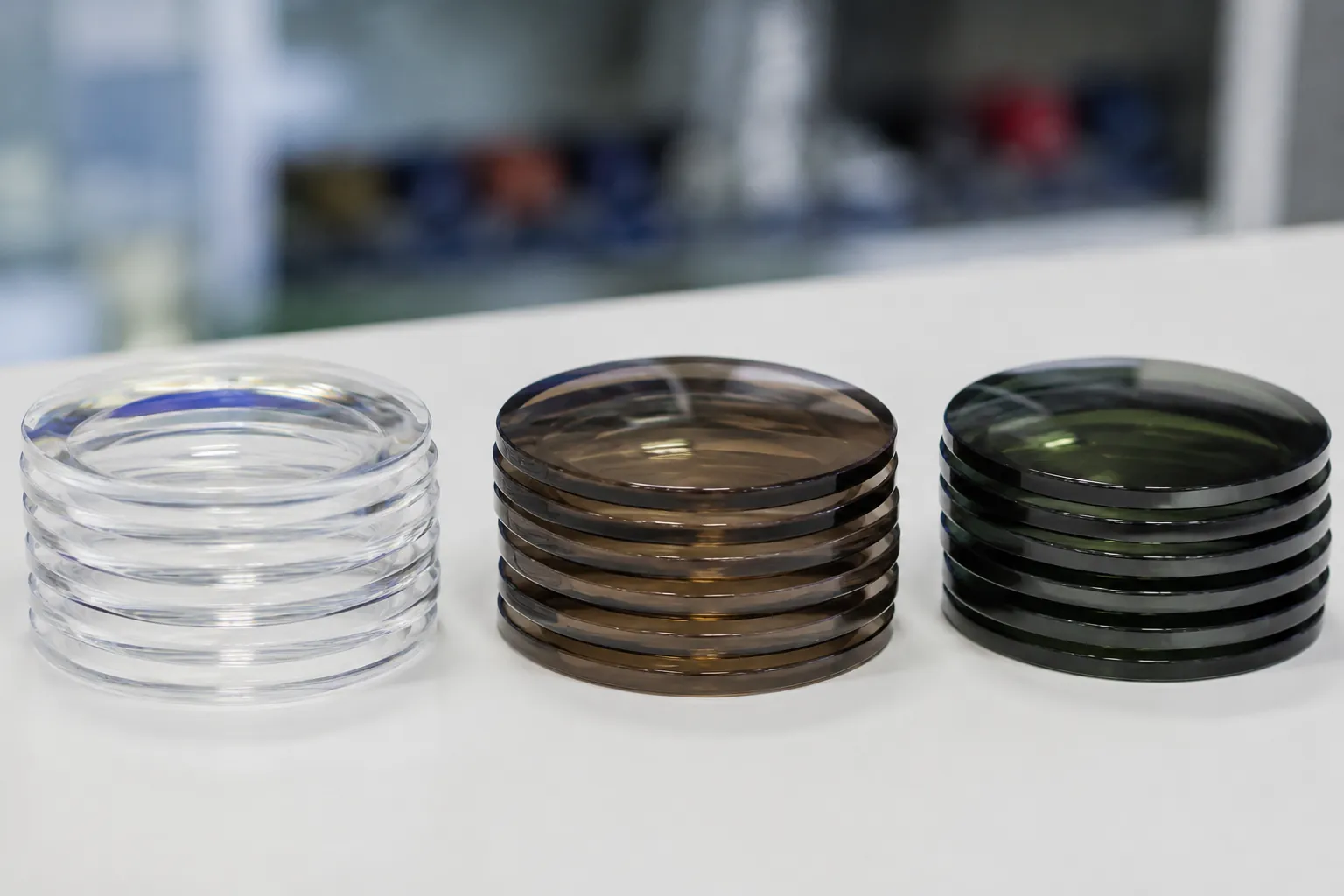
This guide is for brand owners, importers, distributors, and retail buyers choosing a sunglass lens stack that fits the product, channel, and compliance market. PC, TAC, and CR-39 can all work in private-label sunglasses, but they behave differently in impact, optics, coating dependence, polarization, and production handling. That difference matters. A lens that looks fine at sample stage can turn costly in bulk through scratch complaints, tint variation, test-report mismatch, or weak margin recovery. The job is not to pick the "best" material in the abstract. It is to match lens construction, coatings, QC tolerances, and documentation to the retail band, use case, and order economics.
Start with the selling channel, not the lens material
Many buyers start in the wrong place. They ask for TAC because a competing style is polarized, or for CR-39 because it sounds more premium, before they define channel, retail price, use case, or compliance market. That is how programs get overbuilt at sample stage and underbuilt in bulk.
Start with four decisions: target retail price, main selling channel, expected use conditions, and the failure most likely to damage the program. In discount retail or high-volume promotional channels, cost control and repeatability usually matter most. In fashion chains, cosmetic consistency across repeat orders often matters more. In optical-adjacent retail, buyers may put more weight on visual clarity and perceived quality. In sport, youth, and outdoor programs, impact performance often moves to the front.
A practical sourcing rule is simple. Entry programs often use polycarbonate because it is light, widely available, and commonly used where impact resistance matters. Mid-tier driving and fashion programs often use TAC polarized lenses because polarization is easy to explain at retail without moving into a higher-cost premium optics story. Premium fashion and better independent retail may justify CR-39 when the full build supports a more optics-led position.
Then look at the production path. A lens that looks cost-effective on paper may become expensive if it creates rework on tint matching, coating adhesion, lamination control, or cosmetic sorting. Buyers should judge the full production effect of the lens stack, not just the base material.
What PC, TAC, and CR-39 change in production
These three lens families differ in more than price. They behave differently in forming, coating, tinting, lamination, edging, and inspection.
| Lens option | Typical thickness range | Main strengths | Main weaknesses | Best fit |
|---|---|---|---|---|
| PC | Often used in sunglass lenses around 1.0 to 2.2 mm, depending on design and tooling | High impact resistance, light weight, broad commercial availability | Surface durability depends heavily on hard coat; optical clarity is generally below CR-39 | Entry sunglasses, sport, kids, promo, mass retail |
| TAC polarized | Often supplied as a laminated stack around 1.1 to 1.5 mm, depending on construction | Affordable polarization, glare reduction, flexible mid-tier positioning | Bonding quality matters; haze, edge issues, or delamination risk if lamination control is weak | Mid-price polarized fashion, driving, resort, chain retail |
| CR-39 | Commonly used around 1.4 to 2.0 mm, depending on lens design | Good optical clarity, stable tinting performance, stronger premium perception | Lower impact resistance than PC, higher weight, higher material cost | Premium fashion, optical-adjacent retail, better department store programs |
PC is widely used because it combines low weight with strong impact performance. But PC alone is not a full specification. Hard-coat quality, curing consistency, and scratch-resistance performance still need to be defined and checked during sampling and QC.
TAC is not a single substrate in the same sense as PC or CR-39. It is a laminated construction, often with a polarized film. That shifts the evaluation. The buyer is reviewing tint and thickness, but also lamination quality, edge stability, and process control. If TAC processing is weak, the result may be haze, bubbles, rainbowing, or edge separation.
CR-39 is often selected when optical clarity and perceived quality matter more than maximum impact resistance. That can make sense in premium fashion and better retail. It only works if the use case matches the material.
Lens stacks by price band
Buyers should specify the whole lens stack, not only the base material. In production terms, that usually means substrate, tint method, UV requirement, hard coat, optional mirror, optional back-side anti-reflective coating, and any decoration method if branding appears on the lens.
| Band | Typical lens stack | Indicative ex-factory logic | Channel fit | Main production risk |
|---|---|---|---|---|
| Entry | PC lens plus UV400 and hard coat | Usually chosen for cost control and broad usability in simple non-polarized builds | Discount retail, promo, tourist shops, online bundles | Hard-coat under-specification leading to early scratch complaints |
| Mid | TAC polarized plus UV protection, hard coat, optional flash mirror | Often used where polarization supports the sell-through story without requiring a premium optics build | Fashion chains, resort stores, distributors, driving styles | Lamination inconsistency, edge failure, polarization variation |
| Premium | CR-39 lens with tint, hard coat, optional back-side AR | Higher-cost route that makes sense when retail margin and product presentation support better optics | Better retail, optical-adjacent, premium private label | Channel mismatch on impact expectations; tighter cosmetic sorting needed |
For entry-level product, a non-polarized PC lens is often the most practical default. If the target shelf price is tight, focus first on reliable UV performance, a credible hard coat, and stable tint repeatability. Extras can wait.
For mid-tier polarized product, TAC often gives a workable balance between feature value and cost. It lets the brand sell polarization and glare reduction without moving straight into a higher-cost CR-39 program. This is also the band where buyers often overspec and pay for performance the channel cannot clearly explain or recover.
For premium collections, CR-39 works best when the rest of the build supports it. On an entry-level frame with basic packaging, the optics upgrade may be hard for the end customer to notice. On a better-finished product with stronger presentation, the upgrade is easier to defend.
- Entry stack: prioritize UV400, hard-coat consistency, and stable tint repeatability.
- Mid stack: confirm polarization performance, lamination integrity, and edge finishing after cutting.
- Premium stack: tighten cosmetic grading, define tint approval clearly, and add optional back-side AR only when the use case justifies it.
How MOQ, unit price, and lead time move
Lens choice changes handling steps, inspection load, and the amount of approval work needed before bulk production.
At lower MOQs, each extra process step carries more weight because setup time, sampling waste, and manual inspection are spread across fewer pairs. That is why simple PC builds are often easier to manage in small runs. As order size rises, buyers have more room to add polarization, tighter color control, or more complex finishing, provided the channel can absorb the cost.
Lead time should be treated as a project variable, not a stock promise. Sample and bulk timing can shift based on mold status, lens color approvals, mirror confirmation, print placement, packing requirements, testing needs, and whether the lens stack has already been validated for the target market. TAC may require closer review of lamination quality and edge condition. CR-39 programs may need more scrutiny on tint consistency and cosmetics. PC programs are often simpler to schedule, but they still depend on coating and color approval.
Set the tolerance before sampling. If left and right lenses must match within a narrow visual range, or if a mirror finish must stay consistent across repeat orders, the supplier needs that requirement in writing. Otherwise, a sample approved by eye becomes the starting point for a later dispute.
Compliance is not optional
Compliance should be aligned before production starts, not after the sample is approved. For Europe, CE under EN ISO 12312-1 is a core reference for plano sunglasses. For the United States, buyers often ask about FDA registration and ANSI Z80.3. For Australia and New Zealand, AS/NZS 1067 is commonly referenced. REACH may also apply for chemical compliance, depending on the market and materials. ISO 9001 and BSCI can matter when reviewing supplier management systems, but they are not substitutes for product-level lens compliance.
The operational point is direct: compliance is not just a certificate file. Lens transmittance, UV protection, tint category, polarization status, markings, and labeling all need to match the exact delivered construction. If a buyer approves a dark smoke sample and later changes to a lighter gradient or different mirror effect without checking transmittance, risk goes up fast.
Request the exact tested lens basis: material, polarized or non-polarized status, coating stack, tint reference, and any other construction detail used for the compliance file. A TAC polarized lens and a non-polarized PC lens on the same frame should not be treated as interchangeable on documentation. Material substitutions, coating changes, and meaningful tint changes may require the compliance basis to be reviewed again before shipment.
Keep the rule simple. If the lens stack changes, assume the compliance path may need to be reconfirmed unless the supplier can document why the existing basis still applies.
Where lens programs usually fail
Most lens failures are predictable. They usually come from weak specifications, rushed approvals, or a mismatch between use case and material behavior.
- PC scratching too early: the hard coat was treated as a generic requirement instead of a performance point that needed review during development and QC.
- TAC edge failure: lamination quality was unstable, or the lens shape and edging process placed too much stress near the perimeter.
- CR-39 breakage in the wrong channel: a lens chosen for optical quality was used in an application where higher impact resistance mattered more.
- Tint mismatch across repeats: the sample was approved visually without a retained reference, transmittance record, or signed standard.
- Logo placement distortion: decoration was approved from flat artwork but not verified on the curved finished lens or assembled product.
Decoration method matters here. Temple logos may be pad printed, heat transferred, laser marked, or foiled depending on substrate and finish. Lens logos, especially on shield or strongly curved sunglasses, need extra checking for position shift, visual distortion, and adhesion after production handling.
Factory capability helps. It does not replace specification discipline. Even where molding, lens processing, decoration, and QC are managed in one operation, the buyer still needs a clear target specification, retained approval standard, and explicit QC checkpoints.
A buyer spec sheet that prevents confusion
If the goal is cleaner sampling and fewer revisions, the buyer should issue a short but disciplined lens spec sheet. Most suppliers move faster with a clear written standard than with long email threads that leave key points open.
- Lens material: PC, TAC polarized, or CR-39.
- Target use: fashion, driving, sport, kids, promo, or optical-adjacent retail.
- Lens color and category: smoke, brown, green, mirror, gradient, and required transmittance range.
- Coatings: hard coat required, UV400 or other UV requirement, optional back-side AR if relevant.
- Compliance market: EU, US, Australia/New Zealand, or mixed shipment.
- Cosmetic standard: acceptable level for dust points, edge finish, color variation, and logo position.
Then align the specification with the commercial structure. If the order is a small trial run, avoid loading the brief with a premium lens stack that only makes sense at larger scale. If the program is meant for long-run retail, do not approve a fragile low-cost lens simply because the first sample looked acceptable under casual inspection.
Buyers should also retain a signed reference sample, record the approved lens description in full, and tie that description to the compliance file used for shipment approval. That one step prevents a large share of reorder disputes.
Match the lens to the margin
The simplest buying rule is still the most useful. Use PC when you need impact resistance, low weight, and broad commercial practicality. Use TAC when polarization matters and the retail band sits in the middle. Use CR-39 when the customer is likely to notice better optics and the product can support the cost.
Do not buy premium optics for a channel that mainly competes on price. Do not try to build a premium story on entry-level lens performance alone. And do not ignore the fact that coatings, tint control, retained standards, and QC discipline can affect field performance almost as much as the base lens material.
The right stack is the one that fits the use case, aligns with the required compliance path, and still leaves room for margin after testing, freight, duties, and expected after-sales cost. That is the decision frame serious buyers should use.
Have a custom sunglasses project in mind?
Send us your styles, target market and quantities and we will return a detailed quote with MOQ, lead time and a sample plan.
Get a QuoteWhy source this from Wenzhou with LumiShades
Wenzhou in Zhejiang Province is widely regarded as China’s eyewear manufacturing capital, producing a large share of the world’s sunglasses. That concentration matters to buyers: a deep local supply chain for acetate sheet, hinges, lens blanks, plating and packaging means shorter component lead times, easier color and material matching, and a workforce with decades of eyewear-specific skill. LumiShades has manufactured in this ecosystem since 2009, and our vertical integration — in-house injection molding, acetate cutting, CNC milling, lens tinting, decoration and quality control — means no part of your order is quietly subcontracted to a workshop you cannot audit.
For international buyers, that vertical control translates into accountability. When a single factory owns every step, defects are traced and fixed at source rather than bounced between vendors, and your specifications survive intact from first sample to bulk. We back this with 15+ years of experience, shipments to 60+ countries, more than 5 million pairs produced per year and a 98.5% on-time delivery rate. Our certifications — CE EN ISO 12312-1, FDA registration, ANSI Z80.3, AS/NZS 1067, REACH, ISO 9001 and BSCI audit — mean the compliance documentation your market requires already exists. Explore our manufacturing capabilities and quality control process to see how this works in practice.
Frequently asked questions
Is PC always the cheapest lens option for custom sunglasses? PC is often the most economical choice for standard non-polarized sunglass programs, but buyers should check the full lens stack before assuming it is the lowest-cost option in practice. Hard-coat quality, tint method, mirror finish, lens geometry, and decoration can all change total cost and reject rate. A practical step is to ask the supplier for a line-by-line comparison between a basic PC build and the nearest TAC or CR-39 alternative, including coating and decoration, then weigh that against likely returns or scratch claims in the target channel.
When should I choose TAC over PC? Choose TAC when polarization is a real selling feature for the channel and the buyer needs a mid-tier solution rather than a premium optics build. It is commonly suitable for driving, resort, and fashion programs where glare reduction can be explained clearly at retail. Before approving bulk, ask for confirmation of polarization performance, lamination construction, edge finish after cutting, and the exact compliance basis for the polarized lens version being shipped.
Does CR-39 make sense for online-only fashion brands? It can, but only when the brand has enough price support and product presentation to make the upgrade meaningful. CR-39 is easier to defend when the online offer emphasizes material quality, lens clarity, and overall product finish rather than competing mainly on low price or fast trend turnover. A useful test is to ask whether the extra lens cost improves conversion, perceived value, or return performance enough to justify the higher specification. If the rest of the product remains entry-level, buyers often struggle to recover the added cost.
What compliance documents should I confirm before placing bulk production? Confirm the product-level documentation that matches the market and the actual shipped lens construction. For Europe, that generally means CE under EN ISO 12312-1 for plano sunglasses. For the US, buyers often review FDA registration status and ANSI Z80.3. For Australia and New Zealand, AS/NZS 1067 is commonly referenced. REACH may also be relevant for chemical compliance. In addition, ask the supplier to state the tested lens material, tint category or transmittance basis, and whether the tested version is polarized or non-polarized. Do not rely on generic certificates that are not tied to the delivered lens stack.
How do MOQ and lead time affect lens choice? At low MOQ, simpler lens builds are usually easier to control because each extra step adds setup time, inspection load, and approval complexity. That is why small runs often start with straightforward PC programs unless polarization or premium optics are commercially necessary. For planning, buyers should ask the supplier to break lead time into sample approval, compliance review, material preparation, production, and final QC rather than accepting one headline number. That makes it easier to see whether TAC lamination checks, CR-39 tint approvals, or extra decoration steps are likely to affect the schedule.
Ready to start?
Explore our rimless sunglasses or request a quote — our sales team replies within 12 hours.
Request a Quote