
PC Injection vs Acetate: Cost, Finish, and MOQ Tradeoffs
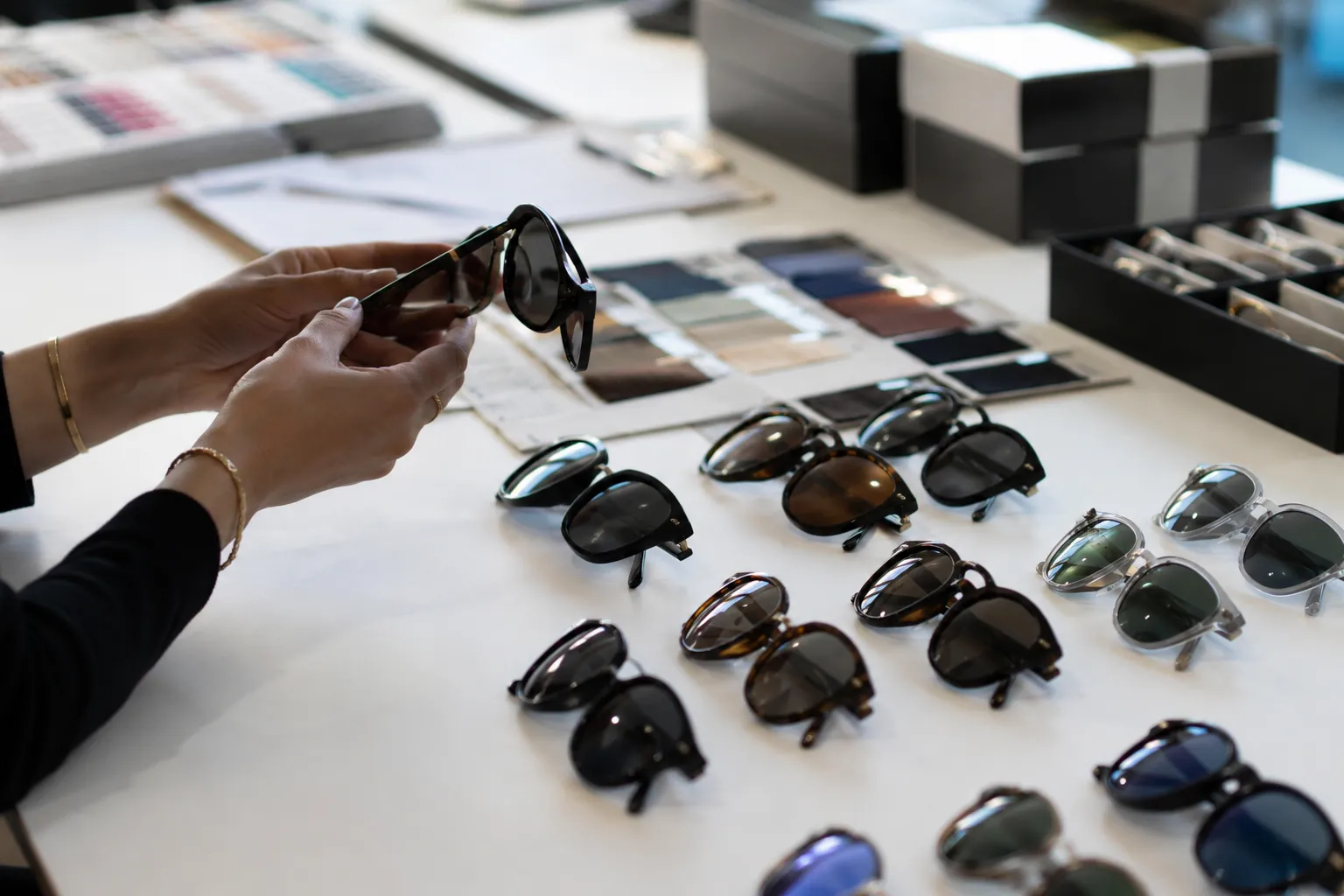
Choosing between injected polycarbonate and hand-cut acetate is not mostly a style call. It is a cost, process, and risk call. Pick the wrong route and you may add tooling cost, squeeze margin, slow approvals, or invite quality problems that show up only after production starts. This guide compares both frame routes from a sourcing standpoint: mold investment, CNC and polishing labor, tolerance control, finish quality, revision flexibility, MOQ logic, lead time, and compliance checkpoints. If you buy for a brand, distributor, importer, or retail chain, use this framework before sampling so the development brief matches the commercial result you actually need.
Start with margin, not material
Many buyers start with appearance. That is understandable, but it is not the best first move. Acetate is often linked with richer finish and visible material depth. Injected PC is often chosen for lower cost and repeatability. True enough. But that view is too narrow.
Start with retail math, channel expectations, and order volume. Then choose the frame route.
As a working rule, injected PC often fits better when the product has to stay inside a cost-sensitive retail band and the program depends on repeatable output at scale. Hand-cut acetate often fits better when the retail price can support higher conversion cost and the frame itself has to carry more of the premium story through gloss, lamination, color depth, or heavier feel in hand.
Before you request samples, confirm four internal inputs:
- Target landed cost per pair: include ex-factory price, freight, duty, packaging, testing, and expected wastage
- Target retail and wholesale structure: define the margin model the product must support
- Opening order volume per design: unit economics shift sharply between a small validation run and a repeat-volume program
- Approval calendar: include sample review, artwork approval, testing, packaging sign-off, and shipping schedule
If those inputs are fuzzy, teams often pick the frame that looks best in an early sample instead of the one that fits the business model. That mistake gets expensive later.
Head-to-head: cost, look, and production differences
| Factor | PC Injection | Hand-Cut Acetate |
|---|---|---|
| Base manufacturing route | Polycarbonate resin is dried, injected into a mold, cooled, ejected, trimmed, assembled, and finished | Acetate sheet is cut to shape, CNC milled, tumbled, polished, heat formed, assembled, and aligned |
| Typical dimensional control | Usually strong once tool and process are stable; hinge geometry and lens groove accuracy depend heavily on mold quality | Depends on CNC precision and finishing control; polishing and heat adjustment can affect final profile and symmetry |
| Upfront tooling | Higher, because a steel mold is typically required | Lower, because shapes are usually developed through cutting files and CNC programs rather than full injection tooling |
| Best fit for volume | Generally more efficient for repeat programs and higher-volume runs | Often better suited to lower-volume development, color variation, and evolving collections |
| Visual finish | Clean and consistent, usually with less visible material depth | Often richer in gloss, translucency, lamination, and edge appearance |
| Perceived value in hand | Often lighter and more value-led in feel | Often denser and read by consumers as more premium |
| Revision flexibility | Geometry changes may require tool modification | Shape revisions can often be handled through updated cutting and CNC files |
| Typical unit-cost outcome | Usually lower at scale, especially on repeat styles | Usually higher because of sheet cost, machining, tumbling, polishing, and more manual labor |
Neither route wins by default. Injection tends to win on scale economics and repeat consistency. Acetate tends to win when the product depends on finish, color story, or premium presentation.
For quoting, ask suppliers for volume tiers rather than one headline price. The gap between 100 pairs, 500 pairs, and a repeat program can be large, especially after lenses, logos, and packaging are added.
How each route is made and where risk shows up
PC injection is a tooling-led process. Polycarbonate resin must be dried before molding because excess moisture can affect appearance and consistency. The material is injected into a mold cavity, cooled, and ejected. Parts are then trimmed and checked for common molding defects such as flash, sink, flow marks, short shots, and warpage. Front curve, hinge geometry, and lens groove accuracy all need to stay stable for assembly and lens fit to remain consistent.
In simple terms, injection quality depends on three things: tool accuracy, machine settings, and process control. If those stay stable, pair-to-pair consistency is usually strong.
Hand-cut acetate follows a different path. Sheet material is chosen by color, pattern, and thickness. Fronts and temples are cut from sheet stock, then CNC milled to form the profile, bevels, grooves, hinge areas, and thickness transitions. Parts are then tumbled or barrel-finished, polished, heat adjusted, assembled, and aligned.
That route involves more manual handling and more finishing steps. It also gives the factory more room to tune the final look. Edge softness, gloss level, thickness balance, and color presentation can be adjusted in ways that are harder to achieve on a cost-led injected build.
For buyers, the risk profile is not the same:
- Injection risk: if key design choices are wrong early, corrections later may require tool changes, more trials, and extra time.
- Acetate risk: cosmetic quality and final consistency depend more on material grading, polishing control, and operator discipline.
So material choice is only part of the decision. Process control matters just as much. A capable factory should explain not only how it makes each route, but also where dimensional checks, cosmetic inspection, and assembly controls sit in production.
Tooling, revisions, and the hidden cost problem
Many buyers compare only unit price. That is not enough.
Development cost and revision cost can change the real economics of a project. Fast.
Injected PC usually needs mold investment upfront. If a design is approved too early and the team later changes the eye shape, bridge width, temple thickness, front curve, or end-piece geometry, the supplier may need to modify the tool. Some changes are minor. Others mean more machining, new sampling, and a longer approval cycle.
Acetate is usually easier to revise during development. If you need to shift the lens shape, refine the brow line, alter the temple taper, or adjust the front profile, the supplier can often update the cutting path and CNC program without building a new mold. That does not make acetate cheap. It does reduce sunk-cost risk while the design is still moving.
Use a simple screening rule:
- Choose PC injection when the design is already commercially proven, repeat volume is likely, and unit-cost control is a priority.
- Choose acetate when the shape is still being refined, color is central to the concept, or the frame itself must support a more premium market position.
Put plainly: stable designs often favor tooling. Evolving designs often favor sheet stock and CNC.
Finish, perceived durability, and post-sale complaint risk
Buyers often ask which material is more durable. On its own, that question is too broad to help much. The better question is this: which route is more likely to perform well in your channel, at your target price point, and under expected use conditions?
Injected PC is widely used in commercial sunglasses because it is light, scalable, and usually consistent once the process is under control. But it can also read more clearly as a value-led product if the end customer compares it with heavier frames that show more material depth.
Acetate often scores higher on tactile quality and finish. Translucent, solid, and laminated sheets can create a stronger visual identity without major hardware changes. But acetate also demands tighter finishing discipline. Over-buffing can soften edges, inconsistent polishing can affect appearance, and poor heat adjustment can lead to asymmetry or temple imbalance.
Common complaint triggers include:
- PC injection: warpage, visible flash, sink in thicker sections, or color inconsistency between batches
- Acetate: uneven edge polish, visible sheet variation, weak hinge-area finishing, or inconsistent temple spread after forming
A serious QC plan should check frame symmetry, temple balance, hinge function, lens fit, decoration quality, color consistency, and cosmetic defects before packing. Ask suppliers how those checks are documented and at what production stage failures are isolated and corrected.
Retail price bands, MOQ logic, and decoration cost
There is no universal retail formula. Still, buyers can use a practical screening model before spending money on sampling.
| Retail positioning | Likely better route | Why it often fits |
|---|---|---|
| Entry price, promotional, chain-volume retail | PC Injection | Often better suited to cost control, repeatability, and larger replenishment programs |
| Lower-mid fashion retail | Either route | Choice depends on whether the line competes more on price or on perceived finish |
| Mid-range boutique and brand-led fashion | Hand-Cut Acetate | Finish, density, and material presentation often support stronger perceived value |
| Collections with multiple color stories | Hand-Cut Acetate | Sheet-based color and lamination options usually allow broader visual differentiation |
MOQ logic matters too. A small test order can help validate fit, market response, or buyer review, but it is rarely the point of best cost efficiency. As volume rises, suppliers can usually quote more efficiently because setup cost, labor planning, and material purchasing are spread over more units. That is often where the cost gap between injection and acetate becomes clearer.
Decoration also changes the math. Pad printing is common on injected frames and is usually cost-efficient. Laser marking can work on both routes, depending on finish and logo effect. Metal logo plates or more presentation-led branding are often paired with acetate when the product aims higher on shelf.
To avoid bad comparisons, ask for quotations that separate at least four variables: frame construction, lens specification, decoration method, and packaging. A low frame price alone tells you very little about final landed cost.
Lead time, compliance, and a five-check decision framework
Timing can affect material choice more than many teams expect. Once an injection mold is approved and the specification is frozen, repeat production is often straightforward to schedule. Acetate can also move well, but polishing, heat adjustment, and alignment add labor-sensitive steps that are harder to compress without quality risk.
For sunglasses sold into regulated markets, compliance should be defined before the PO is issued, not after production starts. The purchase specification should identify the destination market, lens category where applicable, labeling requirements, and the test basis required for that SKU.
Relevant standards and certifications commonly referenced in sunglasses sourcing include CE EN ISO 12312-1, ANSI Z80.3, AS/NZS 1067, REACH, FDA registration, ISO 9001, and BSCI. These references are useful, but buyers should still confirm in writing which standards apply to the exact product being ordered and request current supporting documentation where needed.
If you need a fast internal decision, use this five-check framework:
- Check target retail. If the product must stay highly price-competitive, start with PC injection. If the line needs stronger tactile and visual value, evaluate acetate seriously.
- Check design stability. If CAD, fit, or geometry are still moving, acetate usually reduces development risk. If the shape is locked, injection becomes more attractive.
- Check volume confidence. Strong repeat-volume confidence often favors injection. Uncertain demand can favor acetate because it usually avoids upfront mold commitment.
- Check channel expectation. Promotional and chain programs usually reward cost control and output consistency. Boutique and image-led channels often reward finish and material presence.
- Check calendar discipline. If your team expects multiple design revisions, acetate is usually easier to revise. If you need a stable repeat program on a fixed schedule, injection is often simpler to manage.
Best use of PC injection: commercially proven styles, cost-sensitive retail, repeat volume, and straightforward branding.
Best use of hand-cut acetate: premium-positioned styles, stronger finish expectations, evolving designs, and color-led collections.
The practical takeaway is simple. If your margin model depends on the lowest workable ex-factory cost, do not choose acetate just because an early sample feels more premium. If your brand sells on finish, tactile quality, and material story, do not choose injection just to cut unit cost on paper. The frame route should match how the product is expected to sell.
Have a custom sunglasses project in mind?
Send us your styles, target market and quantities and we will return a detailed quote with MOQ, lead time and a sample plan.
Get a QuoteWhy source this from Wenzhou with LumiShades
Wenzhou in Zhejiang Province is widely regarded as China’s eyewear manufacturing capital, producing a large share of the world’s sunglasses. That concentration matters to buyers: a deep local supply chain for acetate sheet, hinges, lens blanks, plating and packaging means shorter component lead times, easier color and material matching, and a workforce with decades of eyewear-specific skill. LumiShades has manufactured in this ecosystem since 2009, and our vertical integration — in-house injection molding, acetate cutting, CNC milling, lens tinting, decoration and quality control — means no part of your order is quietly subcontracted to a workshop you cannot audit.
For international buyers, that vertical control translates into accountability. When a single factory owns every step, defects are traced and fixed at source rather than bounced between vendors, and your specifications survive intact from first sample to bulk. We back this with 15+ years of experience, shipments to 60+ countries, more than 5 million pairs produced per year and a 98.5% on-time delivery rate. Our certifications — CE EN ISO 12312-1, FDA registration, ANSI Z80.3, AS/NZS 1067, REACH, ISO 9001 and BSCI audit — mean the compliance documentation your market requires already exists. Explore our manufacturing capabilities and quality control process to see how this works in practice.
Frequently asked questions
At what order size does PC injection usually make more sense than acetate? PC injection usually becomes more attractive when three conditions are true at the same time: the design is stable, repeat orders are likely, and the supplier can spread tooling cost over meaningful volume. There is no single break point because mold cost, frame complexity, decoration, and lens specification all affect the comparison. Ask suppliers for a side-by-side cost model at several volume tiers and include tooling, sampling, unit price, and likely revision cost in the analysis.
Can I test a new style in small volume before committing to a bigger run? Yes, but be clear about what the small run is meant to prove. Use a low-volume order to validate fit, market response, packaging, and compliance assumptions before scaling. When you request the quote, ask for separate pricing for sample development, pilot quantity, and repeat production quantity so you can see whether the first run is commercially representative or only a test cost. Also confirm whether any tooling or setup charges from the pilot can be credited into a larger follow-up order.
Which route is better for custom logo work? Both routes support logo customization, but the right method depends on the brand effect and the target price point. For cost-efficient programs, ask about pad printing or laser marking. For more premium presentation, ask whether the frame construction supports metal logos, inlaid branding, or cleaner engraved effects. When reviewing options, request samples of the exact logo method on the actual frame finish because logo appearance can change a lot by surface gloss, frame color, and placement area.
How should I review compliance before placing an order? Start by matching each SKU to its destination market. Then specify, in writing, the required standard or regulatory basis, lens category if applicable, labeling requirements, and any chemical or documentation requirements. For sunglasses programs, relevant references may include CE EN ISO 12312-1, ANSI Z80.3, AS/NZS 1067, REACH, FDA registration, ISO 9001, and BSCI. Ask the supplier which of these apply to your product, request current supporting documents where relevant, and make sure the purchase order and packaging artwork reflect the same compliance requirements.
What is the realistic timeline from approved design to shipment? The timeline depends on the construction route, whether tooling is required, how many sample rounds are needed, and how quickly your team approves artwork, packaging, and test requirements. Injection programs can move efficiently once the tool and geometry are finalized. Acetate programs may need more time for finishing and alignment control. To keep the schedule realistic, build the plan backward from the ship date and include sample approval, any tool adjustment, compliance confirmation, packaging sign-off, and freight booking. Most delays come from incomplete specifications or slow approvals, not from the production line alone.
Ready to start?
Explore our shield & oversized sunglasses or request a quote — our sales team replies within 12 hours.
Request a Quote