
PC Injection vs Acetate Frames: Cost, MOQ, Lead Time
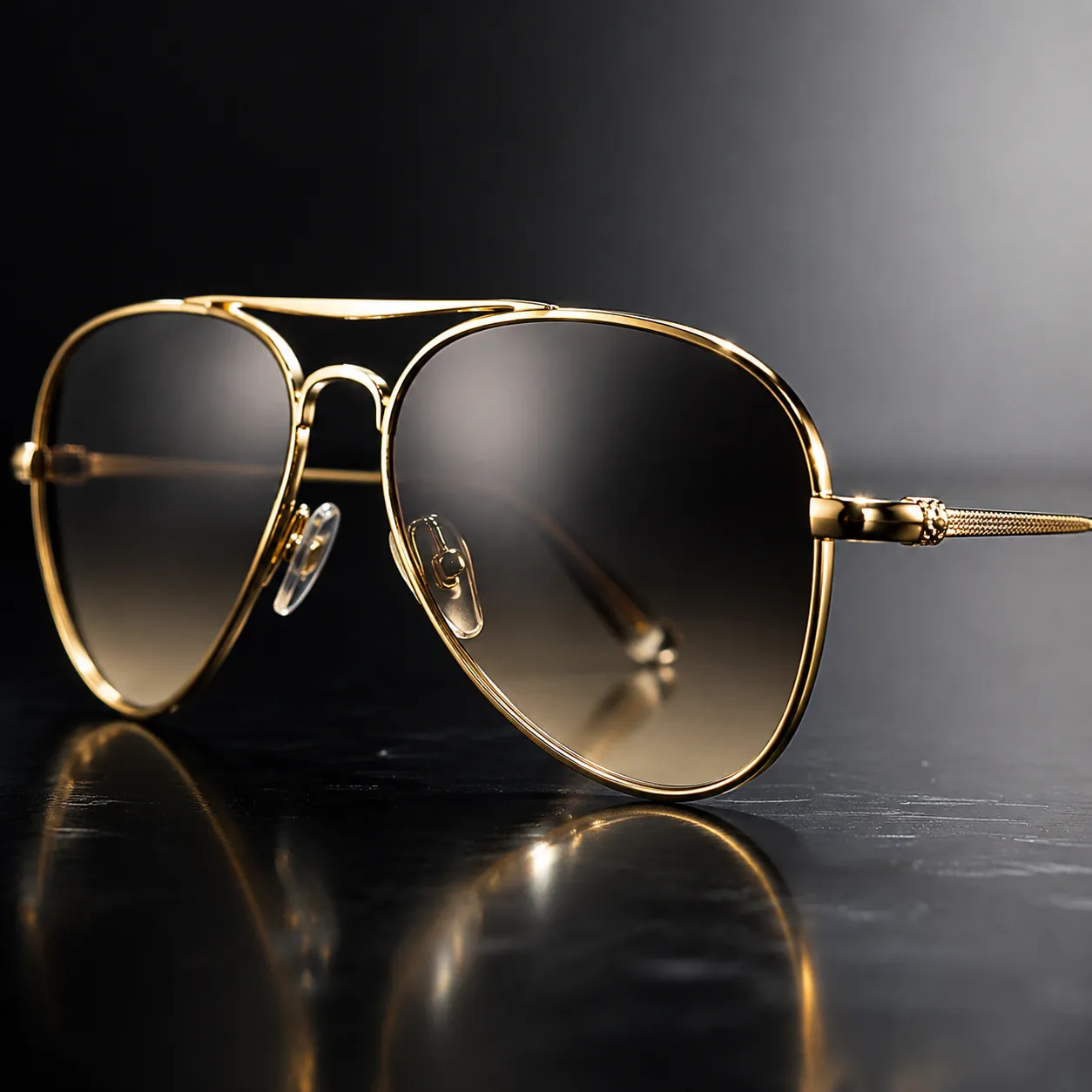
This guide is for brand owners, importers, distributors, and retailers weighing two very different frame programs: injected polycarbonate (PC) and sheet-based acetate. The choice affects tooling cost, MOQ, unit economics, lead time, finish level, color range, reorders, and quality risk. It also affects how much flexibility you keep once sampling starts. If you are planning a custom sunglasses line, use this comparison to choose the production route that fits your landed-cost target, retail position, and sales plan before you approve samples or pay for tooling.
Start with the commercial model, not the material
Buyers often start by asking which material is "better." That is usually the wrong question. Start with this one instead: what commercial model does this frame need to support?
A price-led promotional line, a core private-label range, and a boutique premium collection may all use a similar silhouette on paper. In production, they do not behave the same way. Material choice changes the cost structure, the revision path, and the risk profile.
PC injection and acetate can both be used for compliant sunglasses. But the production logic is different. Injection is tooling-led. Once the geometry is approved and the mold is stable, output is usually faster and more repeatable, with lower labor content per unit. Acetate is machining- and finishing-led. Design revisions are often easier before bulk approval, but the unit cost stays tied to cutting, polishing, assembly, and visual inspection.
In sourcing terms, the split usually looks like this:
- PC injection: often a better fit for cost-sensitive programs, repeat orders, and higher-volume SKUs once tooling is validated.
- Acetate: often a better fit for premium positioning, design-led collections, and products where material appearance is part of the selling story.
The production routes are different too. Injection programs typically move through CAD, mold engineering, test shots, trimming, lens fitting, decoration, assembly, and QC. Acetate programs typically move through sheet selection, CNC machining or cutting, tumbling, beveling, polishing, hinge fitting, lens fitting, frame adjustment, and final inspection.
Same category. Different economics.
Development sequence: mold-first for injection, pattern-first for acetate
The biggest planning difference is the development sequence.
For PC injection, frame geometry must be frozen early because the mold defines the part. Front curve, bridge profile, lens groove, temple section, hinge seat, shrink behavior, and draft angle should be resolved before tooling is cut. Molded-part tolerances depend on geometry, resin grade, mold quality, and process control, so a generic tolerance claim is not enough. The practical point is simple: once the mold is made, color changes and some decoration changes are relatively easy, but structural changes are expensive and slow.
For acetate, development is usually more forgiving before bulk approval. A factory can machine a sample from sheet and adjust eye shape, bridge depth, temple width, bevel profile, or front thickness without the same tooling lock-in. That makes acetate useful when fit, branding, or styling is still moving. But revisions are not free. Changes in thickness, bevel depth, lamination, or temple construction can affect weight, polishing time, assembly steps, and yield from the sheet.
Typical sample flow looks like this:
- PC injection: CAD drawing - fit review - mold design - test shot - cooling and shrink check - lens fitting - decoration trial - revised sample - bulk approval.
- Acetate: design drawing - sheet color confirmation - CNC or cutting sample - tumbling and hand polish - hinge fitting - lens fitting - finish review - revised sample - bulk approval.
When comparing suppliers, ask what stage the sample represents. An appearance sample, an engineering sample, and a pre-production sample do not carry the same risk. This matters most on injection programs, where a frame can look fine and still come from tooling that is not fully stable.
Cost structure and MOQ logic: where the money goes
Injection and acetate do not just differ in unit price. They differ in how cost is distributed between upfront development and ongoing production.
PC injection usually pushes more cost into tooling and less into labor per frame. If a buyer can use an existing mold platform or proven construction, the opening commitment may stay manageable. If a new mold is required, first-order economics change fast because the project must absorb tooling, engineering review, and test-shot adjustments. Once tooling is validated, unit pricing often improves more sharply as volume rises because cycle time is predictable and labor content per unit is lower than in hand-finished acetate production.
Acetate has the opposite profile. Tooling dependence is lower at sample stage, but part cost stays labor-heavy because sheet yield, machining time, tumbling, hand polishing, wire-core temple work, hinge setting, fitting, and visual inspection all remain part of every order. Material waste matters too. Front thickness, narrow bridge geometry, laminated constructions, and multi-color temples can reduce sheet yield and raise cost.
| Cost factor | PC Injection Frame | Hand-Cut Acetate Frame |
|---|---|---|
| Typical MOQ logic | Often workable for test runs if an existing construction is used; commercially stronger at higher volumes when tooling is involved | Often more practical for smaller design-led runs because there is less tooling lock-in, though piece cost usually stays higher |
| Upfront investment | Higher if a new mold is needed; lower if an existing construction is reused | Lower at sample stage; less structural lock-in before bulk |
| Unit cost behavior | Often declines more sharply with volume once tooling is validated | Usually declines more slowly because labor and finishing remain significant |
| Main cost drivers | Mold work, cycle time, material weight, decoration, lens-fit stability | Sheet grade, yield loss, CNC time, polishing hours, hinge fitting, reject rate |
| Best use case | Entry-price lines, core volume programs, repeat sellers | Premium-looking styles, boutique programs, lower-volume fashion collections |
Do not compare quotes line by line unless the content is truly equivalent. Lens category, hinge type, screws, logo treatment, pouch or box, barcode labeling, and compliance testing can shift landed cost more than many buyers expect.
Finish, color, and perceived value at retail
This is what customers notice first.
Acetate usually offers stronger visual depth. Tortoise effects, crystal colors, layered laminations, and polished edges are built into the material rather than added as a surface effect. Thicker acetate fronts can show edge transparency and visible layering, which often supports a higher retail position. Buyers targeting higher price points should pay close attention to bevel quality, edge clarity, polish consistency, and front-to-temple color matching.
PC injection usually offers stronger consistency and efficiency. It works well for solid colors, matte textures, sport-influenced styling, and repeatable volume production. It can also support decorative finishes, but those finishes should be reviewed case by case. Do not assume they will match the depth of premium acetate.
Decoration methods also vary by material:
- Pad printing: common on injection and also used on acetate for inside marks or simple logo placement.
- Laser engraving: useful for subtle branding, SKU marks, and traceability where appropriate for the material and finish.
- Metal logo plates or inlays: often associated with acetate, but they add fitting steps and more QC points.
- Hot stamping or foil: possible for specific branding effects, but adhesion and abrasion performance should be validated before bulk production.
From a QC standpoint, buyers should define finish standards clearly: acceptable gloss level, bevel sharpness, visible molding marks or machining marks, color reference, and logo-position tolerance. Terms like "premium finish" are not specifications. Use approved samples, annotated photos, or written acceptance criteria.
MOQ, reorder flexibility, and where each program scales
MOQ is not one fixed number. In eyewear sourcing, there is a difference between the factory minimum and the commercially sensible minimum.
For injection, low MOQ usually works best when the supplier can use an existing base construction or make minor cosmetic changes. If the buyer needs dedicated tooling, a very small order may function more like a development run than an efficient production order. In that case, judge the project on total program value, not just on the opening PO quantity.
For acetate, smaller volumes can be more rational because the buyer is not committing to a mold in the same way. But there is still a penalty for fragmentation. A small order spread across too many acetate colors or lamination options becomes less efficient because yield, setup time, color matching, and rejection risk all get worse.
A practical rule is simple: if demand is uncertain, acetate can reduce structural lock-in; if demand is proven and repeatable, injection often rewards scale more aggressively.
Before approving MOQ, ask the supplier four questions:
- Is the quoted MOQ based on a new mold, an existing mold, or an existing frame platform?
- How many colors are included in that MOQ, and what is the minimum per color?
- Does the quoted price assume standard packaging and standard decoration only?
- If the style repeats, what price changes at the next volume tier once development cost is behind us?
QC and compliance: same market standards, different failure points
Material choice does not remove compliance obligations. The finished sunglasses still need to meet the requirements of the destination market based on lens performance, labeling, and product safety. Depending on the market and program, buyers may need to review standards or systems such as CE EN ISO 12312-1, ANSI Z80.3, AS/NZS 1067, REACH, FDA registration, ISO 9001, and BSCI. These do not all serve the same purpose. Some relate to product conformity, some to chemical compliance, some to quality systems, and some to social compliance. Confirm what applies to the SKU, sales market, and import pathway.
The QC focus changes by process:
| QC area | PC Injection risk points | Acetate risk points |
|---|---|---|
| Dimensional control | Shrink variation, front warpage, lens groove inconsistency, temple twist | Machining variation, edge material loss after polishing, bridge thickness variation |
| Surface appearance | Flow marks, gate marks, sink, gloss inconsistency, color streaking | Scratches, polish haze, bevel inconsistency, lamination mismatch, edge ripple |
| Assembly | Weak hinge-seat design, screw torque inconsistency, lens stress after fitting | Hinge alignment, temple balance after heating, rivet seating, hand-fit asymmetry |
| Wear performance | Stress whitening, heat-related shape change, decoration abrasion | Polish wear, hinge loosening after repeated adjustment, acetate aging or dimensional change over time |
Ask the supplier to define checkpoints before bulk starts: golden sample approval, color standard, logo location, lens specification, packaging method, carton marks, and any product testing required for your market. On both materials, expensive failures usually come from vague approvals, not the material itself.
Lead time and the final choice
Published sample and bulk lead times only mean something if the specification is complete. In practice, the calendar is shaped less by nominal production speed than by input quality and revision count.
Injection delays are usually engineering delays: CAD not confirmed, mold modification after test shots, warpage found after cooling, hinge-area weakness, or lens-retention problems caused by groove mismatch. A frame front can look acceptable right after molding and still shift after cooling or after lens insertion. That is why "sample approved" and "tooling stable" are not the same thing.
Acetate delays are usually finish delays: sheet color changes, polishing rework, bevel inconsistency, logo rejection, hinge alignment correction, or mismatch between approved sample gloss and bulk gloss. Transparent and dark translucent colors often need tighter visual control because scratches, haze, and edge inconsistency show more clearly.
To keep either program on schedule, send a complete tech pack at the start. At minimum include:
- lens category and lens color
- PMS reference or physical color standard where applicable
- logo artwork format and exact logo position
- frame measurements and fit requirements
- packaging specification and barcode rules
- destination-market compliance requirements
Buyer shortcut: if your launch date is fixed but your design is still moving, do not treat injection and acetate as interchangeable. Injection penalizes late structural change more heavily. Acetate penalizes vague finish approval more heavily.
Use this framework before requesting your next quote or approving a sample:
- Target retail price: If the frame itself must signal premium value at first glance, acetate usually gives more support. If the retail target is aggressive and cost sensitivity is high, injection is often the safer start.
- Expected annual volume: If the style is likely to repeat and scale, injection economics usually improve over time.
- Design certainty: If fit, front shape, or temple profile is still moving, acetate gives more room to refine before you commit to tooling.
- Color strategy: If the line depends on crystal, tortoise, layered, or high-polish looks, acetate is often the better route. If solid colors and repeat consistency matter more, injection may be enough.
- Reorder plan: If you expect a carryover winner with multiple repeat POs, ask for a cost model that separates development cost from repeat-order pricing.
There is no universal winner. Only fit for purpose. Injection usually offers better scale efficiency. Acetate usually offers higher perceived material value. The right choice is the one that matches your margin structure, reorder plan, and brand position, not just the lowest opening quote.
Have a custom sunglasses project in mind?
Send us your styles, target market and quantities and we will return a detailed quote with MOQ, lead time and a sample plan.
Get a QuoteWhy source this from Wenzhou with LumiShades
Wenzhou in Zhejiang Province is widely regarded as China’s eyewear manufacturing capital, producing a large share of the world’s sunglasses. That concentration matters to buyers: a deep local supply chain for acetate sheet, hinges, lens blanks, plating and packaging means shorter component lead times, easier color and material matching, and a workforce with decades of eyewear-specific skill. LumiShades has manufactured in this ecosystem since 2009, and our vertical integration — in-house injection molding, acetate cutting, CNC milling, lens tinting, decoration and quality control — means no part of your order is quietly subcontracted to a workshop you cannot audit.
For international buyers, that vertical control translates into accountability. When a single factory owns every step, defects are traced and fixed at source rather than bounced between vendors, and your specifications survive intact from first sample to bulk. We back this with 15+ years of experience, shipments to 60+ countries, more than 5 million pairs produced per year and a 98.5% on-time delivery rate. Our certifications — CE EN ISO 12312-1, FDA registration, ANSI Z80.3, AS/NZS 1067, REACH, ISO 9001 and BSCI audit — mean the compliance documentation your market requires already exists. Explore our manufacturing capabilities and quality control process to see how this works in practice.
Frequently asked questions
Is PC injection always cheaper than acetate? Not always. On repeat or higher-volume programs, PC injection often delivers a lower unit cost because labor content per frame is lower once tooling is validated. But the first order can be more expensive if a new mold is required. To compare accurately, ask the supplier to separate three numbers: tooling cost, sample or development cost, and repeat-order unit price. Then compare that against an acetate quote with the same lens spec, hinge spec, logo treatment, and packaging.
Can I start with 50 pairs for both materials? Sometimes, yes, but whether 50 pairs is sensible depends on the construction. For acetate, a small opening run can be commercially reasonable if the style is simple and color splits are controlled. For injection, 50 pairs usually makes sense only if the supplier is using an existing mold or frame platform. If dedicated tooling is required, treat a very small order as a development decision, not a true production benchmark. Before placing the PO, confirm minimum per color, packaging minimums, and whether compliance testing cost is included or separate.
Which material is better for premium-looking sunglasses? In most cases, acetate. It typically offers deeper color, clearer edge transparency, more visible lamination, and a more hand-finished appearance. That does not mean every acetate frame will look premium by default. Finish quality still depends on polishing, bevel control, hinge fitting, and visual QC. If premium perception is the goal, ask for close-up photos of the bevel, front edge, inner polish, temple alignment, and logo execution, not just front-view product shots.
Do compliance requirements differ between injection and acetate frames? The compliance pathway depends on the finished sunglasses and the destination market, not just the frame material. Buyers should confirm which requirements apply to each SKU, including lens performance, labeling, chemical compliance, and importer documentation. Common reference points may include CE EN ISO 12312-1, ANSI Z80.3, AS/NZS 1067, REACH, and FDA registration where relevant. A practical step is to request a document checklist from the supplier before sampling begins so the technical file, test plan, and labeling requirements are aligned early.
What usually causes delays on acetate orders? Most delays come from finish-related issues rather than from cutting the shape itself. Typical causes include sheet color approval, lamination mismatch, polishing rework, bevel inconsistency, hinge alignment correction, and logo rejection. To reduce delay risk, approve a physical or couriered reference sample when finish is critical, define acceptable color and gloss clearly, and confirm whether the approved sample is the standard for bulk inspection. If the style uses transparent or dark translucent acetate, ask for extra in-line appearance checks because scratches and haze are easier to spot on those colors.
Ready to start?
Explore our rimless sunglasses or request a quote — our sales team replies within 12 hours.
Request a Quote