
OEM vs ODM Sunglasses: Lower Risk, Faster Launch
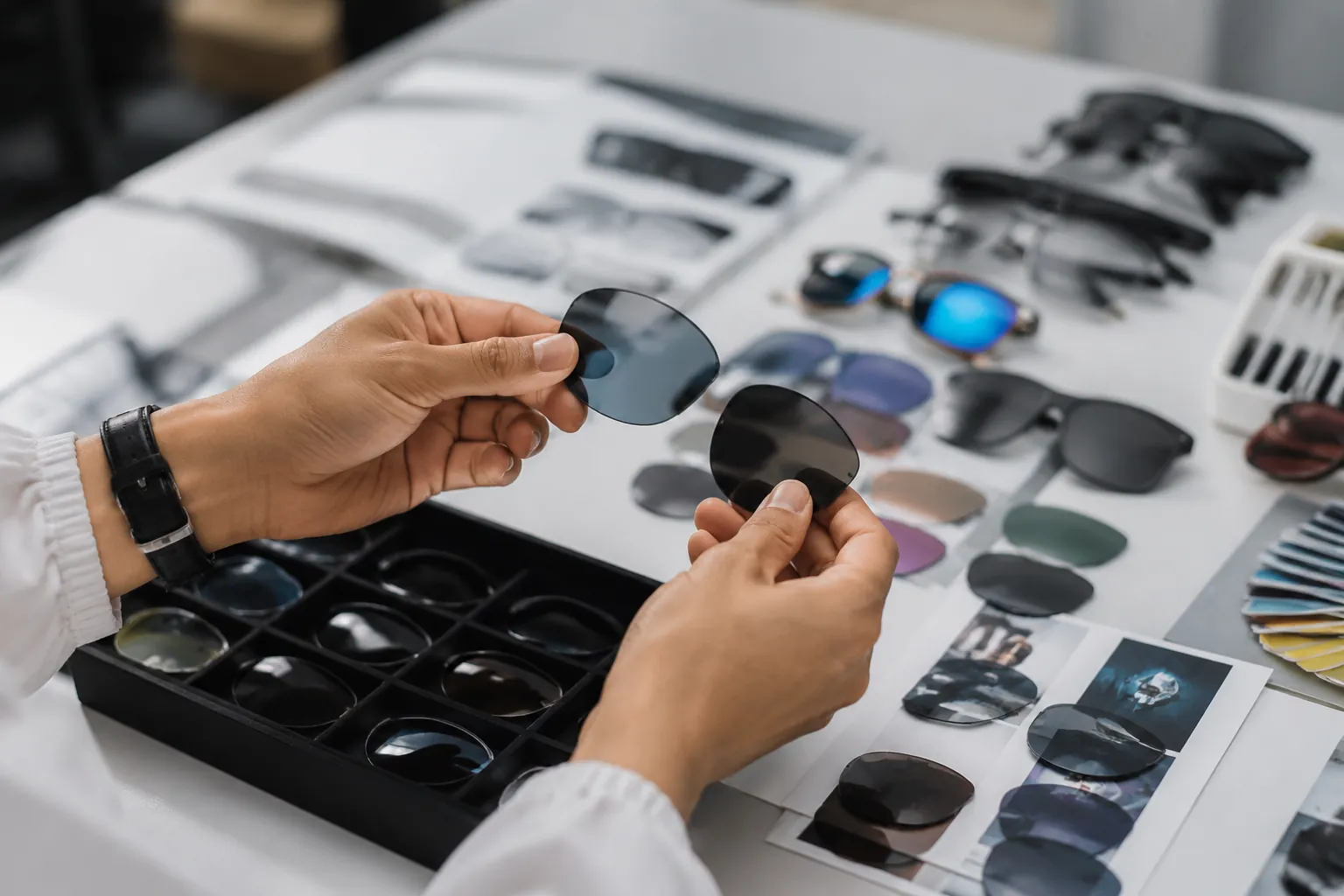
This guide is for brand owners, importers, distributors, and retailers deciding how to launch or expand a sunglasses line without missing a season or tying up cash in the wrong development path. The real choice is not creativity versus convenience. It is whether your first order should use an existing factory platform through ODM or require full product development through OEM. That choice affects sample timing, tooling cost, MOQ pressure, defect risk, compliance work, and the margin left after freight, replacements, and markdowns. If you need a practical framework instead of sourcing jargon, this article breaks the decision into costs, checkpoints, and the production realities that usually decide whether a program scales.
Start with the constraint that actually matters
Buyers often say they want a fully custom frame. What they usually need is a product that ships on time, meets market requirements, lands at target cost, and still leaves margin after duty, freight, returns, and safety stock. That is why OEM versus ODM is not mainly a design debate. It is a timing, cash-flow, and execution-risk decision.
ODM means starting from a factory's existing frame platform: front curve, lens groove geometry, hinge placement, temple length, and mold set are already defined. The buyer customizes visible or channel-specific elements such as frame color, lens tint, logo method, case, pouch, barcode label, hangtag, and outer carton details. In some programs, small changes to temple profile, tip shape, metal trim, or surface finish are also possible without building a new frame architecture.
OEM starts with your sketch, tech pack, reference sample, or target spec. The supplier then has to turn that concept into production drawings, define material behavior, build tooling or CNC programs where needed, cut prototypes, revise fit, lock cosmetic standards, confirm compliance, and prove that the approved sample can be repeated in bulk. More approvals. More interpretation points. More chances for the schedule to slip.
For most buyers, the first question is not which route is better in theory. It is which route fits this launch window and this order size. A 50- to 300-pair retail test drop has a very different risk profile from a 5,000- to 20,000-pair chain-store program. Even when a supplier supports low MOQs, the economics still shift hard at 300, 1,000, and 5,000 pairs because setup cost, decoration efficiency, packaging consolidation, and freight utilization improve at each tier.
Rule of thumb: if the selling window is tight and your differentiation is mostly branding, lens tint, and packaging, ODM is usually the lower-risk path. If the frame architecture itself is the brand story and you can absorb a longer development cycle, OEM may be worth the extra cost.
Head-to-head: cost, speed, flexibility, and margin
The table below covers the issues buyers actually feel during a project: cash tied up before production, number of approval rounds, tolerance risk, and how quickly a factory can move from sample to repeatable bulk output.
| Decision factor | ODM route | OEM route | Buyer impact |
|---|---|---|---|
| Development lead time | Usually faster because the base structure already exists | Usually longer because the supplier must develop the product from your spec | ODM lowers missed-season risk and cuts internal approval drag |
| Upfront tooling cost | Low or none when using existing molds and standard hardware | Higher because new molds, fixtures, CNC programs, or custom parts may be needed | OEM ties up cash before sell-through is proven |
| MOQ fit | Best for small tests and private-label pilots | Usually better for committed volume and repeat programs | Small buyers carry less inventory risk with ODM |
| Tolerance stability | Base dimensions are already validated in production | Depends on development quality and production control | OEM needs tighter pre-production control and a clear golden sample |
| Customization depth | Moderate; colorways, logos, plating, lens tint, packaging, and selected trim changes | High; frame geometry, material spec, hardware layout, brand detailing, and packaging system | OEM supports stronger design differentiation if the market will pay for it |
| Margin potential | Good when brand, channel, or merchandising does the heavy lifting | Higher long term if unique design supports premium pricing and lower direct comparability | OEM pays off only when retail price and reorder rate justify development cost |
There is no free option. ODM saves time but limits originality. OEM gives control but adds more ways for a launch to go wrong: hinge alignment drift, shrinkage variation after molding, color mismatch between sample and bulk, temple angle changes after polishing, or lens retention problems once line speed increases. Small dimensional changes can turn a clean prototype into a rework-heavy production run.
Margin math usually settles the argument faster than aesthetics. A buyer testing 100 pairs does not need the same sourcing model as a brand planning 10,000 repeat units. At low volume, the safest margin often comes from avoiding tooling amortization, cutting approval rounds, and reducing the chance of delay-driven markdowns.
Where OEM time really goes
Buyers new to custom eyewear often underestimate how many approvals sit between a render and a stable production run. A frame can look finished on screen and still fail on the factory floor.
- Design translation: the supplier converts the concept into production drawings with front width, bridge, lens eye size, temple length, base curve, groove depth, hinge position, and decoration coordinates. If these details are vague, revisions start fast.
- Material selection: acetate, TR90, PC, and injected recycled materials do not behave the same. Acetate gives a richer hand feel and deeper pattern, but cutting, tumbling, heat bending, polishing, and manual adjustment add time. Injection materials can be faster and cheaper at volume, but mold precision and shrinkage compensation matter more.
- Tooling and fixtures: new molds, lens cutting dies, polishing jigs, drilling fixtures, and logo-placement guides may be built or modified. This is often where budget moves from concept optimism to production reality.
- Prototype revision: first samples expose practical issues: temple closing pressure, face fit, lens retention, nose contact, and logo alignment. More than one revision is common before the frame looks and feels stable.
- Compliance alignment: lens category, UV protection, visible light transmittance, and labeling must match the destination market before bulk material is purchased.
- Pre-production confirmation: color swatches, logo artwork, packaging, barcode labels, master carton marks, and the golden sample are frozen before the line runs.
Each stage adds days because the variables are connected. A new metal logo plate may require a different recess depth in the temple. A darker lens tint may move the product into a different visible light transmittance category. A thicker acetate front may improve hand feel but change polishing time and hinge balance. None of these decisions is hard on its own. Stacking them is what slows the program.
Process capability matters too. In-house injection molding, acetate cutting, CNC milling, lens tinting, pad printing, laser engraving, assembly, and QC reduce handoff delays because one team can coordinate sampling under one roof. Even then, OEM is still OEM. Every extra custom variable adds cycle time and raises the chance that the approved sample and the production sample drift apart.
Why ODM is often the smarter first order
ODM works best when the factory already has a frame platform that fits your target market in both look and function. In plain terms, the core geometry, lens seating, hinge setup, and assembly sequence have already been tested in production. You are not paying to discover basic fit errors with your first batch.
This route is especially effective for three common programs: a seasonal collection test, a private-label launch for a retailer, or a distributor range where speed matters more than originality. If the frame shape is commercially safe and your brand difference sits in color, lenses, packaging, and merchandising, ODM protects cash and shortens the launch calendar.
- MOQ logic: low-MOQ pilots can work for market testing, but unit economics usually improve as order size rises because setup, logo application, and packaging runs become more efficient.
- Price curve: pricing often improves with volume because material purchasing, line planning, and packing efficiency get better at larger quantities.
- Lead-time advantage: once artwork, colors, and packaging are locked, approved samples and bulk production usually move faster than a fully custom program.
- Decoration flexibility: pad printing, laser engraving, hot stamping on cases, metal logo plates, and custom lens tinting create visible brand identity without rebuilding the frame.
The hidden advantage is operational. Fewer tooling decisions mean fewer chances for a buyer, merchandiser, factory engineer, and QC team to interpret the spec differently. That lowers rework risk. For small and mid-sized buyers, that matters more than owning a fully unique temple curve on day one.
ODM also makes repeat ordering easier. Once a style has a stable BOM, approved logo position, lens category, and carton standard, replenishment is usually faster and more predictable. That repeatability is often worth more than a custom detail the consumer may never notice.
Materials and decoration choices change cost fast
Many sourcing problems do not come from the route itself. They come from underestimating how material and decoration choices affect labor, scrap, and consistency. Two frames that look similar in photos can carry very different process loads.
| Choice area | Lower-risk option | Higher-complexity option | Production effect |
|---|---|---|---|
| Frame material | Injected PC or TR90 on an existing mold | Custom-cut acetate with new front and temple patterns | Injection is generally faster and more repeatable; acetate adds richer feel but more manual finishing time |
| Logo method | Pad print or laser engraving | Inset metal logo plate or custom badge | Simple methods are faster to align; metal inserts need recess accuracy and stronger QC on placement |
| Lens specification | Standard smoke, brown, or green tint | Custom gradient, mirror, polarized, or photochromic spec | Standard colors move faster; special lenses add sourcing, matching, and test complexity |
| Surface finish | Standard gloss or matte | Rubberized, crystal-clear, marbled, or mixed-finish detailing | Special finishes can raise reject rates because scratches, dust, and color variation show more easily |
Acetate and injection deserve special attention. Acetate usually gives better perceived value because of weight, polish depth, and pattern richness, but it also brings more manual operations: sheet cutting, CNC shaping, barrel tumbling, hand polishing, heat bending, hinge setting, and final adjustment. That increases both labor and cosmetic risk. Injection can be more efficient at volume, but mold calibration and shrinkage control become critical, especially around the lens groove, bridge thickness, and hinge area.
Decoration methods also change the QC burden. A pad-printed logo may tolerate minor visual variation if placement is clearly defined. A metal logo plate demands tighter pocket depth, adhesive consistency or mechanical fixing, and more attention to edge flushness. Ask for custom logo hardware, polarized lenses, and premium marbled acetate in the same first order, and you are not just adding style. You are adding failure points.
Compliance affects the sourcing route
Sunglasses are not just fashion goods. They are tested products. Compliance delays often start because the buyer treats testing as late-stage paperwork instead of a design input.
For export buyers, the practical job is to make sure lens performance, labeling, and material declarations match the destination market. Standards such as CE EN ISO 12312-1, ANSI Z80.3, and AS/NZS 1067 are common reference points depending on where the goods will be sold. Chemical compliance such as REACH also matters because coatings, plastics, inks, and decorations can create risk. FDA registration may apply to certain U.S. facility or product workflows, but that should be confirmed with a compliance advisor based on the actual import and distribution setup.
| Requirement area | What buyers should confirm | Why it matters |
|---|---|---|
| Lens performance | Visible light transmittance category, UV protection level, tint consistency, and whether polarization or mirror coatings affect the claim | Wrong lens category can block sale, trigger relabeling, or create customer complaints |
| Market standard | Correct test and labeling alignment for CE EN ISO 12312-1, ANSI Z80.3, or AS/NZS 1067 as required | Passing the wrong standard does not help if the destination market requires a different one |
| Chemical compliance | Material declarations and conformity for applicable plastics, coatings, inks, and metal trims | Decorative components can become the weak link in an otherwise compliant product |
| Factory systems | Process records, traceability, and audit documents such as ISO 9001 or BSCI where required | Retailers and importers often review system control, not just the sample itself |
ODM usually reduces compliance risk because the base frame and standard lens combinations may already have test history. OEM needs more discipline because even a small design change can alter the result. Change the lens tint, lens thickness, or frame geometry enough, and the test plan may need to be repeated. That is one reason OEM should be reserved for programs that can absorb both cost and schedule variability.
Choose by buyer type, volume, and risk tolerance
Different buyers should make different choices. Copying the sourcing model of a bigger brand with a different budget, timeline, and reorder confidence is a common mistake.
Retailer launching a house brand: Start with ODM. The job is to test sell-through, returns, and price acceptance. Reliable replenishment and low dead-stock risk matter more than a custom mold.
Importer supplying multiple chains: Use mostly ODM, then reserve OEM for committed-volume programs. Importers win on repeatability, delivery confidence, and the ability to adapt packaging and labeling by account.
Design-led brand with higher ticket pricing: OEM can make sense if frame architecture is central to the story and margins can absorb development cost. Even then, focus on one or two hero SKUs before expanding the range.
Distributor entering a new region: ODM is usually safer because compliance language, packaging localization, and channel positioning already create enough complexity without adding full product development risk.
A practical sourcing path is often staged rather than pure. Launch with ODM to test demand, then convert proven winners into OEM projects where uniqueness can support a higher selling price or stronger retail exclusivity. For example, a buyer may begin with an ODM frame, custom lens tint, laser-engraved or pad-printed logo, and branded packaging at low MOQ. If the style reorders well, the next phase can move into OEM features such as a unique temple profile, proprietary acetate pattern, or custom metal logo hardware.
Blunt truth: if you are unsure of demand, OEM is often expensive confidence theater. Use ODM to learn first. Move to OEM when reorder data justifies it.
Checklist before you place the PO
Use this checklist before committing to either route. Simple. Useful. Expensive ambiguity usually starts here.
- Define the sales window. If missing the season damages the launch, give ODM priority.
- Set the real first-order volume. Compare 50, 300, 1,000, and 5,000-pair economics honestly, not the optimistic forecast.
- Separate must-haves from nice-to-haves. Frame shape, temple branding, lens color, packaging, and compliance target should not sit in one vague brief.
- Price custom elements one by one. A custom logo plate, a custom lens, and a custom mold are not the same cost category.
- Freeze one golden sample. It should define color, finish, hinge feel, branding position, packaging, barcode, and labeling before bulk starts.
- Write QC checkpoints. Cosmetic defect limits, logo position tolerance, lens scratch standard, carton packing method, and drop-test expectations should be documented.
Suppliers with in-house processes can move faster because sampling, decoration, assembly, and QC feedback stay under one roof. But speed only shows up after approvals are fully closed. Half-approved projects are where schedules usually fail.
The shortest path to market is rarely pure OEM or pure ODM forever. It is usually a staged sourcing plan: use ODM for speed, learning, and lower first-order risk, then use OEM where design uniqueness clearly earns a margin premium. Smart buyers use both. Just not at the same stage.
Have a custom sunglasses project in mind?
Send us your styles, target market and quantities and we will return a detailed quote with MOQ, lead time and a sample plan.
Get a QuoteWhy source this from Wenzhou with LumiShades
Wenzhou in Zhejiang Province is widely regarded as China’s eyewear manufacturing capital, producing a large share of the world’s sunglasses. That concentration matters to buyers: a deep local supply chain for acetate sheet, hinges, lens blanks, plating and packaging means shorter component lead times, easier color and material matching, and a workforce with decades of eyewear-specific skill. LumiShades has manufactured in this ecosystem since 2009, and our vertical integration — in-house injection molding, acetate cutting, CNC milling, lens tinting, decoration and quality control — means no part of your order is quietly subcontracted to a workshop you cannot audit.
For international buyers, that vertical control translates into accountability. When a single factory owns every step, defects are traced and fixed at source rather than bounced between vendors, and your specifications survive intact from first sample to bulk. We back this with 15+ years of experience, shipments to 60+ countries, more than 5 million pairs produced per year and a 98.5% on-time delivery rate. Our certifications — CE EN ISO 12312-1, FDA registration, ANSI Z80.3, AS/NZS 1067, REACH, ISO 9001 and BSCI audit — mean the compliance documentation your market requires already exists. Explore our manufacturing capabilities and quality control process to see how this works in practice.
Frequently asked questions
What is the fastest realistic way to launch a branded sunglasses line? Start with an ODM frame platform that already has proven tooling and production history. Then customize the elements that do not require new development: lens tint, logo application, case or pouch, barcode labels, hangtags, and carton artwork. The next step is to lock artwork, packaging, and compliance requirements before sample approval so the factory can move into bulk without rework.
At what order size does OEM usually make financial sense? OEM makes more sense when the style is likely to repeat, the frame design is a real source of brand value, and the order volume can absorb development cost. A common threshold is around 1,000 pairs per style or a clear reorder plan, but the real test is whether your retail price can cover tooling, revisions, and compliance work without squeezing margin too far.
Can I start at 50 pairs and still get meaningful customization? Yes, but keep the customization to ODM-friendly elements. At 50 pairs, the best-return changes are color, lens tint, logo decoration, packaging, and labeling. If you need new frame geometry, custom molds, or major structural changes, the project will usually become slower and more expensive than the order size justifies.
Which certifications or standards matter most for export sunglasses? Match the product to the destination market. The most common standards are CE EN ISO 12312-1, ANSI Z80.3, and AS/NZS 1067. REACH matters for chemical compliance in applicable markets, and FDA registration may apply in certain U.S. workflows depending on the setup. Also confirm whether the factory holds ISO 9001 or BSCI documentation if your customer requires supplier-system evidence.
What are the most common causes of delay on custom eyewear orders? The most common delays are late artwork approval, unclear color standards, packaging changes after sample approval, compliance questions raised too late, and hidden OEM complexity such as new molds, hinge revisions, or non-standard lens specifications. The fix is simple: freeze the golden sample early, define QC limits in writing, and confirm compliance before bulk materials are purchased.
Ready to start?
Explore our wayfarer sunglasses or request a quote — our sales team replies within 12 hours.
Request a Quote