
OEM vs ODM Sunglasses: Which Gets to Market Faster?
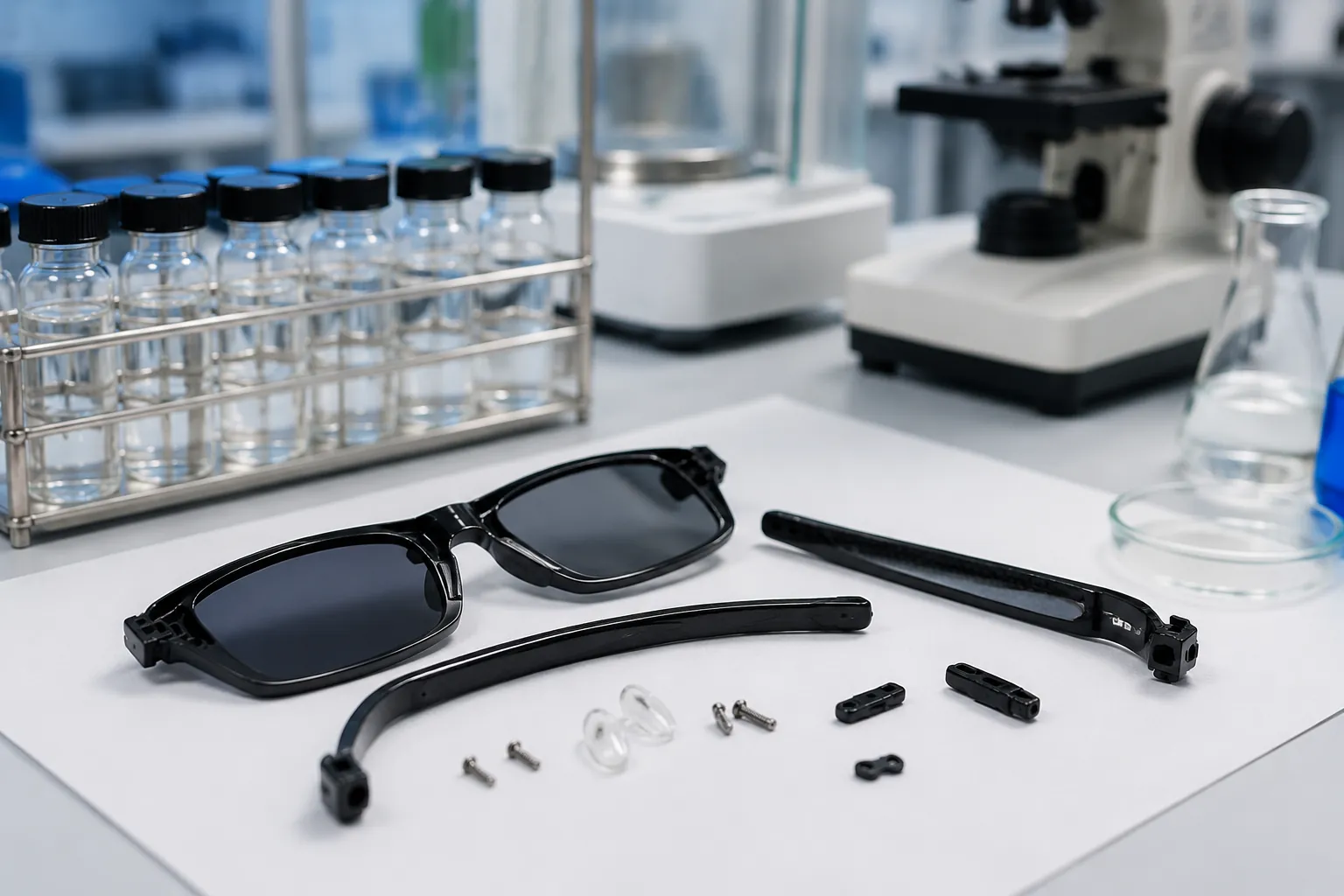
Choosing between OEM and ODM sunglasses is not mainly a design question. It is a timing, margin, and execution question. Buyers need to know how fast a style can move from brief to approved sample to bulk shipment, and how much change their order volume can really support. In most cases, ODM moves faster because the frame platform, assembly flow, and decoration positions already exist. OEM gives you more control over geometry, fit, materials, and branding structure, but it usually adds engineering work, approvals, and delay points. This guide compares both models by channel, lead-time pressure, MOQ logic, tolerance risk, compliance, and the production details that affect the final outcome.
Start with the sales channel, not the sketch
Many buyers start with the wrong question: which is better, OEM or ODM sunglasses? The better question is simpler. Which model fits your channel, launch window, and level of differentiation?
If you sell into trend-driven retail, marketplaces, online DTC, promotional programs, or distributor stock programs that need quick replenishment, ODM often makes more sense. You begin with an existing frame platform with established tooling, lens fit, hinge placement, and assembly flow. Then you customize the parts that matter in those channels: color, lens tint, logo application, barcode labeling, and packaging.
If you sell a brand-led collection, a licensed range, a sport line with fit demands, or a premium program where the frame shape itself carries value, OEM is usually the better fit. In those cases, changes to eye size, bridge width, temple length, front thickness, pantoscopic angle, base curve, or material selection are not cosmetic. They are the specification.
A useful rule: if the market rewards speed, acceptable differentiation, and lower development exposure, start with ODM. If it rewards a distinct silhouette, repeatability across seasons, and tighter control over fit and construction, OEM is worth the extra work.
- ODM fits: private label, chain retail, seasonal capsules, distributor stock programs, giveaways, tourist channels, and event sunglasses.
- OEM fits: brand collections, licensed products, sport or technical fit programs, premium acetate lines, and products with unique geometry or hardware.
- Mixed strategy fits: buyers who use ODM for fast-moving styles and reserve OEM for a small number of signature designs with enough repeat potential to justify development.
This channel-first approach prevents a common mistake: over-developing a product for a market that mainly needs reliable timing, stable quality, and clean branding.
Head-to-head: lead time, MOQ, cost, and control
Many buyers compare OEM and ODM on unit price first. That is too narrow. A better comparison is speed-adjusted cost: unit price, plus development cost, plus the commercial cost of delay.
| Factor | ODM sunglasses | OEM sunglasses |
|---|---|---|
| Development starting point | Existing mold, frame program, or proven shape | New CAD, modified tooling, or fully new mold depending on the request |
| Typical first sample timing | Often faster because color, lens, logo, and packaging are applied to an existing frame platform | Usually longer because engineering review, prototypes, and tooling evaluation may be required |
| Bulk lead time after approval | Typically shorter when materials are standard and the frame program is already in production | Typically longer when mold correction, fit revision, or special material sourcing is involved |
| MOQ logic | Often workable at lower volumes for simple private-label runs, subject to the supplier's program and decoration method | Usually needs higher volume to absorb development, setup, and tooling cost |
| Typical unit-cost behavior | More competitive at lower volume because development cost is limited | Often less efficient at low volume; improves when repeat orders spread non-recurring cost |
| Customization depth | Frame color, lens tint, pad print, laser logo, metal logo plate, case, pouch, hangtag, outer carton marking | Frame geometry, hinge type, temple construction, acetate lamination, material specification, finish, branding structure, and fit tuning |
| Main operational risk | Product may look too similar to other market offers using comparable frame platforms | Delay from unclear specifications, tolerance issues, prototype revision, or tooling rework |
For example, a lower OEM unit price does not help if the project misses a seasonal launch. By contrast, a brand that plans to reorder the same signature shape for several seasons may accept a slower first launch because the owned geometry has long-term value.
Why ODM usually moves faster
ODM is usually faster because the factory is solving fewer first-time engineering problems. The mold already exists. The hinge location is set. The lens groove dimensions have been used before. The assembly order is known.
On a standard sunglasses program, the buyer may choose an existing front and temple set, confirm a color reference, select a lens option, and approve branding. If the supplier manages molding or frame processing, lens fitting, decoration, packing, and final QC through a stable production flow, the path is shorter than a ground-up development project.
The details still matter. Frame color can be matched to a chip, a Pantone reference where applicable, or an approved sample, but the visual result may still shift with resin batch, transparency, texture, or surface finish. Lens options such as smoke, brown, green, mirror, gradient, or polarized TAC may be available without changing frame tooling, but buyers still need to confirm performance needs and destination-market requirements before approval.
Decoration is modular, but not frictionless. Pad printing is common for simple logos. Laser marking can work on some temple materials and some lenses. Metal logo plates can create a more premium look, but they add assembly steps and depend on stable recess dimensions and placement control.
Bulk production is also easier to schedule because the factory is mainly managing materials, workflow, and QC rather than product engineering. Still, ODM can slow down. Too many decoration variants, late artwork changes, unusual hardware requests, or structural tweaks can pull the project away from the original frame program.
Where OEM earns the extra time
OEM takes longer because the buyer is not just selecting a platform. The buyer is defining a product specification. That shifts the factory's work from customization to engineering and process control.
Common OEM requests include changes to eye size, bridge width, temple length, front thickness, end-piece angle, nose geometry, bevel profile, hinge specification, wire-core shape, or acetate laminate structure. Sport styles may need a different wrap or base curve. Premium fashion styles may call for heavier fronts, sharper bevels, or more distinctive hardware.
Even small changes can affect several process steps. A revised bridge shape can change mold design and release behavior. A thicker front can affect cooling in injection molding or polishing time in acetate production. A lens base change can affect lens cutting, edge fit, and retention. Hinge position tolerance matters too. Small shifts can affect alignment, opening feel, and visual symmetry.
That is why OEM needs clearer technical input. Mood boards are rarely enough. Factories work faster and with fewer mistakes when they receive structured specifications: front width, lens width, bridge size, temple length, target frame weight, material type, logo method, color references, and target compliance market. The approval path also needs discipline. If shape, color, and branding are approved on different samples without one final master sample, production risk rises.
OEM makes sense when geometry, fit, or construction creates real commercial value. If the goal is only to look a bit different, ODM is often the lower-risk choice.
The cost structure buyers underestimate
Unit price is only part of the sourcing decision. The development model changes how cost behaves across the full project, from sampling to repeat orders.
With ODM, setup cost is usually lower because the frame platform already exists. That makes lower-volume test runs more practical, especially when customization is limited to frame color, lens tint, logo, and packaging. Add too many variables, though, and small orders become less efficient because each change adds setup time and QC complexity.
As volume rises, pricing often improves because materials can be purchased more efficiently, production changeovers can be reduced, and inspection cost is spread over more pairs. The exact breakpoints depend on the supplier, material, lens type, decoration, and packaging. Ask for quotation tiers. Do not assume standard thresholds.
With OEM, buyers need to account for non-recurring engineering cost and delay cost. New mold work, prototype rounds, revised samples, and technical review all add expense before the first sellable unit exists. If planned volume is limited, that overhead can erode margin quickly. If annual demand is high enough and reorder potential is real, the economics improve because development cost is spread over more units and the design asset stays specific to the buyer.
- Short-run market test: ODM usually lowers cash exposure and timing risk.
- Fast refill for a proven seller: ODM often wins because speed and repeatability matter more than novelty.
- Signature frame planned across seasons: OEM makes more sense when reorder potential and brand value can justify the development path.
The useful metric is not the lowest quoted unit price. It is expected margin after timing, development cost, revision risk, and sell-through are factored in.
Compliance and materials can change the answer
For sunglasses, compliance is part of product development. Not a separate box to tick later. It affects lens performance, materials, coatings, labeling, and document control. Buyers should define the target market and requirement set before sampling starts.
Common references include CE EN ISO 12312-1 for many export markets, ANSI Z80.3 for the United States, AS/NZS 1067 for Australia and New Zealand, and chemical requirements such as REACH where applicable. Some importers also ask suppliers to provide FDA registration details in their document package. Supplier-system indicators such as ISO 9001 and BSCI may help buyers assess management systems and social compliance, but they do not replace product-level testing or market-specific labeling requirements.
Material choice shapes both performance and compliance planning. Polycarbonate lenses are widely used for impact resistance. TAC polarized lenses are common when polarization is required, but buyers should confirm consistency and supporting test documentation. Acrylic lenses may be used in lower-cost fashion programs, but suitability depends on the market and performance target. For frames, injected plastics support efficient high-volume production, while acetate offers a more premium look and layered color effects but usually needs more processing and fit control.
Compliance-sensitive programs often lean toward ODM because there are fewer new variables to validate. A proven frame platform with a standard lens construction can simplify the review path. OEM adds variables, and each new resin, coating, decorative ink, metal trim, or adhesive may require additional verification.
- Lens category: define the visible light transmission target before sampling begins.
- UV protection: state the required performance level in the first RFQ.
- Chemical limits: align frame materials, coatings, inks, adhesives, and metal parts with the destination market.
- Documents: define required test reports, declarations, and labeling before bulk production starts.
If the market is compliance-sensitive, the fastest route is often the one with the fewest new material and construction variables. In many cases, that points to ODM.
A practical framework before RFQ
Before requesting quotation, buyers should structure the project so the supplier can price and execute it clearly. That cuts vague quoting, shortens revision cycles, and makes lead times easier to judge.
- Define the channel first. A resort shop, supermarket chain, online DTC launch, distributor stock order, and promotional giveaway each support different levels of uniqueness, cost, and lead-time tolerance.
- Count backward from the ship date. If goods must depart in a tight window, ask the supplier whether OEM is realistic before asking for design work.
- Separate must-haves from nice-to-haves. Frame geometry, lens specification, logo execution, and packaging do not create equal sales value.
- Match customization depth to quantity. Lower-volume orders usually support branding changes more easily than structural redevelopment.
- Lock compliance early. Give the supplier the target standards and market before sampling starts.
- Approve one master sample. The final approved sample should combine frame color, lens, logo, hardware, and packaging into one reference for production and QC.
For many importers and retailers, the best answer is not choosing one model forever. It is using ODM for speed on proven commercial styles and using OEM selectively on the designs that truly justify a longer development path.
What a factory should show before you commit
A serious supplier should explain the manufacturing path, not just send a catalog. Buyers should ask which operations are handled directly, which are outsourced, where bottlenecks usually appear, and what quality checks are used before shipment.
A supplier with stable control over frame production or sourcing, lens fitting, logo application, packaging, and final QC is usually better positioned to manage timing than one relying on loosely coordinated subcontracting. That matters for sample control and bulk consistency. It matters even more when something goes wrong, such as logo placement drift, lens color variation, inconsistent hinge feel, or packing errors.
Ask direct questions. Expect direct answers.
- Can you support my target MOQ without changing materials or decoration method?
- How do you quote by volume tier, color count, and packaging type?
- Which decoration methods are stable at my quantity: pad print, laser marking, or metal logo plate?
- Which QC checkpoints cover lens fit, alignment, hinge function, cosmetic defects, and carton accuracy?
- Which documents can you provide in practice: CE EN ISO 12312-1, ANSI Z80.3, AS/NZS 1067, REACH, FDA registration, ISO 9001, and BSCI where applicable?
If the factory answers vaguely, the ambiguity usually shows up later in sampling or production. Clear process language is not just good presentation. It often signals operational control. Buyers do not only need a competitive quote. They need a supplier that can turn a commercial requirement into a realistic sample path, stable production, and on-time shipment.
Have a custom sunglasses project in mind?
Send us your styles, target market and quantities and we will return a detailed quote with MOQ, lead time and a sample plan.
Get a QuoteWhy source this from Wenzhou with LumiShades
Wenzhou in Zhejiang Province is widely regarded as China’s eyewear manufacturing capital, producing a large share of the world’s sunglasses. That concentration matters to buyers: a deep local supply chain for acetate sheet, hinges, lens blanks, plating and packaging means shorter component lead times, easier color and material matching, and a workforce with decades of eyewear-specific skill. LumiShades has manufactured in this ecosystem since 2009, and our vertical integration — in-house injection molding, acetate cutting, CNC milling, lens tinting, decoration and quality control — means no part of your order is quietly subcontracted to a workshop you cannot audit.
For international buyers, that vertical control translates into accountability. When a single factory owns every step, defects are traced and fixed at source rather than bounced between vendors, and your specifications survive intact from first sample to bulk. We back this with 15+ years of experience, shipments to 60+ countries, more than 5 million pairs produced per year and a 98.5% on-time delivery rate. Our certifications — CE EN ISO 12312-1, FDA registration, ANSI Z80.3, AS/NZS 1067, REACH, ISO 9001 and BSCI audit — mean the compliance documentation your market requires already exists. Explore our manufacturing capabilities and quality control process to see how this works in practice.
Frequently asked questions
If I need sunglasses on the water in 45 days, should I avoid OEM? Usually yes, unless the requested change is very minor and the supplier confirms that no new tooling, CAD revision, or extra material validation is needed. In a 45-day window, ask for a backward schedule that shows sample approval, material purchasing, production, inspection, and shipment dates. If any of those steps are still unclear, ODM is the safer option.
Is 50 pairs per design enough for custom branding? It can be, but it depends on the supplier's MOQ policy and the decoration method. At that volume, buyers usually have the best chance with existing frame styles plus practical custom elements such as color, lens tint, logo, and packaging. Before placing the order, confirm which branding methods are available at that quantity, whether artwork setup charges apply, and whether all pairs will use the same packaging configuration.
At what order size does OEM start making more sense? There is no universal threshold. It depends on tooling cost, sampling rounds, material choice, and expected reorder frequency. OEM becomes easier to justify when the design will be repeated, when frame geometry itself supports brand positioning, and when planned demand is high enough to spread development cost across multiple orders. Ask the supplier to quote both an ODM option and an OEM option so you can compare total project cost, not just unit price.
What is the biggest cause of delay after sample approval? Late specification changes are one of the most common causes. Typical examples include changing lens color, moving logo position, revising packaging artwork, switching hardware details, or changing the decoration method after the master sample is approved. Buyers can reduce this risk by issuing one final approved sample, one written specification sheet, and one approved packaging file set before bulk production begins.
Do ISO 9001 or BSCI replace product compliance tests for sunglasses? No. ISO 9001 and BSCI do not replace product-level compliance. They can help buyers assess supplier systems and audit status, but sunglasses still need to meet the destination market's applicable product and chemical requirements, such as CE EN ISO 12312-1, ANSI Z80.3, AS/NZS 1067, and REACH where required. The practical step is to list required standards in the RFQ and request the supporting test and document package before shipment.
Ready to start?
Explore our rimless sunglasses or request a quote — our sales team replies within 12 hours.
Request a Quote