
OEM vs ODM Sunglasses: Which Lowers Risk?
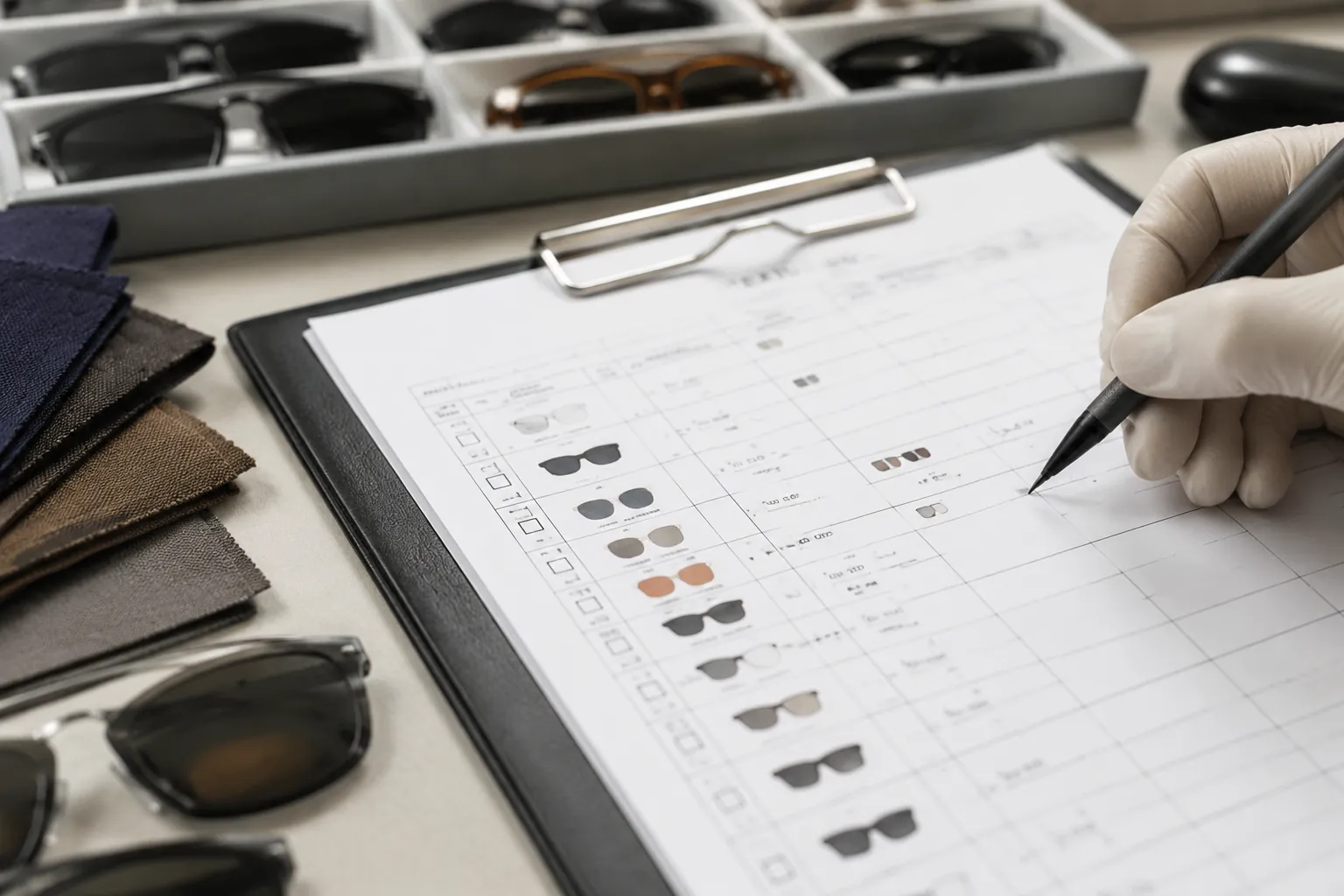
If you are sourcing private label sunglasses, the first question is not whether the product is custom. It is how much risk you want to take on the first order. Using an existing factory frame platform usually cuts tooling exposure, shortens development, and lowers MOQ risk. Building a frame from scratch gives you more control over fit, geometry, and brand identity. It also adds more moving parts: mold cost, tolerance correction, compliance review, and longer lead times. For many first-time buyers, ODM is the safer test. OEM makes more sense after a style proves demand.
Start with the risk you are trying to remove
Buyers often treat OEM versus ODM as a design choice. It is not. It is a risk decision.
Before you ask for quotes, decide which problem matters most: time-to-market, cash exposure, MOQ pressure, compliance delay, or weak differentiation.
Common early mistakes are simple:
- Development drag: too many CAD edits, fit changes, and sample revisions.
- Tooling waste: paying for molds or fixtures before demand is proven.
- MOQ mismatch: ordering more than your channel can actually move.
- Compliance surprises: late lens or structure changes that affect testing or labeling.
- False exclusivity: assuming a logo change protects the frame itself.
ODM is often safer because the frame already exists in production. Dimensions are known. Assembly behavior is known. Hinge fit, lens insertion, molding behavior, and logo placement have already been checked in real production. OEM removes that safety net. If your first order is a market test, do not reopen engineering unless the brand really needs a proprietary shape, fit, or build.
OEM vs ODM, side by side
| Factor | ODM sunglasses | OEM sunglasses |
|---|---|---|
| Starting point | Existing factory frame platform with established dimensions and assembly process | New frame built from buyer sketches, CAD, reference sample, or major structural modification |
| Sample timing | Usually shorter when changes are limited to color, logo, lens, trim, or packaging | Usually longer because development may include CAD work, prototyping, tooling, and correction rounds |
| Bulk lead time | Often more predictable because production follows an existing process | Often longer or less predictable if tooling validation and structural revisions are required |
| Tooling cost | Low or none when existing molds are used | Higher when new molds, fixtures, or part tooling are needed |
| MOQ exposure | Often better suited for market testing, depending on supplier policy | Often higher because development and tooling costs must be absorbed |
| Tolerance risk | Lower because lens groove, hinge placement, and temple fit are already proven on that platform | Higher because front curve, lens seating, and temple alignment may require adjustment |
| Exclusivity | Usually limited unless reserved by written agreement | Potentially stronger if tooling ownership, design-file control, and exclusivity terms are clearly defined |
| Best use case | Fast launch, seasonal programs, retail tests, small-batch private label introductions | Signature styles, engineered fit, long-term volume programs, stronger differentiation |
The difference is direct. ODM modifies a known frame architecture. OEM changes the architecture itself. With ODM, the gate position, wall thickness, hinge anchor points, and lens groove dimensions are usually already proven. With OEM, those parts can change. That gives you freedom. It also creates more ways for the project to slip.
Why ODM usually wins on speed and cash control
For many private label buyers, the first goal is not the perfect frame. It is a frame that can launch without eating time or capital.
ODM usually wins because the process risk has already been reduced by prior production. The factory knows how the materials behave. For injection styles, shrinkage and mold behavior are already understood. For acetate styles, the supplier already knows sheet yield, polishing loss, and where warpage tends to show up. Hinge feel, lens insertion sequence, and branding positions are based on experience, not guesses.
That usually means a shorter timeline. Fewer technical variables too. Instead of validating a whole structure, the buyer is confirming commercial choices: color, lens spec, branding method, packaging.
ODM can also help with MOQ, though supplier policies vary. It helps to think about MOQ in stages:
- Pilot quantity: for demand testing, influencer seeding, boutique launch, or content production.
- Early commercial quantity: for a first real sales run with better carton efficiency and clearer sell-through data.
- Repeat volume: for better material planning and unit economics.
- Scale volume: for stronger pricing leverage and production scheduling.
That is why ODM often lowers first-order failure. You test demand before paying for custom tooling or a new structure that may never earn back its cost.
Where OEM earns its keep
OEM makes sense when the shape itself is the advantage. If your brand needs a signature silhouette, a specific bridge fit, a distinct temple profile, or a lens geometry that is not in the supplier's range, ODM may be too limiting.
Common changes that push a project into OEM include:
- Changing front curvature enough to require new lens geometry or a different base curve.
- Moving hinge position or changing temple structure beyond cosmetic variation.
- Adjusting eye size, bridge width, and temple length together to engineer a target fit.
- Creating a new acetate profile that needs CNC development, bevel tuning, and finishing trials.
- Adding custom nose structures, dedicated metal trims, or integrated logo hardware.
This is where tolerances matter. A small request can ripple through the build. A thicker temple can change hinge feel, screw engagement, and opening force. A lens groove that is slightly off can cause insertion stress or weak retention. On acetate, aggressive profiling can soften edge definition after polishing. On injection styles, uneven wall thickness can cause sink, warpage, or uneven cooling.
OEM can also make copying harder and support stronger brand identity over time. But that only works if ownership is clear. Put it in writing: who owns the mold, whether tooling is dedicated, who controls the CAD files, whether the factory can reuse non-branded structural features, and what exclusivity applies by market, channel, or territory.
Cost is more than unit price
Unit price alone is a weak comparison. OEM and ODM do not carry the same cost stack.
ODM is usually easier to read: sample charges, unit price, packaging, freight, and any setup cost for branding methods such as pad print, laser engraving, or metal-logo application. Even there, the unit price only matters if the bill of materials is clear. A frame with a standard lens and simple packaging is not the same product as one with polarized lenses and premium retail packaging.
OEM has more layers:
- Development sampling: prototype, revision sample, and pre-production sample.
- Tooling: injection molds, CNC fixtures, acetate templates, or custom trim tooling.
- Material validation: resin color matching, acetate review, trim fit, and lens seating stability.
- Compliance confirmation: especially when lens construction, coatings, or frame structure differ from previous builds.
- Delay cost: missed retail windows, slower inventory recovery, or internal approval bottlenecks.
The hidden risk is not only higher spend. It is earlier spend, before demand is proven. Ask suppliers to break quotes into sample cost, tooling cost, unit price at different order bands, packaging cost, and timing by stage. One blended number hides the real risk.
Compliance changes are often structural
Sunglasses are regulated. They are not just fashion items. Your sourcing route changes how much compliance work needs active buyer oversight.
Relevant standards and systems may include CE EN ISO 12312-1, ANSI Z80.3, AS/NZS 1067, REACH, FDA registration, ISO 9001, and BSCI. Which ones matter depends on the destination market, product construction, and importer duties. Confirm that with the supplier and, if needed, your own compliance advisor or testing partner.
The obvious variables are lens category, visible light transmission, UV performance, mirror coating, and labeling. The less obvious ones are structural. A different base curve can affect fit and optical positioning. A new groove tolerance can change lens retention. A weaker hinge anchor or thinner temple can reduce durability even if the optics still pass.
Small BOM changes can create avoidable problems if the approved sample does not match mass production. A lens tint change is not always cosmetic if it changes the transmission category or label. A mirror coating may need reconfirmation. A polarized TAC lens and a standard PC lens can differ in handling and product marking.
Ask these questions early on OEM jobs:
- Does the final lens construction match the destination-market standard?
- Do mirror, polarized, photochromic, or gradient options change the test plan or labeling?
- What warnings, markings, and carton labels are required for each market?
- When is the BOM frozen so late changes do not reopen compliance work?
Freeze the lens spec before mass production. Keep the approved sample, test basis, and production BOM aligned.
A simple buyer-side decision guide
| If your situation is... | Safer route | Why |
|---|---|---|
| You need shipment within a tight launch window after sample approval | ODM | Existing molds and a proven assembly path usually reduce development and correction time |
| You are testing a new market, channel, or style family | ODM | Lower development exposure reduces downside if sell-through is weak |
| Your brand needs a signature shape competitors cannot source easily | OEM | Custom geometry and controlled tooling support stronger differentiation |
| You need exact bridge, eye size, temple length, or wrap changes | OEM | Fit can be engineered intentionally rather than approximated from a stock frame |
| You have limited internal product-development resources | ODM | Fewer technical variables and fewer approval loops to manage |
| You expect stable, repeat demand over time | OEM or hybrid | Development cost can be justified more easily when spread across repeat orders |
For many buyers, the best path is hybrid. Start with ODM to validate price point, lens spec, and color demand. If one style works, convert that winner into an OEM derivative with adjusted fit, refined details, or dedicated tooling. Fast first. Custom later. That order matters.
What to send the factory before you request quotes
Weak RFQs create weak pricing. If one supplier quotes a standard lens, simple polybag, and printed logo, and another quotes polarized lenses, branded packaging, and metal-logo hardware, the numbers are not comparable.
Send a minimum spec pack:
- Route: ODM from existing styles, OEM from drawings, or both quoted side by side.
- Frame material: PC, TR90, metal, or acetate, plus finish such as matte, rubberized, hand-polished, or crystal.
- Lens requirement: lens material, polarization, mirror or gradient requirement, category target, and destination-market standard.
- Decoration: pad print, laser engraving, screen print, foil, or metal-logo application, with exact artwork position.
- Packaging: pouch, case, folding box, barcode label, carton mark, and insert card.
- Volumes: ask for pricing at multiple order levels so MOQ and scale economics are visible.
- Timeline: sample deadline, approval date, and requested ship window.
Also ask what is done in-house: injection molding, acetate cutting, CNC milling, lens tinting, logo application, QC. That does not guarantee quality. It does show where correction loops may be faster or slower. The right sourcing route is not the one that sounds most custom. It is the one that removes the most avoidable risk for your stage of business.
Have a custom sunglasses project in mind?
Send us your styles, target market and quantities and we will return a detailed quote with MOQ, lead time and a sample plan.
Get a QuoteWhy source this from Wenzhou with LumiShades
Wenzhou in Zhejiang Province is widely regarded as China’s eyewear manufacturing capital, producing a large share of the world’s sunglasses. That concentration matters to buyers: a deep local supply chain for acetate sheet, hinges, lens blanks, plating and packaging means shorter component lead times, easier color and material matching, and a workforce with decades of eyewear-specific skill. LumiShades has manufactured in this ecosystem since 2009, and our vertical integration — in-house injection molding, acetate cutting, CNC milling, lens tinting, decoration and quality control — means no part of your order is quietly subcontracted to a workshop you cannot audit.
For international buyers, that vertical control translates into accountability. When a single factory owns every step, defects are traced and fixed at source rather than bounced between vendors, and your specifications survive intact from first sample to bulk. We back this with 15+ years of experience, shipments to 60+ countries, more than 5 million pairs produced per year and a 98.5% on-time delivery rate. Our certifications — CE EN ISO 12312-1, FDA registration, ANSI Z80.3, AS/NZS 1067, REACH, ISO 9001 and BSCI audit — mean the compliance documentation your market requires already exists. Explore our manufacturing capabilities and quality control process to see how this works in practice.
Frequently asked questions
Is ODM just rebranding a stock frame? Not always. ODM usually starts from an existing factory frame platform, but buyers can still change commercial elements such as frame color, lens tint, lens type, branding method, trim details, and packaging. The key test is simple: if the core geometry, structural parts, or tooling stay the same, the project is usually ODM. To act on this, ask the supplier to label every requested change as either 'cosmetic/commercial' or 'structural/tooling-related' before sampling starts.
When does a sunglasses project become OEM instead of ODM? A project usually becomes OEM when the core construction changes, not just the finish. Common triggers include a new front shape that needs different lens tooling, moved hinge positions, changed temple structure, new bridge fit, major size changes, or a custom acetate profile that needs CNC development and new fixtures. If you are unsure, send an annotated reference image or CAD and ask for a written split between changes that use existing molds and changes that need new tooling or engineering review.
Can I get exclusivity on an ODM style? Yes, but only if the agreement is specific. Exclusivity can apply to the exact colorway, logo execution, packaging set, customer channel, market territory, or the underlying frame shape. Without written definitions, the same base style may still be sold to another buyer with different branding. Ask for a written exclusivity clause that states what is protected, where, for how long, and what evidence identifies the protected style, such as a model code, drawing, or approved sample.
What MOQ makes sense for a first test order? It depends on your sales channel, price point, and how sure you are about demand. For an unproven style, the safest starting point is usually the lowest quantity that still gives you a valid market read. Ask for pricing and lead time at several quantity bands, not just one MOQ. That shows whether the first order should be a pilot run, an early commercial run, or a larger launch tied to confirmed demand.
Do cosmetic changes affect compliance? Some do and some do not. A logo print or packaging change may have no effect on the optical standard itself. But lens tint, mirror coating, polarization, photochromic treatment, lens material, and some frame-structure changes can affect testing, labeling, or conformity review under CE EN ISO 12312-1, ANSI Z80.3, or AS/NZS 1067. Send the final lens spec and destination market before sample approval, then ask whether that exact configuration changes the test basis, markings, or documentation.
Ready to start?
Explore our round sunglasses or request a quote — our sales team replies within 12 hours.
Request a Quote