
Nylon Lenses for Performance Sunglasses: When They Pay
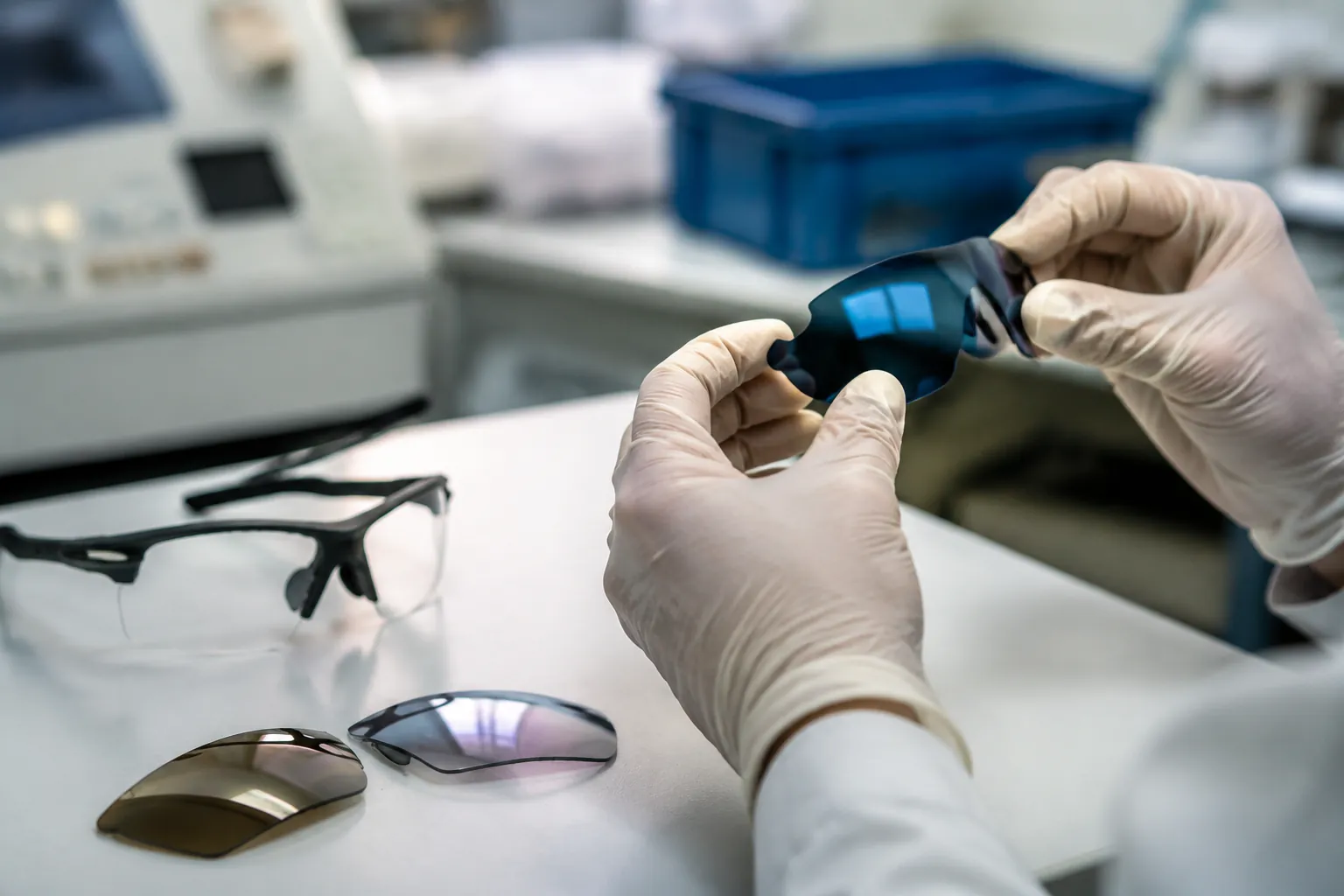
This guide is for brand owners, importers, distributors, and retail buyers developing sport or activewear sunglasses at volume. Nylon lenses usually cost more than AC acrylic and often more than standard polycarbonate. That alone means nothing. The real question is whether the upgrade improves optics in wrapped shapes, lowers breakage risk in use and assembly, or supports a retail position strong enough to cover the added factory cost. In sport programs, the answer usually comes down to four variables: wrap geometry, impact exposure, optical requirements, and sales channel. If you buy by MOQ, carton, or container rather than by the pair, those variables affect margin, complaint risk, and reorder potential.
Why buyers consider nylon lenses
Most entry-level sunglasses still use AC acrylic or standard polycarbonate lenses. For fashion-led styles, that is often the right call. The decision changes when the brief shifts to active use: higher wrap curves, larger lens areas, repeated frame flex, outdoor heat exposure, and longer wear time. At that point, lens material stops being a basic BOM line and becomes a performance spec.
Nylon is widely used in sport sunglasses because it combines low weight, toughness, and solid optical performance in curved lens shapes. That matters in cycling, running, golf, fishing, trail, and paddle categories, where users need stable peripheral vision and comfort across a wider field of view.
From a sourcing perspective, the value is usually indirect. Buyers do not recover the premium from the material name alone. They recover it when the finished product performs better in use, creates fewer complaints about distortion or cracking, or supports a higher retail position in technical channels. Simple test: if the product promise is based on function, nylon may make sense. If it is based on style alone, usually not.
- Best use case: premium sport or activewear sunglasses with wrap coverage, larger lens area, or demanding movement-based use
- Weak use case: flat fashion frames, low-wrap lifestyle shapes, and highly price-sensitive promotional programs
- Commercial logic: higher ex-factory cost may be justified when the material supports better durability, more consistent optics, and stronger technical positioning
Where nylon beats standard lens materials
Nylon is not better in every case. It is better in specific cases where the difference is visible to the wearer, the retailer, or the QC team.
First, nylon is often a stronger choice in higher-wrap geometries. In sport frames with pronounced curvature, lower-grade materials may show more visible distortion or less consistent visual quality if lens forming and edging are not tightly controlled. Nylon is common in performance categories for a reason. It can help manufacturers deliver better visual results in curved lenses when the process is right.
Second, nylon is valued for toughness and flexibility in real handling. Performance sunglasses get dropped, packed into bags, pressed into tight frame grooves, and exposed to repeated frame tension. Compared with acrylic, nylon usually gives a wider safety margin against brittle failure.
Third, nylon can improve comfort on larger lens footprints because lower lens weight reduces load at the bridge and temples. That matters most on shield constructions and full-coverage sport frames built for long wear.
There is also an assembly advantage. Lens retention in performance frames depends on groove tolerance, bevel profile, and lens flexibility. On aggressive-wrap or semi-rimless builds, nylon can make assembly more forgiving than a brittle material, assuming the frame design and tolerances are correct.
For sales teams, nylon also gives the product a functional story that is easy to defend. Specialty dealers in cycling, golf, marine, and outdoor categories usually ask what the lens does in use, not just what color it is. Material matters there.
Material trade-offs to compare before quoting
Material choice should follow the use case, not habit. The comparison below keeps the decision practical for RFQs and line planning.
| Lens material | Main strengths | Main weaknesses | Typical cost position | Best fit |
|---|---|---|---|---|
| AC acrylic | Lower cost, easy color matching, suitable for simple flat or low-wrap styles | Lower impact resistance, lower toughness, optics can degrade more easily in higher-wrap applications | Lowest | Promotional sunglasses, low-cost fashion programs |
| Polycarbonate | Good impact resistance, broad availability, cost-effective for many sport-adjacent products | Needs reliable hard coating, optical performance in premium wrap applications may not match a well-made nylon lens | Low to mid | Mid-range sport sunglasses, general outdoor use |
| Nylon | Light weight, high toughness, good optical performance in curved lenses, premium performance positioning | Higher raw material and processing cost, unnecessary for many basic SKUs | Mid to high | Premium sport, wraparound, cycling, running, fishing, golf |
| TAC polarized assembly | Effective glare reduction at controlled cost, common in lifestyle polarized programs | Laminated structure may be less suitable for some high-wrap or high-impact sport builds, edge finishing requires close control | Mid | Driving, marine lifestyle, casual outdoor polarized lines |
A practical rule helps. If the frame is flat or only mildly curved, nylon is often unnecessary cost. If the frame is a wrapped sport style with a large lens area, extended side coverage, or a shield construction, nylon deserves a direct comparison against coated polycarbonate.
When the higher lens cost pays back
Buyers usually notice nylon cost first in sample quotations and landed unit price. Fair enough. But the better question is whether the material improves total program economics over launch and reorder cycles.
Four situations commonly justify the upgrade.
- You need a clear retail step-up. If the assortment is moving from casual sport into technical performance, nylon gives the product team a real specification difference that can support a higher price position.
- Your complaint risk is tied to optics or durability. Small unit savings disappear fast if field complaints rise because of distortion, stress cracking, or poor edge durability.
- You are using large wrap shields or full-coverage shapes. Bigger, more curved lenses make both weight and optical quality more noticeable to the wearer.
- You sell through specialty dealers. Technical retail channels usually reward products with defensible performance specifications.
MOQ and volume still matter. Low-quantity development runs are useful for evaluation, but per-unit costs are less efficient when material setup, coating preparation, color approval, and QC are spread over very small quantities. Compare nylon and coated polycarbonate on the same specification basis at the intended production volume, not only on a sample run.
One more point. Do not judge lens material in isolation. A nylon lens paired with weak coating control, poor edge finishing, or an unstable frame groove will not create a premium product. Total build quality decides whether the premium pays back.
Process controls that decide nylon lens quality
Nylon is only as good as the process behind it. Buyers should ask how the lens is formed, coated, edged, inserted, and inspected. Those steps decide whether the material advantage survives into the finished sunglass.
For performance eyewear, the critical sequence usually includes lens production, tinting where applicable, mirror or flash application where required, hard coating, curing, edging or CNC trimming, bevel control, frame insertion, and final inspection under defined lighting conditions. Common failures are predictable: curve inconsistency, weak edge finishing, coating defects, and overstressed assembly.
- Curve consistency: Left and right lenses should match in curve, fit, and visual appearance. Mismatch is easier to spot in higher-wrap sport frames.
- Edge profile control: Inconsistent bevel depth or rough trim edges can create stress points that later turn into cracks during insertion or use.
- Coating adhesion: Hard coat and mirror layers need to remain stable through normal cleaning and handling.
- Retention fit: Lens insertion should be secure without excessive compression that can increase long-term stress.
- Inspection standard: Premium sport programs should define cosmetic zones, optical acceptance criteria, and sampling standards before production approval.
Operational control matters. If lens processing and final assembly sit inside a controlled production system, sample corrections are easier to trace and tolerance issues are easier to fix. Buyers with stricter QA requirements should also confirm whether the supplier operates under ISO 9001 quality management and whether social compliance requirements such as BSCI apply to the program.
Compliance and specification lock for sport programs
Performance claims attract more scrutiny than casual fashion products, so compliance needs to be aligned early with the lens category and destination market. For sunglasses, the most common requests include CE EN ISO 12312-1 for Europe, ANSI Z80.3 for the United States, AS/NZS 1067 for Australia and New Zealand, REACH for restricted substances where applicable, and FDA registration where relevant to the US import process.
The key point is simple. Nylon itself is not compliant. The finished sunglass is. Test status depends on the final mix of lens tint, visible light transmission category, UV performance, optical quality, frame construction, and labeling. Buyers often lose time by changing mirror color, tint density, polarization, or labeling late in development and then finding that the document set no longer matches production.
That is why specification lock matters. Before bulk approval, buyers should confirm exactly which lens color, transmission category, coating stack, logo method, and frame style the report or declaration covers. If the program includes multiple lens options, each variant should be reviewed as a separate compliance checkpoint unless the test scope clearly covers all of them.
For B2B teams, the safest workflow is direct: define the destination market first, approve the performance category second, and freeze aesthetic changes before final compliance documents are issued. That sequence cuts avoidable retesting, labeling errors, and shipment delays.
How to quote nylon from sample to bulk
Many expensive sourcing mistakes start with a vague RFQ. A buyer asks for "nylon sport sunglasses," gets a unit price, and later finds that polarization, mirror finish, hard-coat level, compliance scope, or branding method were not quoted on the same basis. Then the comparison falls apart.
A workable RFQ for nylon performance sunglasses should state the target use, frame type, lens function, destination market, branding method, packaging level, and volume ladder. Without those details, quotes are not directly comparable.
- Target use: cycling, running, golf, fishing, driving, trail, or general outdoor
- Frame geometry: shield, full-rim wrap, semi-rimless, and base curve if known
- Lens function: non-polarized, polarized, mirrored, photochromic, or category-specific tint
- Market destination: EU, US, Australia/New Zealand, or multi-market
- Branding method: laser engraving, pad printing, hot stamping, temple metal logo, or molded logo insert
- Order ladder: sample quantity, trial order, and projected production volumes
- Packaging scope: polybag only, pouch, EVA case, retail box, barcode labels, or full POS set
Decoration and packaging can move pricing more than new buyers expect. A one-color pad print does not have the same cost structure as laser logo work, metal badge application, or custom molded branding. The same goes for packaging: a pouch and carton label cost far less than an EVA case, microfiber cloth, color box, and retail-ready master carton spec.
If the RFQ is clear, the supplier can also say more honestly whether nylon is necessary or whether a well-coated polycarbonate lens will meet the brief at lower cost. Good manufacturers should make that distinction instead of treating "nylon" as an automatic upgrade.
A practical rule for activewear assortments
If you need a simple filter, use this one: stay with standard lens options when the product is fashion-led, low-wrap, highly price-sensitive, and sold mainly on color or logo. Move to nylon when the product is sold on sport function, wrap coverage, lower weight, better perceived optics, and channel credibility.
In most activewear collections, the better structure is not to use nylon everywhere. It is to build a tiered assortment. Entry styles can stay in basic materials for opening price points. Mid-range sport styles can use well-coated polycarbonate. Top-line performance SKUs can justify nylon where the wearer is most likely to notice the difference. That keeps price architecture clean and avoids overbuilding slow-moving items.
If the lens material will not materially improve the user experience, keep the lower-cost option. If it is likely to improve optics in a wrapped shape, reduce breakage risk, or strengthen the product's technical position, nylon deserves a serious look.
That is the discipline. Do not chase the most expensive material. Match the material to the use case, the sales channel, the compliance target, and the reorder outlook.
Have a custom sunglasses project in mind?
Send us your styles, target market and quantities and we will return a detailed quote with MOQ, lead time and a sample plan.
Get a QuoteWhy source this from Wenzhou with LumiShades
Wenzhou in Zhejiang Province is widely regarded as China’s eyewear manufacturing capital, producing a large share of the world’s sunglasses. That concentration matters to buyers: a deep local supply chain for acetate sheet, hinges, lens blanks, plating and packaging means shorter component lead times, easier color and material matching, and a workforce with decades of eyewear-specific skill. LumiShades has manufactured in this ecosystem since 2009, and our vertical integration — in-house injection molding, acetate cutting, CNC milling, lens tinting, decoration and quality control — means no part of your order is quietly subcontracted to a workshop you cannot audit.
For international buyers, that vertical control translates into accountability. When a single factory owns every step, defects are traced and fixed at source rather than bounced between vendors, and your specifications survive intact from first sample to bulk. For procurement review, buyers can request process records, approved samples, quality checkpoints and project-specific compliance files before placing a bulk order. Required testing and documentation are confirmed against the destination market and product specification rather than assumed from a generic certificate list. Explore our manufacturing capabilities and quality control process to see how this works in practice.
Frequently asked questions
Is nylon always better than polycarbonate for sport sunglasses? No. Nylon is often the better choice for premium wrap sport styles where lower weight, higher toughness, and more stable optics in curved lenses matter. Polycarbonate is often the better value for mid-range active programs, especially when frame wrap is less aggressive and the supplier can apply a reliable hard coat. To decide properly, ask the supplier to quote both materials on the same frame with the same coating, tint, branding, packaging, and compliance scope, then compare performance and total landed cost.
What minimum order makes nylon lenses more practical? There is no universal minimum because feasibility depends on the factory process, the lens specification, and the amount of customization required. In practice, low-quantity samples can confirm fit and appearance, but they are a poor basis for judging real production economics. Buyers should request pricing at the intended trial volume and at least one reorder volume, then compare nylon against coated polycarbonate on a like-for-like basis. Also confirm whether sample tooling, coating setup, testing, or packaging approvals are charged separately.
Do nylon lenses automatically meet CE or ANSI requirements? No. Compliance applies to the finished sunglass, not just the raw lens material. Buyers should ask which final specification has been tested or documented, including lens tint, visible light transmission category, UV performance, frame style, labeling, and any polarization or mirror treatment. For Europe, check alignment with CE EN ISO 12312-1. For the United States, review ANSI Z80.3 and any relevant FDA registration requirements in the import workflow. If you change lens color, coating, or labeling after approval, confirm whether new testing or updated documents are required.
Will nylon lenses increase lead time? They can, but not always. Lead time depends less on the word "nylon" and more on the number of processing steps, coating complexity, color approvals, and whether compliance documents need updating. To control timing, ask the supplier which stages are done in-house, what the sample approval sequence looks like, and when the specification must be frozen for production and testing. If the program includes multiple lens colors or markets, build in extra time for document review and approval changes.
What should I specify in the RFQ to avoid wrong pricing? At minimum, specify the end use, frame geometry, base curve if known, lens function, destination market, branding method, packaging level, and your quantity ladder from sample to projected production. Also state whether you need compliance support for CE EN ISO 12312-1, ANSI Z80.3, AS/NZS 1067, REACH, or FDA registration-related documentation, and whether supplier qualifications such as ISO 9001 or BSCI are required. Finally, ask the factory to list assumptions line by line so you can see whether coatings, logos, packaging, testing, and spare parts are included or excluded.
Ready to start?
Explore our rimless sunglasses or request a quote — our sales team replies within 12 hours.
Request a Quote