
Memory Metal vs Stainless Temples: ROI Guide for Buyers
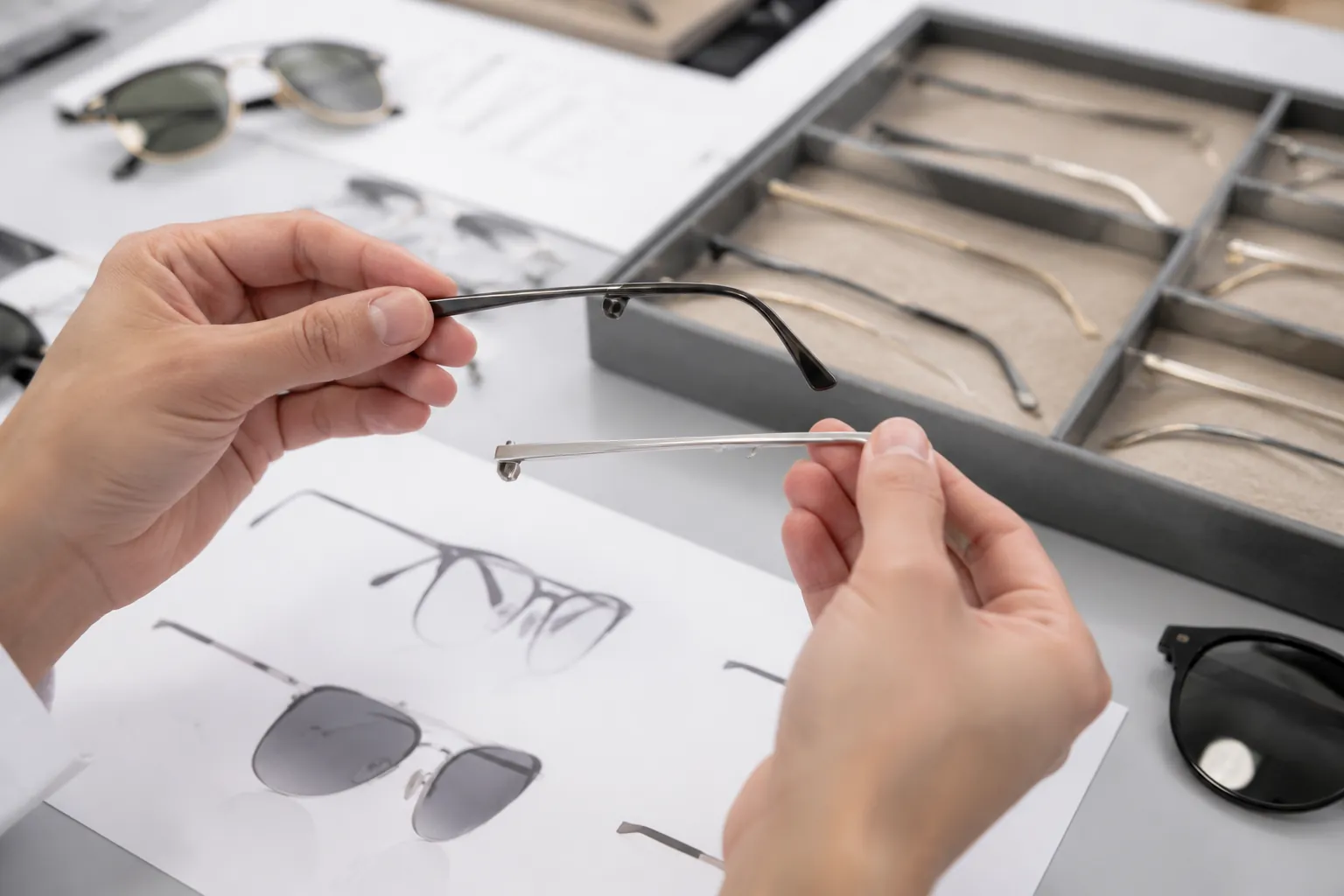
This guide is for eyewear brands, importers, distributors, and retailers weighing memory metal against stainless steel for custom sunglasses. The real question is simple: does the extra cost reduce fit complaints, widen fit range, or support a higher selling price enough to protect margin? Below is a practical comparison of material behavior, sourcing logic, factory process differences, quality-control points, decoration limits, and compliance requirements so buyers can specify the right temple build without paying extra for flex they do not need.
The Buying Decision in One Page
Memory metal temples are not automatically better than stainless steel temples. They solve a specific problem: repeated outward flexing, wider fit tolerance, and better shape recovery after moderate handling stress. If your sunglasses are low-cost promotional items, short-life seasonal goods, or fashion-first styles where the front sells the product, stainless steel often gives the better return. If the frame is a daily-wear SKU sold online, shipped internationally, or expected to fit a broader mix of wearers without in-person adjustment, memory metal may earn its keep.
For buyers, the clearest way to frame the decision is this: will it cut returns and complaints? Stainless steel can perform well if hinge quality, temple geometry, finish, and opening angle are specified correctly. But once stainless steel is bent past its elastic limit, it may stay bent. Memory metal, usually a nickel-titanium alloy used in flexible sections or cores, is designed to flex and recover within a defined range. That matters most for wider-head wearers, rough handling, and ecommerce orders where no one tries the frame on first.
Do not approve a memory metal temple from photos or a short bending video. Get physical samples. Compare left-right recovery. Confirm that the frame returns to an acceptable wearing position after repeated flexing. Generic material claims are not enough.
How the Two Temple Materials Behave in Real Use
Stainless steel is economical, stable, and widely used for slim metal temples. It offers good corrosion resistance for normal eyewear use, takes plating, painting, and laser decoration well, and suits many fashion styles. Its main weakness is simple: overload can leave it permanently out of shape. If a temple is forced outward too far, twisted, or bent in shipping or handling, it may not return.
Memory metal behaves differently. In eyewear, it is often used as a flexible temple section, core, or bridge component rather than a fully decorative exposed part. Its value is recoverable flex. When deflected within the intended range, it returns closer to its original geometry than standard stainless steel. That can preserve fit after rough handling and reduce side pressure for some wearers because the temple can flex outward with less permanent flare.
| Temple option | Typical use case | Approx. cost impact | Main technical risk | Buyer note |
|---|---|---|---|---|
| Standard stainless steel | Fashion, promo, controlled retail fitting | Baseline | Can stay bent after overload | Usually the simplest and lowest-cost production route |
| Thicker stainless steel | Premium metal look, heavier front frames | Higher than baseline build | May feel stiff on wider heads | Specify opening angle and hinge torque carefully |
| Memory metal temple section | Ecommerce, active users, wider fit range | Higher than stainless temple build | Higher component cost and tighter assembly control | Useful where returns or poor reviews are costly |
| Memory bridge + memory temples | Performance positioning, flexible-fit claims | Highest cost among these options | More complex QC and fitting consistency | Usually more suitable for higher retail price points |
In wear testing, skip vague questions like which material is "stronger." Ask what happens after repeated opening and moderate outward flexing. A practical factory test is repeated flex on each temple, followed by checks for open width, temple symmetry, and levelness against the approved sample. Write tolerances into the specification before production starts.
Where Memory Metal Actually Pays Back
Memory metal pays back only if it reduces a measurable problem. Most often, that problem is fit inconsistency across a broad customer base. A stainless steel temple may feel fine on one head width and too tight on another. A flexible temple section gives the frame more tolerance before pressure turns into a complaint. That matters in direct-to-consumer ecommerce, marketplaces, travel retail, uniform programs, and distributor channels serving mixed age groups and face shapes.
It can also cut shape-related complaints caused by normal misuse. Frames get over-opened by store staff, worn on top of the head, packed into bags, or stressed in transit. Memory metal does not make a frame unbreakable. It does not prevent hinge failure or coating damage either. What it can do is lower the chance that one handling event leaves the temples permanently flared and the frame sitting crooked.
- Use memory metal for medium- to high-retail-price sunglasses where after-sales costs matter and fit complaints are visible.
- Use memory metal when the sales channel offers limited or no in-person fitting, especially DTC, marketplaces, and cross-border ecommerce.
- Use memory metal for wide-fit, sport, driving, travel, kids, or daily-wear models expected to tolerate frequent handling.
- Skip memory metal for low-cost giveaways, short seasonal campaigns, and highly trend-driven frames where the front design is the main value driver.
- Skip memory metal if hinge quality, lens compliance, packaging protection, or final inspection discipline are still weak. Fix those issues first.
One warning. Memory metal does not rescue a poor frame design. Front curve, hinge placement, temple length, pantoscopic angle, end-tip shape, and weight distribution still control comfort and fit. Flexible temples can improve a sound design. They rarely save a bad one.
Cost Logic: Unit Price, MOQ, and Real ROI
Buyers often ask for one clean price difference between stainless steel and memory metal. That is not enough. The real cost gap depends on quantity, temple construction, hinge type, finish, assembly method, and whether the flexible component is a full temple or only one section. Compare complete build against complete build, with the same lenses, packaging, branding method, and compliance scope.
At low quantities, memory metal is usually a test decision, not a cost-optimized one. As volume rises, the added development and setup work is spread over more units. Then the sourcing question changes. Not "does it cost more?" but "does it prevent enough returns, credits, or customer dissatisfaction to justify the premium?"
As a working rule, ask suppliers to quote:
- standard stainless steel temple build,
- upgraded thicker stainless steel temple build,
- memory metal section build,
- all with identical lenses, packaging, logo method, and compliance scope.
Also confirm whether the quote includes flex testing, cosmetic inspection standard, spare hardware if applicable, and any declared corrosion-resistance requirement for the finish. Cheap quotes can hide omissions. A stainless steel temple with weak plating or unstable hinge assembly may cost less to buy and more to replace.
For brands that track after-sales performance, the ROI math is direct: compare the total upgrade cost for the order with the documented cost of fit-related returns, replacements, credits, and support time. If memory metal does not reduce those costs or support a higher selling price, it is not a useful upgrade.
Factory Process Differences Buyers Should Know
A stainless steel temple usually follows a straightforward process: component preparation, cutting or stamping, forming, polishing, plating or coating, hinge assembly, end-tip fitting, and final inspection. It is a mature process and generally easier to control when the design is simple.
Memory metal adds more control points. Material consistency matters more. Forming has to stay within the intended working range. Heat exposure during joining, coating, or finishing must be controlled because it can affect recovery behavior. Assembly alignment is also more sensitive. A flexible temple may hide one problem and expose another. If the temple recovers but the hinge loosens, the front distorts, or the left-right balance is uneven, the customer still gets a defective frame.
- Confirm front material, target wearer, and fit range before choosing temple type.
- For larger programs or return-sensitive channels, sample both stainless steel and memory metal versions.
- Measure open width, temple drop, tip symmetry, and hinge feel against the approved sample.
- Run repeated open-close and outward-flex tests, then recheck screw tightness and frame levelness.
- Approve decoration only after flex testing, not before.
Put practical tolerances into the specification sheet. Examples include temple length tolerance, open-width tolerance, logo placement tolerance, and a visual standard for levelness against the approved sample. If tolerances are not stated, disputes usually show up after bulk production. Too late.
Spec Sheet and Decoration Details That Prevent Disputes
Many factory disputes start with vague wording like "memory temple" or "premium metal temple." That is not a specification. Buyers need to define both performance and cosmetic limits in plain language.
Your spec sheet should include temple length, width, thickness or profile, hinge type, target opening angle, open width, end-tip material, finish color, logo method, lens category, and destination market. If recovery performance matters, state the test method and acceptance rule. For example: after the agreed flex test, both temples must return close enough to the approved sample that the frame remains level, symmetrical, and within the stated dimensional tolerance, with no visible finish damage.
Decoration on memory metal needs extra care because repeated flexing can expose weak adhesion or brittle coating systems. The safest methods are usually:
- Laser engraving: durable, precise, and generally the lowest-risk option for metallic branding.
- Pad printing: economical for logos and size marks, but it should be tested for cracking or wear after flexing.
- Metal logo plate or insert: premium appearance, but bonding or fixing quality must be checked carefully.
- Paint fill over engraving: visually strong, but color consistency and abrasion resistance should be reviewed.
For compliance, request what the destination market and product category require. No more. Common documents or standards for non-prescription sunglasses may include CE EN ISO 12312-1, ANSI Z80.3, AS/NZS 1067, REACH, FDA registration where relevant to U.S. import handling, ISO 9001, and BSCI. These are not interchangeable. CE EN ISO 12312-1, ANSI Z80.3, and AS/NZS 1067 address sunglass performance in their markets. REACH covers restricted substances. ISO 9001 and BSCI relate to management-system or social-compliance frameworks, not product performance. Ask suppliers to identify which documents apply to the shipment and market instead of sending a generic compliance list.
Sampling, Lead Time, and Bulk Inspection Strategy
Sample and production timing depends on specification completeness, material availability, factory workload, and whether new tooling or engineering review is needed. Memory metal does not always make production slower, but it often adds buyer-side review time because flex performance must be checked physically, not just visually. Build that into the development schedule.
Do not approve a flexible temple from photos or short videos. Request physical samples and test them in use. Wear them. Open and close the temples repeatedly. Flex both sides evenly within a reasonable range. Then place the frame on a flat surface. If one side sits high or the fit changes noticeably, the cause may be uneven forming, hinge alignment error, or inconsistent recovery between left and right temples.
For first orders, a pilot run can be more useful than a long debate over material theory. It gives the buyer real data on customer response, defect rate, and return reasons before wider rollout.
For bulk inspection, define AQL or equivalent checks that include:
- visual finish and coating consistency,
- hinge function and screw tightness,
- lens defects and tint consistency,
- logo position and durability,
- packaging, barcodes, and SKU labels,
- temple flex recovery against the approved sample.
Keep the review balanced. A flexible temple cannot compensate for poor lens quality, crooked front assembly, weak packaging, or inconsistent finishing. The right sourcing decision is not to buy the most flexible temple. It is to buy the most suitable full build for the sales channel, target customer, and after-sales risk.
A Practical Rule for Choosing the Upgrade
Use stainless steel when the SKU is price-led, fashion-led, or sold through channels where fit can be adjusted before the customer leaves the store. It remains a sensible and widely used material when the design is engineered correctly. Use memory metal when fit range, longer-wear comfort, or rough handling directly affects profit. That usually includes online sales, active-use positioning, travel or driving collections, and core styles where complaint patterns can be measured over time.
Make the decision at SKU level, not across the whole collection. Many brands get better results by using memory metal only on a small number of core daily-wear models and keeping seasonal or trend-driven styles in stainless steel. That protects margin and keeps the line easier to manage.
Buyer rule: if the upgrade does not reduce returns, improve comfort feedback, or support a higher selling price, it is not delivering commercial value.
So quote both builds. Sample both when the order justifies it. Test them the way customers will actually use them. Memory metal can be worth the premium when it solves a real business problem. Nothing more.
Have a custom sunglasses project in mind?
Send us your styles, target market and quantities and we will return a detailed quote with MOQ, lead time and a sample plan.
Get a QuoteWhy source this from Wenzhou with LumiShades
Wenzhou in Zhejiang Province is widely regarded as China’s eyewear manufacturing capital, producing a large share of the world’s sunglasses. That concentration matters to buyers: a deep local supply chain for acetate sheet, hinges, lens blanks, plating and packaging means shorter component lead times, easier color and material matching, and a workforce with decades of eyewear-specific skill. LumiShades has manufactured in this ecosystem since 2009, and our vertical integration — in-house injection molding, acetate cutting, CNC milling, lens tinting, decoration and quality control — means no part of your order is quietly subcontracted to a workshop you cannot audit.
For international buyers, that vertical control translates into accountability. When a single factory owns every step, defects are traced and fixed at source rather than bounced between vendors, and your specifications survive intact from first sample to bulk. We back this with 15+ years of experience, shipments to 60+ countries, more than 5 million pairs produced per year and a 98.5% on-time delivery rate. Our certifications — CE EN ISO 12312-1, FDA registration, ANSI Z80.3, AS/NZS 1067, REACH, ISO 9001 and BSCI audit — mean the compliance documentation your market requires already exists. Explore our manufacturing capabilities and quality control process to see how this works in practice.
Frequently asked questions
Is memory metal always better than stainless steel for sunglasses temples? No. Memory metal is usually better only when recoverable flex and broader fit tolerance matter commercially. Stainless steel is often the better choice for price-sensitive, fashion-driven, or promotional sunglasses because it is simpler to source, easier to decorate, and usually less expensive. To choose well, compare both options on the same frame design and review sample performance after repeated opening and outward-flex testing.
What order quantity makes memory metal temples worth testing? There is no universal threshold because development cost, selling price, and return risk vary by project. In practice, memory metal is most worth testing on styles expected to become repeat SKUs, core ecommerce products, or higher-value frames where fit complaints are costly. If you are unsure, ask the supplier for matched quotes and samples in stainless steel and memory metal, then decide based on actual sample results and the expected after-sales risk for that SKU.
Will memory metal temples change the bulk lead time? They can, but not always because of factory production alone. The bigger impact is often approval time: buyers usually need more sample review, physical wear testing, and left-right recovery checks before bulk sign-off. When planning the order, ask the supplier to confirm sample timing, production timing, and any extra engineering or approval steps required for the memory metal construction.
Which compliance standards should I request for sunglasses with memory metal temples? Request standards based on the destination market and product type, not on the temple material itself. For non-prescription sunglasses, buyers commonly ask about CE EN ISO 12312-1, ANSI Z80.3, and AS/NZS 1067. For chemical compliance, REACH may be relevant. FDA registration may matter in U.S. import handling depending on the product and importer arrangement. ISO 9001 and BSCI relate to factory-system or social-compliance status, not product performance. Ask the supplier to state clearly which documents apply to your shipment and to provide matching test reports or declarations where required.
Can I add logos to memory metal temples? Yes, but approve the logo method only after flex testing. Laser engraving is usually the safest option because it does not depend on surface adhesion the way printed or plated decoration does. Pad printing, paint fill, and logo inserts can also work, but buyers should require sample testing for cracking, peeling, wear, edge lifting, and position stability after repeated flexing. The purchase specification should state the logo method, position, appearance standard, and durability check.
Ready to start?
Explore our round sunglasses or request a quote — our sales team replies within 12 hours.
Request a Quote