
Memory Metal vs Stainless Steel Temples: Fewer Returns
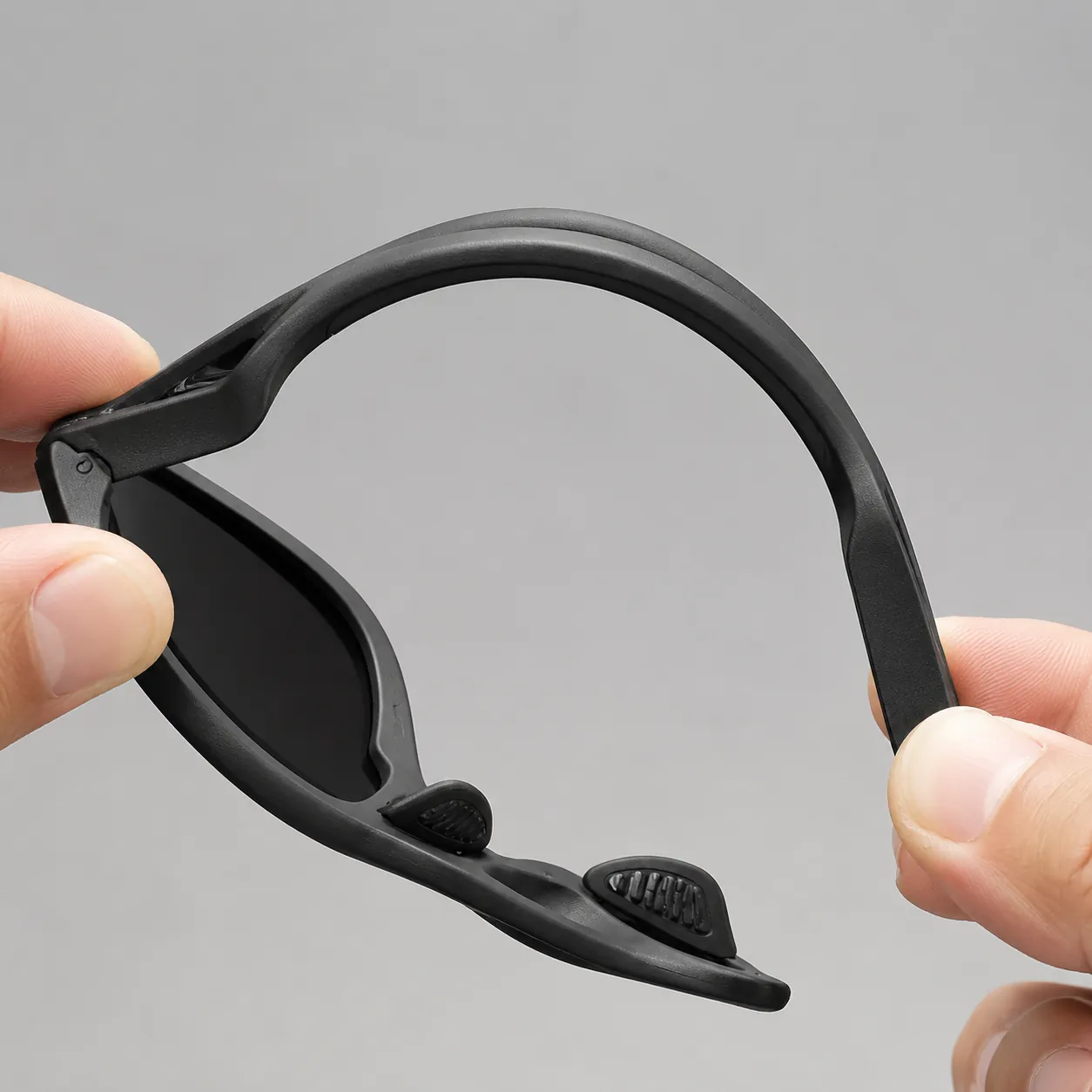
This guide is for eyewear brands, importers, and retail buyers choosing metal temples for optical frames and sunglasses. The key question is simple: which temple system is more likely to cut returns, support the required finish, and stay within target cost in production? Not which metal sounds better. Below is a practical comparison based on common failure modes, flex behavior, finishing limits, development risk, and production control.
Start with the return file, not the material story
Many buying teams start too high up the ladder: memory metal or stainless steel? Start lower. Sort recent claims by cause first.
In most eyewear programs, temple material mainly affects three things: resistance to bending, fit retention after repeated handling, and wearer comfort. It has much less effect on problems caused by hinge assembly, poor plating prep, weak soldering, or loose dimensional control.
If returns keep coming back because temples are bent out of shape during try-on, storage, or transport, memory metal is worth testing. If complaints are mostly about finish wear, cosmetic consistency, logo quality, or hinge looseness, stainless steel is usually the lower-risk option because it tends to offer a wider and more stable finishing window.
Useful claim buckets to review before changing a frame specification:
- Deformation: temple spread, asymmetry, or permanent bend after normal handling.
- Fit retention: the frame starts aligned but loses adjustment after repeated opening and closing.
- Pressure comfort: temple squeeze behind the ear or at the side head during wear.
- Finish durability: plating crack, paint whitening, logo edge lift, or visible left-right color mismatch.
- Assembly failure: hinge screw loosening, rivet movement, weak solder, or tip detachment.
A material change will not rescue a weak design. A temple that is too thin at the flex zone, too sharp at the bend radius, or poorly supported at the hinge can still fail in either material. But if the real complaint is repeated loss of shape under normal handling, temple material matters. A lot.
Head-to-head: what each temple material usually does better
| Factor | Memory metal temples | Stainless steel temples |
|---|---|---|
| Shape recovery | Generally better elastic recovery within the designed flex range. If section thickness and hinge geometry are correct, moderate bending can return close to original alignment. | Good strength and stiffness, but once over-bent it typically keeps more permanent set and may need manual readjustment. |
| Fit comfort | Often more forgiving across different head widths because the temple can flex with less concentrated side-head pressure. | Can feel precise and stable, but may feel more rigid if the section is thin and stiff or the ear bend is aggressive. |
| Surface finishing | Narrower process window. Coatings and decorative treatments must tolerate repeated flex at stress zones. | Broader finishing flexibility. Plating, spray, brushed, polished, laser marking, enamel fill, and applied logos are generally easier to control. |
| Design freedom | Often better suited to clean, function-led, comfort-focused temples than heavily decorative fashion builds. | Usually better for slim fashion temples, sharper profiles, mixed finishes, and decorative hardware. |
| Process stability | Typically requires tighter development control when both flex performance and final finish must be maintained. | Usually more predictable in volume production, especially across multiple colorways or finish variants. |
| Unit economics | Often higher in material and development cost, so the value case depends on whether bend-related claims are a real issue. | Usually more cost-predictable across low-, mid-, and high-volume programs. |
Two cautions matter here. First, memory metal is not indestructible. It recovers shape only within its intended deformation range; crush damage, hinge-area distortion, or excessive torsion can still create permanent deformation. Second, stainless steel is not a cheap fallback. It is widely used in premium eyewear because it combines stable strength, clean profile control, and broad finishing compatibility.
Failure modes that show up after shipment
The expensive returns often appear after repeated handling, not during incoming inspection. Retail frames may be opened dozens of times before sale. E-commerce pairs may be tried on, packed, returned, and shipped again. That changes the material decision.
Common field failures and what they usually indicate:
- Temple spread after repeated try-ons: memory metal can help when the main issue is repeated outward flex across a wide range of head widths.
- Permanent bend from bag or pocket pressure: memory metal may offer an advantage if the flex zone is correctly engineered and the hinge area is not the weak point.
- Finish cracking at bend zones: stainless steel is often safer for bright plated, dark painted, or multi-layer decorative finishes.
- Hinge-area stress failure: usually a design or assembly problem, not a simple material problem. Check screw fit, barrel alignment, solder quality, and local thickness around the hinge.
- Behind-ear discomfort: memory metal can perform well where comfort across varied fit conditions matters more than rigid hold.
Ask suppliers for more than showroom samples. For metal temples, useful quality checks include left-right opening angle comparison, hinge torque consistency, visual finish inspection under controlled light, and simple bend-recovery checks on finished parts. These are basic return-prevention checks. Not extras.
Plating, paint, laser marking, and logos: the hidden decision point
Finish capability is often where a project is really won or lost. Stainless steel generally accepts a wider range of decorative processes with fewer production surprises. That matters if the line depends on polished gold tones, brushed silver, matte gunmetal, black coatings, pad-printed branding, laser engraving, or attached logo plates.
Memory metal can also be plated or painted, but the coating system has to survive repeated flex. A sample can look fine at first and still develop micro-cracking, whitening, or adhesion loss after repeated outward bending around the ear curve or near the logo zone.
For finish-heavy projects, ask for final-finish validation rather than bare-metal approval. Minimum checks should include:
- Bend-and-inspect: flex the finished temple outward several times and inspect the high-stress curve and hinge-side transition.
- Tape adhesion check: especially over pad print, paint, or plated logo zones.
- Sweat and cosmetic exposure review: important for sunglass and optical lines sold in hot climates or used for long wear.
- Left-right color consistency: compare the pair under neutral light, not warehouse lighting alone.
- Logo durability: confirm that laser marks remain clean and that applied logo plates do not create stress points or finish failure around the attachment area.
A good rule: if the concept depends on a bright decorative finish and a high-flex temple, allow more development time. Stainless steel is usually easier for fashion-led collections with multiple trims. Memory metal earns the extra cost when comfort and bend recovery matter more than finish complexity.
MOQ, cost, and lead-time logic for private-label programs
Temple material should be judged as part of the full frame build, not as a stand-alone line item. Tooling route, front material, hinge type, end-tip construction, decoration method, and order volume all affect real cost and development timing.
In lower-volume programs, stainless steel is often easier to cost and easier to sample because finish performance is more predictable. Memory metal temples can add development work when both bend behavior and surface finish need validation. That does not make memory metal a bad fit for low volume. It means the business case should be clear.
| Order scenario | Stainless steel temple logic | Memory metal temple logic |
|---|---|---|
| Pilot runs and small design tests | Often a practical choice when aesthetic flexibility, finish variety, and easier sampling matter most. | Best used when bend recovery is central to the product concept or prior claim history already shows deformation issues. |
| Mid-volume programs | Common choice for balanced cost control across several colorways or seasonal revisions. | Worth evaluating for comfort-led optical lines or active-use products where fit retention can affect returns. |
| Large repeat-volume programs | Usually strong for margin control, decorative consistency, and scalable repeat production. | Commercially strongest when earlier sales or warranty data supports the higher build and development cost. |
Lead time depends on design complexity, finish route, tooling status, and test requirements. Sampling can move quickly on established constructions. New temple geometry, custom plating trials, or repeated flex-validation rounds add time. Buyers should compare not only quoted production lead time but also the number of development loops likely before approval.
If you are sourcing from a custom sunglasses manufacturer or private-label supplier, ask whether metal processing, finishing, assembly, and QC are managed under a documented quality system such as ISO 9001, and whether social compliance requirements such as BSCI apply to your program. These systems do not guarantee low returns. They do provide a clearer process baseline.
How to write a temple spec that controls performance
Many tech packs still say only "metal temple" plus a color name. That is not enough. If performance matters, the spec should define the geometry and process details that control real-world behavior.
Minimum items buyers should lock down:
- Temple cross-section: width and thickness at the hinge side, mid-flex zone, and ear bend.
- Overall temple length: for example 135 mm, 140 mm, or 145 mm depending on target fit.
- Local thickness tolerance: especially on slim temples where small variation can noticeably change stiffness.
- Hinge type: standard barrel hinge, spring hinge, or custom hinge; include screw specification if relevant.
- End-tip construction: overmolded, inserted, glued, or sleeve type, plus retention method.
- Surface finish: polished, brushed, electroplated, painted, rubberized, or mixed finish.
- Decoration method: laser mark, pad print, enamel fill, foil, attached metal plate, or inlaid logo.
- Target flex behavior: firm hold, moderate flex, or shape-recovery priority.
When a collection mixes acetate or injected fronts with metal temples, the handoff risk between process steps goes up. A supplier with integrated control over molding, cutting, CNC work, tinting, decoration, and QC can reduce coordination errors, but only if the original spec is complete and priorities are clear.
For regulated markets, confirm the finished product meets the relevant requirements for its category and destination. Common references include CE EN ISO 12312-1, ANSI Z80.3, and AS/NZS 1067 for applicable sunglass products. Also review coating chemistry and assembled-product documentation against REACH, and check whether FDA registration is relevant to the product type and your import process. Temple material alone does not determine compliance, but coatings and final assembly can affect it.
A practical buying framework by channel, price point, and use case
The shortest useful framework is this.
Choose memory metal temples if:
- your return data is clearly driven by bent temples or loss of shape after repeated handling
- you sell comfort-led optical frames or active-lifestyle sunglasses where flexible fit matters
- the product is handled heavily in clinics, chain stores, travel retail, or sample distribution
- the design can stay relatively clean and does not depend on delicate decorative finishes in high-stress bend zones
Choose stainless steel temples if:
- you need broad finish variety across multiple SKUs and seasonal colorways
- margin pressure is high and the retail target leaves little room for extra material or development cost
- your main complaints are cosmetic or assembly-related rather than deformation-related
- the collection uses sharp profiles, logo plates, brushed effects, or fashion-first detailing
Channel behavior matters. Optical stores that adjust frames frequently and serve a wide range of face widths may benefit from memory metal on selected comfort lines. Fashion sunglass programs, especially those refreshed each season, often perform better commercially with stainless steel because finish range, cosmetic precision, and easier scale-up matter more than high bend recovery.
Before bulk approval, run a disciplined sample check:
- Open and close both temples repeatedly and compare resistance.
- Flex each temple moderately outward and check recovery.
- Inspect the hinge zone, logo zone, and ear curve under bright, neutral light.
- Wear-test on narrow, standard, and wider heads for pressure points.
- Check decoration adhesion and left-right finish consistency.
- Approve against the production color standard, not a photo alone.
Short version: if your biggest cost comes from bent-product returns, memory metal may be the better tool. If your biggest constraint is budget, finish variety, and predictable scaling, stainless steel is often the safer buy.
Have a custom sunglasses project in mind?
Send us your styles, target market and quantities and we will return a detailed quote with MOQ, lead time and a sample plan.
Get a QuoteWhy source this from Wenzhou with LumiShades
Wenzhou in Zhejiang Province is widely regarded as China’s eyewear manufacturing capital, producing a large share of the world’s sunglasses. That concentration matters to buyers: a deep local supply chain for acetate sheet, hinges, lens blanks, plating and packaging means shorter component lead times, easier color and material matching, and a workforce with decades of eyewear-specific skill. LumiShades has manufactured in this ecosystem since 2009, and our vertical integration — in-house injection molding, acetate cutting, CNC milling, lens tinting, decoration and quality control — means no part of your order is quietly subcontracted to a workshop you cannot audit.
For international buyers, that vertical control translates into accountability. When a single factory owns every step, defects are traced and fixed at source rather than bounced between vendors, and your specifications survive intact from first sample to bulk. We back this with 15+ years of experience, shipments to 60+ countries, more than 5 million pairs produced per year and a 98.5% on-time delivery rate. Our certifications — CE EN ISO 12312-1, FDA registration, ANSI Z80.3, AS/NZS 1067, REACH, ISO 9001 and BSCI audit — mean the compliance documentation your market requires already exists. Explore our manufacturing capabilities and quality control process to see how this works in practice.
Frequently asked questions
Does memory metal always reduce returns? No. It is most relevant when returns are caused by temples losing shape after normal handling, repeated try-on, or moderate bending. It will not fix weak hinge construction, poor soldering, bad screw fit, or finish systems that fail under flex. Before changing material, review actual return reasons by SKU and confirm that deformation is a meaningful share of the problem.
Is stainless steel suitable for premium eyewear? Yes. Stainless steel is widely used in premium eyewear because it offers stable strength, slim profile control, and broad compatibility with decorative finishes. If your collection depends on sharp detailing, plated looks, brushed surfaces, or precise logo execution, stainless steel is often the more practical premium choice.
Will memory metal limit my finish options? Often yes, compared with stainless steel. The real issue is not whether a finish can be applied, but whether it stays stable after repeated flex in the finished product. Ask for final-finish samples, then run bend-and-inspect checks, tape adhesion checks, and close visual review at the bend zones before approval.
How should I test temple options before bulk production? Request samples in the final construction and final finish, not bare metal only. Then check hinge torque consistency, left-right opening symmetry, moderate outward flex and recovery, finish condition at the hinge-side transition and ear bend, adhesion of paint, print, or plated logo areas, and wear comfort across different head widths. Record the exact sample condition and approval comments so the supplier has a clear production standard.
What compliance and supplier documents should buyers ask for? For sunglass products, ask which standard applies to your destination market and request supporting test documents where relevant, such as CE EN ISO 12312-1, ANSI Z80.3, or AS/NZS 1067. For chemical and market-entry review, ask about REACH and whether FDA registration is relevant to your import route or product type. On the factory side, request current documentation for ISO 9001 and, if required by your sourcing policy, BSCI. These documents do not replace product inspection, but they help verify process control and compliance readiness.
Ready to start?
Explore our sport wrap sunglasses or request a quote — our sales team replies within 12 hours.
Request a Quote