
Seasonal Color Forecasts for Sunglass Buying
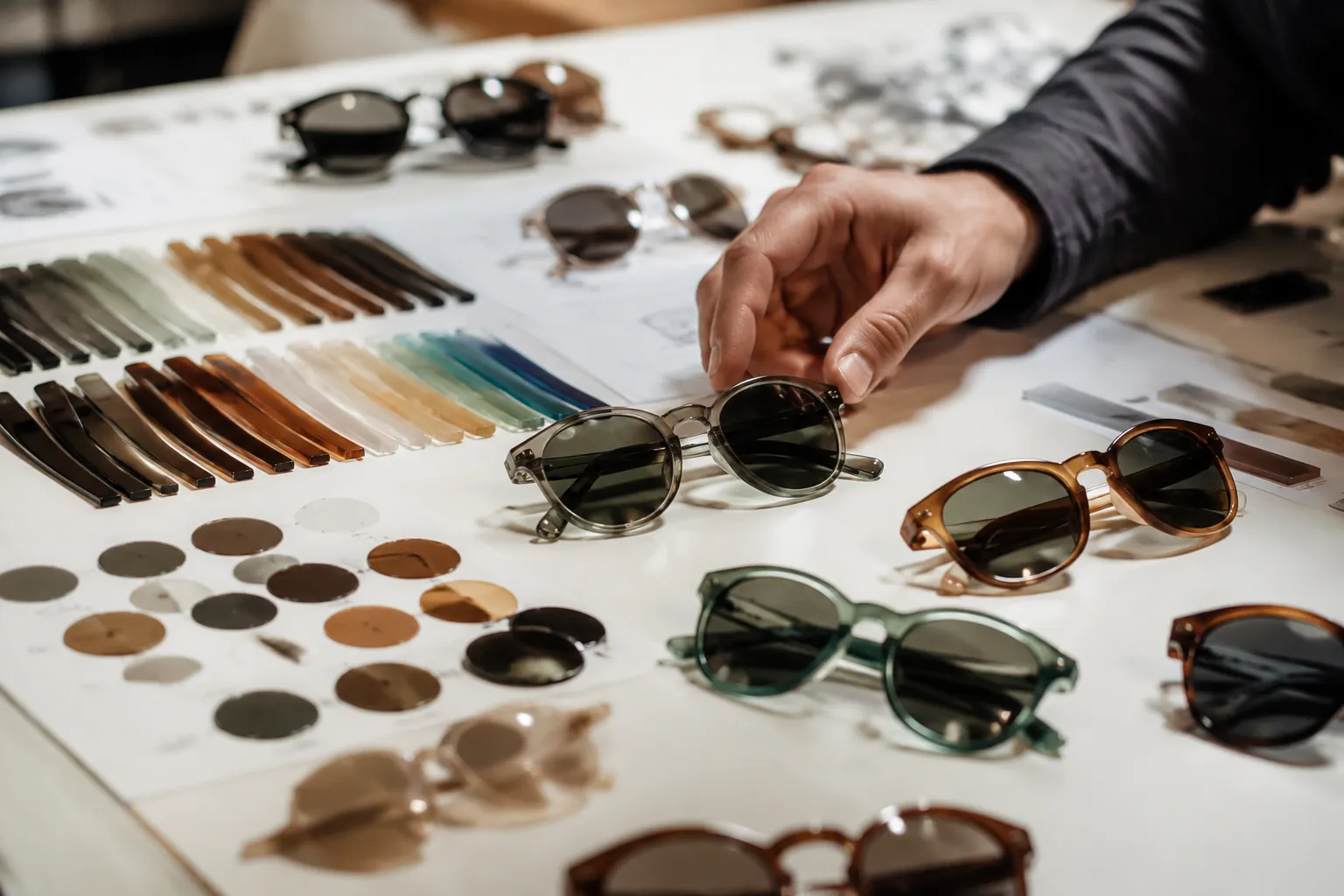
Seasonal color forecasts only matter if they change what gets ordered. This guide is for brands, importers, distributors, and retailers that need to turn trend color direction into a sunglass assortment that can sell, clear, and repeat. The aim is practical: buy fewer wrong colors, place deeper volume behind safer shades, and line up production lead times before the season peaks. The framework below focuses on buying decisions that can be checked: MOQ, pricing steps, lead times, materials, decoration, and compliance.
Start with the buying problem, not the trend board
Most color forecasts are written for designers. Buyers need something else. A deck may call out "soft mineral neutrals," "muted citrus," or "smoked translucents," but the buying team has to answer harder questions: What will sell at retail? What can be produced at the right landed cost? What can still arrive before the selling window closes?
A forecast only helps when it changes the assortment plan. For sunglasses, color affects four commercial decisions at once: frame resin or acetate shade, lens tint, metal finish, and logo decoration. A pale crystal frame with an amber gradient lens reads very differently from a black injected frame with mirrored lenses. That difference affects photography, merchandising, and conversion. Not just design.
Separate fashion color from commercial color. Fashion color makes the range feel current. Commercial color carries margin and replenishment. A strong buy plan keeps both, but not at the same depth. In practice, that usually means one safe color at full volume, one forecast-aligned color at moderate volume, and one test color at shallow depth.
Channel matters too. A fashion retailer can usually take more color risk than a wholesale program that has to sell through in multiple regions. If the same frame will be sold online, in stores, and through distributors, the color has to work on screen, on shelf, and in hand. That is where many trend colors lose force.
Start with the business problem. Then use the forecast to solve it. Build the color plan around unit economics, production capability, and sell-through expectations instead of trying to mirror a trend board line by line.
Turn forecast language into frame and lens choices
Forecast language is broad. Sourcing is not. "Earth tones," "softened brights," "icy pastels," "deep greens," and "metallic neutrals" all imply different manufacturing choices. The buyer's job is to turn those words into material, finish, and lens decisions that can actually be produced and repeated.
Some forecast families map cleanly to certain substrates. Warm neutrals often work in tortoise acetate, sand crystal injection, coffee translucent, olive, brown, or amber. Cool pastels usually read better in translucent injection because the color stays lighter and less heavy. Deep seasonal colors can hide small variation, which makes them useful while a supplier is still dialing in a new color recipe. Metallic notes are often better handled through plating, laser engraving, metal logo plates, or temple inserts than through frame color alone.
At LumiShades, injection molding, acetate cutting, CNC milling, lens tinting, and decoration are done in-house. That matters because a forecast shift does not need several factories to coordinate. If a buyer moves from glossy black to smoked crystal with a slight tint change, the frame, lens, and decoration can be aligned inside one production flow instead of being passed between vendors. Less handoff risk. Less drift.
Pay close attention to color tolerances. Small differences matter more than people expect. Approve color under the lighting conditions the product will actually be viewed in, then hold the supplier to that same reference during production. If the spec is loose, the same olive can look green in one batch and grey in another. For opaque colors, surface gloss matters almost as much as hue. For translucent colors, resin clarity, wall thickness, and polish quality all shape the final read.
Do not over-order a forecast color just because it looks strong in presentation software. A safer launch formula is one hero color, one safe color, and one test color. Cleaner read. Better control.
Choose the right seasonal mix by sales role
A sunglass range should not be built as a pile of attractive shades. Each color needs a job. The most useful way to structure the mix is by sales role: anchor, support, and test. That makes volume, price, and risk easier to align.
| Role | What it does | Typical color behavior | Buying logic | Common depth |
|---|---|---|---|---|
| Anchor | Drives core volume and replenishment | Black, tortoise, smoke, dark brown | Order first; safest for first production and repeat buys | 50% to 70% of units |
| Support | Broadens the range and keeps it seasonal | Crystal, olive, champagne, muted blue, sand | Order medium depth if the forecast direction is clear | 20% to 35% of units |
| Test | Checks trend response with limited risk | Bright translucent, unusual lens tints, metallic accents | Order shallow; judge sell-through before repeating | 5% to 15% of units |
The mistake is mixing those roles. If a risky trend color gets the same depth as black, dead stock becomes more likely. If only safe colors are ordered, the range misses the reason the forecast mattered in the first place. The right ratio depends on the channel: fashion retail can tolerate more test colors, while distributors and multi-store chains usually need a heavier anchor mix.
A practical first pass is 60-25-15: sixty percent anchor, twenty-five percent support, fifteen percent test. It is not a rule. It is a starting point when local sell-through data is thin. If the forecast is especially strong or the market is highly trend-sensitive, the support bucket can grow. If the brand is new or the channel is conservative, the anchor bucket should expand.
Depth should follow margin logic. The deepest color should be the one that can most likely be replenished quickly and sold across the broadest customer base. That color protects the line if the seasonal story underperforms. The shallow test color is there to add freshness, not to carry the whole program.
Match material and finish to forecast color
Color behaves differently in injection, acetate, and metal. That is where many buyers lose money. A forecast shade can look rich in a rendering and weak in production if the material fights it. The same olive, for example, can feel premium in a polished acetate sheet but flat in a low-clarity injected resin.
Injection molding is efficient for translucent, crystal, and opaque fashion colors. It is usually the better choice when repeatability and larger volume matter. It also supports cleaner batch consistency when a buyer needs 300, 1000, or more pairs in the same color. Acetate gives richer depth, especially for tortoise, layered, and warm tonal looks, but the outcome depends on sheet consistency, cut direction, tumbling, and polishing. Metal frames carry color through plating, powder coating, anodized finishes, or inserts, and they often need tighter finish control to avoid looking thin or cheap.
The key question is not only "What color?" It is "What substrate will hold this color at scale?" Smoked crystal, pale grey, and muted amber are often easier to scale in injection. Marbled warm tones, rich tortoise, and layered translucents usually work better in acetate, where depth and variation are part of the visual appeal. If the forecast calls for premium depth, expect a stricter approval process and some rejection risk on the first color strike-off.
Lens color matters just as much. Frames and lenses can clash fast. Warm frames usually pair best with brown, amber, or green lenses; cooler frames can support grey, smoke, or blue-tint lenses. The most commercial lens is often less dramatic than the most stylish one. A brown gradient lens usually sells more consistently than an extreme fashion tint, even if the latter photographs better.
Finish durability belongs in the decision too. Glossy surfaces show dust, scratches, and fingerprints more easily, while matte and satin finishes hide handling marks better but can look less premium if the texture is too coarse. On acetate, a smooth polish can lift a warm color story. On injected frames, a slightly softer gloss can make a translucent shade look richer. Finish choice changes the final color read almost as much as pigment does.
Use price breaks to decide which colors deserve volume
Forecast colors are not all worth the same commitment. Buyers should tie color choice to unit economics, because price steps change quickly with volume. The commercial logic is simple: MOQ, mid-tier pricing, and high-volume pricing should each map to a color role, not just a style preference.
The buying question is not just whether a color looks good. It is whether the color can carry enough volume to justify tooling, sampling, decoration, and packaging setup. A fresh seasonal color may be attractive, but if it only moves at MOQ, the per-unit cost will stay higher than a color that can be extended to a larger run across regions or channels.
Use volume to organize commitment:
- Put the most commercial forecast color in the deepest quantity bracket.
- Assign the second-strongest color to a medium depth if the margin still works.
- Keep experimental seasonal colors at MOQ or low hundreds.
- Reuse the same frame platform where possible so the color story does not inflate tooling and packaging costs.
Decoration costs matter too. A simple pad print is usually faster and cheaper than a multi-step logo system, while a metal logo plate or laser engraving can add perceived value without requiring a full redesign. If the forecast color is already risky, do not stack unnecessary cost on top of it. Keep the test color testable.
Lead time belongs in the cost model. Samples in 7-10 days can work if the line is started early. Bulk in 25-35 days is realistic only if final approval happens before the seasonal window gets tight. If a team waits until the market is already moving, the best color in the world can become a late shipment. Then the problem is timing, not design.
Build color approval like a production gate
Color approval should be treated as a production gate, not a casual review. The best seasonal buys usually come from a controlled approval process with clear references, defined tolerances, and a fixed signoff sequence. That keeps expensive rework out of bulk production.
A strong approval flow is straightforward. First, select the forecast family and assign each color a sales role. Next, send physical or digital references instead of vague descriptions. Then approve frame material, lens tint, and finish together, because those elements affect each other. Review the sample under daylight and indoor light. Confirm the logo method, whether laser engraving, pad printing, hot stamp, or metal plate. Only then release the final spec for bulk.
Specificity matters. If a translucent olive is expected, define whether it should read more green or more grey. If the lens is brown, specify flat tint or gradient. If a logo plate is used, define placement, size, and edge finish. Many color disputes are really specification disputes hiding inside vague language.
For quality control, ask for a pre-production sample, a color master, and an approved reference under the intended lighting condition. Retail lighting can shift a color more than a casual office review suggests. If possible, confirm the sample against the same physical reference every time. On a production line, small deviations can compound quickly across frame, lens, and decoration.
For buyers working with a vertically integrated supplier, in-house QC helps because color, decoration, and assembly can be checked in one flow. That does not replace buyer approval. It just reduces the number of handoffs where a shade can drift before the carton is sealed.
Check compliance before you scale a color story
Color trend planning means nothing if the product cannot clear compliance. Overseas buyers should treat compliance as a sourcing gate, not a post-production issue. The certifications and standards relevant to sunglass buying here are limited to those that can be independently verified: CE EN ISO 12312-1, FDA registration, ANSI Z80.3, AS/NZS 1067, REACH, ISO 9001, and BSCI.
Different markets care about different risks. Some focus on optical performance and impact requirements. Others care more about restricted substances, labeling, or factory systems. If a seasonal color range is being bought for multiple countries, the frame and lens spec still has to fit the destination market. A bright color does not excuse weak paperwork.
| Market need | What to confirm | Why it matters |
|---|---|---|
| EU | CE EN ISO 12312-1, REACH | Safety, labeling, and restricted substance control |
| US | FDA registration, ANSI Z80.3 | Retail acceptance and optical/safety expectations |
| Australia/New Zealand | AS/NZS 1067 | Local sunglass compliance expectations |
| Factory system | ISO 9001, BSCI | Quality management and social compliance confidence |
Ask for compliance documents before committing to volume. Also confirm that decoration methods do not interfere with the tested product spec. A color story can still fail if the final print, plating, adhesive, or lens tint changes the tested construction. That is especially true when a brand wants a premium decorative finish on a low-cost frame platform.
If the range is intended for export, check carton labeling, packaging language, and any market-specific warnings at the same time. That prevents a late-stage color approval from being blocked by a packaging or regulatory issue that should have been caught earlier.
Turn forecast colors into a buy plan you can execute
The cleanest way to use a seasonal forecast is to tie it to a timed buy plan. Start with the selling calendar, then work backward from bulk lead time. If samples take 7-10 days and bulk takes 25-35 days, the final color signoff needs to happen early enough to leave room for packaging, freight, and retail set-up. That sounds obvious. It is also where many teams miss the window.
A workable seasonal planning framework looks like this:
- Week 1: shortlist the forecast palette and assign anchor, support, and test roles.
- Week 2: request samples in the top three colors and lock lens tint options.
- Week 3: review fit, color accuracy, finish, and decoration placement under multiple light sources.
- Week 4: approve the winning colors and place the bulk order.
- Weeks 5-9: production, QC, packing, and shipment.
If you sell through both wholesale and retail channels, do not over-index on one forecast color. Give the safe color the deepest depth, then use a smaller fashion color run to keep the line current. If the trend underperforms, the range still has a solid commercial base.
Seasonal color forecasts are useful only if they reduce risk. The job is not to predict the future perfectly. The job is to buy a palette that looks current, produces cleanly, clears compliance, and does not leave the warehouse full of the wrong shade. Use trend color as a planning tool, not a gamble.
Have a custom sunglasses project in mind?
Send us your styles, target market and quantities and we will return a detailed quote with MOQ, lead time and a sample plan.
Get a QuoteWhy source this from Wenzhou with LumiShades
Wenzhou in Zhejiang Province is widely regarded as China’s eyewear manufacturing capital, producing a large share of the world’s sunglasses. That concentration matters to buyers: a deep local supply chain for acetate sheet, hinges, lens blanks, plating and packaging means shorter component lead times, easier color and material matching, and a workforce with decades of eyewear-specific skill. LumiShades has manufactured in this ecosystem since 2009, and our vertical integration — in-house injection molding, acetate cutting, CNC milling, lens tinting, decoration and quality control — means no part of your order is quietly subcontracted to a workshop you cannot audit.
For international buyers, that vertical control translates into accountability. When a single factory owns every step, defects are traced and fixed at source rather than bounced between vendors, and your specifications survive intact from first sample to bulk. For procurement review, buyers can request process records, approved samples, quality checkpoints and project-specific compliance files before placing a bulk order. Required testing and documentation are confirmed against the destination market and product specification rather than assumed from a generic certificate list. Explore our manufacturing capabilities and quality control process to see how this works in practice.
Frequently asked questions
How many seasonal colors should I buy in one sunglass style? For a first order, keep it to three colors unless you have strong sell-through history: one anchor color, one support color, and one test color. Before adding more, make sure each color has a clear role, a target channel, and a volume plan tied to your reorder strategy.
What is the safest color family for first orders? Black, tortoise, smoke, and dark brown are usually the safest starting points because they work across channels, are easier to replenish, and are less dependent on a narrow trend window. If you need a seasonal touch, add one support color instead of replacing the anchor color.
How should I decide between acetate and injection for a forecast color? Choose injection when you need repeatable translucent, crystal, or opaque colors at higher volume. Choose acetate when the forecast depends on depth, layering, tortoise effects, or a more premium hand feel. Ask the supplier for a sample in the exact finish and lighting condition you will sell in before you commit.
What lead time should I plan for a seasonal color launch? Use 7-10 days for samples and 25-35 days for bulk as a planning baseline, then add time for approval, packing, freight, and retail setup. If your selling window is short, move the color signoff earlier instead of trying to compress production later.
Which compliance documents should I request for export orders? Request the documents that match your target market: CE EN ISO 12312-1 and REACH for the EU, FDA registration and ANSI Z80.3 for the US, and AS/NZS 1067 for Australia/New Zealand. Also ask for ISO 9001 and BSCI if you need factory-system confirmation, and make sure the final decoration and lens spec match the tested product.
How do I keep a trend color from becoming dead stock? Limit the trend color to shallow depth, pair it with a proven anchor color, and use the same frame platform so you can reorder the winner instead of carrying too many unique SKUs. Set a sell-through target before you place the order so the test color has a clear exit plan.
Ready to start?
Explore our aviator sunglasses or request a quote — our sales team replies within 12 hours.
Request a Quote