
Gas Station Sunglasses SKU Planning Guide
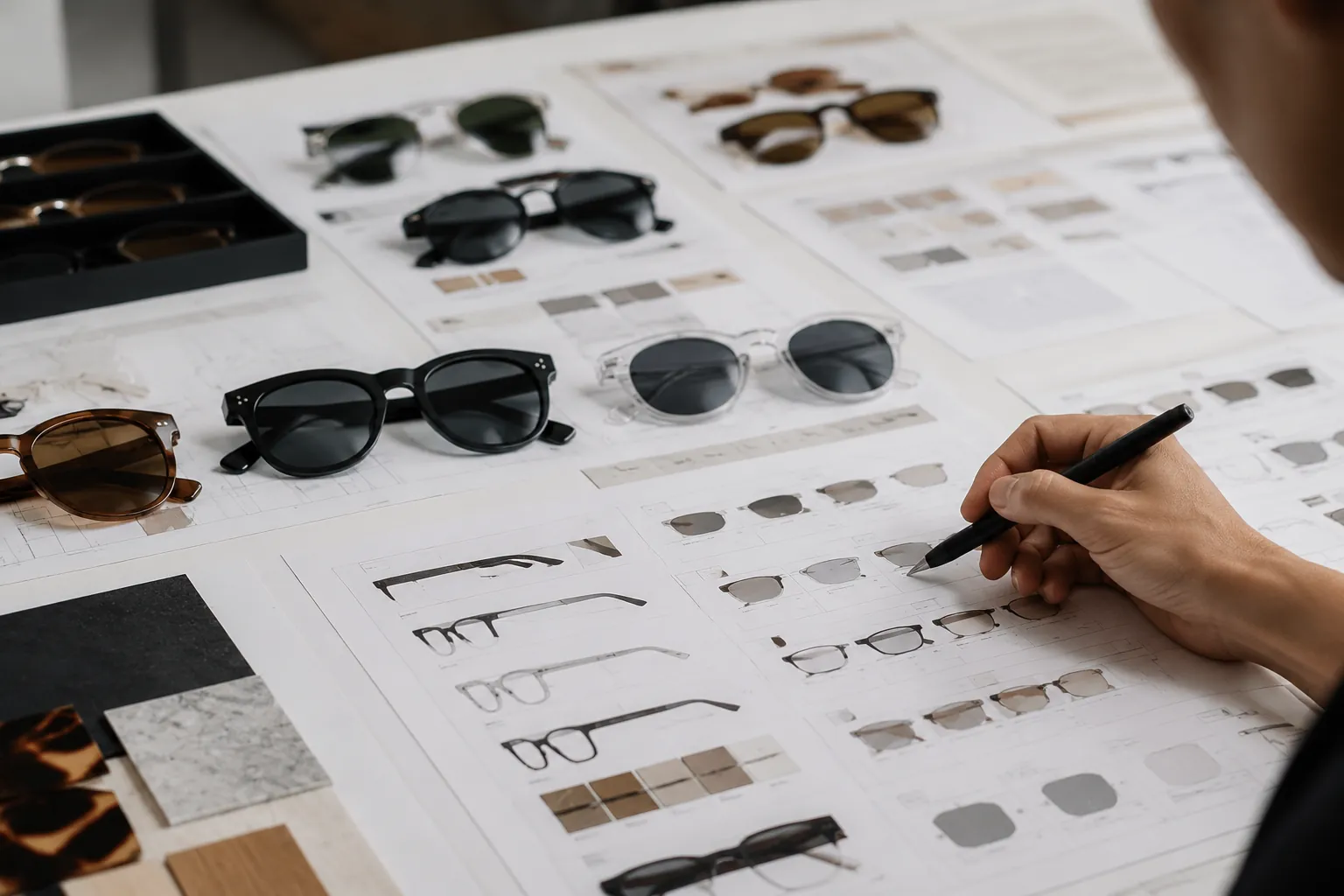
This guide is for distributors, importers, retail chains, and private-label brands building sunglasses programs for gas stations, convenience stores, truck stops, kiosks, and other impulse retail channels. The goal is not to buy the cheapest sunglasses. The goal is to build a rack program that sells, replenishes cleanly, scans correctly, and arrives with fewer surprises. That means clear price tiers, a controlled SKU count, stable packaging, reliable labeling data, documented compliance support, and practical QC limits. The guidance below reflects real sourcing constraints for custom sunglasses programs, including low-MOQ tests, sample approval, bulk production planning, decoration choices, material behavior, inspection points, and volume-based cost logic.
Start With Display Capacity
Impulse eyewear is sold from the display before it is sold from the frame. A shopper near a fuel counter or register may give the rack only a few seconds. If the price is unclear, the styles look duplicated, or the rack is hard to shop, the sale is already at risk.
Start with the rack format: counter spinner, wall peg area, floor display, or seasonal shipper. A 12-piece counter unit cannot use the same assortment logic as a 72-piece floor rack. Small displays need fewer frame bodies and stronger visual separation. Larger racks can support shopper segments such as driving, sport, women's fashion, polarized, kids, and value.
Use this order: retail price point first, display capacity second, frame family third, lens mix fourth, packaging fifth. Do not begin by picking dozens of good-looking samples. That creates a sample catalog, not a replenishable retail program.
- 12 to 24 pieces: Use 4 to 6 SKUs, mainly black, tortoise, smoke, brown, and one sport or polarized option.
- 36 to 48 pieces: Use 8 to 12 SKUs, with 60-70% neutral core styles, 20-25% polarized or driving styles, and limited seasonal color.
- 72 pieces and up: Segment by shopper need: value, sport, classic, women's oversized, polarized driving, kids, and seasonal mirror.
- Refill packs: Keep barcodes, card size, carton count, and inner-pack logic stable so stores can reorder without resetting the rack.
LumiShades can support low-MOQ development from 50 pairs per design. That helps with pilot racks, buyer presentations, and distributor tests. For permanent replenishment, proven SKUs should move toward larger production quantities so material buying, packing setup, and carton use become more efficient.
Build Price Tiers With Cost Logic
Price-led sunglasses are not just cheap sunglasses. They are controlled-cost products with a clear job at retail. The shopper is making a fast call: Do they look acceptable? Do they feel comfortable? Do they cut glare? Is the price fair?
Most gas station programs work best with three or four tiers. One tier covers emergency purchases. One carries the volume. One gives the retailer a reason to sell up, usually through polarized lenses, better hinge feel, or stronger branding. A limited seasonal tier can refresh the rack without making replenishment messy.
| Retail Role | Typical Build | Manufacturing Logic | Buyer Watchpoint |
|---|---|---|---|
| Opening price point | PC injection frame, UV400 smoke or brown lens, basic hang tag | Low tooling friction, fast assembly, stable color, simple packing | Can look too cheap if hinge tension, lens edge finish, or temple alignment is poor |
| Main volume tier | PC or TR90 frame, better nose fit, branded card or pouch, neutral tints | Good balance of comfort, yield, cost, and packing speed | Too many similar black or tortoise SKUs can split sales without increasing total turns |
| Step-up polarized tier | Polarized TAC lens, thicker temple, laser logo or metal plate | Higher lens cost and stricter inspection for axis, haze, delamination, and stress marks | Packaging must explain the price difference clearly at the rack |
| Seasonal fashion tier | Transparent frames, color lenses, mirror coatings, oversized shapes | Needs tighter approval samples for tint, coating color, and decoration placement | Higher dead-stock risk if color selection is based on taste rather than sell-through data |
Unit cost depends on frame material, lens type, polarization, hinge choice, logo method, packaging, labeling, inspection level, order quantity, and assortment complexity. A basic PC frame with a hang tag and neutral lens should not be costed like a polarized SKU with metal trim, custom carding, UPC labels, and mixed-carton packing. Tie the bill of materials to the retail price and margin. Not to the prettiest sample.
Choose Materials by Abuse Level
Convenience retail is hard on sunglasses. Frames are tried on with one hand, dropped on tile, hung back incorrectly, left near windows, and stored in hot vehicles or back rooms. A frame can photograph well and still fail at retail if temple pressure is wrong, lens fit is loose, or the front warps after heat exposure.
PC injection is common for value sunglasses because it is efficient, dimensionally stable, and suitable for simple shapes. It can feel stiff if the base curve is too flat or the temple spread is narrow. TR90 is lighter and more flexible, which helps sport, driving, and higher-comfort price points. Acetate gives richer color and a more premium hand feel, but cutting, tumbling, polishing, hinge insertion, and assembly add time and scrap risk. Metal works for aviators and classic shapes, but plating, solder joints, nose pads, screws, and rim closure need tighter process control.
Do not overbuild every SKU. Put cost where the customer notices it: lens clarity, hinge feel, nose comfort, temple pressure, and clean packaging. Supplier discussions should be specific: wall thickness, lens groove depth, bridge width, temple torque, hinge type, screw length, lens base curve, and acceptable color deviation.
- Use PC for opening price points where the shape is simple and the volume is steady.
- Use TR90 where flexibility, lighter weight, and comfort justify the higher material cost.
- Use acetate only when the retail tier can absorb polishing time, material loss, and slower assembly.
- Use metal selectively, with inspection on plating, solder points, screws, nose pads, and rim alignment.
- Approve a golden sample for hinge tension, lens color, frame width, temple opening, logo placement, labeling, and final packaging.
Specify Lens Mix and Claims
Lens choice can drive repeat orders or returns. The baseline is documented UV protection and consistent filter category. Compliance planning should start before artwork is printed. Depending on the destination market and product claims, buyers may need support for CE EN ISO 12312-1, ANSI Z80.3, AS/NZS 1067, REACH, and FDA registration requirements. Do not print UV, polarized, impact, safety, driving, or children's claims unless the product file supports those claims for that market.
For gas stations, smoke and brown should carry most of the core assortment. Smoke is easy to understand and works for general driving. Brown improves perceived contrast and fits outdoor and classic styles. Green can work well for traditional driving looks. Mirror lenses add rack impact, but they show scratches, coating rub, pinholes, and uneven color more easily. Packing protection and coating inspection matter.
Polarized lenses should usually be separate SKUs, not hidden inside the same price tier. They reduce glare from roads, dashboards, water, snow, and fuel-station pavement. They also add inspection risk. Check polarization axis, lens haze, delamination, stress marks, coating scratches, tint consistency, and lens seating. One poor polarized SKU can damage trust in the whole rack.
- Core tints: Smoke, brown, and green for steady replenishment and broad driving use.
- Fashion tints: Blue, pink, amber, and gradient lenses for seasonal buys, not permanent over-assortment.
- Mirror coatings: Strong visual impact, but inspect for pinholes, rub marks, color shift, and coating edge defects.
- Polarized lenses: Best used as step-up SKUs with clear hang-tag messaging and separate QC criteria.
- Labeling: Match filter category, UV wording, warning text, country of origin, barcode, and destination compliance wording before mass printing.
In-house or supplier-managed lens tinting can help control batch color, but buyers still need approved production limits. A small brown or smoke shift may be acceptable if it stays within the standard. A mirror lens that changes visibly from blue to purple across cartons is not acceptable for a branded rack program.
Control SKU Count and Test Data
The most common buying mistake is adding too many frames that solve the same shopper need. Four black rectangular men's styles on a 48-piece rack do not create real choice. They split sales, slow replenishment, and make weak items harder to spot.
For a 48-piece convenience-store rack, a strong opening plan is 10 to 12 SKUs. Keep 60-70% in dependable neutral colors. Put 2 or 3 SKUs into polarized or driving styles. Reserve 1 or 2 slots for fashion color, kids, or seasonal mirror. If a retailer wants more variety, create it through lens color, card color, or temple detail before adding new molds or near-duplicate fronts.
Use the first production run as a test matrix. Samples usually take 7 to 10 days depending on frame choice, lens, decoration, packaging, and artwork readiness. Bulk production is typically 25 to 35 days after sample approval, material confirmation, artwork approval, and deposit. Confirm these lead times on the purchase order. Holidays, material availability, mixed assortments, and special packaging can change the schedule.
Do not judge a gas station sunglasses line by the best-looking sample. Judge it by sell-through, returns, and replenishment accuracy after the rack has been in store.
Store feedback does not need to be complex. Track SKU code, starting count, ending count, days on display, retail price, store type, and location type. After 45 to 60 days, cut duplicates, reorder the top sellers, and test only a few new colors or lens options. Discipline beats a bloated assortment.
Lock Packaging and Barcodes Early
Branding for impulse sunglasses should be durable, readable, and easy to run. Laser engraving works well on temples when the material color gives enough contrast. Pad printing is flexible for logos, icons, and small marks, but adhesion should be checked with rub testing. Metal logo plates look better on step-up SKUs, but they add assembly cost and another failure point if adhesive, riveting, or temple recess control is weak.
Before sampling, buyers should provide clean vector artwork, logo size rules, Pantone references where needed, barcode files, carton marks, warning text, country-of-origin wording, lens category information, and destination labeling requirements. Late artwork and missing barcode data are easy ways to lose production time.
Packaging should match store operations. Gas stations often prefer hang tags, header cards, recyclable bags, or simple pouches because staff can restock quickly. A hard case may look premium, but it can consume margin, increase shipping volume, and reduce display density. For small tests, keep packaging simple. For replenishment programs, finalize a card and barcode system that supports scanning, reordering, and visual sorting.
- Put SKU code, barcode, lens type, and price-tier identifier on every retail unit.
- Use card colors or icons to separate polarized, kids, sport, and value styles.
- Keep carton labels consistent: PO number, item code, color, lens type, quantity, and mixed-assortment details.
- Approve inner-pack counts, such as 12 or 24 pairs per inner carton, before production packing starts.
- Freeze barcode data before mass printing; wrong barcodes create receiving delays and possible chargebacks.
Set QC Tolerances Before Production
Inspection should focus on defects shoppers see right away and defects that create returns. A small mark inside a temple may be acceptable for a value tier. A scratched lens, loose hinge, warped front, wrong barcode, sharp edge, or badly seated lens is not.
A practical QC plan covers incoming material, molding or cutting, lens fit, decoration, assembly, final cleaning, and packing. For injection frames, inspect sink marks, flash, color streaks, lens-groove consistency, and temple alignment. For acetate, inspect polish quality, lamination lines, hinge mounting, and surface scratches. For lenses, check UV records, visible scratches, coating marks, tint match, optical distortion, and polarized function where applicable.
Set measurable limits before production starts. Working checks may include approved front width tolerance, balanced temple opening, no unacceptable rocking on a flat surface, secure lens seating with no visible gap, screws flush and tight, and logo placement within the approved artwork position. The exact tolerance should match the product tier. Vague phrases such as normal quality are not enough.
| Checkpoint | What to Inspect | Practical Acceptance Focus |
|---|---|---|
| Frame alignment | Temple symmetry, front warp, bridge angle, rocking on flat surface | Reject pieces that sit crooked, twist visibly, or feel uncomfortable immediately |
| Lens condition | Scratches, bubbles, tint match, mirror coating defects, edge chips | Reject visible defects in the wearer's field of view or obvious coating inconsistency |
| Hinge and screws | Opening tension, screw depth, burrs, temple looseness | Reject loose hinges, sharp metal edges, missing screws, or uneven temple resistance |
| Decoration | Logo position, print adhesion, engraving contrast, plate attachment | Reject shifted logos, weak rub resistance, crooked plates, or adhesive overflow |
| Packing data | Barcode, SKU count, carton mark, inner-pack count, mixed assortment | Reject wrong codes or mixed cartons that do not match the purchase order |
LumiShades operates under ISO 9001 systems and BSCI certification. These credentials help, but they do not replace the buyer's approved sample, written inspection checklist, AQL plan, shipment approval process, and clear defect classification.
Plan Replenishment Around Lead Time
Impulse sunglasses are seasonal in many markets, but replenishment should not be treated as one summer buy. Fuel stops, outdoor work, roadside purchases, travel, and replacement needs happen outside peak season too. Separate the program into launch stock, refill stock, and seasonal refresh.
Use low-MOQ production for testing, then consolidate volume into winners. Once sell-through is proven, move core SKUs into larger runs to improve unit cost, material efficiency, and packing consistency. Bulk production is typically 25 to 35 days after approvals, so reorder points must include production time, freight time, customs or receiving time, and distribution time to stores.
A simple calendar works. Approve samples 60 to 75 days before the target in-store date. Confirm packaging at the same time as frame samples. Lock purchase quantities after sample approval. Avoid late changes to packaging, logo placement, barcode files, or carton data unless there is a real error. Last-minute changes usually become delay, scrap, repacking, or confused cartons.
Capacity and factory responsiveness matter, but buyers still need clean purchase orders, realistic approval timing, and firm specifications. A supplier can move quickly when the product file is complete. It cannot guess missing barcode rules, warning text, carton marks, retail price identifiers, or mixed-assortment ratios.
Have a custom sunglasses project in mind?
Send us your styles, target market and quantities and we will return a detailed quote with MOQ, lead time and a sample plan.
Get a QuoteWhy source this from Wenzhou with LumiShades
Wenzhou in Zhejiang Province is widely regarded as China’s eyewear manufacturing capital, producing a large share of the world’s sunglasses. That concentration matters to buyers: a deep local supply chain for acetate sheet, hinges, lens blanks, plating and packaging means shorter component lead times, easier color and material matching, and a workforce with decades of eyewear-specific skill. LumiShades has manufactured in this ecosystem since 2009, and our vertical integration — in-house injection molding, acetate cutting, CNC milling, lens tinting, decoration and quality control — means no part of your order is quietly subcontracted to a workshop you cannot audit.
For international buyers, that vertical control translates into accountability. When a single factory owns every step, defects are traced and fixed at source rather than bounced between vendors, and your specifications survive intact from first sample to bulk. For procurement review, buyers can request process records, approved samples, quality checkpoints and project-specific compliance files before placing a bulk order. Required testing and documentation are confirmed against the destination market and product specification rather than assumed from a generic certificate list. Explore our manufacturing capabilities and quality control process to see how this works in practice.
Frequently asked questions
What is the safest starting assortment for a 48-piece gas station sunglasses rack? Start with 10 to 12 SKUs. Keep 60-70% in neutral core styles such as black, tortoise, smoke, and brown. Add 2 to 3 polarized or driving SKUs as clear step-up options. Reserve 1 to 2 slots for seasonal color, mirror lenses, kids, or fashion shapes. Track sell-through by SKU for 45 to 60 days before adding more styles.
Can I start with only 50 pairs per design? Yes. LumiShades can support production from 50 pairs per design, which is useful for pilot racks, sales presentations, and distributor tests. Use that stage to confirm fit, lens mix, packaging, barcode data, and store feedback. For ongoing replenishment, consolidate orders into proven SKUs and larger quantities to improve cost control, packing consistency, and purchasing efficiency.
What determines the wholesale cost of gas station sunglasses? Cost is driven by frame material, lens type, polarization, hinge structure, decoration method, packaging, barcode or retail card requirements, inspection level, order quantity, and whether the order is packed as single SKUs or mixed assortments. Ask for itemized quotations by SKU and confirm what is included: frame, lens, logo, retail packaging, inner carton, master carton, barcode label, and any compliance or test documentation required for your market.
Which compliance documents should I ask for before ordering? Ask for documents that match your destination market and printed claims. Depending on the market, this may include CE EN ISO 12312-1, ANSI Z80.3, AS/NZS 1067, REACH, and FDA registration where applicable. Confirm the lens category, UV claim, warning text, country-of-origin wording, and any children's or driving-related statements before artwork is printed. Do not print unsupported UV, polarized, impact, safety, or driving claims.
How long should I allow from sample approval to bulk shipment? Samples usually take 7 to 10 days depending on frame choice, lens, decoration, packaging, and artwork readiness. Bulk production is typically 25 to 35 days after sample approval, material confirmation, artwork approval, and deposit. Add time for freight, customs, receiving, and store distribution. For a fixed in-store date, approve samples and packaging about 60 to 75 days in advance.
Are polarized lenses worth it for convenience stores? Yes, if they are positioned as a clear step-up SKU and inspected properly. Use separate barcode and packaging callouts so the shopper understands the higher price. Before shipment, check polarization axis, haze, scratches, coating defects, stress marks, delamination, tint consistency, and lens seating. Do not mix polarized and non-polarized units under the same SKU code.
Ready to start?
Explore our wayfarer sunglasses or request a quote — our sales team replies within 12 hours.
Request a Quote