
Laser, Print, and Metal Logos on Custom Sunglasses
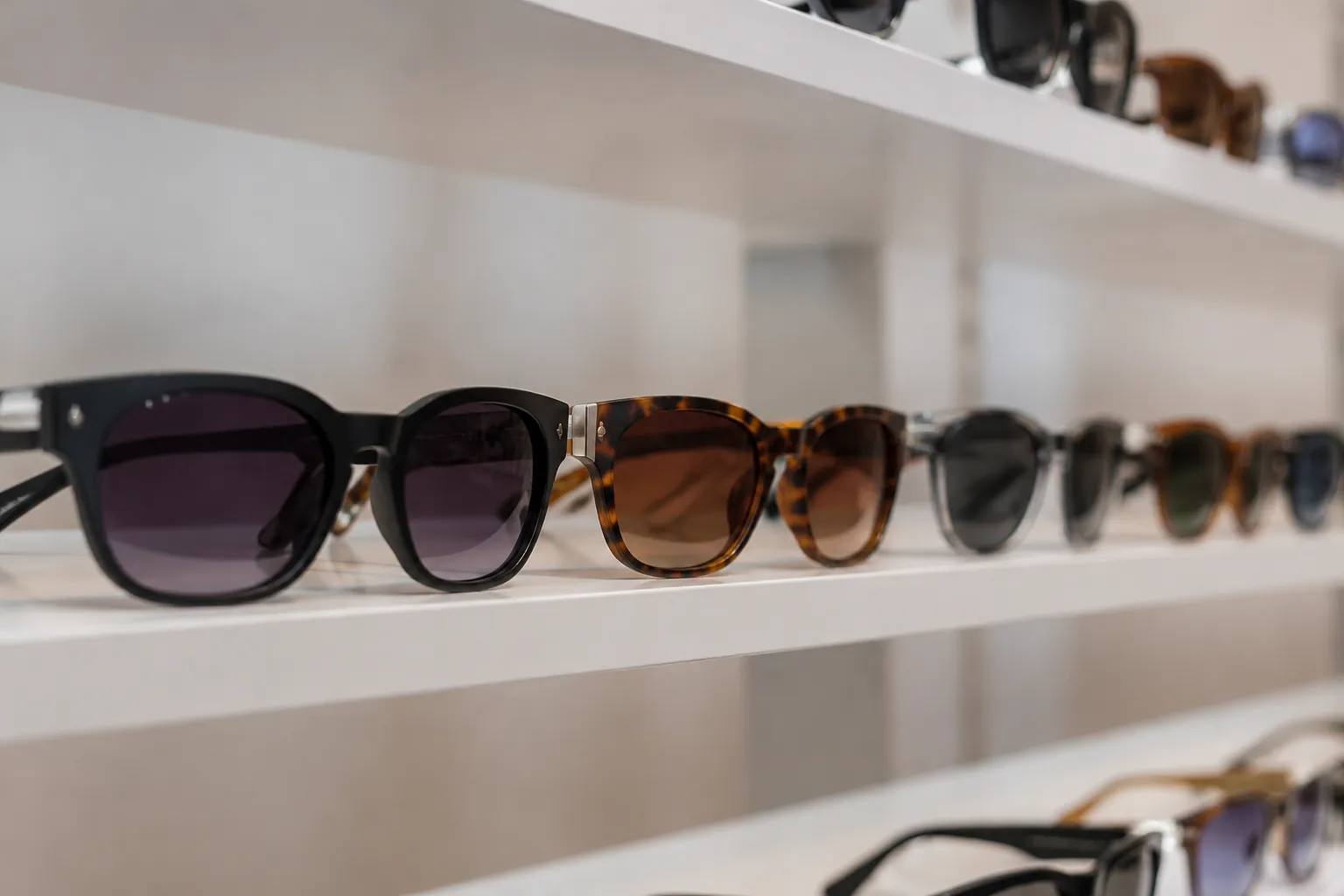
This guide is for brand owners, importers, distributors, and retailers developing custom sunglasses in volume. The goal is simple: assign laser engraving, pad printing, and metal details to the right surface, material, and branding role. Done well, the product looks premium, runs cleanly in production, and stays commercially sensible at different order volumes. Decoration planning is not just about looks. It affects handling steps, defect risk, repeatability from sample to bulk, and how well branding stays separate from compliance information.
Start with a decoration hierarchy, not a mood board
Most decoration problems start early. Artwork can look balanced on a flat layout, then feel crowded on a curved temple beside hinge hardware, lens marks, and mixed materials. A common mistake is giving the outer-temple logo, lens logo, front badge, and internal text the same visual weight.
Start with a hierarchy before approving any logo location.
- Primary brand mark: the first branding element a customer notices. On most sunglasses, this is the outer temple.
- Secondary brand confirmation: a quieter mark inside the temple, on a temple tip, or in a lens corner.
- Functional or compliance marking: model code, size, country of origin, lens category, or traceability text placed away from the main brand zone.
For many commercial programs, two visible branded elements are enough. A third can work, but only if it is intentionally smaller, lower contrast, or both. Keep it controlled. One hero branding position, one supporting branding position, and one protected area for non-marketing information.
This matters because every added logo location can add handling, alignment checks, and inspection points. A small metal logo, for example, may require a recess, a positioning method, adhesive control, curing time, and a final appearance check. Those steps are manageable. They are not free. Choose them on purpose.
Match each decoration method to the surface it suits
Laser, print, and metal are not interchangeable. Each behaves differently depending on substrate, curvature, finish, and contact area. The safer buying decision is to match the method to the job it does well.
| Method | Best surfaces | Typical detail range | Strengths | Common limits | Typical use |
|---|---|---|---|---|---|
| Laser engraving | Acetate, coated or painted metal parts, some dark matte plastics | Fine lines and small text, subject to material response and test results | Permanent feel, precise small text, no ink layer to wear away | Contrast depends on base color, coating, and finish; large filled areas may appear uneven | Inner temple logo, model code, subtle outer-temple mark |
| Pad printing | Injection-molded frames, acetate temples, lens corners, cases | Small logos and text, depending on artwork, curvature, and ink transfer stability | Color control, clean logo edges, efficient for simple visible branding | Wear risk in high-rub zones; very small multi-color registration is harder on curved parts | Outer-temple logo, lens logo, internal text |
| Metal logo plate | Acetate temples, milled recesses, decorative inserts on thicker temples | Usually better for simple shapes and readable logo sizes with adequate bonding area | High perceived value, strong brand visibility, premium fashion signal | Adds component cost, placement labor, adhesive or insert control, and reject risk if fit varies | Outer-temple hero logo |
The practical rule is straightforward.
- Use laser for permanence, subtlety, and technical text.
- Use print when color accuracy, visibility, and efficient scaling matter.
- Use metal when you want one obvious premium anchor.
Material behavior often decides the method. Acetate usually accepts fine engraving and inset metal details more predictably than many lightweight injection-molded plastics. Injection-molded TR90 or PC frames often suit pad print better when the logo needs white, gold, or Pantone-matched color. Metal logos usually need a temple profile thick enough to support a stable recess or bonding surface without weakening the part.
Geometry matters too. A usable branding area is always smaller than a flat CAD outline suggests because edge radius, hinge clearance, polishing, and final curvature reduce the real printable or engravable zone. Approve decoration from placement drawings or physical samples, not flat artwork alone.
Branding combinations that work without adding noise
Some method combinations work well because each one has a clear role. They look cleaner and are easier to control in production.
Option 1: Metal outside, laser inside. This is a common premium setup for acetate or other thicker temple constructions. The metal logo is the visible brand cue on the outer temple, while laser inside carries the wordmark, model code, or collection name. Clean outside. Quiet inside. It works best when the temple has enough thickness and flat area to support a controlled recess or secure bonding area.
Option 2: Print outside, laser inside. This is often the most efficient system for injection-molded programs. Pad print handles the visible outer logo in one or two colors, and laser inside can replace an extra print pass for technical text when the substrate responds well. For many medium-volume projects, this gives a strong balance of appearance, durability, and process simplicity.
Option 3: Metal outside, small lens print. Use this when shelf recognition matters and the retailer wants a visible lens signature. Keep the lens logo small, usually in one upper corner. Do not let it fight with the temple branding. If the temple already carries a metal brand cue, the lens mark should support it, not compete with it.
Problems start when buyers use all three methods at full strength on one frame. A large metal badge, bold outer print, and visible lens logo can make the product look crowded. That is the visual issue. The bigger issue is process stacking. More steps mean more chances for variation between sample and bulk, especially when approvals are rushed or multiple decorated parts must stay visually consistent across the same order.
What drives cost, MOQ, and lead time on mixed decoration
Decoration cost is not just the cost of adding a logo. The real drivers are tooling or fixture requirements, setup time, handling steps, scrap risk, labor content, and inspection intensity. Small design changes on screen can create big differences on the production line.
Mixed decoration makes more sense as order volume rises because setup and development effort are spread across more units. On lower-volume orders, simple print programs are usually easier to approve and control. On higher-volume orders, extra decoration steps may be justified if they support a clear retail or branding objective.
| Decoration setup | MOQ practicality | Typical add-on logic | Lead-time effect | Buyer note |
|---|---|---|---|---|
| Single pad print | Often the easiest option for low MOQs | Usually the lowest add-on because it uses one decoration process and limited extra handling | Often the least impact if artwork and color approvals are clear | Usually the safest low-risk starting point |
| Laser plus print | More practical once the program is commercially stable | Moderate add-on due to a second decoration step and another QC point | Can extend sampling or production slightly because both appearance and placement must be checked | Strong value balance for many branded programs |
| Metal plus laser | More practical when the order can absorb component and sampling cost | Higher add-on because of logo component cost, recess or bonding control, placement, and inspection | May add sampling revisions if logo fit, finish, or recess depth changes | Best when the metal logo is clearly the hero feature |
| Metal plus print plus laser | Usually justified only when each element has a distinct role | Highest add-on and highest coordination burden | Needs tighter approval standards, more in-process checks, and better packing protection | Use only when the design benefit is clear and repeatable |
Lead time also depends on whether the project needs new recess geometry, custom logo parts, extra adhesion testing, or revised placement drawings. Standard samples for simple printed models may move quickly. Mixed-decoration samples usually take longer because engraving response, print adhesion, metal fit, and final appearance all need to be confirmed before approval. Ask the supplier which step is most likely to extend the schedule: custom metal part development, artwork approval, curing, or inspection.
Design rules that prevent clutter and production trouble
Most decoration problems can be reduced before sampling if the buyer follows a few hard rules.
- Choose one hero location only. Outer temple, front, or lens. Not all three.
- Keep secondary marks smaller. The supporting mark should be visibly quieter than the hero mark.
- Leave safe margins. Keep logos clear of temple edges, hinge screws, and strong curve transitions wherever possible.
- Respect the material. Acetate usually handles inset metal and refined laser detail better; injection frames often favor print and simpler inserts.
- Keep lens branding discreet. A small corner logo usually reads better than a large lens print.
Factory constraints matter as much as design intent. A temple may look wide in an engineering drawing, but the usable flat zone often shrinks after polishing radius, hardware clearance, and final curvature are applied. For metal logos, recess depth and part fit must stay consistent or the insert may sit proud, sink unevenly, or show adhesive at the edge. For print, textured surfaces and strong curvature can cause incomplete ink transfer. For laser, base color and gloss level directly affect readability.
Ask for an artwork placement drawing before sampling, not just logo-file approval. The drawing should show actual location, width, height, orientation, and distance from the hinge or edge. If the decoration is metal, also ask for recess dimensions and whether the part is intended to sit flush, slightly raised, or framed by the temple surface.
Keep compliance marks separate from branding
Buyers selling into multiple markets need to manage regulatory information without turning the frame into a billboard. The safest approach is to separate commercial branding from compliance marking from the start.
For sunglasses, applicable requirements may include CE EN ISO 12312-1, ANSI Z80.3, and AS/NZS 1067, depending on the destination market and product classification. REACH can matter for material and chemical compliance in relevant markets. FDA registration may matter for U.S. documentation or importer expectations in some cases, while ISO 9001 and BSCI relate to management and social compliance systems rather than sunglass optical performance.
The execution is simple: place compliance text inside the temple, on packaging, or in supporting documents unless the destination market requires a visible mark elsewhere. Do not use prime visual space for test standards, origin text, or traceability if those marks can sit in a protected internal zone.
This matters on mixed-decoration programs because late compliance additions often trigger rework. A clean temple layout can change fast if model text, lens category, or origin marking is added after the brand sample is already approved. Define those information fields early. It protects both appearance and timing.
How to brief the factory so the sample comes back right
Mixed-decoration projects often fail because the buyer sends a logo file but not a full production brief. A useful tech pack for branded sunglasses should tell the factory exactly what goes where, by which method, at what size, and to what acceptance standard.
- Frame material and finish: acetate, TR90, PC, metal combination, gloss, rubberized, or matte.
- Decoration map: outer temple, inner temple, lens corner, front, tip, case, or pouch.
- Method by location: laser, pad print, or metal plate for each position.
- Exact size: width and height in millimeters, not vague terms such as "small" or "standard."
- Color and finish references: Pantone for print, shiny or brushed finish for metal, and expected engraving effect if relevant.
- Priority level: identify which mark is hero, which is secondary, and which is purely functional.
- Durability expectation: especially for logos near hinges, ear-contact zones, or packing contact surfaces.
- Compliance text list: keep it separate from branding so it is not inserted into the visual layout by default.
Ask the supplier to confirm three points before sampling: whether laser contrast has been tested on the chosen material and finish, whether pad print adhesion has been checked for the intended location, and whether a metal logo needs a custom recess or special placement fixture. These answers affect both timing and sample reliability.
Before approving bulk production, request clear sample photos that show a straight side view, a close-up of each decorated area, and any metal insert detail. Those views often reveal oversized logos, weak laser contrast, inconsistent print edges, or a metal part that feels too heavy for the frame line.
A simple decision framework for buyers
If you need a fast commercial rule, use this one: one premium signal, one supporting signal, and one hidden information zone.
For example, choose a metal outer-temple logo as the premium signal. Add laser inside the temple as the supporting signal. Keep model, origin, and compliance text in the hidden information zone. If the budget is tighter, replace metal with pad print and keep the laser inside. If shelf recognition depends on the lens, make the lens print the supporting signal and reduce temple branding accordingly.
Before approving bulk production, ask three direct questions:
- If one decoration is removed, does the frame still look branded enough? If not, the design may rely too heavily on visual clutter.
- Does each method have a separate job? If two decorations communicate the same message in the same visual zone, one is probably unnecessary.
- Will this still make commercial sense at the target order volume? If not, the decoration plan may be fighting the sourcing strategy.
That is the balance serious buyers want: visible brand value, controlled manufacturing risk, repeatable decoration quality, and a specification that sourcing, quality, and compliance teams can review clearly before production starts.
Have a custom sunglasses project in mind?
Send us your styles, target market and quantities and we will return a detailed quote with MOQ, lead time and a sample plan.
Get a QuoteWhy source this from Wenzhou with LumiShades
Wenzhou in Zhejiang Province is widely regarded as China’s eyewear manufacturing capital, producing a large share of the world’s sunglasses. That concentration matters to buyers: a deep local supply chain for acetate sheet, hinges, lens blanks, plating and packaging means shorter component lead times, easier color and material matching, and a workforce with decades of eyewear-specific skill. LumiShades has manufactured in this ecosystem since 2009, and our vertical integration — in-house injection molding, acetate cutting, CNC milling, lens tinting, decoration and quality control — means no part of your order is quietly subcontracted to a workshop you cannot audit.
For international buyers, that vertical control translates into accountability. When a single factory owns every step, defects are traced and fixed at source rather than bounced between vendors, and your specifications survive intact from first sample to bulk. We back this with 15+ years of experience, shipments to 60+ countries, more than 5 million pairs produced per year and a 98.5% on-time delivery rate. Our certifications — CE EN ISO 12312-1, FDA registration, ANSI Z80.3, AS/NZS 1067, REACH, ISO 9001 and BSCI audit — mean the compliance documentation your market requires already exists. Explore our manufacturing capabilities and quality control process to see how this works in practice.
Frequently asked questions
Which decoration method lasts longest on sunglasses? Laser engraving is usually the most durable option for text and subtle branding because the mark is created by changing the surface rather than adding an ink layer on top. Metal logos can also perform well if the part is correctly fitted, bonded, and protected from edge lift. Pad print is effective and widely used, but it is more vulnerable to abrasion in high-contact zones. For a buying decision, ask the supplier which method is proposed for each location, request an adhesion or appearance standard for printed marks, and avoid placing print where the temple rubs against skin, hinges, or packaging.
Can I combine all three methods on a low-MOQ order? You can, but it is rarely the most efficient place to start. On low-MOQ orders, setup effort, sample revision time, and inspection cost are spread across fewer units, so complexity gets expensive fast. If you still want a three-method build, ask the supplier whether a custom metal part is required, whether laser contrast has been tested on the chosen material, and whether lens or temple curvature will affect print quality. For most low-volume launches, a single pad print or a print-plus-laser combination is easier to approve and easier to repeat.
What is the most cost-efficient premium branding setup? For many buyers, pad print on the outer temple plus laser inside the temple is the most cost-efficient premium-looking system. The outer print provides visible branding, and the inner laser keeps technical text or a secondary wordmark discreet and durable. It usually avoids the extra component cost and fit-control requirements of a metal insert. To confirm whether it is the right setup, ask for a placement drawing, a laser test on the exact frame material and finish, and a sample photo showing both decorated sides before final approval.
Do metal logo plates require special tooling? Often yes, or at least a defined recess and a stable placement method. On acetate or CNC-finished temples, the supplier may need a milled pocket with controlled depth and width so the logo sits flush and stays aligned during bonding or insertion. That can affect sample timing and reject risk. Before approving artwork, confirm the logo dimensions, attachment method, recess design, finish, and whether the part sits flush or raised. Also ask who supplies the metal logo part and whether the first sample will use production-equivalent hardware.
Where should compliance markings go on custom sunglasses? Usually inside the temple, on packaging, or in supporting documentation, depending on the destination market and the applicable standard. Keeping compliance separate from visible branding helps preserve a clean retail appearance while still supporting documentation needs. Define the target market first, list which requirements apply from the start, and provide the supplier with the exact compliance text to appear on the product, packaging, or paperwork. Relevant references may include CE EN ISO 12312-1, ANSI Z80.3, AS/NZS 1067, REACH, FDA registration, ISO 9001, and BSCI, but only some of these belong on the product itself.
Ready to start?
Explore our round sunglasses or request a quote — our sales team replies within 12 hours.
Request a Quote