
Design a Signature Sunglass Temple Detail
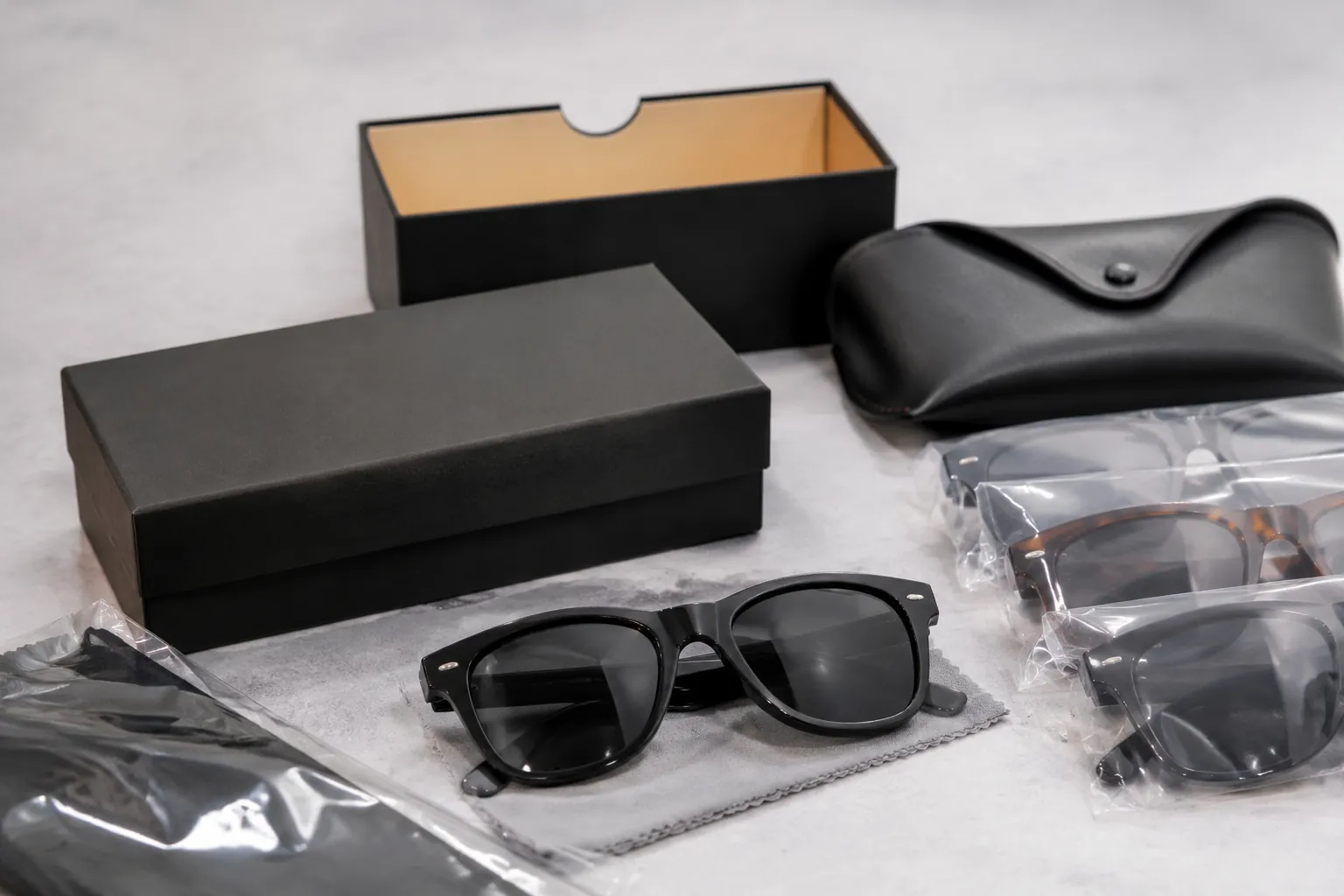
This guide is for brand owners, importers, and private label buyers who want sunglasses that look recognizable at a glance without rebuilding every front frame. In many commercial programs, the temple is the fastest place to build repeatable brand recognition because one side-view cue can carry across multiple front shapes. Get the temple detail right, and you usually get better cost control, cleaner SKU planning, and fewer sample revisions. One brand cue. Used well.
Build a temple system, not a one-off sketch
Many buyers start by trying to make every frame front look different. That usually creates more sample rounds, weaker collection consistency, and extra cost. A better approach is to build a temple system: repeat a small number of side-view cues across several front shapes so the range looks related even when the lenses change.
In practice, the most useful temple signatures come from three zones: the outer temple profile, the branding position, and the tip geometry. Often, that is enough. Piling on details such as a heavy bevel, metal plate, laminate, and rubber tip cover can add process steps, assembly variation, and QC complexity without making the frame more recognizable.
For most private label sunglass programs, a practical spec is one repeatable temple profile, one fixed branding location, and one tip cue that can translate across acetate and injection where possible. Exact dimensions depend on the frame category and fit, so define the design intent with engineering drawings or approved reference samples. Not with generic dimensions.
- Shape cue: stepped temple, flat outer face, widened hinge zone, blade taper, or a bevel along the top edge.
- Branding cue: laser mark, pad print, inset metal plate, or stamped badge placed at a fixed location from the hinge.
- Tip cue: squared tip, angled cut, integrated hook, or a contrasting end-piece shape visible from the side.
- Material cue: visible wire-core effect in acetate, laminated color strip, soft-touch zone, or a contrasting insert window.
The goal is not decoration for its own sake. The goal is a side profile buyers can recognize and factories can repeat across a product line without forcing a full redesign of every front frame.
Match temple architecture to MOQ and cost
A signature temple has to work commercially, not just visually. Some details fit a small trial order. Others only make sense when reorder volume can absorb extra tooling, hardware, and labor. Match the detail level to the order pattern you actually expect.
| Temple detail option | Best base material | Tooling and setup impact | Typical MOQ logic | Main trade-off |
|---|---|---|---|---|
| Custom outer temple profile | Injection or acetate | New temple mold cavity or CNC program; low extra assembly | Often workable for small trial orders; cost improves as volume increases | Must still pass fit, balance, and hinge-strength review |
| Pad print or laser logo | Injection, acetate, or metal temples | Low setup cost; artwork plate or laser program only | Common choice for lower-volume development | Lower visual depth than metal hardware; durability depends on surface and process control |
| Inset metal logo plate | Acetate or thicker injection temple | Custom hardware, recess machining or mold feature, placement fixture | Usually more efficient when reorder volume is clearer | Adds manual assembly and alignment risk |
| Laminated acetate insert | Acetate | Extra cutting, bonding, shaping, and polishing stages | Better suited to programs that can support added labor content | Glue-line control and color consistency become visible QC issues |
| Rubber or TPE tip cover | Injection or hybrid | Overmold tooling or secondary assembly | More suitable when repeat volume justifies the added process | Can improve grip and comfort but increases process complexity and material review |
If you are testing a new brand direction, start lower risk: shape the temple, fix the logo position, and add custom hardware only after the style proves itself. That keeps early development simpler and reduces the chance that alignment or overmold issues stall a style with uncertain demand.
At higher volumes, extra detail is easier to justify because setup cost spreads across more pairs. The real question is not whether a detail looks premium. It is whether the factory can repeat it consistently at your actual order quantities.
Use temple shape for recognition, not discomfort
Temple design affects more than appearance. It changes side pressure, frame balance, hinge load, and how the frame sits behind the ear. A common mistake is approving a dramatic side profile from a rendering or photo before checking how it wears. Looks good. Feels wrong.
Three engineering rules matter in most programs. First, avoid unnecessary bulk near the hinge if it adds weight or stiffness where the frame presses against the head. Second, keep skin-contact areas smooth, especially through the ear section. Third, do not thin out critical structural zones without factory review, especially near hinges, spring-hinge pockets, and sharp transitions.
Material behavior matters too. Acetate allows more sculptural shaping because the temple can be cut, CNC-milled, polished, and hand-finished after block preparation. That makes stepped sections, bevel transitions, and visible wire-core effects easier to achieve. Injection molding is efficient for repeat production, but the shape still has to release from the tool and stay structurally sound. Deep undercuts, reverse angles, and very sharp edges often force design changes or more complex tooling.
A useful buyer brief describes the visual zone in measurable terms. Define where widening starts, where taper begins, where branding sits, and which surfaces must stay flush or smooth. That gives engineering and QC a clear basis for checking strength, polish access, and assembly feasibility before the sample is approved.
Document the design intent well, and the same temple language can often carry across acetate and injection versions of a line, even if the exact section profile changes to fit the process.
Choose inserts and logo hardware with tolerance in mind
Temple inserts may look simple on artwork. In production, they are often a major source of variation. Buyers need to know which decoration methods are forgiving and which demand tighter fixtures, more labor, and more inspection.
Metal logo plates are a common way to build a stronger temple signature. They can be flush-mounted, slightly raised, or placed in a recessed window. Flush-mounted plates are often easier to protect in handling because they snag less and make small placement shifts less obvious. Still, visual judgment is not enough. The factory should define a measurable position standard for the hardware and use the same reference in sample approval and bulk inspection.
Laminated acetate details work well when the brand wants color identity rather than obvious logo hardware. A contrasting strip can run along the outer face, sit below the surface, or appear only at the tip. The risk is process control: bonding quality, material flatness, cut accuracy, and final polishing all affect whether the line stays crisp and balanced.
Pad printing is often the simplest route in early development because artwork can change without new hardware. Main buyer checks are rub resistance, edge sharpness, and color consistency on the final surface finish. Laser marking can work well on suitable plastics and coated metal parts, but the visible contrast depends on the base material and finish. Review it on a real sample. Not on artwork alone.
- Ask how the insert is fixed: glue only, press-fit, pin plus glue, heat staking, or embedded during molding.
- Ask for a measurable placement standard: hardware position should be defined on the drawing or approved sample, not left to visual guesswork.
- Ask for durability checks: tape pull, rub, repeated opening, and normal handling should not shift or damage the detail.
- Ask about rework risk: if a plate or insert needs resetting, confirm whether removal can leave glue haze, witness marks, or edge damage.
For low-volume exploratory programs, shape plus print is often the safer path. For styles with clearer reorder potential and tighter QC control, hardware and lamination become more realistic options.
Keep the temple detail inside the compliance path
Temple branding is not separate from compliance. It sits on a finished sunglass that still has to meet the destination market requirements, and decorative choices can affect material suitability, durability, and documentation.
For export programs, buyers often review CE EN ISO 12312-1 for general-purpose sunglasses sold in Europe, ANSI Z80.3 for the US market, and AS/NZS 1067 for Australia and New Zealand. Material compliance matters too. REACH is relevant for chemical restrictions in the EU, especially where the temple uses coatings, adhesives, plating, paints, or soft-touch materials. Buyers should also note that FDA registration discussions in the US do not replace product performance requirements for sunglasses.
This becomes more important when the design adds painted surfaces, adhesive-bonded hardware, rubberized coatings, or decorative metal parts. A small badge may look minor in the design file, but it still changes the material stack the factory must control and document. Broader systems such as ISO 9001 or social compliance programs such as BSCI may help with supplier evaluation, but they do not replace product-specific compliance and performance checks.
A serious sample review should include more than appearance approval:
- Hinge cycle check: confirm the detail does not create stress around the hinge area or interfere with normal opening and closing.
- Adhesion check: plates, prints, and coatings should be reviewed for peel, rub, and edge lift.
- Heat exposure check: decorative surfaces should be reviewed after storage simulation for tackiness, print-through, movement, or visible distortion.
- Symmetry inspection: both temples should match in logo position, insert length, and tip geometry under consistent inspection conditions.
The rule is simple: decide the destination market and compliance path first, then freeze temple materials and decoration methods inside that framework. Do not approve the decorative method first and ask compliance questions later.
Use staged sampling to catch temple problems early
A common eyewear development mistake is trying to approve appearance, comfort, branding, and packaging in one sample round. That usually leads to vague feedback and lets temple problems survive until production engineering, where changes are slower and more expensive.
Use a staged sequence instead. First, the concept sample should confirm side profile, proportion, and branding position. Second, the engineering sample should confirm hinge-area construction, logo insertion method, acetate wire-core placement where relevant, opening feel, and finishing feasibility. Third, the pre-production sample should lock color, decoration method, symmetry standard, and bulk QC points.
Timelines vary by construction, tooling status, hardware, and factory workload, so ask for a written sampling schedule instead of relying on a generic lead-time promise. Any custom hardware, tooling revision, repeated artwork change, or temple geometry update can extend development because engineering and approval steps have to restart.
At approval stage, ask for close side-view photos, top-view photos, left-right symmetry photos, and measured records for branding location and any insert feature. If the temple detail is the main selling point of the style, the approval notes must be measurable and inspectable. Comments such as "cleaner" or "more premium" are hard to enforce in bulk. Notes tied to drawings, approved samples, and measurement checkpoints are far more useful for both factory and QC teams.
That discipline cuts disputes later because everyone is working from the same reference.
Know where temple cost moves and where it does not
Buyers often underestimate the cost of repeated revisions and overestimate the cost of a well-defined side identity. In many cases, the smarter long-term move is to freeze one strong temple concept and use it across several front shapes instead of rebuilding an entire frame family every season.
The main cost drivers are tooling changes, added assembly labor, decoration rejects, and slower inspection. A shape-only signature may add limited incremental cost once the CNC program or mold feature is set. A temple with a laminated insert, custom badge, and soft-touch tip adds operations across material preparation, assembly, finishing, re-inspection, and possible rework.
The commercial rule is straightforward. If the first order is a small trial, keep the signature simple and easy to inspect. If the style family has a realistic reorder plan, more refined hardware and finishing details become easier to justify because setup cost spreads better and the factory has a better chance to stabilize the process.
From an operations standpoint, temple development can involve molding or cutting, CNC shaping, decoration, hinge assembly, finishing, and QC. That is why consistency improves when the temple concept is judged not only by how it looks in a sample box, but by whether it can be repeated cleanly from sample approval through bulk production.
In practical buying terms, customers usually notice the temple profile before they notice smaller decorative extras. If budget is tight, invest in profile and proportion first. Add secondary decoration only if the business case supports it.
Buyer checklist before bulk release
Before approving production, run the temple detail through a short release checklist. If any item is still vague, fix it before the purchase order moves forward. Most bulk disputes on temple details come from missing definitions, not impossible manufacturing.
- Signature defined: temple profile, branding position, tip geometry, and any insert dimensions are written in measurable terms or shown on approved drawings.
- Construction confirmed: acetate, injection, or hybrid structure is matched to the chosen detail and hinge type.
- Material stack frozen: coatings, adhesives, plating, and print method are approved for the target market and finish level.
- Symmetry standard set: left and right temples have an agreed appearance standard for logo position, insert length, and tip shape.
- Decoration method locked: laser, pad print, inset plate, or laminate is approved with a reference sample and inspection method.
- QC points listed: hardware position, print durability, gap check, polish quality, edge feel, and hinge function are included in inspection notes.
- Compliance path confirmed: the final material set aligns with the required market route such as CE EN ISO 12312-1, ANSI Z80.3, AS/NZS 1067, and relevant REACH review where applicable.
A signature temple detail works because it is repeatable, not because it is complicated. If the supplier can make it consistently in samples and hold the same visual identity in bulk, the concept is stronger commercially.
Have a custom sunglasses project in mind?
Send us your styles, target market and quantities and we will return a detailed quote with MOQ, lead time and a sample plan.
Get a QuoteWhy source this from Wenzhou with LumiShades
Wenzhou in Zhejiang Province is widely regarded as China’s eyewear manufacturing capital, producing a large share of the world’s sunglasses. That concentration matters to buyers: a deep local supply chain for acetate sheet, hinges, lens blanks, plating and packaging means shorter component lead times, easier color and material matching, and a workforce with decades of eyewear-specific skill. LumiShades has manufactured in this ecosystem since 2009, and our vertical integration — in-house injection molding, acetate cutting, CNC milling, lens tinting, decoration and quality control — means no part of your order is quietly subcontracted to a workshop you cannot audit.
For international buyers, that vertical control translates into accountability. When a single factory owns every step, defects are traced and fixed at source rather than bounced between vendors, and your specifications survive intact from first sample to bulk. We back this with 15+ years of experience, shipments to 60+ countries, more than 5 million pairs produced per year and a 98.5% on-time delivery rate. Our certifications — CE EN ISO 12312-1, FDA registration, ANSI Z80.3, AS/NZS 1067, REACH, ISO 9001 and BSCI audit — mean the compliance documentation your market requires already exists. Explore our manufacturing capabilities and quality control process to see how this works in practice.
Frequently asked questions
Can I create a recognizable temple detail without paying for a full new frame mold? Yes, often you can. A practical route is to keep an existing or already-approved front shape and develop a custom temple profile, tip shape, branding position, or hardware detail instead. In acetate programs, temple-side changes are often easier to prototype because shaping and finishing can be adjusted after material preparation. In injection programs, a new temple mold may still be required, but it is often less complex than redeveloping the full front and temple set together. Ask the factory which parts can stay on an existing platform, which parts need new tooling, and how that changes sample cost, lead time, and MOQ.
What temple branding method is safest for a first order at low volume? A shaped temple with pad print or laser branding is usually the safest low-volume starting point because setup stays simpler and assembly variation stays lower. Pad print works well when you need color flexibility or expect artwork changes. Laser marking can work when the material and finish create clear contrast, but test it on an actual sample first. Before approval, ask the supplier for three things: a real sample on the final material, a basic durability check for rub or adhesion, and a written note describing the production method used.
How long should temple development take before bulk production? There is no fixed timeline because development depends on material, tooling status, hardware, decoration method, and the number of revision rounds. A straightforward temple update can move quickly, while custom hardware or repeated geometry changes usually add time. The best practice is to request a written development plan that separates concept sample, engineering sample, and pre-production sample, with approval points listed for each stage. Also ask which changes would restart tooling, artwork, or engineering review, because those are the usual reasons schedules slip.
Will adding temple hardware affect compliance testing? It can. Temple hardware may add plated parts, adhesives, coatings, or paints, and those materials need review as part of the final sunglass specification. For market access, buyers often assess the finished product against CE EN ISO 12312-1, ANSI Z80.3, or AS/NZS 1067 depending on destination. REACH may also apply for chemical restrictions in the EU. A practical step is to ask the supplier for the full material stack for the temple detail, then confirm that the same stack is used on the approved sample, test sample, and bulk order.
How do I stop left and right temple details from looking uneven in bulk? Approve the detail with measurable references, not visual comments alone. Use an approved sample, drawing, or photo record that shows branding location, insert length, tip shape, and any recess or flush requirement. Then ask the factory and QC team to inspect both temples against the same reference during pre-production and bulk inspection. This matters most for metal plates, laminated details, and features placed close to the hinge, where even small shifts become visible. If the detail is critical, require a pre-production sample with left-right comparison photos and written inspection points before bulk release.
Ready to start?
Explore our round sunglasses or request a quote — our sales team replies within 12 hours.
Request a Quote