
Private Label Sunglasses Without Tooling Delays
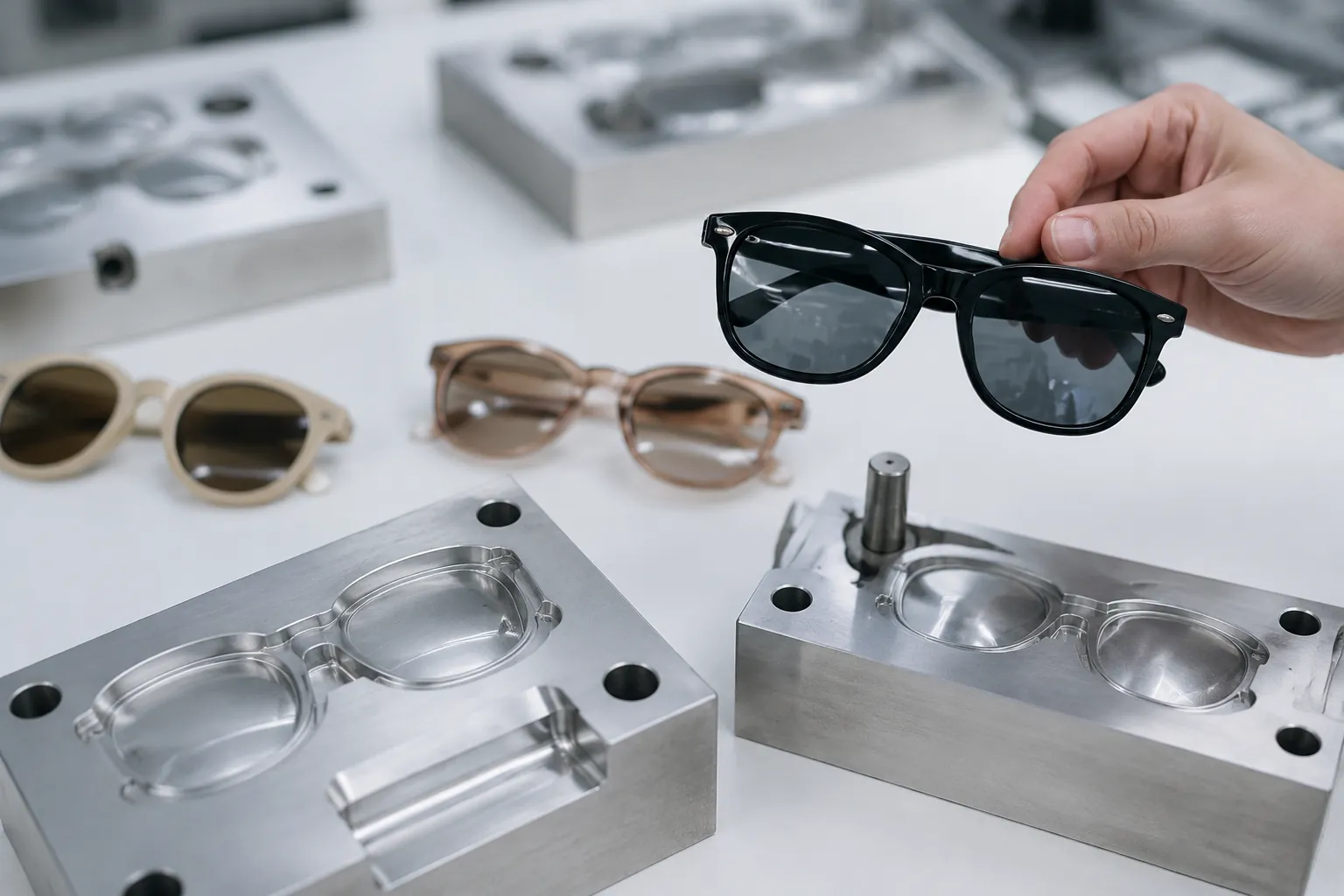
This guide is for brand owners, importers, distributors, and retailers who want a branded sunglasses line without the time, cost, and risk of new tooling. In many cases, the smarter route is to start with an existing frame platform and customize the details customers actually notice: color, lens specification, branding, components, and packaging. If the base geometry already works in production, the project shifts from product engineering to specification control and approval. That cuts development risk, simplifies sampling, and helps buyers move faster. The result can still look intentional and brand-specific—not like a stock frame with a logo added at the last minute.
Start with the right question: what really needs to be unique?
Many buyers ask for a custom frame before they define what must look different at retail. That is backward. It adds development work without improving the parts the customer will notice first.
Start by separating visible differentiation from tooling-dependent change. If the front shape, eye size, bridge fit, and temple geometry already suit your market, you can often keep the existing mold and still build a strong private label program. Shoppers usually notice silhouette, color, lens appearance, logo treatment, and packaging long before they ask whether the mold is unique.
New tooling changes the job. It brings mold development, trial shots, fit correction, hinge alignment checks, lens groove adjustment, and more sample rounds. Sometimes that work is necessary. Often it is not.
- Keep the existing mold when frame width, bridge fit, temple length, and lens shape already meet the commercial and fit needs of your target market.
- Open new tooling only when the shape itself is the selling point or when fit issues are serious enough to hurt comfort, retention, or coverage.
- Prioritize visible changes first: color, translucency, surface finish, lens tint, mirror effect, logo method, trims, and packaging usually create more differentiation than hidden structural changes.
- Use sample review to confirm execution: hinge alignment, lens seating, temple closing symmetry, finish quality, and logo placement accuracy matter more than redesign for its own sake.
The logic is simple. Keep what already works mechanically. Spend on what the customer will see, touch, and compare.
Where new tooling slows projects down
New mold projects rarely add one step. They add a chain of approvals. Mold development leads to trial production, then fit correction, lens seating checks, decoration review, and resampling if the first result misses the mark.
That does not mean new tooling is a bad choice. It means buyers should use it only when a new shape or fit profile is essential.
With an existing frame platform, much of that engineering path disappears. The workflow becomes more direct and easier to control:
- Select an existing frame from the supplier library and confirm exact size, material, hinge construction, and market position.
- Choose color by approved physical sample, factory swatch, or a clearly defined reference.
- Confirm lens specification: category, tint, polarization, mirror or gradient effect, base material, and any coating requirement.
- Approve decoration artwork with real dimensions in millimeters and placement shown on the actual frame area.
- Review a pre-production sample for cosmetics, fit, branding accuracy, and packaging match.
- Release bulk production only after the full specification is locked.
Development does not disappear. It shifts. The job becomes specification control rather than frame engineering. Buyers still need to define the bill of materials, artwork, packaging set, shipping marks, and compliance market early. If those details are vague, the project still stalls.
What you can change without changing the mold
This is where private label becomes useful. A standard frame can look very different once the buyer controls finish, lens, branding, components, and packaging.
| Customization area | What can change | Typical lead-time impact | Commercial notes |
|---|---|---|---|
| Frame color and finish | Solid, translucent, crystal, tortoise-like effect, matte, satin, gloss, soft-touch style finish where suitable | Low | Usually one of the simplest changes if the material and color approval process are clear. Review under consistent lighting. |
| Lens specification | Smoke, brown, green, blue, gradient, flash mirror, polarized, anti-reflective back coating | Low to medium | Lens changes affect appearance and compliance. Product documents should match the final shipped lens combination. |
| Decoration method | Pad printing, laser engraving, hot foil, screen print on lens, metal logo plate | Low | Artwork should be sized to the real usable area. Curved surfaces often require visual adjustment, not just center alignment on a flat drawing. |
| Component upgrade | Spring hinges, adjustable nose pads, screw color, temple tips, decorative rivets, metal trims | Medium | Can change hand feel and perceived value without altering the main mold, but may affect MOQ or assembly complexity. |
| Packaging set | Pouch, EVA case, paper box, barcode label, care card, hangtag, outer carton marks | Low to medium | Often the most efficient way to make the line look coordinated and retail-ready. |
Color, lens specification, and packaging usually deliver the biggest visual change with the least structural risk. A familiar injected frame can be positioned very differently depending on finish quality, lens type, decoration execution, and retail presentation.
There are limits. A narrow temple may not hold a large metal logo plate. A lens change may trigger new documentation. That is the practical rule: know which changes are cosmetic, which are mechanical, and which affect compliance.
Material trade-offs: injected plastic, acetate, or metal
Material choice affects speed, consistency, cost, and how the product looks in hand. Pick the platform that fits the launch goal. Do not assume every material can deliver the same result at the same price.
Injected plastic is often the most practical option for MOQ-sensitive private label programs built on existing molds. Once a frame platform is established, repeatability can be strong, color changes are manageable, and cost is usually easier to control than with more labor-heavy materials.
Acetate offers more visual depth because pattern and character come from the sheet material itself. It suits projects where color expression, lamination, or a fashion-led look matters. The trade-off is more labor: cutting, CNC work, polishing, and hand assembly. Cost goes up. Variation between batches can also be more visible.
Metal works well when the design depends on a thinner profile, a plated look, or sharper trim detail. It also supports mixed-material concepts and certain premium branding treatments. The trade-off is stricter cosmetic control. Plating flaws, solder marks, scratches, and weld cleanup show fast.
| Material | Best use case | Speed | Cost behavior | Buyer caution |
|---|---|---|---|---|
| Injected plastic | Fast private label, promotional to mid-market programs | Fast | Usually the most scalable on established platforms | Finish quality must be controlled carefully or the product can look too basic. |
| Acetate | Fashion-led programs needing richer visual character | Medium | Higher material and labor input | Sheet variation can affect color consistency across production lots. |
| Metal | Slim profiles, plated aesthetics, trim-focused designs | Medium to slower | More sensitive to plating and assembly cost | Cosmetic defects are more visible, so QC standards should be explicit. |
If speed and cost control matter most, established injected platforms are usually the safest starting point. If visual richness drives the brand concept, acetate may justify the extra cost. If the design depends on a finer structural look, metal can work well—but plan for tighter cosmetic review.
Branding details that change perceived value
Weak private label programs usually fail in the finish. The frame may be acceptable, but the branding, lens marking, and packaging feel generic. Customers notice that quickly.
Pad printing remains one of the most common branding methods because it is flexible and cost-efficient, especially for temple logos and inside-leg markings. Laser engraving can feel more permanent on suitable surfaces, but legibility depends on the base material and finish. Metal logo plates can create a stronger premium signal, but buyers should confirm how the plate is fixed and whether the attachment will hold up in use.
- Temple branding: size the logo to the usable temple area, not just the artwork file. Oversized branding often looks cheaper, not stronger.
- Lens branding: use it carefully. A small corner mark can work. A large opaque print often distracts from the product.
- Inside-leg information: model code, color code, and compliance markings should be readable, durable, and consistent for reorder control.
- Packaging hierarchy: pouch, case, box, care card, barcode label, and carton marks should follow the same SKU logic and naming convention.
Execution matters. A logo placed too close to the hinge can look compressed once the temple curves. Foil may behave differently on a textured surface than on a smooth one. Barcode inconsistency creates avoidable warehouse problems. Review decoration on the real sample, from multiple angles. Do not approve from flat artwork alone.
Compliance and QC after customization
Using an existing frame does not guarantee that the final private label product stays compliant. The shipped specification is what matters. If you change lens tint, mirror coating, polarization, base lens material, or decorative materials, you may also change performance or chemical compliance status.
Depending on the target market, buyers may need documentation aligned with standards or requirements such as CE EN ISO 12312-1, ANSI Z80.3, AS/NZS 1067, REACH, and FDA registration where relevant to the U.S. supply chain context. System credentials such as ISO 9001 and BSCI can help assess a supplier, but they do not replace product-level testing or product-specific files.
Lens changes are a common trigger for review because visible light transmittance, filter category, UV performance, and polarization characteristics may change. Decoration changes can matter too if inks, coatings, or metal trims affect material composition.
QC should go beyond collecting reports. Set a practical inspection checklist before bulk production:
- Hinge alignment: temples should open and close evenly without visible skew or abnormal resistance.
- Lens fit: no rattling, edge stress whitening, lens movement, or obvious left-right mismatch.
- Cosmetic standards: define acceptable limits for scratches, sink marks, pits, dust in coating, and print defects before production starts.
- Color consistency: confirm left-right match and reasonable consistency across the approved production batch.
- Packaging accuracy: SKU, barcode, color code, and carton marks should match the purchase order and approved artwork.
Ask for compliance files and QC records that match the exact shipped bill of materials. A report for one lens version should not be assumed to cover another tint, coating, or polarized combination without confirmation.
MOQ, pricing control, and a realistic launch plan
The most common commercial mistake is spreading a first order across too many SKUs. Private label without tooling can make smaller runs more practical, but the economics still improve when volume stays focused.
A stronger launch plan is usually one frame platform in two or three relevant colorways, not a wide assortment with very low quantities per SKU. That simplifies color approval, packaging control, barcode management, and replenishment.
If the timeline is tight, treat the project like an execution calendar:
- Define the target clearly: confirm target user, target retail price, sales channel, and required compliance market before requesting samples.
- Shortlist existing styles: compare exact measurements, material, hinge construction, and lens shape against your target brief.
- Lock the specification early: confirm frame code, color direction, lens specification, logo positions, packaging type, and shipping mark format together.
- Submit artwork and approvals: provide vector files, barcode information, labeling requirements, and packaging copy in one package where possible.
- Review the sample against a checklist: check fit, finish, lens quality, logo sharpness, code markings, and packaging match before approving production.
- Release bulk only after alignment: confirm the approved sample, final bill of materials, and documentation requirements before deposit and production release.
Fast projects are usually the ones with fewer open decisions. Speed does not come from pushing the factory harder. It comes from giving complete, consistent approvals early.
Have a custom sunglasses project in mind?
Send us your styles, target market and quantities and we will return a detailed quote with MOQ, lead time and a sample plan.
Get a QuoteWhy source this from Wenzhou with LumiShades
Wenzhou in Zhejiang Province is widely regarded as China’s eyewear manufacturing capital, producing a large share of the world’s sunglasses. That concentration matters to buyers: a deep local supply chain for acetate sheet, hinges, lens blanks, plating and packaging means shorter component lead times, easier color and material matching, and a workforce with decades of eyewear-specific skill. LumiShades has manufactured in this ecosystem since 2009, and our vertical integration — in-house injection molding, acetate cutting, CNC milling, lens tinting, decoration and quality control — means no part of your order is quietly subcontracted to a workshop you cannot audit.
For international buyers, that vertical control translates into accountability. When a single factory owns every step, defects are traced and fixed at source rather than bounced between vendors, and your specifications survive intact from first sample to bulk. We back this with 15+ years of experience, shipments to 60+ countries, more than 5 million pairs produced per year and a 98.5% on-time delivery rate. Our certifications — CE EN ISO 12312-1, FDA registration, ANSI Z80.3, AS/NZS 1067, REACH, ISO 9001 and BSCI audit — mean the compliance documentation your market requires already exists. Explore our manufacturing capabilities and quality control process to see how this works in practice.
Frequently asked questions
Can a private label sunglass line still look unique if it uses an existing mold? Yes. In most cases, the strongest visible differentiation comes from the combination of frame color, finish, lens treatment, logo application, trims, and packaging—not from a new mold alone. To make an existing platform look brand-specific, ask the supplier to show the same frame with different finishes and lens options, then review those versions alongside your packaging concept before choosing the final direction.
What is the fastest way to start a private label project with LumiShades? Start with an existing frame platform and submit a complete brief at the start: frame code, color reference, lens specification, logo artwork, packaging requirements, barcode information, and target compliance market. Then ask the supplier which items need physical approval and which can be approved from artwork or swatches. That reduces back-and-forth and helps move the project from sampling to production without changing the core specification midway.
Is MOQ 50 pairs enough for real private label branding? It can be enough for a basic branded program on an existing design if the decoration and packaging are straightforward. Before placing a small order, ask exactly what is included at that quantity: logo method, packaging type, barcode labeling, and any component options. Also confirm whether the MOQ applies per color, per frame style, or per total order, because that changes how practical the quantity really is.
Do I need fresh compliance testing if I only change lens color or coating? Possibly. A change in lens tint, mirror coating, gradient, polarization, or base lens material can affect visible light transmittance, filter category, and other performance characteristics. The practical step is to request documentation tied to the exact final shipped specification for your market, such as CE EN ISO 12312-1, ANSI Z80.3, or AS/NZS 1067, and to confirm whether any new decoration materials raise additional REACH or related chemical compliance issues.
How should I split quantities across colors on a first order? Keep the range narrow unless you already have solid sales data. A practical opening plan is one frame platform in two or three proven colorways, with enough units in each color to support clean production, consistent packaging, and easier replenishment. Ask the supplier whether color splits affect unit price, packaging MOQ, barcode label setup, or carton assortment so you can compare the commercial impact before finalizing the purchase order.
Ready to start?
Explore our rimless sunglasses or request a quote — our sales team replies within 12 hours.
Request a Quote