
Sunglasses Factory or Trader? A Practical Buyer Checklist
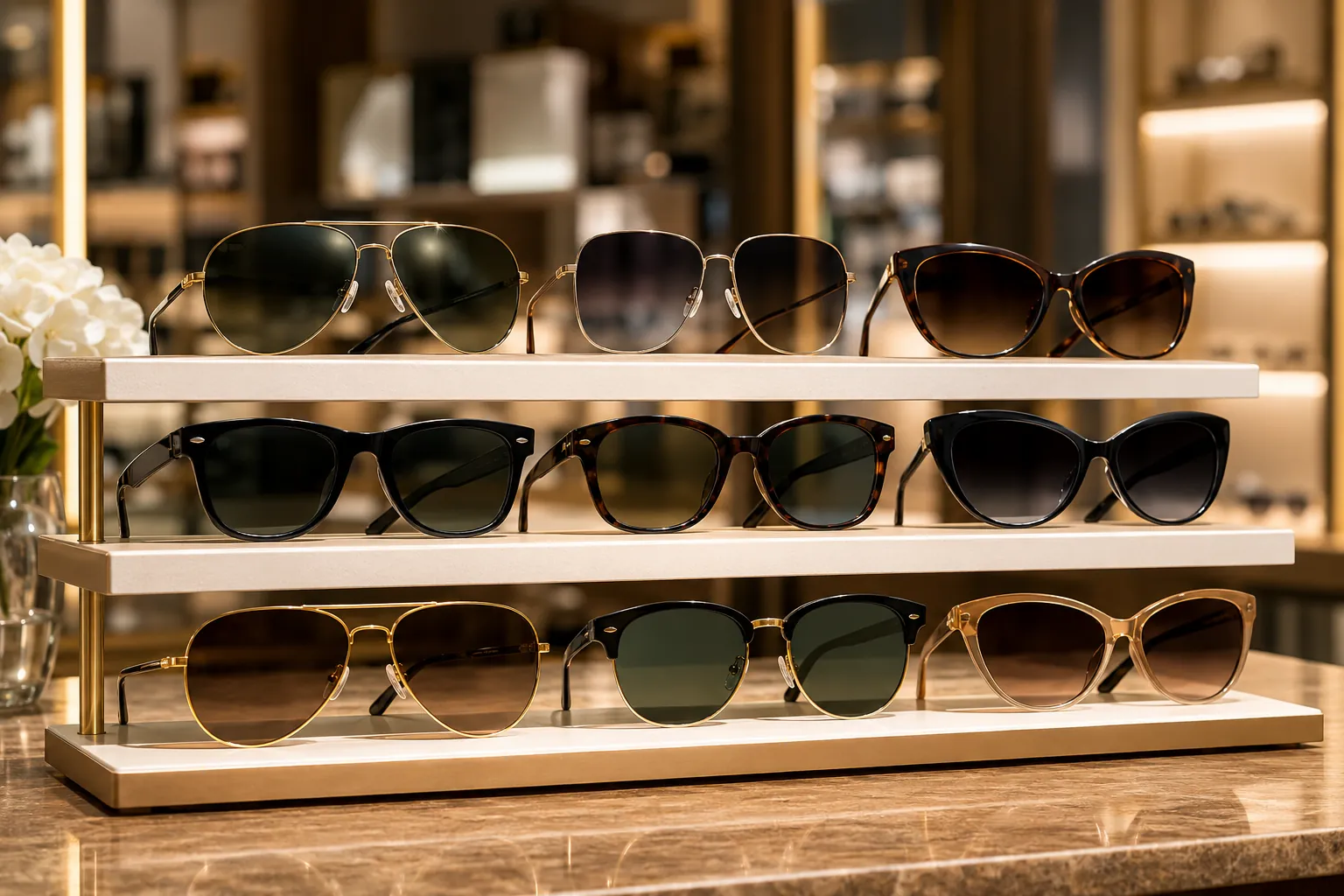
This guide is for brand owners, importers, distributors, and retailers sourcing custom sunglasses in volume. The goal is simple: confirm whether you are dealing with a real manufacturer or an intermediary before you send a deposit, lock a launch date, or approve a private-label program. A real factory can usually explain process flow, material limits, decoration options, QC checkpoints, and realistic production timing in concrete terms. A weak or opaque supplier often leans on catalogs, generic workshop photos, vague promises, and compliance logos that are not clearly tied to your product or legal entity.
1) Start with production questions a real factory should answer fast
The quickest screen is not price. It is technical fluency. A real sunglasses factory should be able to answer basic production questions directly because the information comes from its own process, equipment, and schedule. If every manufacturing answer takes days, you may be dealing with a middle layer.
Keep the first round specific. Do not ask, "Can you make premium sunglasses?" Ask how the frame would actually be produced and controlled. A factory-level answer usually covers material choice, process sequence, likely risk points, and which changes affect sample timing or bulk timing.
- Which frame materials do you produce regularly: injection plastic, TR90-type materials, acetate, metal, or mixed construction?
- Which operations are in-house and which are subcontracted: molding, CNC work, lens coloring, pad printing, laser engraving, hinge assembly, or packaging?
- What is your normal sample process for a stock-mold custom-logo program versus a new-mold program?
- Which design changes require a new sample cycle or tooling review?
- How do you define MOQ by design, by color, and by logo method?
- How do you check logo position, lens fit, and temple alignment during production?
- Which standards can the finished style be tested against: CE EN ISO 12312-1, ANSI Z80.3, or AS/NZS 1067, depending on market?
A trader often stays at the level of style, trend, and shipping. A factory usually talks about material behavior, tooling limits, assembly order, decoration constraints, cosmetic inspection, and packing sequence. That gap shows quickly. What matters is not impressive language. It is whether the answers are specific, consistent, and tied to how your product would actually be made.
2) Match claimed capability to actual equipment and workflow
Factories leave operational fingerprints. If a supplier claims acetate capability, ask what happens between sheet cutting and final polishing. If the supplier claims injection-frame capability, ask whether it uses existing molds, modifies stock tooling, or develops new molds for custom geometry. A real plant should be able to walk you through the sequence step by step.
For injection sunglasses, the flow may include mold setup, injection, cooling, trimming, surface finishing, logo decoration, hinge fitting, lens insertion, cleaning, inspection, and packing. For acetate, the route is usually more labor-intensive and may include sheet selection, lamination review, rough cutting, CNC or pattern milling, tumbling, polishing, hinge slot processing, assembly, and cosmetic inspection. These are different production systems. A supplier that claims to do both should be able to explain where cycle time, workmanship risk, and cosmetic variation differ.
Common capability checks for sunglasses include injection molding machines for plastic frames, acetate cutting and tumbling equipment, CNC milling for shape control and recessed details, lens coloring or tinting capability, pad printing, hot stamping, laser engraving, and assembly benches with in-line QC. Ask for project-specific evidence. Not generic media.
- Request a short video showing your sample frame, logo artwork, or packaging file during one real operation, such as pad printing, hinge fitting, lens insertion, or final assembly.
- Ask which material the supplier recommends for your design and why. Thick temples, deep bevels, and layered visual effects often point to acetate. Simpler high-volume sports styles may suit injection-based construction better.
- Ask how the supplier controls lens fit, hinge symmetry, front shape consistency, and cosmetic grading. A factory should explain the control method, not just say "good quality."
Material behavior often exposes middle layers fast. Acetate allows richer lamination effects and hand-finished polish, but it also involves more manual work and more visible variation from batch to batch. Injection construction is usually more repeatable at scale once tooling is stable, but it is less flexible for certain premium surface effects. A real manufacturer should be able to explain those trade-offs clearly.
3) Use MOQ, pricing, and lead-time logic as a credibility test
Real production follows a sequence, so credible lead times have structure. Sample making, approval, material booking, scheduling, decoration, assembly, inspection, and packing all take time. If a supplier offers almost any style, in almost any color, at very low volume, with no effect on timing or cost, be careful. That often points to quote aggregation across multiple sources rather than direct production control.
There is no universal lead time for custom sunglasses. It depends on design complexity, material availability, workload, and how much is done in-house. So do not accept a broad promise. Ask the supplier to break the timeline into stages: sample preparation, approval, raw-material readiness, production scheduling, decoration, final assembly, inspection, and packing. A credible supplier should be able to explain what can delay each stage.
| Checkpoint | Real factory pattern | Why it makes sense | Trading company warning sign |
|---|---|---|---|
| MOQ by design | MOQ is explained by frame style, material, color, logo method, and packaging setup | Setup work, purchased components, and decoration prep affect the economics of each program | MOQ changes repeatedly with no clear production reason |
| Sample lead time | Supplier explains the sample route and what changes require rework or a new approval cycle | Artwork review, decoration preparation, material sourcing, and assembly all affect sample timing | Promises unusually fast custom samples without explaining process or constraints |
| Bulk lead time | Supplier breaks timing into material readiness, scheduling, production, QC, and packing | Production capacity and purchased inputs must be coordinated before shipment | Offers broad promises, then later blames "partner factories" for delays |
| Price logic | Supplier explains the cost effect of frame material, lens type, logo method, packaging, and order volume | Actual cost depends on labor content, process complexity, purchased parts, and reject risk | Starts with a very low opening quote, then adds charges after sample approval |
Good suppliers can usually explain why MOQ differs by process. A pad-printed logo may work at a lower quantity than custom metal hardware. A simple polybag packout is not the same as a retail box program with labels, inserts, and barcode control. Clear logic matters. If the supplier can explain it, there is a better chance it understands its own production economics.
4) Check certifications by scope, not by logo collage
Many eyewear suppliers show a slide full of compliance logos. That proves nothing. You need to separate product standards, chemical compliance, and company-level system records. Sales decks often blur these categories. Buyers should not.
For sunglasses, CE EN ISO 12312-1, ANSI Z80.3, and AS/NZS 1067 are product-related standards used in relevant markets. REACH concerns restricted substances in materials, coatings, inks, and components. FDA registration may matter in some US import setups, but it is not proof that a sunglass style meets a product-performance standard. ISO 9001 is a quality management system certification. BSCI is a social compliance audit framework. None of these records are interchangeable.
- Request the full report or certificate, not a badge image or cropped first page.
- Check the company name, address, validity dates, issuing body, and scope.
- Confirm that the legal entity receiving payment matches the entity shown on the document, or ask for a clear explanation if it does not.
- Ask which frame materials, lens types, coatings, inks, and metal trims are covered.
- Verify whether the report is style-specific, based on a material family, or tied only to an older model that differs from your current configuration.
Then ask follow-up questions. If the style uses mirrored coating, painted surfaces, or plated metal decoration, ask whether that finish family is included in the available compliance evidence. If the product is intended for a specific market, confirm how the supplier handles applicable labeling and lens-category requirements. A serious factory knows the difference between a broad claim and evidence tied to the exact product configuration you are buying.
5) Audit production control and QC checkpoints, not just the office
A polished sales office is not proof of manufacturing control. You need to know where defects are prevented, who records them, and who can stop production if a process drifts. In sunglasses, common issues include lens color inconsistency, temple imbalance, hinge looseness, poor print adhesion, scratches after finishing, warped fronts, and lens seating problems.
Ask the supplier to describe the QC flow from incoming material to final carton sealing. Strong answers are process-based and measurable, even if the supplier does not disclose every internal specification.
- Incoming inspection of frame material, lenses, hinges, screws, logo parts, and packaging materials.
- Pre-production or first-article confirmation against the approved sample and artwork.
- In-line checks during molding, CNC work, tumbling, coloring, printing, engraving, and assembly.
- Functional inspection for alignment, hinge operation, screw fit, lens security, and basic wearability checks.
- Final random inspection for cosmetics, count accuracy, labeling, and packaging integrity.
Push for detail. A real factory should be able to explain where logo position is checked, how cosmetic defects are classified, how alignment is reviewed, and at which stage a nonconforming lot is held for review. This is the real issue: not whether QC exists, but whether QC happens early enough to prevent costly rework. Lens appearance should be checked before full packing. Decoration quality should be verified before units move downstream. Packaging checks should happen before cartons are closed and shipment marks are applied.
6) Use the sample stage to test discipline and revision control
Sampling is where many buyers misread supplier strength. A trader can look efficient in sampling by sourcing from whichever workshop is available. The real test is whether the approved sample can be repeated in bulk. Treat the sample stage as a small audit of communication, document control, and production discipline.
Send a proper tech pack: front and temple dimensions, lens color reference, logo artwork, logo position, packaging specification, target market, and any compliance assumptions. Then watch the response. A capable manufacturer usually raises practical questions about artwork line thickness, color references, hinge style, material selection, lens category, and finish limits.
Ask how revisions are tracked. There should be a revised drawing, sample code, dated comment sheet, approval email trail, or another version-control record. Without revision control, production can easily revert to an old logo file, an outdated color callout, or a superseded sample dimension.
Simple rule: if a supplier cannot keep sample comments organized at low quantity, bulk consistency will be harder to trust.
Lead-time credibility also shows up here. Ask which changes restart the sample cycle: new mold work, major acetate shape edits, changed lens color, revised decoration method, or custom packaging. If the answer is that every change is easy and timing never moves, you are probably not hearing from the production side.
7) Verify the legal and operational chain before you place a PO
Even if the product looks acceptable, you still need to verify who is actually responsible for manufacturing and shipment. Many sourcing problems are not just about product quality. They start with unclear accountability when the invoice entity, certificate holder, workshop, and bank account do not match.
Before issuing a purchase order, confirm the chain in writing.
- Who is the legal entity on the quotation, proforma invoice, commercial invoice, and bank account?
- Who owns or controls the factory where the sunglasses will be made?
- Which operations are subcontracted, and to whom, if any?
- Who is responsible for first-article approval, in-line QC, final inspection, and corrective action?
- Which entity holds the available test reports, system certificates, or audit records?
If names do not align, ask for a written explanation. There may be legitimate reasons, such as a group structure or a separate export company, but the relationship should be clear. If the supplier refuses to explain the chain, treat that as a risk signal. You should know who takes payment, who makes the goods, who controls quality, and who answers if shipment, testing, or labeling problems arise.
8) Red flags and a practical pre-PO routine
Not every trading company is a problem. Some are transparent and useful. The real risk is the hidden middle layer that reduces control and blurs accountability when quality or timing slips. Watch for patterns, not isolated incidents.
- The supplier claims every material, every process, and every certification, but cannot explain the production trade-offs between them.
- Factory photos look generic, outdated, or unrelated to the product category being quoted.
- The certificate holder, invoice entity, and bank account name do not align, and the explanation is vague.
- The supplier avoids live video walkthroughs or shows only the showroom and office.
- MOQ and price change unpredictably when you ask technical questions.
- Bulk delays are later blamed on "partner factories" after in-house production was implied.
Before a first meaningful PO, use a structured routine. First, get a written capability sheet covering materials, processes, decoration methods, MOQ logic, sample steps, and bulk planning steps. Second, collect current copies of applicable product and company documents. Third, request project-specific production media, not stock workshop footage. Fourth, place a sample order with your logo and packaging, not a blank stock unit. Fifth, confirm revision control and approval records. Sixth, verify who performs first-article approval and in-line QC. Seventh, if the program matters, use a third-party inspection or on-site audit before scale-up. Eighth, start with a controlled opening order before moving to larger volume.
If a supplier claims in-house molding, acetate processing, CNC work, lens coloring, decoration, and QC, tie each claim to evidence. That is the difference between buying factory-direct and paying factory-direct pricing to a middleman using factory-direct language.
Have a custom sunglasses project in mind?
Send us your styles, target market and quantities and we will return a detailed quote with MOQ, lead time and a sample plan.
Get a QuoteWhy source this from Wenzhou with LumiShades
Wenzhou in Zhejiang Province is widely regarded as China’s eyewear manufacturing capital, producing a large share of the world’s sunglasses. That concentration matters to buyers: a deep local supply chain for acetate sheet, hinges, lens blanks, plating and packaging means shorter component lead times, easier color and material matching, and a workforce with decades of eyewear-specific skill. LumiShades has manufactured in this ecosystem since 2009, and our vertical integration — in-house injection molding, acetate cutting, CNC milling, lens tinting, decoration and quality control — means no part of your order is quietly subcontracted to a workshop you cannot audit.
For international buyers, that vertical control translates into accountability. When a single factory owns every step, defects are traced and fixed at source rather than bounced between vendors, and your specifications survive intact from first sample to bulk. We back this with 15+ years of experience, shipments to 60+ countries, more than 5 million pairs produced per year and a 98.5% on-time delivery rate. Our certifications — CE EN ISO 12312-1, FDA registration, ANSI Z80.3, AS/NZS 1067, REACH, ISO 9001 and BSCI audit — mean the compliance documentation your market requires already exists. Explore our manufacturing capabilities and quality control process to see how this works in practice.
Frequently asked questions
Can a trading company still be a good supplier for sunglasses? Yes. The issue is not trading itself but hidden subcontracting and weak accountability. A transparent trading company can still be a workable partner if it clearly identifies the production source, explains which operations are outsourced, shares valid documents for the correct legal entities, and takes responsibility for inspection and corrective action. Before placing a PO, ask for the factory name, the invoice entity, the payment entity, the QC owner, and the escalation contact if quality or delivery fails. If those answers stay vague, treat the supplier as high risk.
What is the fastest practical way to verify whether production is really in-house? Ask for a live video call or a short project-specific video showing your sample, logo artwork, or packaging file during a real operation such as pad printing, hinge fitting, lens insertion, or final assembly. Then compare what you see with the claimed process list. If the supplier claims injection molding or acetate processing, ask follow-up questions about tooling, finishing steps, and which operations are subcontracted. Generic workshop clips, showroom tours, or videos with no link to your project are not enough.
Which compliance documents matter most when screening a sunglasses supplier? Start with product-related evidence relevant to your market, such as CE EN ISO 12312-1, ANSI Z80.3, or AS/NZS 1067, depending on where the sunglasses will be sold. Then review REACH-related evidence for restricted substances in materials and finishes. If the shipment is for the US, ask whether FDA registration is relevant for the import setup, but do not treat it as proof of product performance. Also review ISO 9001 and BSCI as company-level records only. In practice, request full documents, verify the legal entity and scope, and check whether the evidence actually covers the frame material, lens type, coating, and decoration used in your style.
How should MOQ affect my judgment of whether a supplier is a real factory? Use MOQ as a logic test, not as a standalone verdict. A real factory should be able to explain why MOQ changes by design, material, color, logo method, and packaging setup. Ask the supplier to separate frame MOQ, lens-color MOQ, logo MOQ, and packaging MOQ if they differ. Then ask which part of the process drives the requirement: purchased materials, setup time, decoration prep, or outsourced packaging. If MOQ moves randomly or the explanation keeps changing, the supplier may not control production directly.
Are sample and bulk lead-time promises reliable indicators of factory status? They are useful only if the supplier can explain the process behind them. Do not judge by the number alone. Ask for a stage-by-stage timeline covering sample preparation, approval, material readiness, production scheduling, decoration, assembly, inspection, and packing. Then ask which changes restart the clock, such as mold changes, revised lens color, new hardware, or custom retail packaging. A reliable supplier will explain dependencies and constraints. An unreliable one usually gives a simple promise with little process detail and later blames delays on outside partners or material issues that were never mentioned upfront.
Ready to start?
Explore our aviator sunglasses or request a quote — our sales team replies within 12 hours.
Request a Quote