
Backward-Plan Your Sunglasses Launch Timeline
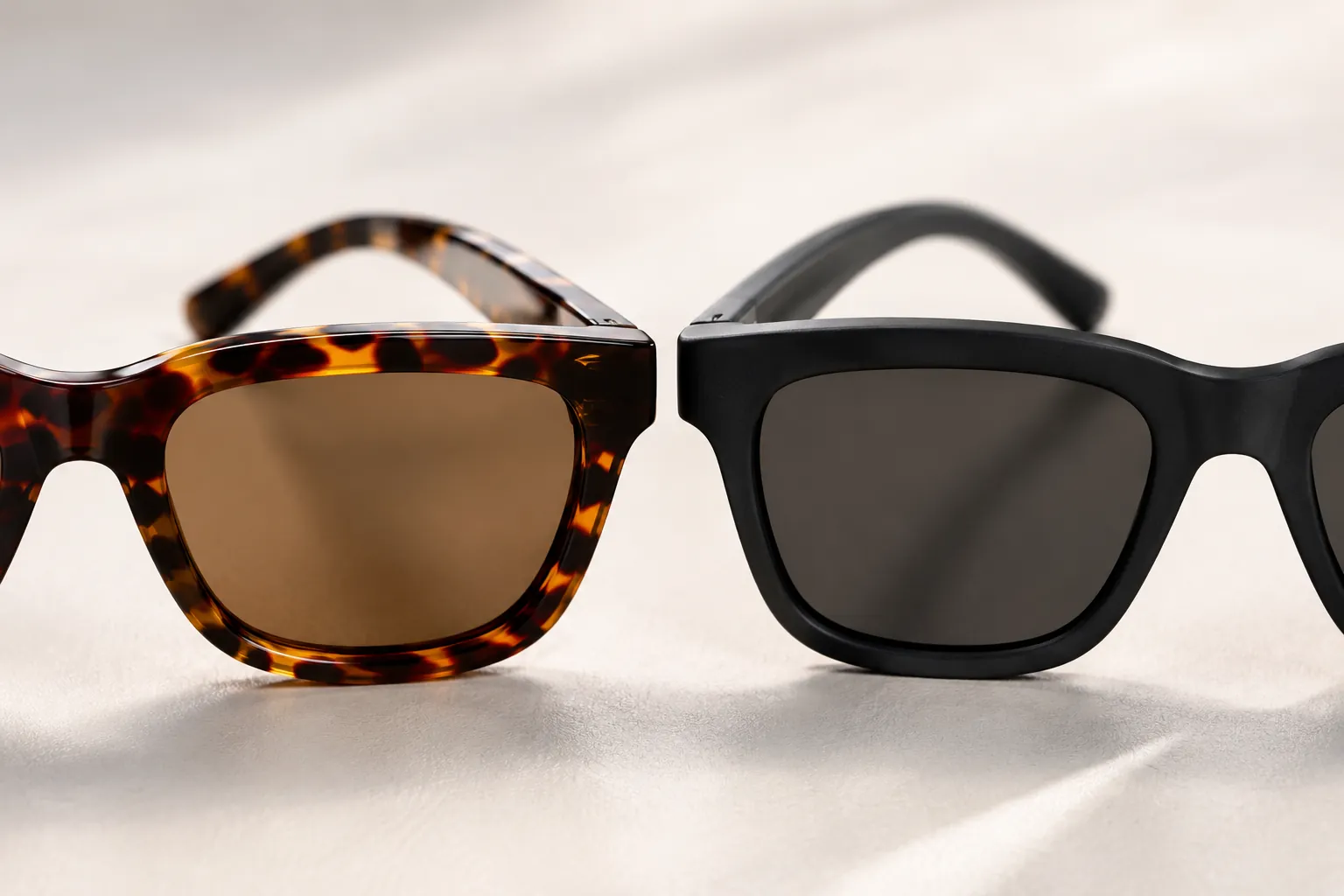
If your sunglasses launch is tied to a fixed retail week, build the schedule from the shelf date backward through warehouse intake, customs, freight, production, approvals, sampling, and spec lock. Simple idea. Often ignored. Buyers regularly count only the factory's quoted production days and miss the delays around them: sample revisions, packaging sign-off, labeling checks, vessel cutoffs, and warehouse receipt. The timeline below is built for private-label and OEM sunglasses programs where launch dates matter and lead-time, MOQ, and approval decisions need to be realistic before the PO is placed.
Start from the shelf date, not the factory date
Most missed launches start with the wrong calendar. The team begins with factory lead time instead of the retail date. They see sample timing and bulk timing, then assume the launch is covered. It is not.
Those factory numbers apply only after the specification is fixed and the pre-production path is clear. Real schedules must also include design freeze, at least one sample review cycle, branding confirmation, packaging approval, compliance documentation, deposit timing, production booking, freight booking, customs clearance, and warehouse receipt.
For a standard custom sunglasses project, a supplier may quote development samples at about 7-10 days per round and bulk production at about 25-35 days after final approval, with MOQ starting around 50 pairs per design depending on the program. But that timing works only if the frame material, lens type, lens color, logo method, packaging format, and target market are already defined. If you are still deciding between PC and TAC polarized lenses, pad print and a metal logo plate, or pouch-only and gift-box packaging, you are still in development. Not production.
Practical rule: if the shelf date cannot move, your flexibility is usually in the spec, the freight mode, or the assortment depth—not in the calendar.
A backward calendar buyers can actually use
The table below is a workable planning frame for a fixed retail launch. It assumes a normal-complexity private-label sunglasses program, not a highly engineered sports frame and not a simple stock-item relabel.
| Stage | Typical duration | What must be finished | Main risk if late |
|---|---|---|---|
| Retail launch week | Fixed date | Stock booked in and ready for store or e-commerce release | Missed selling window |
| Warehouse intake and local distribution | 3-7 days | Cartons received, counted, scanned, routed to stores or 3PL | Launch slips even if cargo arrives on time |
| Customs clearance and final delivery | 5-10 days | Invoice, packing list, labels, declarations, broker file complete | Port hold, exam, delayed handover |
| International shipping | Air: 5-10 days; sea: 25-40+ days | Goods packed, booked, handed over before cutoff | Missed vessel or expensive air recovery |
| Bulk production | 25-35 days | PP sample approved, deposit paid, materials released | Factory schedule slips or incomplete goods |
| PP sample and packaging approval | 5-10 days | Frame color, lens tint, logo, barcode, carton marks signed off | Wrong branding or repack cost |
| Development sampling | 7-10 days per round | Fit, finish, lens spec, branding reviewed | Extra rounds consume launch buffer |
| Concept and spec lock | 7-14 days | Tech pack, target cost, compliance market, quantity plan defined | Downstream decisions stay vague |
In practice, sea-freight launches often need to start about 90-140 days before the shelf date, depending on route complexity, seasonal congestion, and approval speed. New designs with multiple colorways, custom packaging, or multi-market compliance often need more time. Air freight can shorten the back end. It cannot fix unresolved specifications, incomplete labeling, or slow approvals.
Weeks 16 to 12: lock the spec before sampling starts
The launch is usually won or lost at the brief. Before anyone pushes the factory for speed, define what is being made and what commercial target it has to hit.
Your development brief should cover at least:
- Frame material: injection-molded plastic, acetate, or mixed-material construction
- Lens material: PC, TAC polarized, nylon, or another specified performance route
- Lens finish: solid tint, gradient, mirror, flash mirror, anti-scratch, polarized claim
- Target compliance market: EU, US, Australia/New Zealand, or multi-market
- Branding method: pad print, laser engraving, hot stamp, metal logo plate
- Packaging level: polybag only, microfiber pouch, retail box, barcode labels, carton marks
- Quantity by color and total quantity per style
- Target landed cost, not only ex-factory price
Material choice affects both timing and reject risk. Injection-molded frames are usually the fastest route for straightforward fashion shapes and price-sensitive programs. Once molds and color standards are fixed, they tend to move quickly. Acetate gives better depth, layered color effects, and a heavier hand feel, but polishing, edge finishing, and color matching need tighter visual control. CNC-milled details can improve shape precision or hardware placement, but they add process time and are rarely the right choice for buyers trying to cut both cost and lead time.
Specifics matter. If the front width target is 145 mm, bridge 18 mm, temple length 145 mm, and lens width 54 mm, set those numbers before samples are reviewed. If logo placement is 38 mm from the hinge centerline with a maximum acceptable shift of ±1.0 mm, write that down. If lens tint must hit a certain visual category or visible light transmission range, define it before the first sample ships. Vague briefs create "almost right" samples. "Almost right" kills time.
Weeks 12 to 8: sample rounds and review discipline
Sampling is not usually slow because the factory cannot make samples. It is slow because buyer teams review without a decision structure. One person comments on fit, another on logo size, another on lens darkness, and nobody closes the full instruction set.
A disciplined sample review should check these items in order:
- Fit and geometry: overall width, bridge feel, temple opening force, lens seating, left-right symmetry
- Cosmetic finish: color match, polish level, edge quality, sink marks, flow lines, gate vestige
- Lens execution: tint consistency, mirror tone, polarization if specified, haze or scratching risk
- Branding: print sharpness, engraving depth, logo orientation, metal plate attachment quality
- Pack-out: pouch size, folding fit, barcode readability, carton assortment logic
Small changes are often not small in production terms. A temple-curve change can require fixture adjustment. Switching from pad print to a metal plate may add drilling or bonding steps and pull-test checks. Darkening the lens after approval can trigger a fresh visual review and, depending on the market and labeling, a compliance recheck.
Set a simple internal rule: comments returned in one batch within 48 hours of sample receipt. If a second round is needed, use it to close only the unresolved category instead of reopening everything. New-product programs should usually budget for two sample rounds. Repeat constructions with only color or logo changes can often run with one round if the review team stays disciplined.
Weeks 8 to 6: compliance and labeling must be settled early
Sunglasses are regulated in many markets, so compliance belongs inside the launch schedule. Not after it. The exact route depends on destination, but the planning point is straightforward: define the market during development.
Buyers commonly work around these frameworks: CE / EN ISO 12312-1 for Europe, ANSI Z80.3 for the US, and AS/NZS 1067 for Australia and New Zealand. Depending on the product and sales channel, REACH may also apply to materials and substances, and some buyers may ask about FDA registration-related questions within their organization or supply chain. Operationally, what matters is alignment. The product specification, warnings, and packaging claims must match the intended market requirements.
For example, lens category, visible light transmission range, UV performance, and any polarized or mirrored claim can affect packaging and product literature. If a light fashion tint becomes a darker sun lens late in development, recheck the compliance file. If the packaging says "polarized" but the approved lens is not, that is not a cosmetic issue. It is a claim mismatch.
Labeling also needs lead time. Barcode format, country-of-origin marking, warning language, carton shipping marks, PO references, and inner-pack counts should be approved before bulk pack-out begins. These are basic details. They also cause very real customs and warehouse delays when left to the end.
Weeks 6 to 3: bulk production, MOQ logic, and unit cost
Once the PP sample is signed off, time and money tighten together. MOQ depends on the factory, design complexity, and packaging requirements. A low MOQ helps with testing and launch flexibility, but it does not remove sampling, approvals, decoration setup, QC inspection, or packaging preparation.
| Order size | Best use case | Commercial logic | Planning note |
|---|---|---|---|
| 50 pairs per design | Market test, influencer drop, pilot launch | Highest unit cost; setup and handling dominate | Keep decoration and packaging simple |
| 300 pairs | Small branded retail launch | Noticeable unit-cost improvement | Good point for cleaner logo execution or better pouch |
| 1000 pairs | Core seasonal program | Stronger labor and material efficiency | Usually a better balance of margin and assortment |
| 5000+ pairs | Chain retail or distributor volume | Lower unit cost than small orders, depending on build and packaging | Forecast accuracy matters more than one more revision |
Price changes are driven by more than quantity. Construction complexity matters: acetate versus injection, polarized TAC versus basic PC lenses, mirror coatings, multi-color assortment splits, metal logo plates, individual retail boxes, and special barcode or assortment handling. Standardized specs move faster and cost less to control.
Stable programs are easier to manufacture on time: one frame material, one approved lens type, one branding method, one standard package, and balanced color ratios. Programs slow down when they add many colorways, mixed cartons, fragile trims, or last-minute assortment changes. A quoted production window is realistic for an approved, stable order. It is not a buffer against buyer-side churn.
Weeks 3 to 0: freight, buffers, and margin killers
At the final stage, the launch is usually protected or lost outside the factory. Miss a vessel cutoff, hand over incomplete shipping marks, or discover packaging errors too late, and you can lose more time than a normal sample revision would ever cost.
Use freight mode on purpose:
- Choose sea freight when margin matters more than speed and the launch has a real timing buffer
- Choose air freight for compressed launches, high-value drops, or urgent first-release quantities
- Use a split shipment when the first drop must land fast but replenishment can travel by sea
Also confirm before cargo close: final carton count, carton dimensions, gross and net weight, barcode placement, shipping marks, PO references, and destination-specific labeling. Warehouses reject very basic errors, including wrong outer labels, unreadable barcodes, and assortment cartons that do not match the ASN or booking file.
A sound launch plan includes a hard internal cutoff after which no aesthetic changes are allowed. From that point on, only true defects or compliance corrections should interrupt the flow. Everything else goes into the reorder. That discipline often decides whether a seasonal launch stays profitable or turns into an emergency air shipment that wipes out margin.
Plain truth: late indecision usually costs more than a higher MOQ because it burns both time and freight options.
Build the schedule around decisions, not just dates
The best sourcing calendars are decision maps, not just timelines. At each stage, someone needs clear authority to approve, reject, or escalate. If the first sample misses the target color by a visible margin, who signs the new standard? If the pouch is late, can bulk goods be produced and pack-out held, or does the entire order stop? If the lens claim changes, who owns the packaging rewrite and compliance recheck?
For most buyers, the safest sequence is:
- Fix the shelf date and warehouse receipt date
- Choose freight mode and add a real customs buffer
- Subtract the bulk production window
- Reserve time for PP sample and packaging sign-off
- Reserve one sample round minimum, two for a new design
- Lock the compliance market and labeling route before final sample approval
- Freeze the spec before deposit payment and material release
Follow that order and the program gets clearer fast. Reverse it and the launch becomes a guess. Serious buyers do not need optimistic timelines. They need fewer uncontrolled variables, faster decisions, and enough buffer outside the factory to absorb normal disruption. Start from the selling season, count backward honestly, and make the hard calls earlier than feels comfortable.
Have a custom sunglasses project in mind?
Send us your styles, target market and quantities and we will return a detailed quote with MOQ, lead time and a sample plan.
Get a QuoteWhy source this from Wenzhou with LumiShades
Wenzhou in Zhejiang Province is widely regarded as China’s eyewear manufacturing capital, producing a large share of the world’s sunglasses. That concentration matters to buyers: a deep local supply chain for acetate sheet, hinges, lens blanks, plating and packaging means shorter component lead times, easier color and material matching, and a workforce with decades of eyewear-specific skill. LumiShades has manufactured in this ecosystem since 2009, and our vertical integration — in-house injection molding, acetate cutting, CNC milling, lens tinting, decoration and quality control — means no part of your order is quietly subcontracted to a workshop you cannot audit.
For international buyers, that vertical control translates into accountability. When a single factory owns every step, defects are traced and fixed at source rather than bounced between vendors, and your specifications survive intact from first sample to bulk. We back this with 15+ years of experience, shipments to 60+ countries, more than 5 million pairs produced per year and a 98.5% on-time delivery rate. Our certifications — CE EN ISO 12312-1, FDA registration, ANSI Z80.3, AS/NZS 1067, REACH, ISO 9001 and BSCI audit — mean the compliance documentation your market requires already exists. Explore our manufacturing capabilities and quality control process to see how this works in practice.
Frequently asked questions
How many sample rounds should I plan for on a new sunglasses design? Plan for two rounds on a new design if the frame shape, material, lens type, branding method, or packaging is new. One round may be enough for a repeat construction with only color or logo changes. Each round typically needs about 7-10 days for sample making, plus your internal review and feedback time. To keep the schedule moving, send consolidated comments in one batch and avoid reopening decisions that were already approved.
Can I hit a seasonal launch if I start only 8 weeks before retail? Usually only if the program is simple, the specification is already frozen, approvals are fast, and you are ready to use air freight or a split shipment. An 8-week window is tight for a fully custom sunglasses program because it has to cover sampling, PP approval, bulk production, packing, shipping, customs, and warehouse intake. If you still need to choose lens type, branding method, or packaging, the schedule is too short.
What approvals should be signed off before bulk production starts? At minimum: the PP sample, frame color, lens tint, branding position and method, packaging format, barcode placement, carton marks, market-specific compliance route, final quantity breakdown, and payment or deposit release. If any of those are still open, bulk timing is not secure. The safest rule is to freeze all visual, labeling, and compliance decisions before materials are released.
Does a lower MOQ mean I can move faster? Not automatically. A lower MOQ can make testing and launch planning easier, but it does not remove the time needed for sampling, approval, decoration setup, QC checks, packaging preparation, or freight booking. In some cases, small orders take more coordination per pair because the setup work is spread across fewer units. Use MOQ as a commercial tool, not a substitute for a locked specification.
When should I decide between sea and air freight? Before bulk production starts. Freight mode should be chosen based on the retail date, the warehouse receipt date, and the margin target. Sea freight is usually the better choice when the launch has enough buffer time. Air freight is for compressed schedules, urgent first drops, or replenishment that must arrive quickly. If you wait until goods are finished, you are no longer choosing a strategy—you are paying for recovery.
Ready to start?
Explore our aviator sunglasses or request a quote — our sales team replies within 12 hours.
Request a Quote