
Promo vs Retail Sunglasses: Spec Framework for Buyers
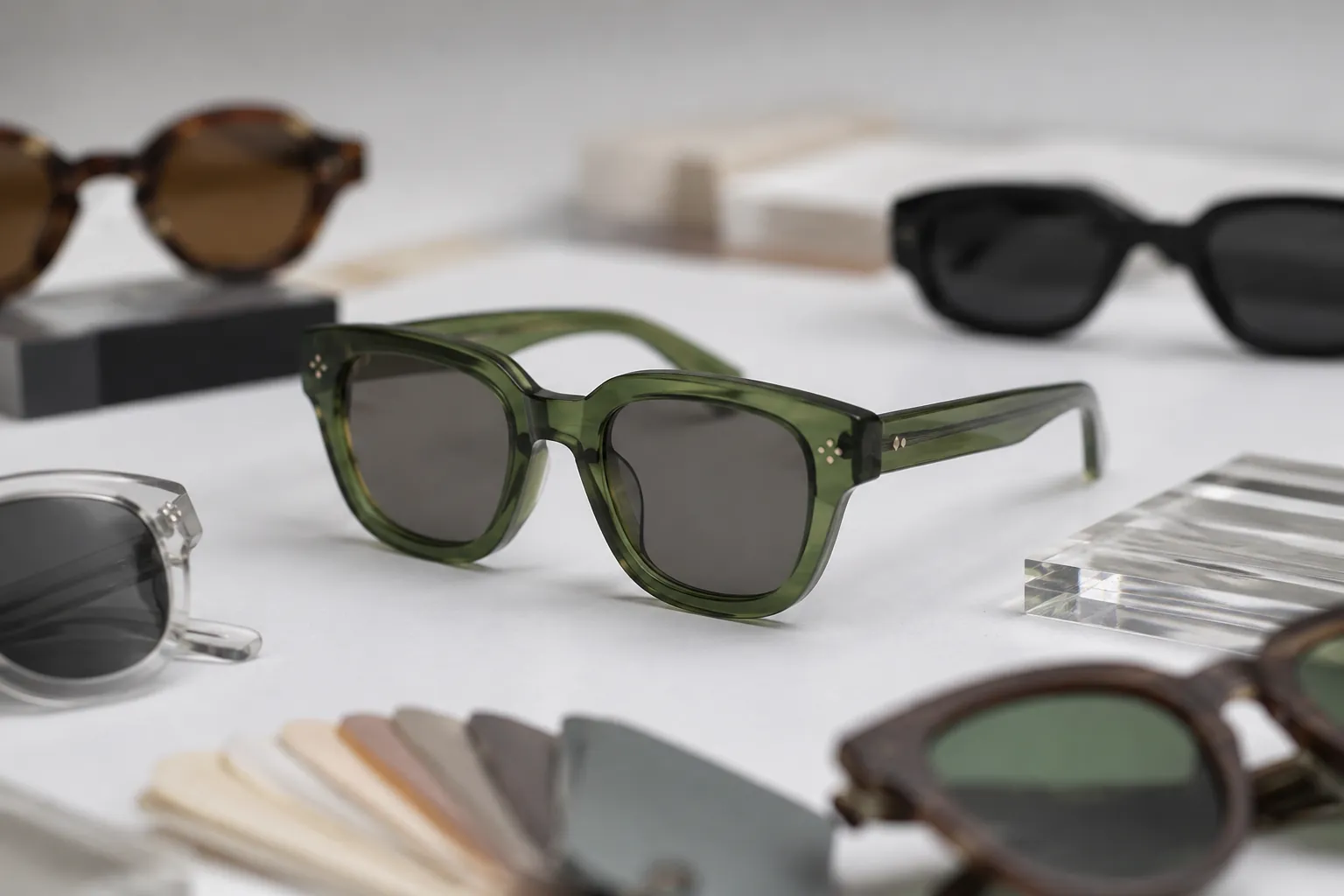
This guide is for brand owners, importers, distributors, and retail buyers sourcing private label sunglasses at volume. One of the most common mistakes is using one specification sheet for two very different jobs: a low-cost promotion and a retail SKU. A giveaway pair is usually built around delivery date, logo visibility, basic wearability, and cost. A retail pair is judged over repeated use for fit, lens consistency, hinge performance, finish, packaging, and return risk. Define the sales channel at RFQ stage. It will save time, cost, and arguments later.
Start with use case, not the logo
Promotional sunglasses and retail sunglasses may share a similar shape, but they should not share the same buying brief. For a campaign giveaway, success is usually simple: hit the event date, control unit cost, make the logo easy to see, and deliver a pair that is wearable and compliant for the destination market. Retail changes the test. The product has to present well on shelf or online, survive repeated opening and closing, keep color consistency across the lot, and avoid preventable returns.
That decision changes factory choices right away. It affects frame material, lens specification, decoration method, packaging format, inspection standard, and carton packing logic. If your RFQ says only custom logo sunglasses, the supplier has to guess what matters. That is how buyers over-spec a promo order or under-spec a retail one.
Order quantity matters too. Lower MOQs can work for tests or small campaigns, but setup cost is spread over fewer units. As volume rises, more packaging, decoration, and component options start to make sense. Start with one blunt question: Will this pair be handed out, or sold and worn repeatedly? Once that answer is clear, the rest of the brief gets easier.
A side-by-side spec framework buyers can actually use
| Spec area | Promotional program | Retail program |
|---|---|---|
| Target use | Event giveaway, campaign activation, short-term brand visibility | Sell-through, repeat wear, lower return risk, stronger presentation |
| Frame material | Injected PC or other commodity plastic, optimized for speed and cost | TR90, higher-grade PC, or acetate based on target retail price point |
| Lens type | Standard tinted lens, compliant for market, limited cosmetic spec | Tighter tint consistency, better optical control, optional polarized TAC or PC lens |
| Decoration | 1-color pad print or simple laser mark | Multi-pass print control, temple engraving, foil detail, or metal logo plate |
| Packaging | PE bag or basic pouch, bulk-packed for freight efficiency | Retail box, barcode label, pouch, insert card, carton assortment control |
| QC focus | Logo position, hinge function, obvious scratch control, count accuracy | Lens cosmetics, hinge alignment, temple symmetry, finish quality, package condition |
| Typical MOQ logic | Often kept simple at low volume to limit setup cost | Usually more economical once volume supports tighter QC and packaging |
| Lead-time priority | Fast sampling and bulk turn for fixed campaign dates | More sample rounds, packaging approval, and tighter QC gates |
This is not a good-versus-bad discussion. It is a fit-for-purpose one. A promo buyer who adds retail specs to a giveaway order often pays for acetate, premium boxes, polarization, or cosmetic standards the campaign does not need. A retail buyer who copies a promo brief often gets frame variation, lens shade inconsistency, weak print durability, or packaging that looks too basic.
- Promo mindset: control cost per impression.
- Retail mindset: control returns, reviews, and perceived value.
- Mixed-use mindset: build a middle spec on purpose, not by accident.
Frame specs: where overbuying and under-specifying start
Frame choice drives both cost and complaint risk. For many promotional programs, injected plastic frames are the practical answer. They are efficient for volume production, support straightforward color matching, and usually offer the lowest cost for logo-first projects.
Retail needs a more deliberate material decision. PC is low cost and impact resistant, but cosmetic quality depends heavily on tooling and molding control. TR90 is lighter and more flexible, which can suit sport or comfort-focused styles. Acetate usually gives better hand feel, richer polish, layered color effects, and stronger perceived value. It also adds time and labor because sheets must be cut, machined, polished, assembled, and fitted with hardware.
For injected frames, do not stop at the material name. Ask for key dimensions, hinge construction, and photos or samples that show molding quality. For acetate, ask for sheet thickness, hardware details, and sample weight. If fit matters, record the actual dimensions on the approved sample and use that sample as the production reference.
For retail programs, define acceptable cosmetic defects in plain language. Keep it concrete. For example: no obvious sink marks on the frame front, no visible twist when the pair is placed on a flat surface, and no rough polishing on acetate edges. Exact tolerances should be agreed with the supplier and written into the purchase order or approved specification sheet, not left to verbal discussion.
- Promotional frame brief: injected frame, standard hinge, logo area sized for visibility, wearable fit, defect control focused on obvious issues.
- Retail frame brief: material grade, fit reference, hinge alignment standard, finish quality, and cosmetic acceptance level.
- Do not skip: lens opening size, bridge width, front width, base curve if relevant, and temple length.
If the product will sit beside other eyewear under retail lighting, buyers notice symmetry, polish, and edge finish fast. Those details matter far less for a short-term giveaway.
Lens specs: compliance is mandatory, optics separate retail
Both channels need compliant sun lenses for the destination market. No exceptions. Depending on where the product will be sold, the relevant standard may include CE EN ISO 12312-1, ANSI Z80.3, or AS/NZS 1067. Chemical compliance may also require REACH. For U.S. imports, buyers sometimes ask about FDA registration. Suppliers should explain clearly what registration applies to their business and should not present FDA registration as a substitute for sunwear performance testing under ANSI Z80.3.
For promotional orders, a standard tinted lens may be enough if it meets the required standard and matches the approved color. For retail, specify more than a generic lens shade. Define the lens category or transmission range for the market, the approved color, whether polarization is required, and the cosmetic standard for the primary viewing area.
If polarization is required, confirm the lens construction and request evidence that bulk production matches the approved sample. If consistency matters across a retail run, ask how tinting is controlled and whether the supplier tests production lots against the applicable standard. Do not assume one test report covers every color or lens construction.
- Set the lens category and target color for the destination market.
- Confirm the exact standard required: CE EN ISO 12312-1, ANSI Z80.3, or AS/NZS 1067 as applicable.
- Approve an actual production-color lens, not just artwork or a screen rendering.
- For retail, define acceptable cosmetic defects in the main viewing area.
Do not add polarization to a giveaway order unless it serves a clear commercial purpose. Do not skip optical and cosmetic controls on a retail program where returns can erase margin fast.
Decoration and packaging: small line items, big cost changes
Logo treatment should match expected wear life. For promotions, pad printing is often the most economical option because setup is simple and one-color branding is efficient. Buyer controls should include print size, location from a fixed reference point, artwork approval, and a basic adhesion or rub-resistance requirement agreed with the supplier.
Retail decoration usually needs better durability and cleaner cosmetics. That can mean tighter pad print control, engraved detail, foil stamping, or metal logo plates. These upgrades add more than unit cost. They can also add handling time, approval steps, and reject risk if placement or finishing is inconsistent.
Packaging is another area where buyers either overspend or create avoidable damage risk. A giveaway pair moving straight from carton to event table may need only a PE bag or basic pouch. A retail pair may need a box, barcode label, insert card, microfiber pouch, and outer-carton assortment rules that match the retailer's receiving process.
| Packaging level | Typical use | Cost/lead-time effect |
|---|---|---|
| PE bag | Mass promo, event handout, freight-efficient bulk orders | Lowest cost, fastest packing, least protection for shelf presentation |
| Soft pouch | Mid-tier promo or e-commerce add-on | Moderate cost, better perceived value, limited crush protection |
| Retail box + barcode | Store shelf, marketplace fulfillment, branded launch | Higher cost, more approvals, more carton volume, better presentation |
If the product is moving directly from carton to event table, retail-style boxes are usually wasted cost. If it is going to a shelf or into an e-commerce unboxing flow, bulk packing is often false economy.
When reviewing packaging, ask for the full pack-out specification: what is inside each unit pack, how many units per inner or master carton, barcode format, shipping marks, and whether the packaging has been drop-tested or transit-checked for your route if that matters to your program.
Durability, QC, and the failure modes to write into the PO
Most preventable disputes come from specs that were obvious in the buyer's head and missing from the paperwork. Promo and retail orders should not use the same QC language.
For promotional orders, focus on the basics: correct logo, pair count, color reasonably matching the approved sample, hinges opening and closing without obvious failure, no major scratches in the lens viewing area, and transit-safe packing. For retail, add tighter checks for lens cosmetics, front and temple alignment, opening and closing feel, finish quality, and packaging condition.
Useful retail checks include whether the frame sits level, whether the temples close evenly, whether left and right lenses match in appearance, whether glossy areas show obvious molding defects, and whether acetate edges are fully polished. The purchase order should also state the inspection stage, such as in-line inspection, final pre-shipment inspection, or a third-party pre-shipment check.
- Common promo failure modes: wrong logo position, print rub-off, mixed colors in one carton, rushed packing causing rub marks.
- Common retail failure modes: uneven temple angle, lens tint mismatch, rough acetate finishing, visible molding defects, damaged retail boxes.
- PO must state: golden sample reference, packaging standard, inspection point, carton pack count, and rework responsibility.
Supplier management systems matter here. ISO 9001 can indicate that the factory works within a documented quality-management system, and BSCI is often relevant where buyers need social compliance review of the supply chain. Neither replaces product inspection. Both can help during supplier qualification.
MOQ, cost, and lead-time logic by program type
Buyers often ask for a retail-looking product at promo pricing with campaign timing. That rarely works. Cost and lead time move with process complexity. A simple injected frame with standard tint and one-position pad print is a very different manufacturing job from an acetate frame with polarized lenses, metal logo plates, a custom retail box, barcode labels, and insert cards.
Lead time depends on material availability, lens color development, artwork approval, packaging complexity, production scheduling, and inspection requirements. These factors vary by factory and season, so ask for a written timeline covering sample development, sample approval, bulk production, packaging production if separate, and final inspection. The schedule should also state what happens if artwork, lens tint, or packaging changes after approval.
Order size changes the economics. At lower volumes, setup charges, mold use, print setup, and packaging development are spread across fewer units, so simple builds usually make more sense. At higher volumes, more refined packaging and decoration are easier to justify because fixed costs are amortized across more pairs.
- Best use of low MOQ: market test, concept check, influencer drop, internal preview, or event pilot.
- Best use of mid-volume: practical promo campaign, regional launch, or controlled retail trial.
- Best use of higher volume: established SKUs, national promotion, or planned retail replenishment.
Remember that low ex-factory price is not the same as low landed cost. Premium packaging increases carton volume. Too many color splits reduce packing efficiency. Complex decoration can increase reject rates. Ask a better question: What combination of specification, yield, packaging, and freight gives the lowest total cost for this channel?
A practical checklist before production approval
Use this checklist before sample sign-off and again before bulk release. It catches many of the issues that later turn into claims.
- Define the sales channel: event giveaway, retail shelf, e-commerce, or mixed use.
- Lock the frame build: material, color, hinge type, and key dimensions.
- Lock the lens requirement: color, category, compliance standard, and polarization yes or no.
- Approve decoration: method, size, placement, color reference, and adhesion expectation.
- Approve packaging: PE bag, pouch, box, barcode, insert, and carton pack count.
- Set QC points: cosmetic standard, hinge function, alignment, packaging condition, and inspection stage.
- Confirm commercial terms: MOQ by design, unit price by volume break, sample lead time, bulk lead time, and approval deadline.
Ask the supplier to attach the following to the final approval file: approved artwork, approved sample photos, packaging layout, carton markings, applicable compliance reports, and any supplier certifications you require such as ISO 9001 or BSCI. If the product is for the EU, U.S., or Australia/New Zealand markets, make sure the test reports match the actual frame and lens construction you are buying.
For overseas buyers sourcing from Wenzhou or other eyewear clusters, the advantage is often process depth and speed. But a vague brief wastes that advantage. Good sourcing is not just finding a factory that can make sunglasses. It is choosing the right specification for the actual channel, margin target, and customer expectation.
Have a custom sunglasses project in mind?
Send us your styles, target market and quantities and we will return a detailed quote with MOQ, lead time and a sample plan.
Get a QuoteWhy source this from Wenzhou with LumiShades
Wenzhou in Zhejiang Province is widely regarded as China’s eyewear manufacturing capital, producing a large share of the world’s sunglasses. That concentration matters to buyers: a deep local supply chain for acetate sheet, hinges, lens blanks, plating and packaging means shorter component lead times, easier color and material matching, and a workforce with decades of eyewear-specific skill. LumiShades has manufactured in this ecosystem since 2009, and our vertical integration — in-house injection molding, acetate cutting, CNC milling, lens tinting, decoration and quality control — means no part of your order is quietly subcontracted to a workshop you cannot audit.
For international buyers, that vertical control translates into accountability. When a single factory owns every step, defects are traced and fixed at source rather than bounced between vendors, and your specifications survive intact from first sample to bulk. We back this with 15+ years of experience, shipments to 60+ countries, more than 5 million pairs produced per year and a 98.5% on-time delivery rate. Our certifications — CE EN ISO 12312-1, FDA registration, ANSI Z80.3, AS/NZS 1067, REACH, ISO 9001 and BSCI audit — mean the compliance documentation your market requires already exists. Explore our manufacturing capabilities and quality control process to see how this works in practice.
Frequently asked questions
Can I use the same sunglasses spec for both giveaways and retail stores? You can, but it is usually a compromise. Promotional programs typically prioritize cost, speed, simple decoration, and freight-efficient packing. Retail programs usually require tighter cosmetic standards, more consistent lens appearance, stronger packaging, and better perceived value. If one style must serve both channels, create a written mid-spec that defines the minimum acceptable frame finish, lens standard, decoration durability, and packaging format. Do not simply use the cheaper brief and hope it performs at retail.
What is the minimum order for a custom design? Minimum order quantity depends on the factory, frame construction, and level of customization. Ask the supplier for MOQ by <strong>frame color</strong>, <strong>lens color</strong>, <strong>logo method</strong>, and <strong>packaging type</strong>, not just MOQ per style. A low stated MOQ can still become impractical if custom packaging or multiple color splits trigger higher setup costs. To compare quotations properly, request a table showing MOQ and unit price at several volume breaks.
How long do samples and bulk production usually take? There is no single industry-wide lead time. Timing depends on whether the frame uses an existing mold or new tooling, whether the lens color is standard or custom, whether packaging is simple or retail-grade, and how many approval rounds are needed. Ask the supplier for a milestone schedule covering sample preparation, approval, packaging development, bulk production, inspection, and shipment readiness. Also ask which steps reset the timeline if you change artwork, lens tint, or packaging after approval.
Which compliance documents should I ask for? Ask for documents that match your destination market and the actual product you are buying. That may include <strong>CE EN ISO 12312-1</strong> for the EU, <strong>ANSI Z80.3</strong> for the U.S., <strong>AS/NZS 1067</strong> for Australia/New Zealand, and <strong>REACH</strong> where chemical compliance is relevant. If the supplier mentions <strong>FDA registration</strong>, ask them to explain exactly what is registered and why it is relevant, because FDA registration is not the same as compliance with sunglass performance standards. Always verify that the report references the same frame and lens configuration, not a different sample or generic style.
When does acetate make sense instead of injected plastic? Acetate usually makes sense when the product is intended for retail and the brand needs better hand feel, richer polish, layered color effects, and stronger perceived value. It is less suitable for cost-driven giveaways because it involves more labor and usually a higher unit price. Before choosing acetate, ask whether the target retail price, margin, and expected sell-through actually support the upgrade. If not, a well-controlled injected PC or TR90 frame may be the better commercial decision.
Ready to start?
Explore our cat-eye sunglasses or request a quote — our sales team replies within 12 hours.
Request a Quote