
How to Split 50, 300 and 1,000 Pair Sunglasses SKUs
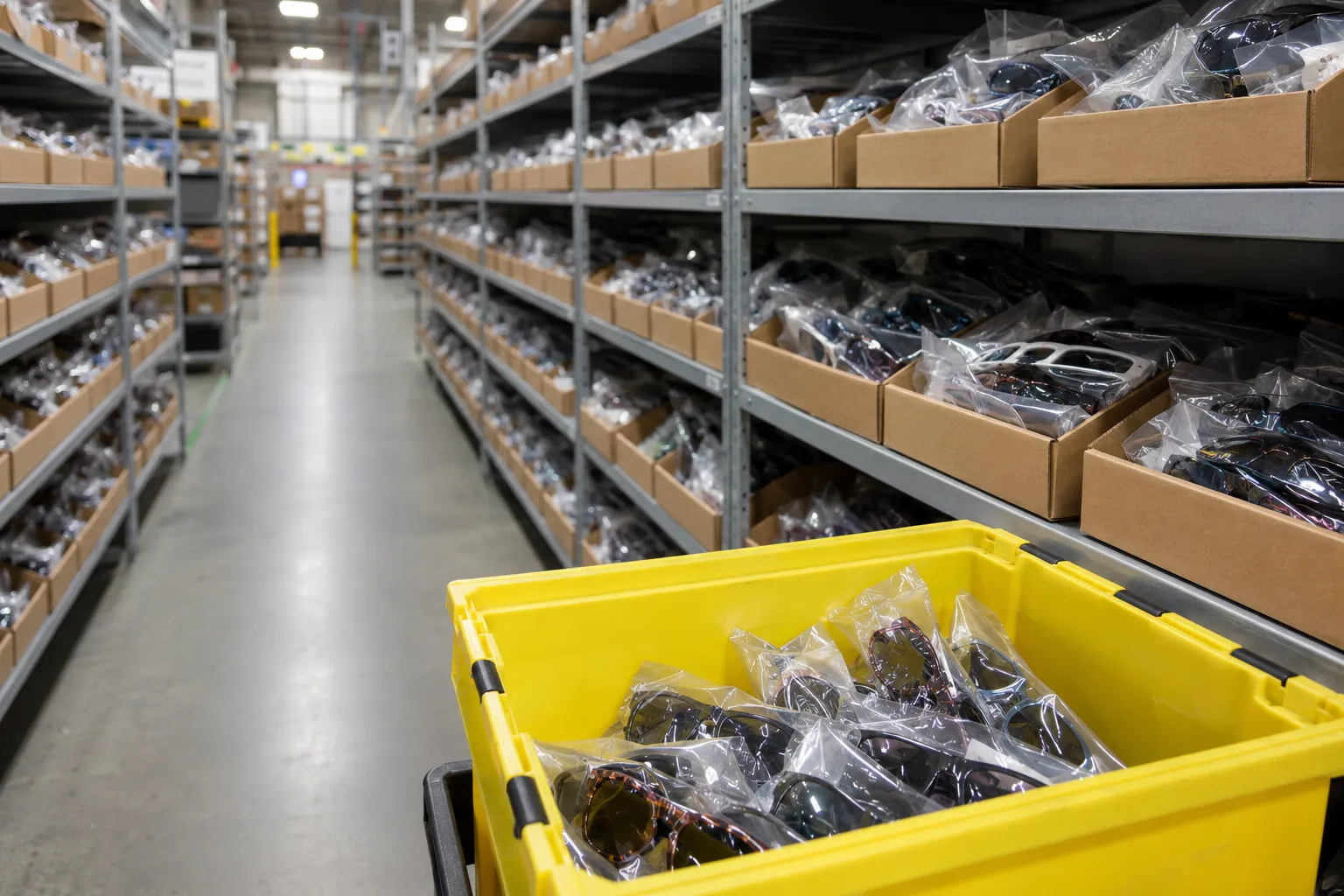
Brand owners, importers, distributors and retail buyers often want variety without letting every custom sunglasses SKU damage the margin. Equal quantities are rarely the right answer. A better structure is a ladder: 50-pair trial designs, 300-pair commercial tests and 1,000-pair proven winners inside one purchasing plan. This article shows how to assign each SKU a role, control setup cost, choose decoration methods that fit the quantity, protect lead time and write specifications a factory can quote and produce with fewer assumptions.
Start With SKU Roles, Not Equal Quantities
A mixed sunglasses order breaks down fast when every design gets the same quantity, development effort and margin target. A 50-pair translucent fashion color is not the same decision as a 1,000-pair black core frame. Before asking for a quote, give each SKU a job: test, prove or scale.
Use 50 pairs per design for controlled testing: seasonal colors, influencer drops, event merchandise, retail pilots, uncertain lens tints and new shapes with no sell-through history. The unit price will usually be high. Setup, color approval, decoration preparation and inspection are spread across very few units. That is the point. You are buying market feedback, not efficient unit economics.
Use 300 pairs for SKUs with a defined channel but limited demand history: a distributor test, marketplace launch, resort shop program, first wholesale run or reorder candidate with uncertain depth. At 300 pairs, production planning usually gets easier because the factory can organize material use, decoration setup and packing with less fragmentation.
Use 1,000 pairs for proven winners: core colors, repeat silhouettes, private label basics, corporate program styles and sunglasses that can carry more than one sales season. At this level, consistency, carton planning and defect control matter more than experimentation.
Practical rule: ten 50-pair SKUs are not the same as one 500-pair production run. They are ten setups, ten color approvals, ten packing counts and often ten separate QC points. Low-MOQ variety only works when the SKU structure stays disciplined.
The Quantity Ladder and Cost Logic
Small-batch flexibility can help, but each quantity band needs a clear purpose. A 50-pair SKU is usually a test. A 300-pair SKU is usually a first commercial run. A 1,000-pair SKU should carry margin and justify tighter process control.
The cost curve usually improves as quantities rise because setup cost, material purchasing, decoration preparation and inspection time are spread across more units. The exact result still depends on frame material, lens type, packaging and logo method.
| SKU quantity | Best use | Cost behavior | Process warning |
|---|---|---|---|
| 50 pairs | Color test, market sample, event drop, new shape validation | Highest unit cost because setup, color approval, sorting and QC are spread over few units | Keep decoration simple; custom tools, special tints or complex packaging can outweigh the commercial value of the SKU |
| 300 pairs | First commercial run, distributor test, retail pilot | Often the first quantity where pricing becomes more workable for custom production | Freeze frame color, lens category and logo position early or the SKU may miss the planned production slot |
| 1000 pairs | Core SKU, repeat seller, private label standard | Better margin potential because planning and material usage are usually more efficient | Write defect criteria clearly because one repeated issue can affect a large share of the run |
| 5000+ pairs | Promotion program, chain retail, distributor reorder | Usually the most efficient cost band for stable specifications | Lock compliance documents, carton marks, barcode data and shipment plan before bulk production starts |
Do not average the whole PO too early. Price 50-pair SKUs as research, 300-pair SKUs as market entry and 1,000-pair SKUs as margin protection. Each quantity level should carry the right commercial burden. No more.
Build One PO Around Shared Components
The cleanest way to mix 50-, 300- and 1,000-pair SKUs is to reduce hidden variation. Vary frame color, lens tint and logo color while keeping the base mold, hinge type, temple geometry, lens base curve and packaging format stable. The factory gets a more predictable production flow. QC becomes easier to compare across SKUs.
Shared specifications do not replace a tight spec sheet. They do reduce the number of variables that can fail at the same time.
- Keep the frame platform common: one injection mold or one acetate shape across several colorways will usually quote and run better than five unrelated shapes.
- Control lens categories: mixing category 1 fashion tint, category 3 sun lens and polarized lenses in one small batch increases testing, sorting and labeling pressure.
- Standardize packaging: one pouch, one box size and one barcode label format can save time during packing and carton marking.
- Use decoration tiers: laser engraving for 50-pair tests, pad printing for 300-pair runs and metal logo plates only where quantity and price position justify the added setup and inspection.
- Limit hardware variation: do not change hinge color, screw finish, nose pad type and temple tip color for every SKU unless the retail price can carry that complexity.
A workable mixed PO might use one injected frame platform in black, tortoise and translucent smoke. Black gets 1,000 pairs, tortoise gets 300 and smoke gets 50. The mold, hinge, lens curve, pouch and carton format stay shared. Only the color and SKU labels change. That is factory-friendly assortment planning.
Specify Material Behavior and Tolerances
Small SKUs expose vague specifications. If the buyer writes only "black frame, grey lens, logo on temple," the factory has to interpret too much. Better specs define material, finish, measurable controls and inspection points.
For injected PC, TR90 or similar thermoplastic frames, ask for controls on flash, gate marks, sink marks, temple alignment and hinge screw seating. Measure frame front width against the approved sample using an agreed tolerance. Check temple opening symmetry so the frame does not sit visibly twisted. The factory should confirm the final tolerance based on material behavior, mold condition and frame construction.
For acetate frames, expect natural sheet variation. Tortoise, crystal and laminated sheets will not repeat like injected plastic. The right control is not "identical pattern." Use an approved sheet reference, an acceptable color range and clear rejection rules for obvious blotches, uneven lamination, poor polishing or visible glue lines. Acetate also needs attention to lens groove fit, temple balance and polishing around the bridge and end pieces.
For lenses, specify material, filter category, color reference, UV claim, polarization if applicable and any required visible light transmission range. A grey category 3 sun lens is not the same product as a light fashion tint. If polarized lenses are used, include polarization orientation consistency and basic visual distortion checks in QC. If the product is sold into regulated markets, the compliance file should match the exact frame-and-lens combination being shipped, not only a style family name.
Match Decoration Method to Quantity
Decoration is where low-volume sunglasses orders often lose discipline. The buyer sees a small logo detail. The factory sees plates, positioning, color matching, adhesion checks, rejection risk and packing segregation.
| Decoration method | Best quantity fit | Typical advantage | Main risk |
|---|---|---|---|
| Laser engraving | 50 pairs and above | No ink color matching; practical for small tests and subtle temple marks | Low contrast on some translucent or dark materials unless tested first |
| Pad printing | 300 pairs and above | Good logo visibility; practical for one-color temple or lens marks | Plate setup, ink adhesion and position tolerance must be checked |
| Hot stamping | 300-1000 pairs | Useful for metallic logo effects on cases, pouches or selected temples | Foil wear and inconsistent pressure can create uneven marks |
| Metal logo plate | Usually 1000 pairs and above | Premium retail feel for private label core styles | Tooling, plating approval, attachment tolerance and durability checks add complexity |
For a 50-pair SKU, laser marking or a shared one-color pad print is usually the practical choice. For a 300-pair SKU, pad printing makes more sense if the logo size, position and color are already locked. For a 1,000-pair SKU, a metal plate can work, but only if the brand accepts the tooling, approval and inspection steps.
Specify logo position in millimeters from a stable reference point, such as the front hinge edge or temple tip. Do not use loose phrases like "near the hinge." Ask for an approved production sample or a clearly referenced pre-production approval before bulk decoration starts.
Plan Lead Time Around the Real Bottlenecks
Mixed-volume orders need a calendar that protects high-volume SKUs from small experimental details. Actual lead times vary by season, factory load, materials, tooling and approval speed. Ask for a written timeline tied to the specific PO. Generic promises are weak planning tools.
- Confirm the SKU ladder before sampling: mark every design as 50, 300 or 1,000 pairs.
- Approve the shared frame platform first: mold, acetate shape, hinge, lens base curve and temple fit.
- Approve decoration separately: laser mark, pad print position, logo plate size or temple badge.
- Freeze destination-market requirements: CE EN ISO 12312-1, ANSI Z80.3, AS/NZS 1067, REACH or FDA registration as applicable.
- Separate must-have approvals from nice-to-have details. Do not hold a 1,000-pair black SKU because a 50-pair translucent color needs one more shade adjustment.
- Lock carton marks, barcode labels, inner packing and shipping method before bulk materials are ordered.
A change after sample sign-off is rarely just a note. It can trigger new material purchasing, decoration remake, relabeling or revised QC criteria. In mixed orders, small SKUs often feel the pain first. Larger SKUs can also lose their production slot if shared components are not already frozen.
Set QC Rules for Uneven Quantities
QC should reflect both volume and risk. A 50-pair SKU can be inspected heavily without much labor burden. A 1,000-pair SKU needs structured sampling because even a modest defect rate can become a carton-level problem.
For 50-pair test SKUs, inspect visible finish, lens scratches, logo placement, hinge tension, temple alignment, pouch or box condition and packing count. These units often go to retailers, influencers or first customers. Cosmetic presentation matters.
For 300-pair SKUs, add consistency checks across cartons: frame color variation, temple opening angle, lens tint match, pad-print adhesion, barcode accuracy and carton quantity. A distributor or retail chain will notice if the same SKU looks different from one location to another.
For 1,000-pair SKUs, define acceptance criteria before production. Include lens category, UV or polarization claim, optical distortion check, frame symmetry, screw tightness, hinge function, handling checks where relevant, pouch or box condition and carton labeling. If sunglasses are sold into regulated markets, keep test reports and compliance files tied to the exact lens and frame combination shipped.
If a supplier operates under ISO 9001 or has undergone a BSCI audit, that can support process confidence. It does not replace order-specific inspection. Buyers should still request a pre-shipment inspection report matched to the PO: SKU, color, ordered quantity, inspected quantity, defect type, photos, carton count and pass/fail result. "Quality checked" is not a report.
Use a Working Order Structure
Here is a practical structure for a brand testing a summer line while protecting margin on proven sellers. The total PO has 2,350 pairs across four active SKU groups, but the logic is not equal quantity. The order uses shared frames, controlled decoration and different volume levels based on sales confidence.
| SKU group | Quantity plan | Spec strategy | Decision after sell-through |
|---|---|---|---|
| Core black square | 1000 pairs | Shared mold, category 3 grey lens, one-color temple logo, standard pouch | Consider a larger reorder only if sell-through, returns and defect rate remain stable |
| Tortoise square | 300 pairs | Same mold, same lens category, color approved by master sample | Move to 1000 pairs if retail feedback is strong and repeat demand is clear |
| Transparent grey square | 50 pairs | Same mold, laser logo, no special box, clear color tolerance agreed | Drop or repeat at 300 pairs based on actual demand |
| Core black aviator | 1000 pairs | Shared pouch, stable lens tint, stricter hinge and screw inspection | Keep as a core margin SKU if returns remain low |
This structure lets low-MOQ testing and higher-volume winners sit inside one supplier relationship. The buyer gets assortment variety without forcing every design to carry full development cost. The factory gets enough repeatable volume to plan production cleanly.
The final check is simple. Every 50-pair SKU should answer a market question. Every 300-pair SKU should have a defined sales channel. Every 1,000-pair SKU should defend margin. If a SKU does none of those jobs, remove it before the PO is issued.
Have a custom sunglasses project in mind?
Send us your styles, target market and quantities and we will return a detailed quote with MOQ, lead time and a sample plan.
Get a QuoteWhy source this from Wenzhou with LumiShades
Wenzhou in Zhejiang Province is widely regarded as China’s eyewear manufacturing capital, producing a large share of the world’s sunglasses. That concentration matters to buyers: a deep local supply chain for acetate sheet, hinges, lens blanks, plating and packaging means shorter component lead times, easier color and material matching, and a workforce with decades of eyewear-specific skill. LumiShades has manufactured in this ecosystem since 2009, and our vertical integration — in-house injection molding, acetate cutting, CNC milling, lens tinting, decoration and quality control — means no part of your order is quietly subcontracted to a workshop you cannot audit.
For international buyers, that vertical control translates into accountability. When a single factory owns every step, defects are traced and fixed at source rather than bounced between vendors, and your specifications survive intact from first sample to bulk. We back this with 15+ years of experience, shipments to 60+ countries, more than 5 million pairs produced per year and a 98.5% on-time delivery rate. Our certifications — CE EN ISO 12312-1, FDA registration, ANSI Z80.3, AS/NZS 1067, REACH, ISO 9001 and BSCI audit — mean the compliance documentation your market requires already exists. Explore our manufacturing capabilities and quality control process to see how this works in practice.
Frequently asked questions
Can I mix 50-pair and 1,000-pair sunglasses designs in one PO? Yes, if you control variation. Keep shared components wherever possible: the same frame mold or shape, hinge type, lens category, packaging format and logo location. In the PO and spec sheet, list each SKU separately with its quantity, color code, lens specification, decoration method, barcode and packing requirement. Ask the factory to confirm which components are shared and which require separate setup so the real complexity is visible.
Will 50-pair custom sunglasses get the same unit price as 1,000 pairs? No. A 50-pair SKU usually carries much higher setup, sorting and inspection cost per unit. Use that quantity to test demand, color acceptance or a new shape, not to benchmark long-run margin. When requesting quotes, ask for pricing by SKU and by quantity tier rather than one blended average. That makes it easier to decide which styles deserve 300-pair or 1,000-pair follow-up orders.
What should I sample before approving a mixed-volume sunglasses order? Approve the parts that can cause rework later: frame fit, frame color, lens color and category, logo method, logo position, packaging, warning labels and any compliance markings required for the destination market. Use a sample approval form or marked reference photos so the supplier is not working from informal chat comments. If one frame platform supports several SKUs, approve the shared platform first, then sign off the colorways and decoration details separately.
Which tolerances should I include in a sunglasses spec sheet? Include measurable controls tied to the approved sample. Common items are overall front width tolerance, temple length, temple alignment, logo position in millimeters from a fixed reference point, lens category, lens color reference, hinge function and acceptable cosmetic defects. For acetate, define acceptable sheet variation instead of demanding identical pattern repeat. Ask the factory to confirm the tolerances it can hold for that material and construction, then keep those values in the final PO pack.
Which compliance standards should I mention on the spec sheet? State the destination market first, then list the required standard or regulatory requirement that applies to that shipment: CE EN ISO 12312-1, ANSI Z80.3, AS/NZS 1067, REACH or FDA registration, as applicable. Do not list every standard by default, and do not treat them as interchangeable. Ask the supplier to identify which documents already exist for the exact frame-and-lens combination and which tests or registrations are still needed before shipment.
How do I stop small SKUs from delaying the whole order? Split approvals into shared components and experimental details. Lock the common frame platform, lens category, packaging and compliance requirements first so higher-volume SKUs can move forward. Then isolate unresolved 50-pair issues such as a fashion color adjustment or a special logo finish. In practice, this means setting an approval deadline for core SKUs and documenting which small-batch changes will be postponed to a later run if they are not resolved in time.
Are metal logo plates practical on low-MOQ sunglasses? Usually not at 50 pairs. Metal plates often add separate tooling, plating approval, attachment checks and a higher cosmetic rejection risk. For low-volume tests, laser engraving or simple pad printing is usually easier to control. If you still want a metal plate on a smaller run, ask the supplier for the exact added steps: tool charge, minimum order impact, attachment method, plating reference and inspection standard. Then judge whether the branding effect is worth the extra process burden.
Ready to start?
Explore our round sunglasses or request a quote — our sales team replies within 12 hours.
Request a Quote