
Specify UV400 Sunglasses Without Wasting Money
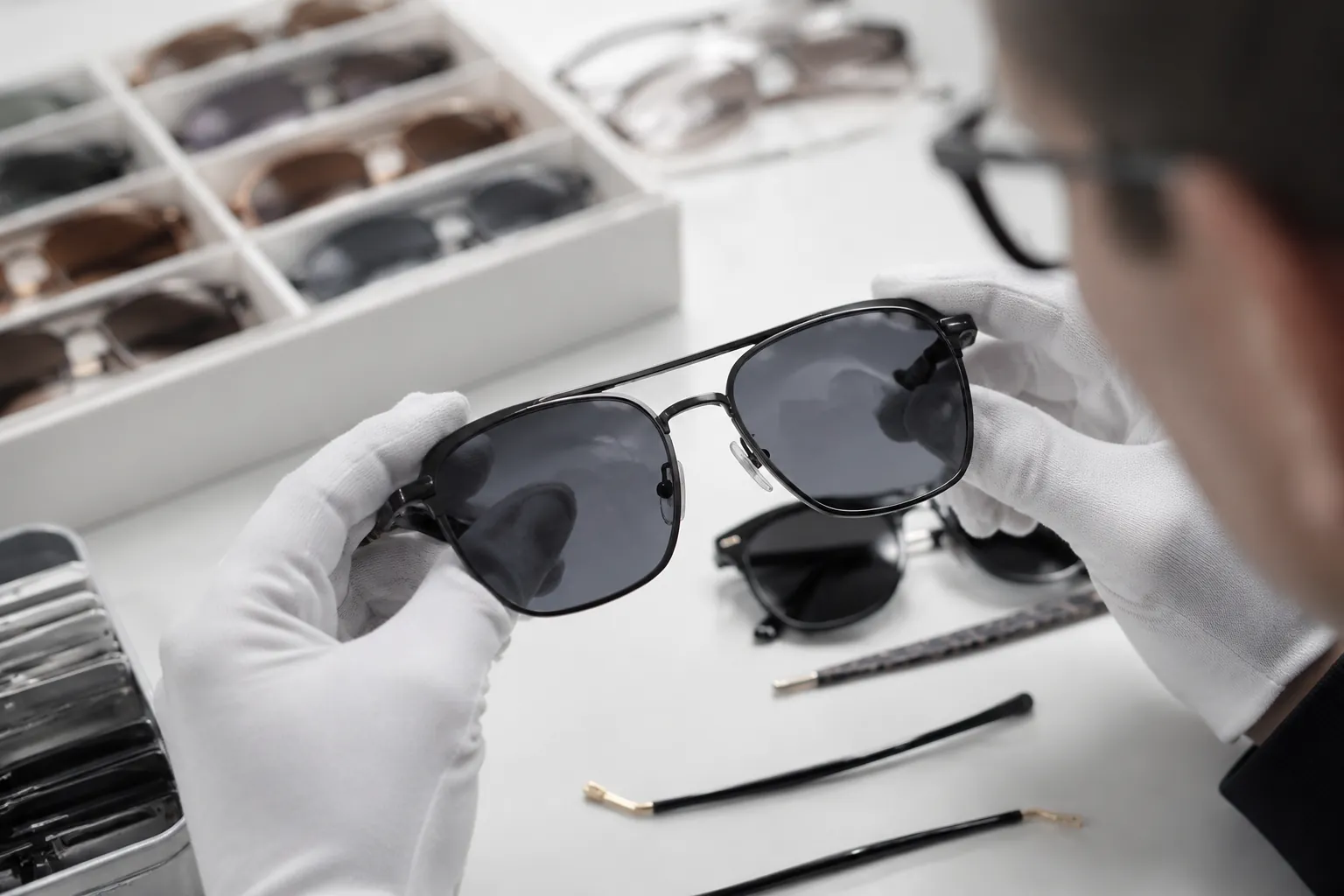
This guide is for brands, importers, distributors, and retailers buying custom sunglasses in volume. It explains what UV400 should mean on a purchase order, how to verify it during sampling and production, and which lens upgrades are worth the cost. The goal is simple: write clearer specifications, reduce compliance risk, and stop paying for features that do not fit the target price point or sales market.
Start With a Measurable UV400 Requirement
UV400 means the lens is intended to block ultraviolet radiation up to 400 nm, covering both UVA and UVB. It does not mean the lens is dark. A dark lens can still fail on UV protection if the material or absorber system is poor. A lighter tint can still meet UV400 if the lens is made correctly.
Write UV400 on the purchase order as a testable requirement, not a sales phrase. Use wording such as: Lenses must provide UV protection up to 400 nm and comply with the applicable sunglass standard for the destination market. Then name the standard. For the EU, use EN ISO 12312-1. For the United States, use ANSI Z80.3. For Australia and New Zealand, use AS/NZS 1067.
Also state the lens category or visible light transmission range. Do not leave it open. Under EN ISO 12312-1, category 3 lenses are common for strong sunlight. Category 4 lenses are darker and not suitable for driving. If category and VLT are not defined, the factory may deliver a lens that looks fine but does not suit the end use.
Do not treat a UV400 print on the temple, sticker, or hangtag as proof. It is only labeling. Compliance depends on lens material, additives, tinting, coating, and test performance against the correct standard. Ask for product-specific test documents that match the lens type, category, and destination market.
Choose Lens Material Before Tint Color
Many buyers start with color: smoke, brown, green, gradient, mirror. That is backwards. Start with lens material. Then choose tint, coating, and marking. Material affects impact behavior, weight, optical quality, processing limits, scratch sensitivity, and cost.
| Lens option | Typical thickness | Best use | Buyer notes | Cost impact |
|---|---|---|---|---|
| AC lens | Commonly around 1.8-2.0 mm | Budget fashion and promotional sunglasses | Low cost and easy to tint. Usually less impact resistant than PC and generally not preferred where tougher performance positioning is needed. | Low |
| PC lens | Commonly around 1.8-2.2 mm | Kids, sport-inspired, travel retail, general fashion | Lightweight and widely used. Hard coating is often worth considering where scratch complaints would be commercially damaging. | Low to medium |
| TAC polarized lens | Laminated construction; thickness depends on build | Driving, fishing, boating, outdoor retail | Offers a clear consumer benefit through glare reduction. QC should check polarization consistency, lamination quality, and edge finishing. | Medium |
| Nylon lens | Varies by design and performance target | Higher-end sport and performance sunglasses | Often selected for more technical applications. Usually unnecessary for low-price fashion programs unless the brand positioning justifies it. | High |
For low-cost giveaways, UV400 AC or PC may be enough if the finished product passes the correct market standard. For mid-market retail, PC with hard coating or TAC polarized often gives a better value story. For premium sport, nylon may make sense. But only if the rest of the product supports it. That includes frame design, assembly quality, packaging, and retail presentation.
Write a Lens Spec the Factory Can Actually Build
A usable lens specification should fit on one page and leave little to interpretation. If the buyer writes only "UV400 smoke lens," the supplier still has to guess the material, darkness, category, coating, logo placement, and test basis. That guesswork costs time. It also causes sample revisions.
- Material: AC, PC, TAC polarized, nylon, or other agreed material.
- UV requirement: UV protection up to 400 nm, with the destination standard named.
- Filter category: category 0, 1, 2, 3, or 4 where relevant.
- VLT target: state a buyer-approved range or target appropriate to the category and use case.
- Tint: solid, gradient, two-tone, flash mirror, or full mirror, with a reference sample or color standard.
- Coatings: hard coating, mirror, anti-reflective, oleophobic, hydrophobic, or none.
- Polarization: yes or no, with orientation requirements confirmed against the approved sample if relevant.
- Marking: brand logo, CE marking where applicable, category marking, warnings, SKU, barcode, and importer or country-specific requirements.
- Tolerance: define acceptable cosmetic limits, lens fit, logo position, and color variation before mass production.
Then check the lens specification against the frame design. Wraparound frames need proper lens seating without stress marks, gaps, or distortion from poor fit. Thick acetate frames need the right groove and bevel match. "Good fit" is not enough. Push the supplier to define measurable acceptance criteria during sample approval, then carry those same criteria into bulk QC.
Control Coating Spend by Retail Position
Coatings are an easy place to overspend. A mirror finish may look good in photos, but if the base lens and packaging are basic, scratch complaints can show up fast. Anti-reflective coating can add value on better-positioned sun lenses. On low-cost promotional product, it often does not pay back. The same goes for oleophobic coating. Nice feature. Often weak economics.
| Retail positioning | Recommended lens build | Usually avoid | Reason |
|---|---|---|---|
| Promo or event | UV400 AC or PC, solid tint, simple logo print | Polarized lenses and multiple premium coating layers | Priority is price, speed, and basic compliance. |
| Mass fashion retail | UV400 PC, optional hard coating, gradient or solid tint | High-cost nylon unless the product concept requires it | Appearance, fit, and acceptable scratch performance matter more than technical optics claims. |
| Outdoor or driving | UV400 polarized lens with controlled category and VLT | Category 4 positioning for driving | Glare reduction is a clear feature, but category and warning control are critical. |
| Premium sport | UV400 PC or nylon, hard coating, controlled optics | Mirror-only upgrades without performance justification | Fit, durability, and visual comfort are more relevant than cosmetic add-ons alone. |
Spend first on compliance, lens fit, hinge function, screw security, and basic surface durability. Those issues get noticed. Fast. Loose temples, scratches, lens rattle, and peeling decoration do more damage than skipping a coating term on the spec sheet.
Specify Decoration and Marking Early
Decoration affects cost, lead time, and production risk. A logo that works on a flat acetate temple may fail on a curved injection-molded temple. A metal logo plate can improve perceived value, but it also adds tooling, placement control, and assembly steps. Late decoration changes create knock-on problems in artwork, fixtures, labels, and packaging.
| Method | Best use | Typical tolerance target | Production caution |
|---|---|---|---|
| Pad printing | Temple logos, small marks, promo orders | Position tolerance to be agreed on approved sample and artwork | Check adhesion after handling and packing friction. |
| Laser engraving | Metal parts, acetate temples, subtle branding | Position tolerance to be agreed on stable surfaces | Contrast depends on substrate color and finish. |
| Hot stamping | Gold or silver fashion logos | Position tolerance to be agreed on approved sample | Foil may break or distort on sharp curves or textured areas. |
| Metal logo plate | Premium acetate or TR styles | Position tolerance to be agreed with fixture method | Requires early confirmation of plate size, finish, and fixing method. |
Marking is not just branding. For regulated markets, confirm warning text, category information, importer details where required, SKU, barcode, and country-of-origin rules before final sample approval. A product can look correct and still fail inspection because the labels are wrong.
Match Compliance to the Sales Market
Compliance is market-specific. It is not universal. For the EU, sunglasses are commonly assessed against EN ISO 12312-1 and supported by the relevant CE documentation. For the United States, ANSI Z80.3 is the common reference for non-prescription sunglasses, and FDA registration may matter depending on product classification and import route. For Australia and New Zealand, AS/NZS 1067 is the key standard. REACH may also apply for materials and chemical substances in products sold into Europe.
Tell the factory the destination market before sampling is finalized. This affects warning language, category marking, test requirements, documentation, and sometimes the commercial logic of the chosen lens. Category 4 lenses are a clear example. They may suit very bright conditions, but they are not suitable for driving and require clear warnings.
When you review documents, look for a close match to the actual product ordered: lens type, category, construction, and sales market. Be careful with generic or outdated reports. They may refer to a different style, different lens build, or an old batch that does not represent current production.
If a supplier says it operates under ISO 9001 or has completed a BSCI audit, verify the current status and scope. Those systems can support management and social compliance review. They do not replace product-level sunglass testing.
Sampling and Bulk QC Process
Samples are not just for photos or internal sales review. They set the technical benchmark for bulk production. Use the sample stage to lock appearance, fit, lens color, decoration, markings, and the compliance document path before mass production starts.
- Confirm frame drawing, material color, lens material, tint reference, and coating build.
- Check the sample under more than one lighting condition. Gradient and mirrored lenses can look different indoors, outdoors, and on-face.
- Request confirmation that UV performance and other relevant lens properties will be tested against the named market standard.
- Check lens fit: no rattle, no excessive insertion stress, no visible edge gap, and no whitening or cracking caused by assembly.
- Inspect decoration by normal handling, rubbing, repeated temple opening and closing, and packing simulation.
- Approve packaging and markings together with the product, including CE-related labeling where applicable, category information, warnings, barcode, and carton labels.
For polarized lenses, check both lenses for consistent polarization using an appropriate tester or a simple polarized-screen check as a preliminary method. That is only a first check. Final compliance decisions should still rely on agreed QC procedures and, where needed, formal testing.
Bulk lead time depends on order size, material availability, decoration complexity, and packaging. During production, QC should cover incoming materials, tint consistency, frame dimensions, lens insertion quality, hinge function, screw security, alignment, surface appearance, and final packing accuracy. The inspection method should also define viewing distance, lighting, and acceptance criteria. That reduces cosmetic disputes before shipment.
MOQ, Price, and Lead-Time Logic
MOQ, unit price, and lead time move together. Small runs are useful for market tests, limited drops, buyer presentations, and new brand launches, but the unit cost is usually higher because setup, sourcing, and QC effort are spread over fewer pairs. At higher volumes, factories can usually buy materials better and standardize processing and inspection.
| Order level | Best use | Cost behavior | Buyer caution |
|---|---|---|---|
| Low-MOQ run | Test order, capsule launch, sales presentation | Highest unit cost because setup is spread thin | Do not assume this level reflects repeat-order pricing. |
| Small retail launch | Distributor trial or first seasonal run | Better material and decoration efficiency than test orders | Limit non-essential upgrades unless the retail plan supports them. |
| Standard private-label run | Normal branded program | Usually a better balance of cost, QC control, and customization | Lock packaging early to avoid delays. |
| High-volume program | Chain retail, importer program, seasonal volume | Best opportunity for stronger pricing and process consistency | Use tighter batch control and pre-shipment inspection requirements. |
The lowest ex-factory lens cost is not always the lowest landed cost. Cheap coatings that fail. Wrong warning text. Unsupported UV claims. Any of these can wipe out the saving. Spend where it protects compliance and customer experience. Cut cost where the difference has no legal, functional, or visible commercial value.
Have a custom sunglasses project in mind?
Send us your styles, target market and quantities and we will return a detailed quote with MOQ, lead time and a sample plan.
Get a QuoteWhy source this from Wenzhou with LumiShades
Wenzhou in Zhejiang Province is widely regarded as China’s eyewear manufacturing capital, producing a large share of the world’s sunglasses. That concentration matters to buyers: a deep local supply chain for acetate sheet, hinges, lens blanks, plating and packaging means shorter component lead times, easier color and material matching, and a workforce with decades of eyewear-specific skill. LumiShades has manufactured in this ecosystem since 2009, and our vertical integration — in-house injection molding, acetate cutting, CNC milling, lens tinting, decoration and quality control — means no part of your order is quietly subcontracted to a workshop you cannot audit.
For international buyers, that vertical control translates into accountability. When a single factory owns every step, defects are traced and fixed at source rather than bounced between vendors, and your specifications survive intact from first sample to bulk. We back this with 15+ years of experience, shipments to 60+ countries, more than 5 million pairs produced per year and a 98.5% on-time delivery rate. Our certifications — CE EN ISO 12312-1, FDA registration, ANSI Z80.3, AS/NZS 1067, REACH, ISO 9001 and BSCI audit — mean the compliance documentation your market requires already exists. Explore our manufacturing capabilities and quality control process to see how this works in practice.
Frequently asked questions
Is UV400 the same as polarized? No. UV400 refers to ultraviolet protection up to 400 nm. Polarization refers to glare reduction from reflective surfaces such as roads or water. A lens can be UV400 without being polarized, and a polarized lens must still meet the required UV performance. On a purchase order, specify both separately if both are required.
What should I put on the purchase order for UV400 sunglasses? Include at least these items: lens material, UV protection up to 400 nm, destination standard such as EN ISO 12312-1, ANSI Z80.3, or AS/NZS 1067, lens category or VLT target, tint reference, coatings, polarization requirement if any, logo and marking details, approved sample reference, packaging requirements, and inspection criteria. If the product is market-specific, also include required warning language and labeling requirements.
Can I use category 4 lenses for driving sunglasses? No. Category 4 lenses are not suitable for driving. If the product is intended for driving or general daily outdoor use, confirm the correct lens category and warning language before approving the sample. Ask the supplier to state the target category on the sample approval record and in the final product specification.
Do I need polarized lenses for a fashion sunglasses line? Not necessarily. For many fashion programs, a UV400 PC lens with an appropriate tint and, if needed, a hard coating is the more cost-effective choice. Polarized lenses are more useful commercially when the product is positioned for driving, fishing, boating, or outdoor glare reduction. Decide based on retail positioning, not trend appeal alone.
How many samples should I approve before bulk production? Approve at least one signed master sample for each design and each material-and-lens combination that will be produced. If color, lens type, or decoration method changes, approve those variants too. For larger programs, keep one approved sample with the buyer, one with the factory QC team, and one as a production reference where possible.
What is the practical MOQ for testing a UV400 sunglasses design? The practical MOQ depends on the factory and the construction, but buyers should expect higher unit pricing on small trial runs. Use low-MOQ orders for market validation or sales samples, not for benchmarking long-term mass pricing. Before placing the order, ask the supplier to quote at several volume breaks so you can compare the cost effect of moving from a test order to a standard production run.
Ready to start?
Explore our cat-eye sunglasses or request a quote — our sales team replies within 12 hours.
Request a Quote