
How to Source Sunglasses for Travel Retail
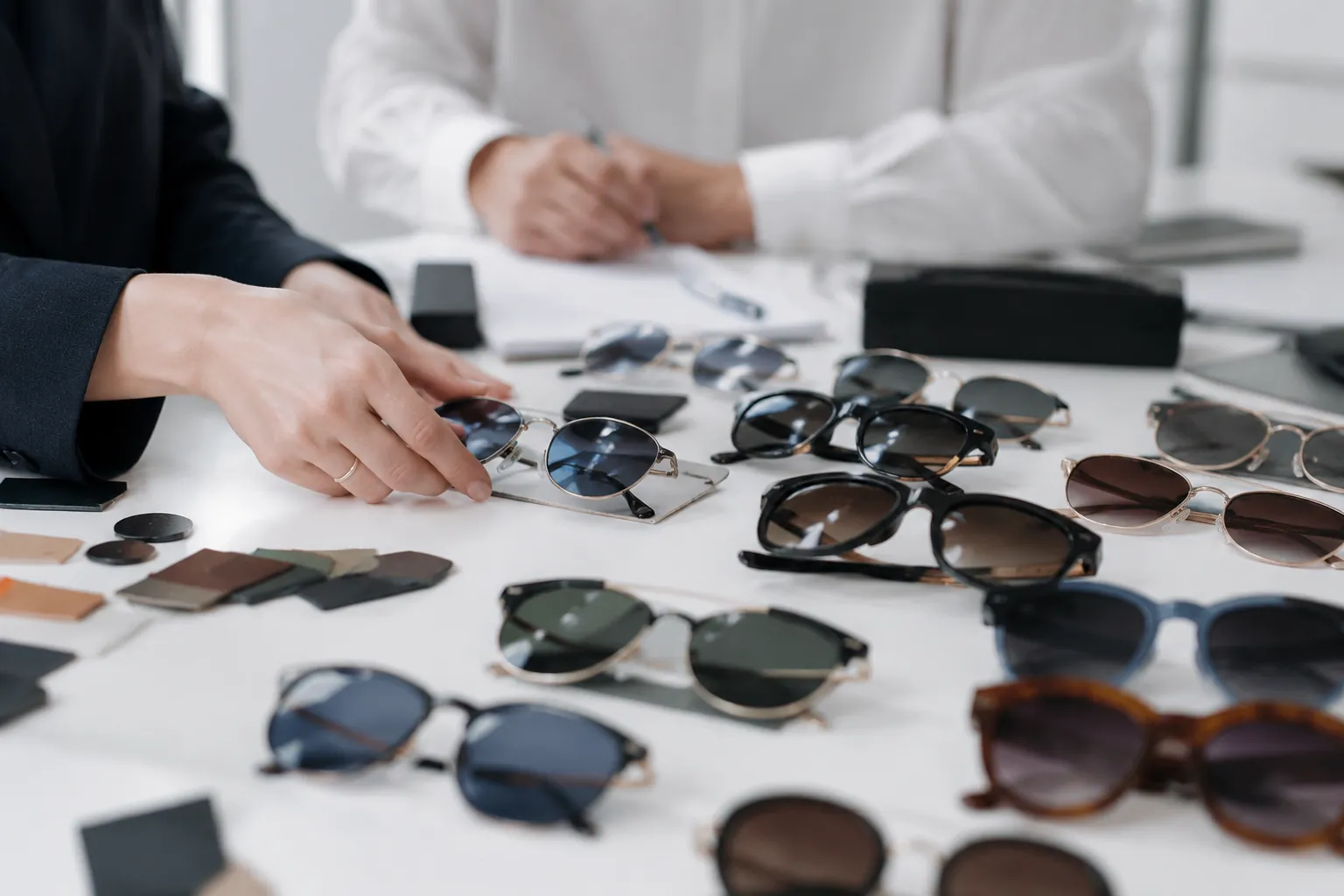
This guide is for B2B buyers sourcing sunglasses for resort shops, cruise boutiques, airport kiosks, duty-paid travel stores, excursion counters, and tour operators. These channels move fast. Customers handle products hard. Demand shifts by season, route, weather, and guest profile. Replenishment mistakes are expensive. Use this guide to define the assortment, lens standard, materials, packaging, MOQ, quality controls, compliance documents, and reorder logic before issuing a purchase order.
Start with channel economics, not the frame catalog
Travel retail is not one channel. A resort gift shop, a cruise ship boutique, an airport impulse wall, and an excursion counter each need a different sourcing plan. If you buy only by frame style, you risk slow colors, weak lens specs, poor replenishment, and too much inventory in the wrong place.
Start with traffic pattern and purchase intent. Resort customers often buy because they forgot sunglasses, lost a pair at the pool, or want a vacation look. Cruise customers may buy for themselves or as gifts, and replenishment depends on ship loading schedules. Airport customers decide in seconds. They need visible benefits: UV400, polarized, lightweight frame, scratch-resistant pouch, or a clear price tier. Excursion counters need practical styles that tolerate sweat, sunscreen, salt spray, and backpack storage.
Keep the first assortment narrow. For many locations, 12 to 24 SKUs per location type is easier to manage than a broad wall of untested colors. Put volume into repeatable cores: black, tortoise, crystal smoke, matte navy, champagne, brown, and one or two seasonal colors. Use channel cues through lens tint, logo position, hangtag copy, pouch or case type, and barcode logic. Do not build a new frame for every account unless the sales volume supports it.
If you are working with LumiShades or another custom sunglasses manufacturer, confirm MOQ by design, color, lens type, decoration, and packaging before quoting the retailer. LumiShades offers low-MOQ development options from 50 pairs per design for suitable programs. That can help with resort color tests, cruise exclusives, or fit trials. Use small runs to learn. Do not build permanent replenishment around very small quantities unless the retail margin can absorb the higher setup, handling, and freight cost per pair.
Assortment matrix for resort, cruise, airport, and excursion retail
| Channel | Recommended SKU mix | Lens specification | Packaging priority | Main sourcing risk |
|---|---|---|---|---|
| Resort shop | 60% unisex casual, 25% oversized fashion, 15% sport wrap; 12-18 SKUs per wall | UV400 Category 3 smoke, brown, or green; polarized on selected premium SKUs | Microfiber pouch, clear barcode, low-bulk inner cartons of 12 or 24 where practical | Salt, sunscreen, sand, and repeated try-ons can damage coatings, screws, and hinges |
| Cruise boutique | 40% classic unisex, 30% women's fashion, 20% men's square, 10% kids or junior where allowed by the retailer | UV400 Category 3; polarized and gradient options for premium or giftable styles | Giftable case or pouch, hangtag, UPC/EAN, compact cartons for ship receiving | Incorrect stock depth can cause lost sales until the next loading window |
| Airport or station retail | 70% quick-fit shapes: wayfarer, aviator, square, round; 8-16 high-turn SKUs | Clearly marked UV400 Category 3; polarized upgrade at higher price point | Hang-ready, scan-ready, tamper-resistant where required by the retailer | Slow conversion if benefits and prices are not visible within a few seconds |
| Tour operator or excursion counter | 50% sport, 30% value classics, 20% kids or junior where appropriate; deeper stock in practical colors | Gray or brown Category 3; polarized for boating, fishing, and high-glare activities | Simple pouch, strong polybag, bulk cartons sorted by activity, route, or location | Lens scratches, breakage claims, and fit complaints during active use |
Use this matrix to shape the first RFQ. It shows where cost should go. For a resort wall, prioritize compliant lenses, corrosion-resistant hardware where metal parts are used, stable decoration, and packaging that staff can refill quickly. For airport retail, spend on presentation: barcode placement, peg-hole position, PDQ display fit, lens-benefit stickers, and a clear price ladder.
Do not make every SKU polarized. Polarization adds cost. It can also create complaints when customers view some phone screens, dashboards, ATMs, payment terminals, or marine displays at certain angles. Use polarized lenses for fishing, boating, driving, and premium resort SKUs. Use standard UV400 Category 3 lenses for fashion colors where appearance, comfort, and price drive the sale.
Lens specs buyers can defend
Lens specification is where many travel retail programs get vague. A hangtag may say UV400, while the purchase order says little about the standard, lens category, tint, polarization, or test-report requirement. That is not enough. For B2B importers, lens requirements should be written into the PO and confirmed through pre-production samples.
For many resort and cruise programs, Category 3 lenses are the practical default because they are intended for bright outdoor conditions. Category 2 lenses can work for lighter gradient fashion styles, but they should not carry a beach or water-side assortment. Category 4 lenses are very dark, are not suitable for driving, and require appropriate warnings under relevant standards. They rarely belong in mainstream travel retail unless the use case is clearly defined.
If the supplier handles lens tinting in-house, ask how shade consistency is controlled across repeat orders. Approve a master lens sample. Define an acceptable visual tolerance under controlled lighting. For replenishment programs, compare bulk lenses against the approved master sample at the center, upper edge, and lower edge. For polarized lenses, check that the polarization axis is consistent across the lot. Poor edging, incorrect assembly pressure, or frame warpage can create visual distortion. Customers notice it when looking at tile lines, railings, or horizon lines.
- CE EN ISO 12312-1: relevant for many European sunglass markets and used for requirements related to optical performance, transmittance, robustness, and safety labeling.
- ANSI Z80.3: relevant for non-prescription sunglasses in the United States, including optical and impact-related requirements.
- AS/NZS 1067: relevant for Australia and New Zealand, including lens category, transmittance, and labeling requirements.
- FDA registration: relevant for U.S. eyewear import and establishment/device listing context. Importer, supplier, and product descriptions should be consistent with shipment documents.
- REACH: relevant for EU restricted substances in frames, coatings, paints, nose pads, printed inks, cases, and accessories.
Ask for test reports that match the destination market, lens material, lens color, frame material, coating, and decoration. A report for one black PC frame does not automatically cover a new metallic coating, rubberized finish, metal logo plate, colored acetate, or accessory set. Restricted substance risk often appears in coatings, inks, plating, soft plastic parts, pouches, cases, and labels rather than in the lens itself.
Frames, hinges, and finishes that survive tourist handling
High-traffic travel retail is rough. Customers try on frames with sunscreen on their hands. They bend temples past the normal opening angle. They drop pairs on tile. They return them to trays without care. The material has to match both the price point and the expected abuse.
PC and TR-type injection frames are common for value and mid-tier programs because they are light, consistent, and economical at volume. Injection molding also supports repeat production once tooling, gate location, shrinkage, and color masterbatch are controlled. Acetate gives better depth, polish, and fashion value, but it needs more manual cutting, tumbling, polishing, and adjustment. It can also deform under heat if stored in hot windows, vehicles, or poorly ventilated storerooms. Metal frames can look premium, but plating quality, screw fit, solder joints, nose pad parts, and corrosion resistance matter near salt air.
If a supplier such as LumiShades offers in-house injection molding, acetate processing, CNC work, decoration, and QC, ask which steps are completed internally for your specific order. Vertical control can reduce handoff risk, but do not assume. Verify it through process descriptions, sample approval, and inspection checkpoints.
For resort and cruise programs, specify hinge type clearly. A five-barrel hinge is generally more robust than a very low-cost two-barrel hinge, but frame geometry, screw quality, and assembly control also matter. Spring hinges can improve fit range for tourists buying quickly, yet they add components and failure points if poorly assembled. Set practical QC requirements: smooth temple movement without grinding, balanced resistance on left and right sides, no sharp hinge edges, and no screw back-out after repeated folding checks. Lens fit should be snug with no audible rattle. Frame front warpage should be controlled so the finished pair sits level and does not twist noticeably on a flat surface.
Choose finishes with the retail environment in mind. Gloss black can show scratches. Matte rubberized coatings may feel premium at first touch but can become tacky or marked if the coating is not compatible with heat, sweat, sunscreen, or alcohol-based cleaners. Transparent frames can reveal bubbles, gate marks, stress whitening, and flow lines. Mirror lenses sell well visually, but they need better scratch protection during packing and handling. None of these options is automatically wrong. They just need stricter approval samples, defined defect limits, and realistic retail placement.
Decoration and branding: control the variables
Branding should look intentional. It should not create avoidable quality risk. Travel retail buyers often request a temple logo, lens sticker, hangtag, pouch print, case embossing, and carton label at the same time. Each decoration method adds setup, approval time, and potential defects. Decide which touchpoints matter at the shelf and which matter only after purchase.
Pad printing is economical for small temple logos and simple one- or two-color artwork. It is fast, but ink adhesion must be checked on glossy, matte, rubberized, and transparent surfaces. Laser engraving can be durable on suitable metal or coated surfaces, but it may be subtle and less visible on dark frames. Metal logo plates can look premium for cruise boutiques, but they add material cost, placement tolerance, adhesive control, edge-lift risk, and abrasion risk during shipping. Hot stamping and embossing can work well on cases and pouches, but artwork must be simplified for clean edges.
For repeat orders, lock decoration location in millimeters from a clear reference point, such as hinge edge or temple tip. "Logo on temple" is not a specification. Write it plainly. For example: 22 mm wide logo, centered vertically on the outer left temple, with the logo start 18 mm from the hinge line. For printed logos, approve ink color, curing time, and a practical rub or tape test before packing. For metal plates, check that edges do not lift after flexing the temple and that the plate does not scratch the opposite lens when folded.
Use decoration where it pays. Opening-price airport SKUs may only need a clean temple print and strong hangtag. Premium cruise SKUs may justify a metal temple plate, microfiber pouch print, and gift case. Excursion-counter SKUs should prioritize durable, low-snag decoration over delicate fashion details.
Packaging that protects margin and prevents chargebacks
Packaging for travel retail has three jobs: protect lenses, help staff merchandise quickly, and make the pair easy to buy. A hard case may look premium, but it increases carton volume and can reduce shelf density. A microfiber pouch is cheaper and useful, but it may not feel giftable enough for cruise boutiques. Match packaging to the selling environment, not to personal preference.
- Define the selling tier: opening price, mid-tier, polarized premium, kids or junior, excursion pack, or gift set.
- Select case type: polybag for bulk operators, microfiber pouch for resort value, soft pouch plus hangtag for retail walls, hard case for premium cruise programs.
- Lock label rules early: barcode, SKU, color, lens category, country of origin, importer details, warnings, and destination language requirements.
- Confirm carton logic: inner quantity, master carton quantity, mixed-SKU rules, carton marks, gross weight, carton dimensions, and location pre-sorting.
- Test display fit: peg-hole position, PDQ footprint, case size, scanner readability, hang angle, and whether the UPC/EAN is blocked by a flap or seam.
For high-traffic stores, lens protection inside the package matters more than decorative print. A thin protective sleeve between lens and temple can prevent rub marks during freight and warehouse handling. If sunglasses ship inside hard cases, confirm whether the case itself needs a polybag or separator. Faux leather, fabric, and matte shells can scuff each other inside master cartons.
Do not leave barcode placement to the final week. Travel retail warehouses may reject cartons or charge relabeling fees when barcodes are too small, hidden under case flaps, assigned to the wrong color, printed at low contrast, or placed on curved surfaces that scanners cannot read. Put barcode artwork, carton marks, and hangtag layout into the sample approval stage.
MOQ, price breaks, and replenishment math
The correct order quantity is not always the lowest MOQ. It is the smallest quantity that still gives reliable cost, carton efficiency, inspection practicality, and reorder timing. LumiShades can support small development orders for suitable designs, with samples typically planned before bulk approval. Confirm sample timing, bulk lead time, packaging lead time, testing time, and payment milestones in writing before promising a delivery date to your retail customer.
Use 50-pair development quantities for color tests, account-specific pilots, and new fit validation when the supplier confirms that the specification is suitable for that MOQ. Move proven SKUs to larger production quantities once sell-through is clear. Unit cost usually improves as volume rises because setup, material purchasing, decoration, packing, and inspection are spread across more units. But changes cost money. Frequent changes to lens tint, logo method, pouch, barcode format, case material, or carton sorting can erase the savings through new samples, setup time, and added QC work.
A practical reorder plan has three layers. First, keep core colors in repeat production: black, tortoise, smoke, brown, and one clear or crystal option. Second, reserve limited colors for seasonal programs, not emergency replenishment. Third, set reorder triggers based on total lead time: factory production plus testing if required, freight, customs clearance, warehouse receiving, and store allocation. For cruise and resort buyers, the full replenishment cycle can be much longer than factory production time alone. Base reorder points on landed inventory timing, not ex-factory dates.
For mixed assortments, ask the factory to quote by SKU and by total program volume. A 24-SKU order at very small quantities per SKU may carry more setup, decoration, and packing labor than a focused assortment with deeper quantities. If the assortment must be broad, share components: same lens base, same hinge family, same pouch, same barcode format, same carton size, and limited temple decoration positions.
Sampling, QC gates, and RFQ details before bulk approval
A good sample approval process is short but strict. Do not approve a pair because the color looks good in a photo. Ask for physical samples or verified pre-production samples to check fit, lens shade, logo position, hinge feel, temple balance, barcode scan, pouch fit, warning labels, and carton labeling.
For bulk QC, define inspection gates early. Incoming checks should cover lens blanks, frame color, hinge components, screws, nose pads, logo plates, inks, pouches, cases, and labels. In-process checks should cover injection defects, acetate polish, CNC dimensions, lens edging, screw tightness, decoration alignment, and temple opening. Final QC should include appearance, lens clarity, fitting, barcode scan, carton count, carton marks, and basic drop or vibration checks when packaging is new.
Set clear acceptance language. Lens fit should not rattle. Temples should open and close smoothly without scraping or sudden looseness. Printed logos should be centered and resist agreed rub testing after curing. Metal plates should not lift at the edges. Screws should not back out during normal folding. Frames should not show sharp burrs at the temple tip, bridge, hinge, nose pad area, or lens groove. For larger programs, use pre-shipment inspection against agreed AQL levels and review compliance documents before balance payment or shipment release.
A serious RFQ should include destination market, required standards, target channel, frame material, size range, lens category, tint, polarization requirement, decoration method, packaging type, barcode rules, carton sorting, order quantity by SKU, expected reorder quantity, sample deadline, bulk delivery target, shipping method, and inspection requirement. If you compare factories, use the same spec sheet for every quote. Otherwise, the prices are not comparable.
For a first LumiShades travel retail program, sample a controlled range, narrow the assortment before bulk order, place deeper quantities on proven core designs, and use smaller quantities for riskier seasonal colors. If you require ISO 9001 process control or BSCI audit status as part of supplier qualification, request current certificates or audit documents directly. Check the company name, site address, scope, validity date, and issuing body before relying on them.
Have a custom sunglasses project in mind?
Send us your styles, target market and quantities and we will return a detailed quote with MOQ, lead time and a sample plan.
Get a QuoteWhy source this from Wenzhou with LumiShades
Wenzhou in Zhejiang Province is widely regarded as China’s eyewear manufacturing capital, producing a large share of the world’s sunglasses. That concentration matters to buyers: a deep local supply chain for acetate sheet, hinges, lens blanks, plating and packaging means shorter component lead times, easier color and material matching, and a workforce with decades of eyewear-specific skill. LumiShades has manufactured in this ecosystem since 2009, and our vertical integration — in-house injection molding, acetate cutting, CNC milling, lens tinting, decoration and quality control — means no part of your order is quietly subcontracted to a workshop you cannot audit.
For international buyers, that vertical control translates into accountability. When a single factory owns every step, defects are traced and fixed at source rather than bounced between vendors, and your specifications survive intact from first sample to bulk. We back this with 15+ years of experience, shipments to 60+ countries, more than 5 million pairs produced per year and a 98.5% on-time delivery rate. Our certifications — CE EN ISO 12312-1, FDA registration, ANSI Z80.3, AS/NZS 1067, REACH, ISO 9001 and BSCI audit — mean the compliance documentation your market requires already exists. Explore our manufacturing capabilities and quality control process to see how this works in practice.
Frequently asked questions
What MOQ should I use for a new resort sunglasses program? Use the lowest confirmed MOQ for testing, not as your long-term operating model. For LumiShades, 50 pairs per design may be available for suitable development orders, such as fit trials, color tests, or account-specific pilots. For commercial replenishment, move proven SKUs into larger quantities as soon as sell-through data supports it. Keep deeper stock in black, tortoise, smoke, brown, and crystal colors. Use smaller quantities for seasonal colors that may not repeat.
Are polarized lenses necessary for cruise and resort retail? No. Polarized lenses are useful for boating, fishing, driving, and premium high-glare resort environments, but they are not needed for every SKU. They add cost and can affect visibility of some digital screens at certain angles. For opening-price and fashion-led styles, UV400 Category 3 lenses are often the more practical specification. Put polarization where the customer benefit is clear and where the retail price can support it.
How long should I plan from sample request to bulk shipment? Build the calendar from approval milestones, not just factory production time. Confirm the supplier's sample lead time, packaging sample time, compliance testing time if required, bulk production time, inspection date, freight schedule, customs clearance, warehouse receiving, and store allocation. Reorder triggers should be based on the full landed lead time. Production can finish on time and still miss the season if freight, documentation, or warehouse intake is delayed.
Which compliance documents should I request for travel retail sunglasses? Request documents based on destination market and product specification. For Europe, ask for CE EN ISO 12312-1 evidence and REACH-relevant material or restricted-substance documentation. For the U.S., ask for ANSI Z80.3 documentation and FDA registration/listing context where applicable. For Australia and New Zealand, ask for AS/NZS 1067 documentation. Check that reports match the actual lens color, lens type, frame material, coating, and decoration in your order, not only a similar previous product.
How can I reduce cost without making the sunglasses look cheap? Reduce complexity before reducing quality. Limit frame colors, share lenses across SKUs, use one pouch or case format, keep barcode and carton rules consistent, and avoid decoration methods that do not improve sell-through. Move proven styles into larger production quantities. Do not cut first from lens compliance, hinge reliability, screw quality, lens fit, or barcode accuracy. Those failures create returns, chargebacks, and lost sales.
What packaging works best for high-traffic travel retail? Match packaging to the selling environment. Resort value retail usually works well with microfiber pouches, clear barcodes, and compact cartons. Cruise boutiques may need a more giftable case or pouch set. Airport retail needs hang-ready and scan-ready packaging with visible lens benefits and price points. Excursion counters usually need durable pouches, simple labeling, and bulk-friendly cartons sorted by activity or location.
Ready to start?
Explore our rimless sunglasses or request a quote — our sales team replies within 12 hours.
Request a Quote