
Source Recycled and Standard Sunglasses on One Line
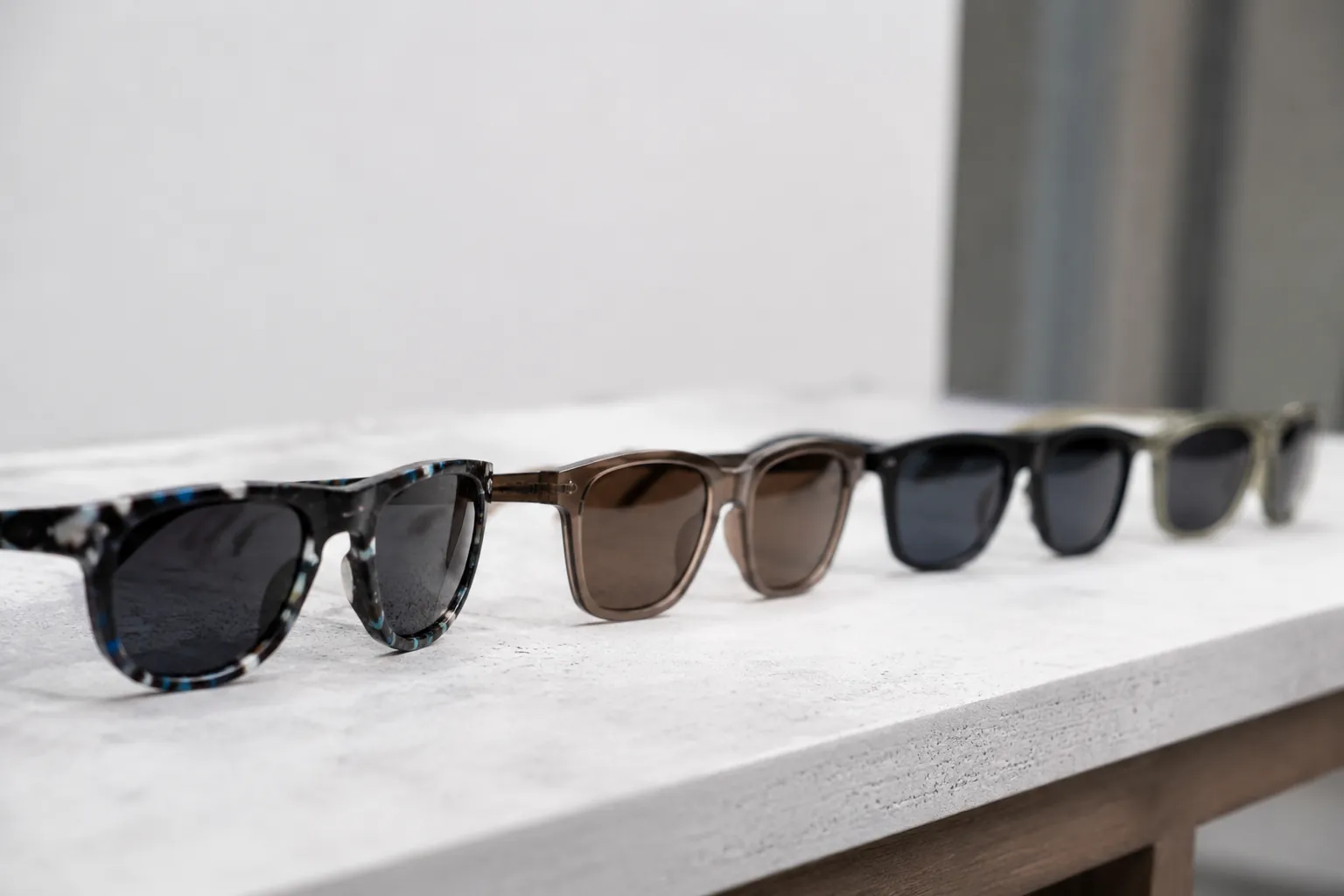
This guide is for buyers building a mixed sunglasses range with both recycled-story SKUs and standard volume styles. The hard part is not finding a factory that can make both. It is controlling cost, claims, color consistency, lead times, and quality once both material lanes sit on the same buying plan. A workable program needs separate margin logic, tighter SKU-level specs, and clearer approval gates than a single-material buy. Run it properly and a recycled line and a conventional line can share one factory, one calendar, and one shipment plan without creating pricing confusion or compliance risk.
Run one collection as two commercial lanes
Many buyers try to place recycled and conventional sunglasses under one sustainability message and one blended target margin. That usually fails early. Recycled-content frames and virgin-material frames can sit in the same collection, but they should be managed as two commercial lanes inside one sourcing program.
The conventional lane is usually the volume lane: easier replenishment, broader color options, more stable processing, and more tolerance for aggressive ex-factory targets. The recycled lane is the claim-sensitive lane: tighter raw-material control, narrower process flexibility, more paperwork, and less room for substitutions late in the cycle. Treat both lanes the same and the numbers drift. Fast.
Your internal buy sheet should separate every SKU by lane and lock the key variables before development starts:
- frame material status at SKU level, not only collection level
- target retail band and maximum ex-factory price
- minimum gross margin by lane
- approved sustainability claim language for each SKU
- replenishment plan for core standard styles versus seasonal recycled styles
- sample approval path, including who signs off color, logo, and packaging
In practice, a core black injected frame sold on repeat should not carry the same margin target or approval logic as a recycled matte fashion shape with custom packaging. One is a replenishment item. The other is a documentation-heavy story SKU.
Merchandise them as one line if that helps the sell-in. Manage them as two different cost structures.
Where recycled and standard frames differ in production
The difference is not just the resin or acetate sheet. It shows up on the factory floor in material flow, color stability, finish yield, and the amount of sorting needed before assembly.
With conventional injected frames, the process window is often easier to hold once the tool, resin grade, and color masterbatch are fixed. That matters when an order moves from development into bulk. Recycled injected materials can be less forgiving. Batch variation may cause shade drift, more visible flow lines on glossy surfaces, or minor warpage if incoming material is inconsistent. That does not make recycled frames unreliable. It means the construction has to suit the material.
Matte textures, medium wall thickness, and conservative commercial colors usually produce fewer rejects than ultra-thin high-gloss fashion shapes or crystal-clear translucent looks. The same logic applies to acetate. Conventional sheet and recycled-content sheet can differ in cutting behavior, polishing response, and color-lot repeatability. Some recycled sheet programs machine cleanly and polish well. Others need tighter process control to reach the same finish.
Ask direct technical questions during development: is sample approval tied to one exact material batch, or to a broader color standard with an agreed tolerance? Can the factory separate recycled and conventional material records by SKU? Does the factory have a documented quality system such as ISO 9001, and can it show social compliance records such as BSCI if your customer requires them? Those questions matter more than a generic request for "sustainable materials."
For a mixed-material program, process control matters most when molding, polishing, printing, assembly, and final inspection sit under one system. The buyer's job is simple: make ownership clear for color, finish, logo application, and packout before bulk starts.
Build the MOQ and price ladder before sampling
Do not start with recycled samples and sort out pricing later. Build the commercial ladder first. Then sample within it.
Many eyewear suppliers offer lower MOQs for development and stronger pricing at higher volume tiers. That only helps if the buyer already knows which SKUs belong in each volume band.
| Program Type | Typical MOQ | Commercial Effect | Typical Use |
|---|---|---|---|
| Proof-of-market style | Low MOQ trial run | Highest unit cost, limited efficiency, least room for custom extras | Retailer tests, capsule drops, influencer seeding |
| Launch SKU | Mid-volume opening order | Better production efficiency and more stable costing | First mixed-line buy with controlled breadth |
| Core repeat style | Commercial reorder level | Better balance of cost, yield, and replenishment logic | Proven commercial frames |
| Volume program | High-volume program | Best leverage on unit cost if the specification stays simple | Chain retail, distributors, promotion-heavy business |
A serious buyer should define three price bands before development starts:
- entry commercial band for standard frames with simple packout
- mid band where standard and recycled SKUs can both sit without margin distortion
- claim-led band where recycled content, upgraded packaging, and documentation cost are protected
The most common costing mistake is mixing premium inputs into low-price recycled concepts during sampling. A recycled frame with a metal logo plate, custom molded case, barcode labels, and tighter color approval is not a fair comparison against a standard frame packed in a polybag. The cost gap comes from the full specification, not the frame material alone.
Set ceiling prices early. If your target volume requires the lower end of the factory cost curve, stay with simpler constructions, fewer manual decoration steps, and colors that do not create high sorting loss. Then ask the supplier to quote by separated cost drivers: frame, lens, decoration, packaging, testing, and any documentation fees.
Use a hard spec matrix to stop cost drift
Mixed-material collections usually go off track for one reason: buyers approve attractive samples without locking the variables that actually move unit cost. The fix is a SKU-level specification matrix used on every style from first sample to bulk approval.
Your matrix should cover frame material, lens material, lens category, hinge construction, decoration method, finish, packaging level, and compliance market. It sounds administrative. It is commercial control.
At minimum, lock these points before sample confirmation:
- frame construction: injected plastic or acetate CNC
- material status: conventional or recycled-content material
- finish: matte, polished, crystal, rubberized, or paint-coated
- decoration: laser engraving, pad printing, hot foil, or metal logo plate
- lens spec: PC, TAC, nylon, or acrylic; tint; base curve; thickness; UV requirement
- hardware: standard hinge, spring hinge, screw color, nose pad detail where applicable
- packout: bulk polybag, pouch, folding case, hangtag, barcode label, export carton marking
- compliance market: CE EN ISO 12312-1, ANSI Z80.3, AS/NZS 1067, REACH screening, importer file requirements
The same matrix should record commercial tolerances. Do not rely on vague language such as "close to approved sample." Define how color approval will be judged, how logo location will be checked, which packaging details are fixed artwork, and which points are cosmetic versus functional defects. Once that sheet is signed, every revision should state what changed and what it does to price and lead time.
This matters even more on recycled programs because small upgrades accumulate. A buyer may accept a matte finish to improve yield, then add a metal plate logo and a premium case. Each change looks minor on its own. Together they add handwork, slow the line, and erode margin.
Claims and compliance need precise wording and separate files
Recycled programs usually create a paperwork problem before they create a production problem. Most claim failures start when the sales message moves faster than the supplier file.
Keep the wording exact. If the frame uses recycled material and the lenses, screws, hinges, and nose pads do not, the claim should refer to the frame material only. Do not imply the whole sunglass is recycled unless the full bill of materials supports that statement. If the pouch or carton also contains recycled content, document those components separately instead of rolling them into one vague sustainability line.
Buyers should keep two distinct files for every recycled SKU:
- finished-product compliance documents for the destination market
- evidence supporting the recycled-content claim for the material used in that production lot
Those are different approval tracks. For sunglasses, buyers typically ask for CE EN ISO 12312-1, ANSI Z80.3, or AS/NZS 1067 depending on destination. REACH screening matters where applicable for chemical restrictions. For U.S. programs, buyers sometimes also ask about FDA registration. Request that only where it is relevant to the importer's process and product category, and verify exactly what the customer or broker requires instead of collecting documents by habit.
The operational question is blunt: can the factory support the exact wording that will appear on the product page, hangtag, or carton? If not, change the wording before the order is placed. It is easier to narrow a claim during artwork approval than to defend an overstated claim after goods land.
Plan the calendar around the slowest approval gate
Sample and bulk lead times vary by construction, tooling status, decoration method, packaging complexity, and test requirements. In mixed-material programs, the real delay is often not molding. It is late approval of color, logo placement, carton marks, or destination-market compliance after the sample is already accepted.
A practical timeline for a mixed-line launch looks like this:
- Freeze commercial spec, claims wording, and target market before sample request.
- Approve standard and recycled color standards separately.
- Approve decoration artwork with exact size and location, not only a visual mockup.
- Approve packaging, barcode labels, and carton marks before bulk release.
- Confirm compliance destination by SKU, not by collection name.
- Hold a pre-production color check for recycled SKUs before full run.
That last hold point matters. Recycled material can vary enough by lot that a showroom sample is not always a reliable mass-production standard. If the buyer wants one ship date for the full collection, planning should be based on the SKU with the highest approval risk, not the easiest standard repeat style.
This is where mixed lines miss delivery. The complex SKUs get approved too loosely, and the easy SKUs create false confidence in the calendar. The line moves at the speed of the highest-risk item.
QC should control consistency across the line
Most eyewear QC reports cover obvious defects: scratches, hinge movement, screw tightness, lens cleanliness, and logo accuracy. For a mixed recycled and conventional program, that is not enough. Commercial damage often comes from inconsistency across the line rather than outright reject defects.
Ask the factory to control and record the following points during in-line and final inspection:
- frame front width, bridge shape, and temple symmetry within agreed tolerance
- left-right temple closing alignment and hinge tension consistency
- lens tint consistency against approved standard
- surface finish repeatability across the same color lot
- logo position repeatability for pad print, laser engraving, or metal plate application
- shade variation between approved sample and mass production, especially on recycled-content frames
For first mixed-material orders, ask for pre-production photos, in-line inspection records, and a final AQL-based report if AQL is part of your standard buying process. Keep one sealed golden sample per SKU for reorders. That sample should include approved frame color, lens tint, logo application, and packout. Without a golden sample, reorder disputes turn subjective very quickly.
QC works best when buyer and supplier agree in advance on what is measured, what is judged visually, what counts as a critical defect, and what triggers rework or hold. That discipline matters more than any promise of "strict inspection."
A practical buying model for a 12-SKU mixed collection
If you are building a 12-SKU line, do not split it 6-and-6 between recycled and standard just because that looks balanced in a presentation. Split it by risk, reorder logic, and where the sustainability claim actually helps sell.
| SKU Role | Recommended Material Lane | Reason |
|---|---|---|
| Core black aviator | Conventional | Fast repeat demand, strict cost cap, easiest replenishment planning |
| Core tortoise square | Conventional or recycled if color-lot control is already proven | Commercial shape, but appearance consistency is critical |
| Seasonal matte fashion color | Recycled | Story value is higher and reorder risk is lower |
| Premium capsule frame | Recycled | Can absorb documentation cost and moderate material premium |
A practical first-season structure is usually a heavier conventional core with a smaller set of recycled story SKUs placed in better-margin channels or limited seasonal drops. That protects the replenishment business while still giving the range a credible sustainability offer.
After first shipment, review profitability by lane, not just by collection total. Compare sell-through, claim value, return rate, reorder ease, and gross margin of recycled versus standard SKUs separately. That is how buyers decide whether to expand recycled options, narrow the offer, or move certain shapes back into the standard lane next season.
The buyers who manage mixed-line sourcing well stay disciplined about lane logic. They do not force every SKU into the sustainability story. They put recycled content where it creates commercial value and keep conventional product where cost stability matters more.
Have a custom sunglasses project in mind?
Send us your styles, target market and quantities and we will return a detailed quote with MOQ, lead time and a sample plan.
Get a QuoteWhy source this from Wenzhou with LumiShades
Wenzhou in Zhejiang Province is widely regarded as China’s eyewear manufacturing capital, producing a large share of the world’s sunglasses. That concentration matters to buyers: a deep local supply chain for acetate sheet, hinges, lens blanks, plating and packaging means shorter component lead times, easier color and material matching, and a workforce with decades of eyewear-specific skill. LumiShades has manufactured in this ecosystem since 2009, and our vertical integration — in-house injection molding, acetate cutting, CNC milling, lens tinting, decoration and quality control — means no part of your order is quietly subcontracted to a workshop you cannot audit.
For international buyers, that vertical control translates into accountability. When a single factory owns every step, defects are traced and fixed at source rather than bounced between vendors, and your specifications survive intact from first sample to bulk. We back this with 15+ years of experience, shipments to 60+ countries, more than 5 million pairs produced per year and a 98.5% on-time delivery rate. Our certifications — CE EN ISO 12312-1, FDA registration, ANSI Z80.3, AS/NZS 1067, REACH, ISO 9001 and BSCI audit — mean the compliance documentation your market requires already exists. Explore our manufacturing capabilities and quality control process to see how this works in practice.
Frequently asked questions
Can I mix recycled and conventional styles under one purchase order? Yes, if the supplier accepts mixed SKUs and each style is separated clearly in the PO and specification pack. For each SKU, state the frame material status, approved claim wording, packaging, compliance market, quantity, and price. Do not combine recycled and conventional styles under one generic line description, and do not use one shared sustainability claim across both material lanes.
Will recycled frames always cost more? Not always, but buyers should assume more cost risk until the supplier proves otherwise. The material itself may carry a premium, and recycled styles often need tighter color review, clearer lot traceability, added claim documentation, or more limited finish options. Ask the supplier to break out cost by frame, lens, decoration, packaging, testing, and documentation so you can see whether the price difference comes from material, specification, or process control.
What is the safest MOQ strategy for a first mixed-material launch? Start with low quantities only on the SKUs that truly need market testing. Put proven commercial shapes into a more efficient opening quantity so the supplier can control color, finishing, and packout under normal production conditions. In practice, buyers should assign MOQs by SKU role: trial quantity for fashion-risk styles, commercial quantity for core repeat styles, and no recycled claim on a core replenishment frame unless the supplier has already shown stable lot control.
How do I avoid overstating sustainability claims? Tie every claim to a documented component and use the same wording in the PO, artwork, packaging, and product listing. If only the frame material contains recycled content, say that directly. Keep the supplier's evidence for that exact material lot in the file with the SKU approval record. Before bulk release, ask one direct question: can the factory support the exact wording that will appear on the hangtag, carton, and product page? If the answer is unclear, revise the wording before production starts.
What compliance documents should I ask for first? Start with the destination-market requirement for the actual SKU: CE EN ISO 12312-1, ANSI Z80.3, or AS/NZS 1067 as applicable, plus REACH screening where relevant. Then ask whether the importer or customer also requires FDA registration, ISO 9001, or BSCI records. Keep those separate from recycled-content claim evidence. Compliance for the sunglass and evidence for the recycled material are different document sets, and both should be matched to the exact SKU and shipment market.
Ready to start?
Explore our square sunglasses or request a quote — our sales team replies within 12 hours.
Request a Quote