
Cut Sample Rounds for Custom Sunglasses
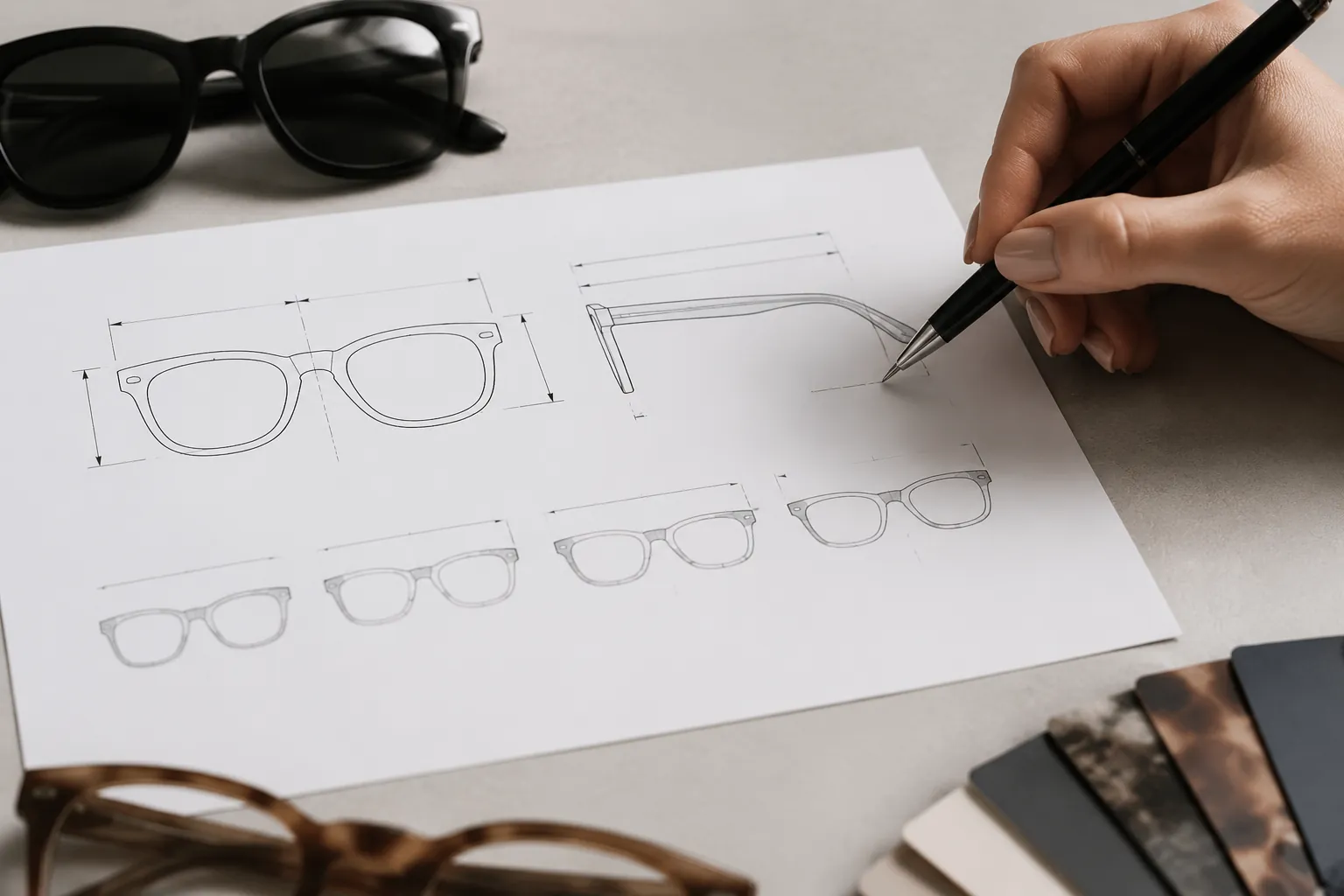
This guide is for brands, importers, distributors, and retailers buying custom sunglasses in volume. The goal is simple: reach sample approval with fewer revisions, faster decisions, and less avoidable delay before bulk production. Most extra rounds come from the same problems: incomplete briefs, unclear dimensional priorities, artwork that is not production-ready, compliance questions raised too late, and structural changes requested after cosmetic review has already started. The fix is not complicated. Decide the high-impact items first, leave low-risk refinements for later, and record every approval in a form the factory can execute and your team can verify.
Start with a decision-ready brief, not a mood board
Many sample rounds fail before any material is cut. The problem is usually not factory speed. It is missing decisions.
If a brief says only "premium look, slightly oversized, matte black frame," the supplier still has to guess shape, weight, finish, lens type, and branding method. Guesswork creates rework.
A decision-ready brief should lock the items that affect tooling, machining, lens cut size, decoration method, compliance planning, and cost. If key points are still open, call it what it is: a development sample, not a final approval sample. That distinction matters. It tells the supplier what is exploratory and what is fixed.
- State the target customer and sales channel: fashion retail, surf shop, promotional program, festival merchandise, optical, chain store, or e-commerce.
- Lock the frame material at the start: injection plastic or acetate. Do not leave this open if the first sample is expected to reflect the intended bulk product.
- List critical dimensions in millimeters: eye size, bridge, temple length, front width, lens height, and base curve if relevant.
- Set lens requirements clearly: tint color, category, gradient or solid, polarized or non-polarized, mirror coating if needed.
- Specify the destination market and compliance path: CE EN ISO 12312-1, ANSI Z80.3, AS/NZS 1067, REACH, and any FDA-related paperwork expectation that applies to your program.
- Define branding locations and methods: outer temple pad print, inner temple laser engraving, or applied metal logo plate.
- Give an ex-factory target and expected order volume so the supplier can align the sampling approach with the commercial objective.
If some items are still undecided, say so plainly. Ask for a development sample and identify exactly what still needs review. That keeps open questions from being mistaken for final instructions.
Lock the specs that cause most rework
Not all comments matter equally. A short list of specs drives most sample revisions because those specs affect how the frame is made, assembled, or tested.
Separate structural decisions from cosmetic preferences. Structural comments affect mold choice, hinge alignment, CNC path, lens retention, and repeatability in bulk. Cosmetic comments affect appearance, but they do not always require a new process route. Mix both into one loose email and the next sample may come back with changes you never meant to request.
| Spec area | Why it matters | What to confirm first | Typical tolerance or rule |
|---|---|---|---|
| Frame dimensions | Controls fit, silhouette, and lens cut size | Front width, eye size, bridge, temple length, lens height | Confirm which dimensions are critical and record acceptable sample tolerance in writing |
| Material | Affects finish, weight, color behavior, and cost | Injection plastic vs acetate | Do not switch material after shape approval unless a new sample round is expected |
| Lens spec | Drives compliance, visual effect, and user experience | Tint, polarization, filter category, standards needed | Approve an actual lens sample or controlled reference, not only a verbal color name |
| Logo method | Changes artwork prep and labor steps | Pad print, laser engraving, metal plate position | Define a measurable placement window on a drawing or marked-up photo |
| Surface finish | Changes scratch visibility and color perception | Gloss, matte, crystal, tortoise, translucent | Approve against a physical reference whenever finish is central to the product |
Use blunt approval language. Write "structure approved, revise tint only" or "logo position approved, update print color only." That tells the sample room what stays frozen. It also helps internal QC because the next round is checked against a short correction list, not treated like a redesign.
Choose material with realistic expectations
Material choice causes a lot of preventable rework. Buyers expect one material to behave like another, then reject the sample for looking exactly like the chosen material should.
Injection frames and acetate frames do not look, feel, polish, or process the same way. Start there.
Injection plastic is often used where repeatability, tighter cost control, and scalable output matter most. It fits many promotional programs, chain retail projects, and entry to mid-price collections. Acetate is usually chosen for greater color depth, a denser hand feel, and a more premium finish. It also involves more labor because sheets are cut, CNC milled, polished, assembled, and adjusted in multiple steps.
| Material option | Best use case | Visual/physical behavior | Cost and process impact |
|---|---|---|---|
| Injection plastic | Promotional programs, scalable basics, value-driven retail | Lighter, more uniform in opaque colors, consistent repeatability | Usually simpler to scale and revise within a cost-sensitive program |
| Acetate | Fashion collections, premium private label | Richer depth, polished edges, heavier hand feel | Higher material and labor input, with slower revision cycles |
| Matte finish | Streetwear and sport-inspired looks | Soft surface appearance; handling marks may show more readily than on gloss | Needs an approved texture reference to reduce subjective disputes |
| Crystal/translucent colors | Trend-driven fashion styles | Shade can shift with wall thickness and internal structure | Requires approval under consistent lighting conditions |
A few practical rules help:
- Tortoise patterns do not repeat exactly. Approve an acceptable appearance range rather than one exact swirl layout.
- Translucent colors can look darker where material is thicker, especially near hinges or reinforced areas.
- Matte finishes often show small handling marks more easily than gloss finishes.
- If edge polish, weight, and hand feel matter, specify acetate before the first sample instead of trying to upgrade later.
If the concept depends on touch and finish, say that during quotation and briefing. Changing an injection-approved design to acetate after round one usually means another full review. The product will not look or feel the same.
Send artwork that production can use
Artwork is one of the easiest ways to lose time. A buyer sends a low-resolution logo screenshot, asks for a metal badge on a narrow curved temple, then rejects the sample because the branding looks wrong. That is not a speed problem. It is an input problem.
Send vector artwork for every logo version, including one-color files where needed. Then match the branding method to the available geometry. Flat temple surfaces are usually the easiest to decorate cleanly. Tight curves, thin temple profiles, and textured finishes reduce usable space and limit execution quality.
- Provide vector files in AI, EPS, or editable PDF format for each logo version.
- State the exact logo width in millimeters for each placement, for example outer temple and inner temple text line.
- Confirm branding method by location: pad print outside, laser engraving inside, metal plate only where there is enough flat area and thickness.
- Define finish expectation: bright silver, brushed gold tone, deboss effect, tone-on-tone print, or low-contrast engraving.
- Request a marked-up artwork drawing or photo approval before the physical sample if branding is central to the design.
Pad printing is often the most flexible option for standard temple branding, but very fine lines and very small text can lose clarity. Laser engraving is durable and useful for inside-temple information, although the result depends on material contrast. Metal logo plates can add perceived value, but they also add parts, alignment tolerance, and assembly steps. If branding matters, ask the supplier to confirm minimum line weight, minimum text size, and feasible placement area before the sample is made.
Simple rule: if a logo location cannot be measured and approved on a drawing, it will probably be disputed on the sample.
Use a two-stage sample process on purpose
Do not treat every sample round as if it must be final. That creates noise.
A better approach is to separate development from confirmation. The first round should validate structure, fit, material direction, and branding position. The second round should confirm only the agreed corrections and the final visual execution. Once approval is clear, the approved sample and spec pack become the reference for bulk production.
| Stage | Main objective | What to review | What not to change |
|---|---|---|---|
| Development sample | Validate concept and structure | Shape, dimensions, fit, material, logo position | Do not spend the round debating minor print density before structure is approved |
| Pre-production confirmation | Freeze the production standard | Final color, lens tint, artwork execution, packaging match | Do not reopen frame dimensions or material choice unless a new revision cycle is accepted |
| Bulk approval file | Align factory and buyer records | Signed spec sheet, QC points, carton and labeling details | Do not rely on chat messages or verbal approval as the final standard |
This works because each round has a clear job. Round one decides what the product is. Round two confirms how the approved product should look at scale. If you try to do both at once, you often create a third round for yourself.
Build compliance into the sample, not after it
If the product is meant for a regulated market, compliance cannot be an afterthought. Lens performance, markings, and paperwork expectations should be discussed before or during sampling so the approved sample matches the intended market path.
For sunglasses, buyers commonly work with CE EN ISO 12312-1, ANSI Z80.3, or AS/NZS 1067 depending on destination. REACH may also apply to chemical compliance requirements in some programs. FDA registration may be relevant in the US supply chain context, but buyers should confirm exactly what documentation or importer obligations apply to their product category and sales model. The practical point is straightforward: frame, lens, markings, and paperwork plan should match the target market before pre-production approval is issued.
- State the destination market in the initial RFQ and brief.
- Clarify whether the lens is a cosmetic fashion tint or intended to meet a defined sunglass standard.
- Confirm warning marks, model codes, country-of-origin marking, and any carton or polybag labeling before pre-production approval.
- Ask whether available declarations or test reports apply to the exact frame and lens combination being purchased, not just a similar style.
Supplier qualifications such as ISO 9001 or BSCI may help with vendor assessment, but they do not replace product-specific confirmation. The approved sample still needs to reflect the final production configuration. Change the lens spec after approval, and the compliance review may need to start again.
Set decision checkpoints before bulk starts
Many delays happen after the buyer says, "the sample looks good," but before bulk production is formally released. Then the project drifts. One person reopens temple length. Another wants a warmer tint. Packaging copy changes after carton artwork is already prepared.
Set fixed checkpoints with named owners and deadlines. One person should own fit and structure. One should own branding. One should own compliance and packaging text. If several people send separate comments over several days, the factory cannot freeze the production standard.
- Checkpoint 1: concept approval from drawing, CAD, or reference sample.
- Checkpoint 2: development sample approval for shape, size, and material.
- Checkpoint 3: branding, finish, and color approval from corrected sample or marked-up photos.
- Checkpoint 4: final sign-off on spec sheet, packaging, compliance notes, and shipment markings.
Put dates on each checkpoint and state in writing that comments received after sign-off create a new revision. That protects both sides and stops informal feedback from overriding approved specifications. A strong approval pack should contain final sample photos, a dimension sheet, material callout, lens specification, approved artwork version, logo positions, packaging notes, compliance requirements, and defined tolerance expectations. If minor process variation is acceptable, record that window clearly so line QC and final inspection work to the same standard.
Have a custom sunglasses project in mind?
Send us your styles, target market and quantities and we will return a detailed quote with MOQ, lead time and a sample plan.
Get a QuoteWhy source this from Wenzhou with LumiShades
Wenzhou in Zhejiang Province is widely regarded as China’s eyewear manufacturing capital, producing a large share of the world’s sunglasses. That concentration matters to buyers: a deep local supply chain for acetate sheet, hinges, lens blanks, plating and packaging means shorter component lead times, easier color and material matching, and a workforce with decades of eyewear-specific skill. LumiShades has manufactured in this ecosystem since 2009, and our vertical integration — in-house injection molding, acetate cutting, CNC milling, lens tinting, decoration and quality control — means no part of your order is quietly subcontracted to a workshop you cannot audit.
For international buyers, that vertical control translates into accountability. When a single factory owns every step, defects are traced and fixed at source rather than bounced between vendors, and your specifications survive intact from first sample to bulk. We back this with 15+ years of experience, shipments to 60+ countries, more than 5 million pairs produced per year and a 98.5% on-time delivery rate. Our certifications — CE EN ISO 12312-1, FDA registration, ANSI Z80.3, AS/NZS 1067, REACH, ISO 9001 and BSCI audit — mean the compliance documentation your market requires already exists. Explore our manufacturing capabilities and quality control process to see how this works in practice.
Frequently asked questions
How many sample rounds should a serious buyer expect for a custom sunglasses project? Two rounds is a practical target for a well-prepared project. Use round one as a development sample to confirm structure, dimensions, material, and branding location. Use round two as a pre-production confirmation sample to freeze color, lens tint, artwork execution, and finish. If a project goes beyond that, check whether the brief was incomplete, the material changed midstream, or structural and cosmetic comments were mixed together. Keep the process tight by sending one consolidated feedback file after each round and labeling each point as structural or cosmetic.
What is the fastest way to shorten sunglasses sample lead time? Start with a complete brief. Include dimensions in millimeters, frame material, lens requirements, branding method, destination market, compliance target, packaging notes, target quantity, and vector artwork. Also identify what is fixed and what is still under review. Before the supplier starts, ask them to confirm any missing data in one list rather than through repeated back-and-forth messages. That one step often removes delays caused by fragmented clarification.
Should I choose injection or acetate for the first sample? Choose the material you actually plan to buy in bulk. Injection and acetate differ in weight, polish, color depth, edge finish, and process behavior. Sample in one material and produce in the other, and you often trigger another review because the appearance and hand feel change. If you genuinely need to compare both, request that comparison clearly and treat it as development, not final approval of a production-ready sample.
Can I approve branding from photos before the physical sample arrives? You can approve some branding points from marked-up photos or drawings, especially logo size, placement, and general method selection. That is useful for pad print placement or checking whether a metal plate fits the available temple area. Final approval for print sharpness, actual tone, material contrast, and overall appearance should still be based on the physical sample whenever branding is important to the product. A practical method is to approve position digitally first, then approve execution on the sample.
When should compliance requirements be discussed with the factory? At RFQ and sampling stage, not after bulk is booked. Tell the factory which markets you will sell into and whether the product needs alignment with CE EN ISO 12312-1, ANSI Z80.3, AS/NZS 1067, REACH, or FDA-related paperwork expectations. Then ask the supplier to confirm what product markings, test scope, and supporting documents apply to the exact frame-and-lens combination you plan to order. If you change lens type, tint, or labeling after sample approval, recheck the compliance impact before authorizing production.
Ready to start?
Explore our rimless sunglasses or request a quote — our sales team replies within 12 hours.
Request a Quote