
How to Quote Custom Sunglasses From a Tech Pack
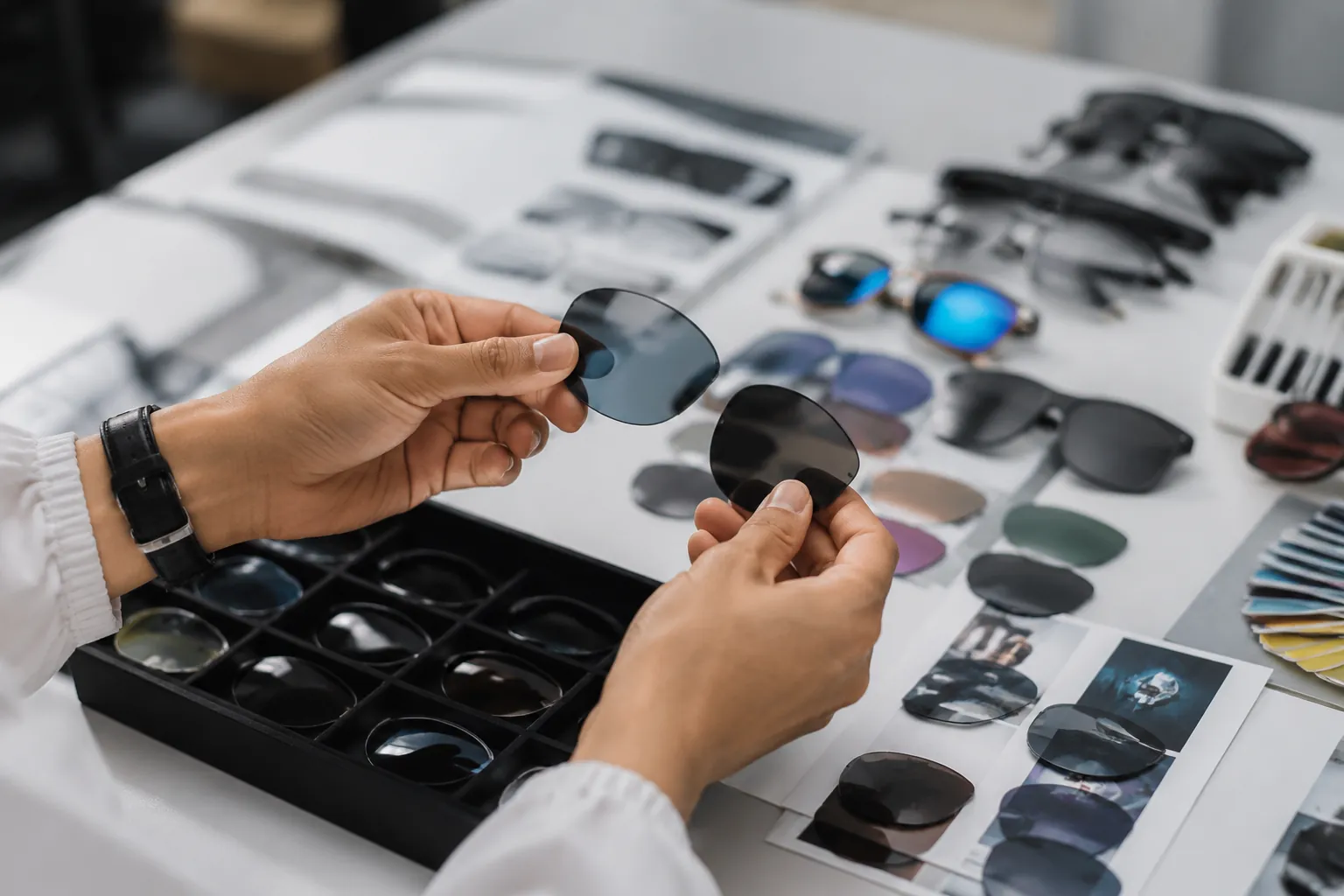
This guide is for brand owners, importers, distributors, and retail buyers who need more than a rough budget number. If you send only a few reference photos, the factory has to guess. It will guess on materials, construction, decoration, packaging, and compliance. Those guesses often change during sampling. Then pricing moves, lead times slip, and email chains grow. A clear tech pack and RFQ give the supplier enough detail to quote the product you actually plan to buy.
Why photo-only RFQs go wrong
A reference photo helps with style direction. It is not a quoting document. A factory can see the shape and general look. It cannot confirm the hidden choices that drive cost, tooling, process route, lead time, and inspection standards.
This is where many eyewear quotes break down. A buyer sends front and side images, asks for acetate or injection, wants a logo, polarized lenses, and custom colors, then expects a firm price. The supplier fills in the blanks. If those assumptions are wrong, the quote changes once sampling starts.
- Lens material not defined: PC, TAC polarized, CR-39, and nylon lenses differ in cost, performance, processing, and test behavior.
- Frame material not defined: injected plastics and acetate require different tooling, finishing, labor, and QC controls.
- Dimensions missing: lens width, bridge, temple length, front width, and base curve affect fit, mold route, and sample approval.
- Decoration unclear: pad print, laser engraving, foil marking, and metal logo plates use different processes and carry different cosmetic risks.
- Compliance market unknown: the target market affects lens specification, labeling, documentation, and test planning.
The result is not random price movement. It is a quote being corrected after the real product becomes clear. A frame with plain tinted PC lenses, a standard hinge, and simple print branding is not the same product as the same silhouette with TAC polarized lenses, spring hinges, metal temple logos, and a defined compliance target. Same photo. Different manufacturing brief.
Start with the five quote drivers
Before you ask for pricing, lock down the choices that shape the production route. These five points have the biggest effect on quote quality for custom sunglasses.
- Construction method. State whether the frame will be acetate, injected plastic, metal, or mixed material. Each route uses different tooling, finishing, and assembly steps.
- Lens specification. Define lens material, whether polarization is required, the tint type, and any finish such as mirror coating or gradient tint. Similar-looking lenses can vary a lot in cost and test performance.
- Decoration method. Specify whether branding is printed, engraved, stamped, or attached as a metal component. Each method changes setup, alignment control, and reject risk.
- Quantity break. Ask for pricing by quantity tier, not a single number. This shows how setup and secondary-process costs spread across volume.
- Target market compliance. State the destination market at RFQ stage so the supplier can quote the correct lens route, labeling, and document requirements.
Also be realistic about finish expectations. A hand-finished premium acetate frame and a high-volume injected frame may both work for your brand. They are not quoted the same way. They are not controlled the same way either. If your brief does not define the route, the factory has to guess.
Once these five decisions are written down, the supplier can quote against an actual production plan instead of a photo alone.
What a usable sunglasses tech pack must include
A sunglasses tech pack does not need fancy design software. It does need to be complete, clear, and in one place. One organized PDF is usually better than scattered messages and loose image attachments. The goal is simple: reduce interpretation at quote stage.
- Style overview: front, side, top, and 45-degree views, even if based on a reference image.
- Core dimensions: lens width, lens height, bridge width, temple length, front width, frame height, and base curve if known.
- Material callout: frame front material, temple material, lens material, hinge type, and any metal insert or core wire requirement.
- Color standards: Pantone for painted parts where applicable, acetate reference if available, and a defined lens tint such as solid smoke, gradient brown, G15, or mirrored silver.
- Branding positions: outer temple, inner temple, lens mark, tip logo, and packaging logo locations.
- Decoration spec: print size, engraving area, metal plate size, finish, attachment method, and any critical alignment requirement.
- Packaging: polybag, pouch, folding case, hard case, barcode label, warning label, and carton pack-out.
- Compliance destination: EU, US, Australia/New Zealand, or another stated market.
Add one page for non-negotiables. Use it to list the points that cannot change during sampling, such as polarized lens required, metal logo required instead of print, fixed front width tolerance, or a defined lens tint target. This helps the supplier separate must-haves from details where standard factory practice is acceptable.
If you are qualifying a new supplier, label items as either approval critical or factory standard acceptable. That keeps development work focused on the features that actually affect your buying decision.
The specs photos cannot show
Some of the most expensive problems come from specs that do not appear in an inspiration photo. The table below shows the hidden choices you should define before treating any quote as dependable.
| Spec item | What to define | Typical production detail | Why it changes the quote |
|---|---|---|---|
| Frame material | Injected PC, TR90-type polymer, or acetate | Injection usually relies on mold tooling and short repeat cycles; acetate requires cutting, tumbling, polishing, and more manual fitting | Changes tooling route, labor content, finish method, and scrap risk |
| Lens type | PC, TAC polarized, CR-39, or nylon; solid or gradient tint | TAC polarized lenses use layered construction; mirrored lenses add coating steps | Changes raw material cost, processing steps, and test performance |
| Hinge construction | Standard hinge, spring hinge, screw spec, embedded metal parts | Standard hinges and spring hinges differ in parts count and assembly requirements | Changes component cost, assembly labor, and durability expectations |
| Decoration | Pad print, laser engraving, foil, metal logo plate, hot stamping | Printed and engraved branding use different setup methods and surface requirements | Changes secondary process cost, setup time, and cosmetic reject risk |
| Tolerance | Critical dimensions and acceptable variance | Buyer control points often include overall fit dimensions and logo placement tolerance | Changes QC criteria, rework decisions, and pass/fail standards |
For acetate frames, buyers often care about polish quality, edge finish, lamination appearance, and hand feel. For injected frames, suppliers pay closer attention to mold consistency, visible sink, flow marks, gate marks, and color stability. Different route. Different controls.
Decoration is another common source of quote revisions. A one-color pad print is not the same as a plated metal badge. Neither is the same as laser engraving on a dark matte surface. If the branding method is still open, ask the supplier to quote each method separately instead of blending them into one estimate.
How to write the RFQ so price breaks mean something
Many RFQs ask for one quantity, then reopen pricing later. That wastes time. A better approach is to request tiered pricing at the start based on realistic buying scenarios. This makes supplier comparisons cleaner and shows where cost changes actually come from.
Your RFQ should ask the supplier to separate these cost lines:
- Unit price by quantity tier, for example 50, 300, 1000, and 5000 pairs
- Any mold or tooling charge, including whether the tooling is customer-owned or supplier-owned
- Sample charge and whether it can be credited against a bulk order
- Decoration upcharge by method
- Packaging cost per unit and carton assumptions
- Testing or documentation cost where required for the destination market
Also ask the supplier to state its quote assumptions in writing: frame material, lens material, polarization yes or no, hinge type, branding method, included packaging, and delivery term. Visible assumptions make supplier comparisons more reliable and reduce disputes after sampling.
A good RFQ also asks what happens if the first sample is revised. If temple length, lens tint, or logo method changes, will the supplier treat that as a normal development adjustment or as a new sample route? This matters. Revision policy affects development cost almost as much as the first quoted unit price.
If you are sourcing from multiple factories, send the same spec sheet and the same RFQ template to each one. Otherwise, the quotes are not truly comparable.
Plan lead time by stage, not by one promise
Lead time problems often start before production. The usual causes are incomplete specs, slow buyer feedback, or changes made after the production route is already set.
Do not rely on one blanket lead-time promise. Break the project into approval stages:
- RFQ review: supplier reviews drawings, materials, branding, packaging, and compliance requirements.
- Sample build: the supplier prepares the first development sample based on the agreed brief.
- Buyer review: the buyer checks fit, finish, branding, color, and packaging against the tech pack.
- Revision round: updates are made if required, especially for color, dimensions, decoration, or comfort.
- Bulk production: production starts only after final approval, commercial terms, and required documents are aligned.
The exact timing depends on construction, tooling status, decoration complexity, and whether testing is required before shipment. A repeat style using an established mold route can move faster than a new acetate development with custom inserts or multiple secondary processes.
For branded programs, avoid approving from photos alone if appearance matters. Temple logo placement, lens depth, gloss level, and polish quality are easy to misread on screen. A physical approval sample is the safer basis for bulk authorization. If color consistency matters across a collection, ask the supplier to retain an approved master sample for reference during production and final inspection.
Compliance notes to put in the pack on day one
Compliance belongs in the brief from the start. Not later. It can affect lens choice, labeling, documentation, and sometimes product design.
If you are buying for Europe, state that the sunglasses must align with CE EN ISO 12312-1. For the US, specify ANSI Z80.3 and confirm whether your internal process also requires supplier support related to FDA registration. For Australia and New Zealand, state AS/NZS 1067. If chemical compliance matters for your market or retailer, ask about REACH for applicable materials. For supplier qualification, ISO 9001 and BSCI are supplier-side credentials, not product performance standards.
Put the destination market on page one of the tech pack. If the supplier cannot see the compliance target clearly, it may quote a product that does not match your intended market.
Also specify any required markings, warnings, importer labeling, packaging language, or documentation timing. If your importer or retailer requires test reports before shipment release, say so during RFQ. That gives the factory time to plan testing and document flow instead of treating it as a last-minute issue.
If the same style is being developed for multiple markets, identify each version separately. A fashion lens look does not define the compliance route. The supplier needs the market brief in writing.
Buyer checklist before you request the quote
Use this checklist before you send the RFQ. If several points are still open, the quote is likely to be provisional whether the supplier says so or not.
- Do I know the frame construction I want quoted?
- Have I listed finished dimensions, not just the nominal lens and temple size?
- Did I define lens material, tint, and whether polarization is required?
- Did I specify branding method and every branding position?
- Did I state the packaging type and label or barcode needs?
- Did I ask for pricing by quantity tier?
- Did I name the destination market and compliance requirements?
- Did I define non-negotiables and acceptable tolerances?
- Did I ask the supplier to state all quote assumptions in writing?
A fast quote is easy to get. A usable quote takes a complete brief and a supplier response that makes assumptions visible. The clearer the product definition, the easier it is to control price changes, cut extra sample rounds, and protect your launch timing.
Have a custom sunglasses project in mind?
Send us your styles, target market and quantities and we will return a detailed quote with MOQ, lead time and a sample plan.
Get a QuoteWhy source this from Wenzhou with LumiShades
Wenzhou in Zhejiang Province is widely regarded as China’s eyewear manufacturing capital, producing a large share of the world’s sunglasses. That concentration matters to buyers: a deep local supply chain for acetate sheet, hinges, lens blanks, plating and packaging means shorter component lead times, easier color and material matching, and a workforce with decades of eyewear-specific skill. LumiShades has manufactured in this ecosystem since 2009, and our vertical integration — in-house injection molding, acetate cutting, CNC milling, lens tinting, decoration and quality control — means no part of your order is quietly subcontracted to a workshop you cannot audit.
For international buyers, that vertical control translates into accountability. When a single factory owns every step, defects are traced and fixed at source rather than bounced between vendors, and your specifications survive intact from first sample to bulk. We back this with 15+ years of experience, shipments to 60+ countries, more than 5 million pairs produced per year and a 98.5% on-time delivery rate. Our certifications — CE EN ISO 12312-1, FDA registration, ANSI Z80.3, AS/NZS 1067, REACH, ISO 9001 and BSCI audit — mean the compliance documentation your market requires already exists. Explore our manufacturing capabilities and quality control process to see how this works in practice.
Frequently asked questions
Can I get an accurate quote from only reference photos? You can get a rough estimate, but not a dependable production quote. Photos do not confirm frame material, lens material, hinge type, exact dimensions, branding method, packaging, or target-market compliance. To move from a budget estimate to a quote you can compare and approve, send a tech pack with dimensions, materials, decoration details, packaging requirements, quantity tiers, and destination market.
What is the minimum information I should send with my RFQ? Send one document that includes product views, key dimensions, frame material, lens material, tint or polarization requirement, hinge type if known, branding locations and methods, packaging requirements, quantity tiers, destination market, and any non-negotiable tolerances or appearance requirements. If you do not know a detail yet, mark it as open and ask the supplier to quote the alternatives separately.
How should I ask for pricing if I may scale later? Request tiered pricing at the quantities you may realistically buy, such as 50, 300, 1000, and 5000 pairs. Ask the supplier to break out unit price, tooling, sample charges, decoration cost, packaging cost, and any testing or documentation cost. Also ask which assumptions apply to each tier. This shows whether the price change comes from volume, process choice, packaging, or compliance support.
How many sample rounds are normal for custom sunglasses? One to two rounds is typical when the first tech pack is clear and the buyer gives consolidated feedback. More rounds are common when key specs were not defined at the start, color approval was not tied to a standard, or branding and fit decisions changed after the first sample. To keep sample rounds down, provide one marked-up feedback file listing every change by location and priority.
What lead time should I budget from RFQ to shipment? Budget by stage rather than using one blanket number. Include time for supplier quote review, sample making, your internal review, at least one revision round if the style is new, bulk production, and any required testing or document approval before shipment. The exact timeline depends on construction, tooling status, decoration complexity, and your own approval speed. Ask each supplier to confirm lead time by stage in writing.
Which certifications or compliance points should I mention to the supplier? State the destination market and the relevant requirements in the RFQ itself: CE EN ISO 12312-1 for Europe, ANSI Z80.3 for the US, AS/NZS 1067 for Australia/New Zealand, and REACH where chemical compliance applies. If your internal process requires support related to FDA registration for the US market, mention that as well. For supplier onboarding, you may also ask whether the factory holds ISO 9001 and BSCI. Keep product compliance requirements separate from supplier-system credentials so nothing is misunderstood.
Ready to start?
Explore our square sunglasses or request a quote — our sales team replies within 12 hours.
Request a Quote