
Qualify a Sunglasses Factory Before 5,000+ Pairs
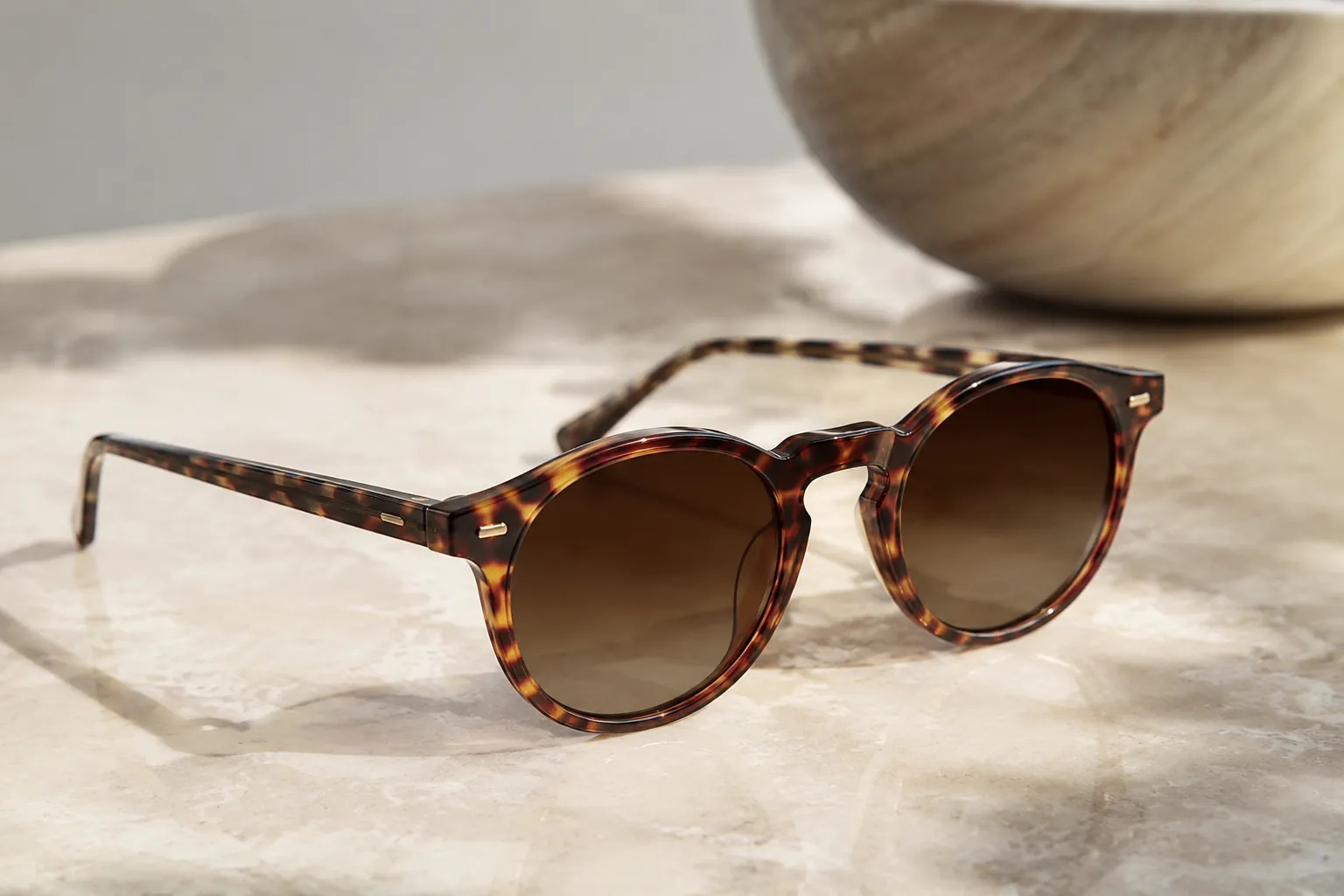
This guide is for brand owners, importers, distributors, and retail buying teams that need to qualify a sunglasses factory before ordering 5,000 pairs or more. A pilot order should test more than looks. It should show whether the supplier can follow a written specification, repeat an approved sample, control lens tint and decoration, assemble stable hinges, pack correctly, respond to defects, and support the compliance documents required in the destination market. Treat the pilot as a production-risk test. Not a cheap first purchase.
Start With A Pilot Order That Has A Clear Job
A 50-pair pilot order should run like a controlled production test. The job is simple: confirm whether the factory can read a specification, repeat an approved sample, control decoration, pack to instruction, and answer technical questions without guessing. If the pilot is vague, the result will be vague too.
For many existing-frame sunglasses programs, 50 pairs per design is a practical starting point. It is large enough to expose small-batch discipline and small enough to limit exposure before the supplier has proved repeatability. The unit price will usually be higher than a 300, 1,000, or 5,000-pair order. Color preparation, setup, logo fixtures or plates, line changeover, carton preparation, and QC time are spread over fewer units. That premium buys information.
Before artwork is released, define what the pilot must prove. Useful targets include frame color matched to an approved Pantone reference or physical chip, logo position held within an agreed tolerance, lens tint matching the signed sample, even left and right temple tension, lenses seated without rattle, and retail packaging matching the approved packing instruction. If the factory cannot control these points on a pilot run, scaling to 5,000 pairs will make the same problem more expensive.
- Start with one or two designs, not a full seasonal range.
- Use the construction you plan to scale: PC injection, acetate, metal, TR90, or mixed material.
- Include the real logo, lens color, pouch or case, barcode, warning label, user information, and carton marks.
- Ask the factory to confirm sample lead time, bulk lead time, production route, inspection points, and document responsibilities in writing.
- Keep one signed pre-production sample with your team and one sealed reference sample at the factory.
Define The Specification Before Sampling
Most pilot failures start before production. The buyer sends a reference photo and a logo file. The factory then guesses the material, lens category, finish, hinge type, decoration method, and packaging level. That may produce an attractive sample. It does not create a repeatable product.
A useful eyewear specification should include frame material, lens material, lens category target, UV claim, frame color reference, lens color reference, hinge type, screw color, logo size, logo position, decoration method, packaging components, carton quantity, market destination, and applicable compliance requirement. "Black sunglasses with smoke lens" is not enough. A stronger specification reads: "PC injection frame, gloss black Pantone Black C reference, 1.8 mm PC smoke lens, UV400 claim subject to test confirmation, Category 3 target, silver pad-printed temple logo 22 mm x 4 mm, logo center 18 mm from hinge, microfiber pouch, barcode sticker, EU warning text, CE user information required."
Sampling lead time depends on what already exists. Existing frames with standard lens colors and simple logo decoration are usually faster than new mold development, custom acetate shapes, special plating, metal logo plates, polarized lenses, or custom retail packaging. If a supplier promises every custom item unusually fast, ask which steps are included: mold trial, color matching, lens verification, decoration adhesion check, packing confirmation, and internal inspection.
Confirm the approval standard before production starts. Photos help communication, but they are not enough for color, lens darkness, surface finish, or hand feel. Use physical samples where possible. For retail programs, approve a golden sample, a color chip or material reference, final artwork PDF, carton layout, user-information copy, and a written tolerance sheet. Version each file with a date and order number. "Same as last time" is not a control system.
Use The Pilot To Test Process Discipline
A good 50-pair run tests how the factory works, not only how the sunglasses look on a desk. The factory should ask practical questions: target market, lens category, Pantone number, logo size, temple curvature, barcode format, packaging language, carton requirement, and inspection standard. These questions are not delays. They prevent rework.
During the pilot, ask for process evidence at key stages: material preparation, frame molding or acetate cutting, lens tinting or lens sourcing, logo decoration, assembly, packing, and final inspection. If the factory claims in-house capability for molding, acetate processing, lens tinting, laser engraving, pad printing, metal logo application, or QC, ask which steps will be used for your order and which steps are outsourced. In-house capability can shorten correction time. It does not remove the need for checkpoints.
Inspect the finished pilot as a batch. All 50 pairs should look like they came from the same approved production route. Warning signs include lens darkness varying pair by pair, logo position drifting beyond tolerance, one temple opening more tightly than the other, screw heads sitting at different depths, lenses rattling in the rim, packaging labels applied at mixed angles, or carton marks that do not match the shipping instruction.
- Approve a pre-production sample with photos, measurements, color references, lens details, logo details, and packaging details.
- Ask for in-process photos after frame production, lens preparation, decoration, assembly, and packing.
- Inspect every pair in the 50-pair pilot where possible.
- Record defects by type: cosmetic, functional, lens-related, decoration-related, packaging-related, or documentation-related.
- Require corrective action before moving to 300, 1,000, or 5,000 pairs.
Compare MOQ, Price Logic, And Scaling Risk
Many buyers ask for the 5,000-pair price before the product is stable. Price tiers matter, but they only make sense beside the specification and process risk. A 50-pair pilot normally costs more per unit because setup time, logo preparation, material handling, packing preparation, and inspection effort do not shrink just because the order is small.
The sharper question is not "What is the cheapest price?" It is "What changes when the price drops?" A lower quote may involve a thinner lens, different hinge, lighter pouch, simpler logo method, reduced packaging, fewer inspection steps, weaker carton, or thinner document package. Ask the factory to keep the same specification across price tiers unless a change is clearly marked in the quotation.
| Order stage | Main purpose | Typical timing | Price and risk logic |
|---|---|---|---|
| 50 pairs per design | Qualify communication, sample accuracy, decoration, packing, and small-batch QC | Depends on frame availability, lens choice, decoration method, and packaging complexity | Highest unit cost because setup, logo preparation, and inspection are spread over few units |
| 300 pairs | Test sell-through, carton packing, and repeat production on a small commercial run | Usually confirmed after sample approval, material availability, and production queue are known | Better cost, but still small enough to catch repeatability issues before major exposure |
| 1,000 pairs | Confirm production rhythm, QC reporting, export documentation, and packaging consistency | Should be tied to written milestones for material preparation, production, inspection, and shipment | Requires formal inspection criteria, defect classification, and retain samples |
| 5,000+ pairs | Scale cost efficiency, replenishment stability, and retail distribution | Depends on material booking, packaging production, inspection plan, and factory load | Best pricing only makes sense after sample, tolerance, packaging, and compliance controls are locked |
The jump from 50 to 5,000 pairs should be earned. Fix unresolved logo adhesion, lens tint, hinge, labeling, carton, or document problems before the next tier. A defect rate that looks manageable in a pilot can become a costly claim when multiplied across cartons and retail locations.
Check Materials And Decoration Like An Engineer
Material choice affects cost, tooling, finish, durability, and lead time. PC injection frames are common for promotional and fashion sunglasses because they support efficient molding and flexible color options. Check for sink marks around thick areas, color streaks, sharp parting lines, flash, and temple warping after cooling. TR90 is lighter and flexible, but it needs proper temperature control and stable hinge assembly. Acetate gives richer color depth and polish, but cutting, CNC milling, tumbling, heating, and hand assembly add time. Metal frames add soldering, plating, lacquer, screw, and nose-pad control.
Ask the factory to state the exact frame material, lens material, lens thickness, hinge type, screw specification, and decoration method. For many fashion sunglasses, lens thickness may sit around 1.8 mm to 2.0 mm, but the correct number depends on frame design, lens material, intended use, and target standard. Check lens color under neutral light against a white background. Left and right lenses should match in darkness and tone. Small tint differences are easy to miss during packing and obvious to retail customers.
Decoration needs separate approval. Pad printing is efficient for temple logos, but it depends on ink adhesion, fixture accuracy, and curing time. Laser engraving is durable but depends on material contrast and engraving depth. Metal logo plates can look premium, yet weak adhesive, shallow recesses, or poor edge fit can cause lifting. Hot stamping can work on some packaging and frame surfaces, but curved areas and textured materials increase the risk of cracking or misregistration.
Use simple pilot-stage checks before approving scale. Rub the logo area with a dry cloth for 20 cycles. Use a mild alcohol wipe only if the material and decoration method allow it. Open and close hinges 20 to 30 times to check screw seating and temple tension. Place frames on a flat surface to check rocking and alignment. These checks do not replace laboratory testing or the requirements of EN ISO 12312-1, ANSI Z80.3, AS/NZS 1067, or restricted-substance rules. They do reveal weak process control quickly.
Use Compliance And QC As Production Gates
Compliance should be discussed before sampling because lens selection, claims, user instructions, and labels depend on the destination market. Ask for documents that match the market and product claim. Relevant references may include CE conformity under EN ISO 12312-1 for the EU, ANSI Z80.3 for the United States, AS/NZS 1067 for Australia and New Zealand, REACH information for EU restricted-substance expectations, FDA registration where applicable, ISO 9001 for quality-management context, and BSCI for social-compliance context. Do not treat any certificate as a substitute for the correct product specification and batch-level verification.
For the EU, sunglasses normally require CE conformity supported by appropriate technical documentation, including UV protection, lens category, and required user information. For the United States, buyers commonly request ANSI Z80.3 alignment and may ask about FDA registration where relevant to the supplier or importer setup. For Australia and New Zealand, AS/NZS 1067 is the key reference. REACH matters for restricted substances in materials, coatings, inks, and components entering the EU.
Build QC into the order before production starts. Divide inspection into appearance, function, lens, decoration, packing, and documentation. Logo position should have a written tolerance based on logo size, temple width, and decoration method; 0.5 mm to 1.0 mm is a common working range for many temple logos, but the final tolerance should be agreed before production. Frame color should be checked against a physical sample or Pantone reference, not a phone photo. Screws should be seated cleanly with no stripped heads. Lenses should sit firmly without rattle, stress marks, chips, or visible distortion. Packaging should carry the correct barcode, warning text, importer details where required, lens category where required, and carton quantity.
- Appearance: scratches, flash, sink marks, color difference, polishing marks, plating defects.
- Function: hinge movement, screw tightness, temple alignment, frame balance, lens fit.
- Lens: tint consistency, UV claim, category target, surface defects, left-right match.
- Decoration: logo size, position, adhesion, engraving clarity, metal plate seating.
- Packing: pouch, cloth, case, barcode, warning label, user information, carton mark, quantity per carton.
For a 50-pair pilot, inspect every pair. For 1,000 pairs and above, use an agreed sampling plan, define acceptable and unacceptable defects in writing, and keep retain samples from the approved batch.
Score The Factory After Delivery
After the pilot arrives, do not make a simple yes-or-no decision based only on appearance. Score the factory across the areas that matter at 5,000 pairs: communication, sampling accuracy, production consistency, QC honesty, lead-time discipline, packaging control, documentation, and corrective action.
Measure timing against the confirmed schedule, not a casual message. Your order should have dates or milestones for sample approval, material preparation, production start, mid-production check, final inspection, and shipment handover. A factory that reports a delay early is easier to manage than one that stays quiet until the ship date.
Defect handling tells you a lot. Good suppliers classify the problem, identify the process step, and propose a correction. Examples include adjusting the pad-printing fixture, increasing curing time, revising lens tinting control, tightening screw torque control, changing carton insert direction, replacing incorrect labels, or remaking defective units. "Next time will be better" is not a corrective action.
| Score area | Pass signal | Warning signal |
|---|---|---|
| Communication | Questions are specific and written confirmations match the order | Sales replies are fast but technical answers keep changing |
| Sampling | Sample matches approved color, lens, logo, and packing details | Corrections are treated as new surprises |
| QC | Defects are reported with photos, quantities, and causes | Only "all good" is reported before shipment |
| Repeatability | All 50 pairs look and function like the same production batch | Lens tint, logo position, or hinge feel varies pair by pair |
| Corrective action | Factory proposes a process fix and confirms how it will be checked | Factory only offers a discount without solving the root cause |
Move To 5,000+ Pairs Only After Controls Are Locked
Scaling should be predictable. Before placing 5,000+ pairs, freeze the approved sample, frame material, lens specification, lens category, color reference, artwork, decoration method, packaging file, carton specification, inspection standard, compliance requirement, shipment terms, and change-control process. Any change after approval should become a new revision.
At volume, price usually improves because material purchasing, line setup, decoration fixtures, and packing labor are spread across more units. Still, the buyer should check exactly what is included in the larger-order quotation: lens type, hinge, pouch, case, barcode, warning label, user information, carton strength, inspection level, document package, and export documentation. Do not compare prices unless the specification is the same.
For the first 5,000-pair order, request a golden sample, production start photos, mid-production inspection notes, and final inspection before balance payment or shipment release. Keep one approved sample with the factory and one with your team. Label both with date, version, and order number. This prevents the common dispute where both sides say "same as last time" but refer to different samples.
A pilot order is not about trust. It is about control. Once the factory can repeat the approved product, report problems early, correct defects with process-level action, and support the right compliance documents for the destination market, scaling becomes a purchasing decision instead of a gamble.
Have a custom sunglasses project in mind?
Send us your styles, target market and quantities and we will return a detailed quote with MOQ, lead time and a sample plan.
Get a QuoteWhy source this from Wenzhou with LumiShades
Wenzhou in Zhejiang Province is widely regarded as China’s eyewear manufacturing capital, producing a large share of the world’s sunglasses. That concentration matters to buyers: a deep local supply chain for acetate sheet, hinges, lens blanks, plating and packaging means shorter component lead times, easier color and material matching, and a workforce with decades of eyewear-specific skill. LumiShades has manufactured in this ecosystem since 2009, and our vertical integration — in-house injection molding, acetate cutting, CNC milling, lens tinting, decoration and quality control — means no part of your order is quietly subcontracted to a workshop you cannot audit.
For international buyers, that vertical control translates into accountability. When a single factory owns every step, defects are traced and fixed at source rather than bounced between vendors, and your specifications survive intact from first sample to bulk. We back this with 15+ years of experience, shipments to 60+ countries, more than 5 million pairs produced per year and a 98.5% on-time delivery rate. Our certifications — CE EN ISO 12312-1, FDA registration, ANSI Z80.3, AS/NZS 1067, REACH, ISO 9001 and BSCI audit — mean the compliance documentation your market requires already exists. Explore our manufacturing capabilities and quality control process to see how this works in practice.
Frequently asked questions
Is 50 pairs enough to qualify a sunglasses factory? A 50-pair pilot is enough to test communication, sampling accuracy, decoration control, packing accuracy, and small-batch QC. It is not enough to prove full production capacity. Use it as the first gate: inspect all 50 pairs, record defects by type, require corrective action, and then consider a 300-pair or 1,000-pair run before committing to a large seasonal order.
Should I ask for the 5,000-pair price before placing a pilot order? Yes. Ask for price tiers at 50, 300, 1,000, and 5,000+ pairs, but require the factory to state what is included at each tier. Confirm whether the frame material, lens material, lens category, hinge, logo method, pouch or case, label, carton, inspection level, and document package stay the same. A lower price is only useful if the specification is unchanged or the changes are clearly approved.
What tolerances should I use for a sunglasses pilot order? Set tolerances before sampling. Common controls include logo position within an agreed range such as 0.5 mm to 1.0 mm where suitable for the logo and temple width, frame color matched to a physical sample or Pantone reference, left-right lens tint consistency, firm lens seating with no rattle, smooth hinge movement, clean screw seating, and correct barcode, warning label, user information, and carton marks. Put these checks into the purchase order or inspection checklist.
What documents should I request for sunglasses compliance? Request documents that match the destination market and product claim. For the EU, ask for CE conformity support under EN ISO 12312-1, including lens category, UV protection, and required user information. For the US, ask about ANSI Z80.3 alignment and FDA registration where applicable. For Australia and New Zealand, ask for AS/NZS 1067 support. For EU material restrictions, ask for REACH information. ISO 9001 and BSCI can support factory evaluation, but they do not replace product-level compliance evidence.
What is a normal sample and bulk timeline? There is no single reliable timeline without the specification. Existing frames with standard lenses and simple logo printing are usually faster. New molds, acetate development, custom lens colors, polarized lenses, metal parts, special plating, or custom packaging take longer. Ask the factory to confirm separate dates for sample production, sample approval, material booking, production start, mid-production check, final inspection, and shipment handover.
What defects matter most in a pilot sunglasses order? Focus on defects that will multiply at scale: lens tint mismatch, missing or unclear UV/category support, warped frames, loose hinges, uneven temple tension, poor screw seating, lens rattle, visible distortion, logo misplacement, weak decoration adhesion, scratches, flash, plating defects, incorrect warning labels, wrong barcodes, missing user information, and carton marks that do not match the shipping instruction.
When should I approve scaling to 5,000+ pairs? Scale only after the approved sample, material, lens specification, lens category, color reference, logo method, packaging files, inspection checklist, compliance documents, and change-control rules are locked in writing. Pilot defects should be corrected, rechecked, and accepted against clear limits. For the first 5,000-pair run, require production start photos, a mid-production check, final inspection results, and retained samples from the approved batch.
Ready to start?
Explore our round sunglasses or request a quote — our sales team replies within 12 hours.
Request a Quote