
OEM vs ODM Sunglasses: MOQ, Cost, Tooling and Fit
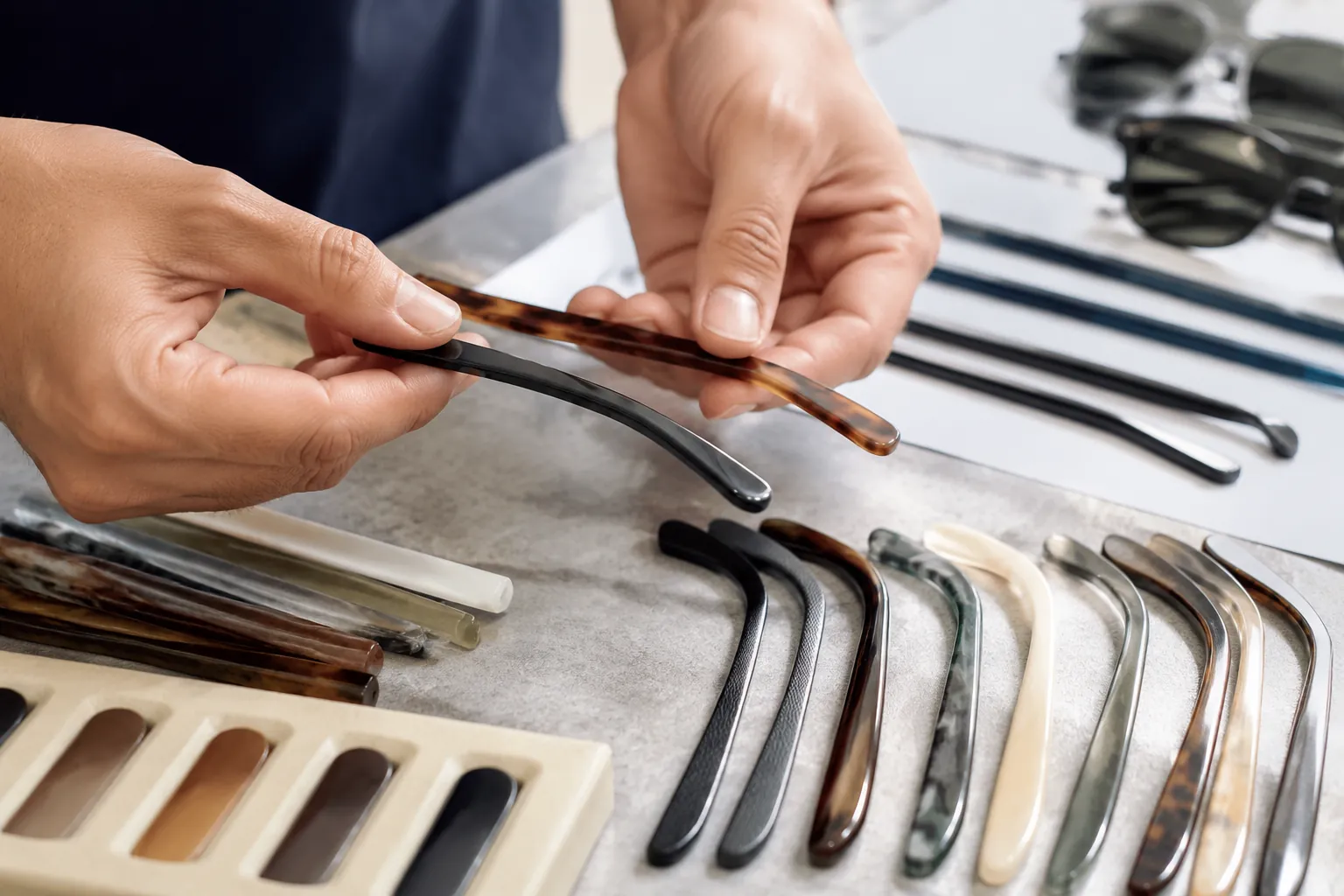
This guide is for brand owners, importers, distributors and retail buyers deciding how far to customize a sunglasses line before cost, MOQ and lead time outweigh the gain. It compares three practical routes: open-mold styles, modified ODM styles and full OEM tooling. The difference is not just design ownership. Each route changes sampling work, tooling cost, color control, decoration options, inspection standards and compliance responsibility. Spend where customers and retailers can verify value: fit, lens performance, finish, logo execution, packaging, labeling and documentation.
Start with launch risk, not the sketch
Most sunglasses projects start with a mood board. That helps direction. It should not drive the first commercial decision.
Start with a sharper question: is the project testing demand, improving an existing private-label line, or building a proprietary frame family that competitors should not be able to buy?
Those goals point to different sourcing routes. Open mold protects cash and speed. Modified ODM gives visible differentiation without rebuilding the product from zero. Full OEM is for buyers who can justify new tooling, fit correction and repeat production.
| Route | Best fit | Practical MOQ | Development cost | Sample timing | Bulk timing |
|---|---|---|---|---|---|
| Open mold | Market tests, seasonal drops, resort retail, promo programs | Often available from low MOQ if using existing materials and simple branding | Usually sample, logo setup and packaging costs only | Commonly fastest when standard colors, lenses and decoration methods are used | Usually shorter because frame tooling already exists |
| Modified ODM | Private-label lines needing a branded look | Low MOQ may be possible; larger runs usually improve unit economics | Low to moderate: color development, decoration setup, logo plates or limited part changes | Depends on material, logo method, color matching and packaging approval | Longer if extra parts, color splits or custom packaging are involved |
| Full OEM tooling | Exclusive shape, signature temple design, long-term carryover styles | Usually sensible only with repeat-order intent and enough volume to absorb development cost | Highest: tooling, CNC programming, prototypes, trial runs and fit correction | Longest, because the frame construction must be proven before approval | Starts after final sample, tooling and documentation are approved |
Sunglasses are tolerance products. They are not only fashion accessories. Lens groove depth, hinge position, temple spread, screw fit and frame front symmetry can affect assembly, lens stress and wearing comfort. These points should be measured during sample review and incoming inspection.
If the first order is mainly a test, open mold or light ODM is usually the lower-risk route. If the product will become a repeat core style and the shape itself is a brand asset, full OEM can make sense. But only when volume, margin and technical control support it.
Open molds: fastest path to market data
Open mold means the factory already has the frame tooling. The buyer chooses an existing frame shape and customizes visible elements such as frame color, lens tint, logo print, laser engraving, metal logo plate, pouch, case, cleaning cloth, hangtag and carton marks.
The main benefit is risk control. New frame tooling can reveal problems that are hard to judge from a rendering: bridge pinch, temples that open too wide, lens popping, hinge looseness, uncomfortable nose contact or a front curve that looks good in CAD but fits poorly on real faces.
Existing molds should already have passed at least one correction and production cycle. Still inspect samples before approval. Do not assume.
- MOQ depends on the supplier, available materials, decoration method and color split; the lowest MOQs are usually for standard frame and lens options.
- Sampling is fastest when the buyer accepts stock material colors, existing lens tints and simple logo decoration.
- Unit price generally improves as order quantity rises because setup time, material batching, decoration fixtures and QC work are spread across more units.
- Open mold is usually the best route for influencer drops, tourist retail, festival programs, distributor line tests and entry private-label ranges.
- Buyers should confirm whether the open mold is non-exclusive, semi-exclusive by market, or available to any customer.
The limitation is exclusivity. Other buyers may be able to use the same frame chassis unless the supplier offers a written exclusivity arrangement. A different color and logo may be enough for a retail rack. It will not create a defensible signature shape.
Use open mold to test customer preference before paying for originality. Order a controlled range: several frame shapes, two lens colors and two price points. Track sell-through, returns, bridge fit, temple comfort and lens preference. That data is worth more than a custom frame designed before you know whether your market wants square, oval, wrap, aviator or cat-eye proportions.
Modified ODM: where most private-label lines should begin
Modified ODM starts from an existing base style, then changes selected details to make the product feel owned by the brand. For many retailers, importers and distributors, this is the practical middle path. It gives differentiation without forcing a completely exclusive frame architecture.
Typical ODM changes include custom frame colors, translucent or tortoise effects, laminated acetate patterns, lens tint matching, gradient lenses, mirror coating, temple logo placement, metal logo plates, hinge finish, temple tip color and packaging. Some geometry adjustments may be possible. The supplier should separate cosmetic changes from tooling changes before quoting.
Material behavior matters. Injection frames are efficient for volume and repeatability, but color matching depends on resin, masterbatch, coating process and minimum batch logic. Acetate gives richer depth, stronger polish and premium pattern options. It also requires cutting, CNC milling, tumbling or hand polishing, plus tighter control of front warp after heating and lens insertion.
- Select a base frame that already matches the target face fit and lens category.
- Confirm whether the frame is injection plastic, acetate, metal or mixed construction.
- Lock color references using Pantone references, physical chips or approved material swatches.
- Define lens material, tint, visible light transmission target and coating requirements.
- Approve logo method, logo size, position tolerance and finish before making the pre-production sample.
- Review a full assembled sample, not only a color chip, loose lens or factory photo.
Decoration can change cost and inspection risk more than buyers expect. Pad printing is economical for simple temple logos, but it needs a clean print area and rub-resistance checks. Laser engraving is durable on suitable materials, but contrast can be subtle. Metal logo plates can look more premium, but they require part fabrication, plating or finishing, recess control, adhesive or mechanical fixing, and inspection for edge lift.
ODM often gives the best return. Customers usually notice color story, lens finish, logo execution, fit and packaging before they notice whether the base front curve is fully exclusive.
Full OEM tooling: use it when the shape is the asset
Full OEM means creating new tooling or a major new component for the frame. Use it when the silhouette, temple architecture, bridge design or engineering detail is central to the brand. Do not use it just because the brief says custom.
Tooling changes the project from selection to development. The supplier must review CAD or technical drawings, make or modify tools, produce trial shots or milled prototypes, assemble lenses, test hinge behavior, correct fit and repeat sampling if needed.
New injection molds must control shrinkage, gate marks, parting lines, screw boss strength and lens groove accuracy. Acetate OEM may not need the same injection mold investment for the front shape, but it still needs CNC programs, drilling fixtures, hardware selection and correction work.
Commercial rule: if the first order is small, the target fit is unproven and there is no reorder plan, full OEM tooling is usually difficult to justify.
OEM makes sense when the buyer expects repeat orders, has margin room and can define the design technically. A serious OEM brief should include lens width, bridge, temple length, front width, pantoscopic angle if relevant, front curve, hinge type, lens groove target, material, finish, decoration, packaging and compliance market.
Inspection is tighter on OEM because the supplier is proving a new construction. Check front symmetry, temple opening angle, temple closing alignment, hinge torque, screw engagement, lens seating, lens edge pressure and bridge comfort. Agree practical tolerances in writing before production. Logo placement, frame dimensions and lens seating each need their own acceptance criteria because they are controlled by different processes. Appearance is not enough. A good-looking frame that pinches the bridge, stresses the lens or fails hinge testing can become a bulk quality problem.
What really changes price and lead time
Quote differences usually come from process steps, not supplier preference. Five frame colors, three lens tints, a metal logo plate, special packaging and mixed cartons will not price or schedule like a single-color open-mold order.
| Cost driver | Lower-impact choice | Higher-impact choice | Why it matters |
|---|---|---|---|
| Frame route | Existing open mold | New OEM tool or major part change | Tooling, trial runs and correction loops add cost before production starts |
| Material | Standard injected plastic | Acetate, metal parts or mixed construction | More cutting, polishing, plating, assembly and inspection time |
| Lens | Standard solid tint | Gradient, mirror, polarized or specific VLT target | More coating control, testing risk and yield control |
| Logo | Pad print or simple laser mark | Custom metal plate or embedded hardware | Extra part sourcing, fixing method and placement checks |
| Color splits | One color in a larger run | Many colors in small quantities | Setup waste and changeover time are spread over fewer pieces |
| Packaging | OPP bag or standard pouch | Custom case, cloth, printed box and retail labeling | Packaging approval and supplier coordination can become the critical path |
Unit price often improves at higher quantities because material setup, decoration fixtures, QC time and carton handling do not scale down cleanly. A small order can still require sample review, line setup, logo alignment, lens cleaning, inspection and packing control.
Lead time should be quoted against a defined approval point. The purchase order should state whether the production clock starts after deposit, approved sample, approved packaging, final artwork confirmation, or all required approvals.
Timing slips for predictable reasons: the buyer changes lens color after sampling, adds a logo plate late, requests new packaging after the frame is ready, or splits a small order into too many SKUs. Every extra decision has a cost.
Fit, materials and decoration details buyers should check
Sunglasses quality is often decided by small physical details. A buyer may focus on color. The customer feels temple pressure, hinge smoothness, lens clarity and frame balance first.
For fit, check lens width, bridge width, temple length, frame front width and temple spread against the target customer. There is no single correct size range for every market. Oversized fashion frames, narrow optical-inspired frames and wrap styles require different evaluation because front curve, bridge geometry and temple angle change wearing comfort.
For materials, injected plastic is efficient for volume and lower price points. It can be light and consistent, but weak resin or poor finishing can make the product feel brittle. Acetate can feel more premium and supports rich patterns, but it is heavier and needs careful polishing, heating and adjustment. Metal components can raise perceived value, but plating, screw quality, soldering or welding points and corrosion resistance should be checked.
- Hinge action should feel even on left and right temples, with no grinding, looseness or excessive stiffness.
- Lens insertion should be secure without visible frame stress, edge gaps or popping under light flex.
- Temple tips should close cleanly and not scrape the lens or opposite temple.
- Logo decoration should be checked for position, adhesion, rub resistance and color consistency.
- Frame color should be compared under consistent light against an approved swatch or sample.
- Packaging should protect lenses from rubbing during transit, especially with mirror coatings.
Decoration should be specified like a production process, not buried in an email. State the logo artwork version, print color, size in millimeters, position from a measurable reference point and acceptable tolerance. For lens marks, confirm whether the logo is temporary, permanent, etched or printed. Each option has different retail, durability and compliance implications.
Compliance is part of the product
Custom sunglasses must match the requirements of the target selling market. A logo change rarely creates a compliance issue by itself. Lens tint, lens category, coatings, frame material, chemical content, labeling and claims can.
The standards and documents buyers commonly discuss include CE EN ISO 12312-1 for relevant markets, ANSI Z80.3 for the United States, AS/NZS 1067 for Australia and New Zealand, REACH for restricted substances, and FDA registration context for US import documentation. ISO 9001 and BSCI are factory-level credentials. They are not substitutes for product performance testing on the sunglasses being sold.
- Confirm the selling market before sampling, because the required documents and labels may differ.
- Define lens category, tint and intended use so warnings and labeling are not guessed later.
- Check visible light transmission when using dark, gradient, mirror or custom tinted lenses.
- Ask whether the test report covers the exact lens material, tint, coating and frame construction being ordered.
- Confirm REACH or other chemical expectations for frames, coatings, nose pads, metal parts and packaging where applicable.
Late lens changes create risk. A smoke lens, brown lens, green lens and mirror-coated lens can perform differently for visible light transmission and traffic signal recognition. If the available report belongs to a previous lens construction, ask the supplier or test lab whether re-testing or technical review is required for the selling market.
Compliance also belongs in the QC plan. Carton labels, product labels, warnings, country of origin, retail packaging claims and instruction inserts should match the approved market. A product can be physically acceptable and still create import or retail problems if documentation and labeling are incomplete.
PO checklist: what to lock before production
Most production disputes start with an assumption that was never written down. Before placing the PO, freeze the product route, technical spec and approval standard. This matters even more for low MOQ custom sunglasses, where small orders leave little room for rework.
- Route: open mold, modified ODM or full OEM, including any exclusivity agreement if applicable.
- Frame: material, color reference, finish, size, hinge type and tolerance notes.
- Lens: material, tint, coating, category, VLT target if required and compliance market.
- Decoration: logo method, artwork file, size, position, color, finish and placement tolerance.
- Packaging: pouch, case, cloth, box, barcode, inserts, carton marks and packing ratio.
- Sample rule: which approved sample controls bulk production and what must match exactly.
- QC points: appearance, color, logo, hinge action, lens cleanliness, lens seating, labeling and carton condition.
- Lead time basis: deposit date, sample approval date, packaging approval date or final artwork confirmation.
The practical sourcing sequence is simple. Use open mold or light ODM to test demand. Move proven sellers into stronger ODM to improve margin and brand control. Consider full OEM only when repeat volume, customer fit data and a defensible design reason are already in place.
Good sourcing is not choosing the most customized route. It is choosing the least expensive route that still supports the sales story, quality requirement and compliance obligation.
Have a custom sunglasses project in mind?
Send us your styles, target market and quantities and we will return a detailed quote with MOQ, lead time and a sample plan.
Get a QuoteWhy source this from Wenzhou with LumiShades
Wenzhou in Zhejiang Province is widely regarded as China’s eyewear manufacturing capital, producing a large share of the world’s sunglasses. That concentration matters to buyers: a deep local supply chain for acetate sheet, hinges, lens blanks, plating and packaging means shorter component lead times, easier color and material matching, and a workforce with decades of eyewear-specific skill. LumiShades has manufactured in this ecosystem since 2009, and our vertical integration — in-house injection molding, acetate cutting, CNC milling, lens tinting, decoration and quality control — means no part of your order is quietly subcontracted to a workshop you cannot audit.
For international buyers, that vertical control translates into accountability. When a single factory owns every step, defects are traced and fixed at source rather than bounced between vendors, and your specifications survive intact from first sample to bulk. We back this with 15+ years of experience, shipments to 60+ countries, more than 5 million pairs produced per year and a 98.5% on-time delivery rate. Our certifications — CE EN ISO 12312-1, FDA registration, ANSI Z80.3, AS/NZS 1067, REACH, ISO 9001 and BSCI audit — mean the compliance documentation your market requires already exists. Explore our manufacturing capabilities and quality control process to see how this works in practice.
Frequently asked questions
At what order size does full OEM sunglasses tooling usually make financial sense? Full OEM makes sense when the tooling cost can be spread across repeat production, not one launch order. Before approving tooling, ask for the mold or development cost, expected sample loops, unit price at realistic quantities, tooling ownership terms, exclusivity terms and reorder forecast. If the first order is small, the fit is unproven or there is no reorder plan, open mold or modified ODM is usually the lower-risk route.
Can I create a private-label look without new molds? Yes. A buyer can usually build a private-label look by changing frame color, lens tint, logo method, logo placement, metal logo plates, temple tip color, pouch, case, cloth, box and retail labeling. Ask the supplier to mark each requested change as cosmetic, process-related or tooling-related so you know which changes affect MOQ, cost, sample timing and exclusivity.
Why does the unit price drop at higher quantities? Many costs are fixed or semi-fixed for each production run: material setup, color batching, decoration fixtures, sample approval, QC checks, packing setup and carton handling. When those costs are spread across more pairs, the unit price usually falls. To compare quotes fairly, keep the same frame, lens, logo, packaging, inspection level and color split across each quantity tier.
Does changing lens tint affect compliance? It can. Lens tint, mirror coating, gradient treatment and polarization can affect visible light transmission, lens category and labeling. Before changing a lens after approval, confirm whether the existing CE EN ISO 12312-1, ANSI Z80.3 or AS/NZS 1067 documentation still covers the exact lens construction. If the report does not match, ask whether testing or written technical confirmation is required for the selling market.
What should I check on a sunglasses sample before approval? Check fit on the target wearer profile, hinge action, temple alignment, frame symmetry, lens seating, lens cleanliness, lens tint, logo position, logo durability, color match, packaging protection, labels and carton marks. For OEM projects, also confirm the agreed tolerances, final materials, hinge hardware, lens groove, bridge comfort and whether the approved sample is the control sample for bulk production.
Ready to start?
Explore our aviator sunglasses or request a quote — our sales team replies within 12 hours.
Request a Quote