
How to Negotiate Sunglasses Payment Terms
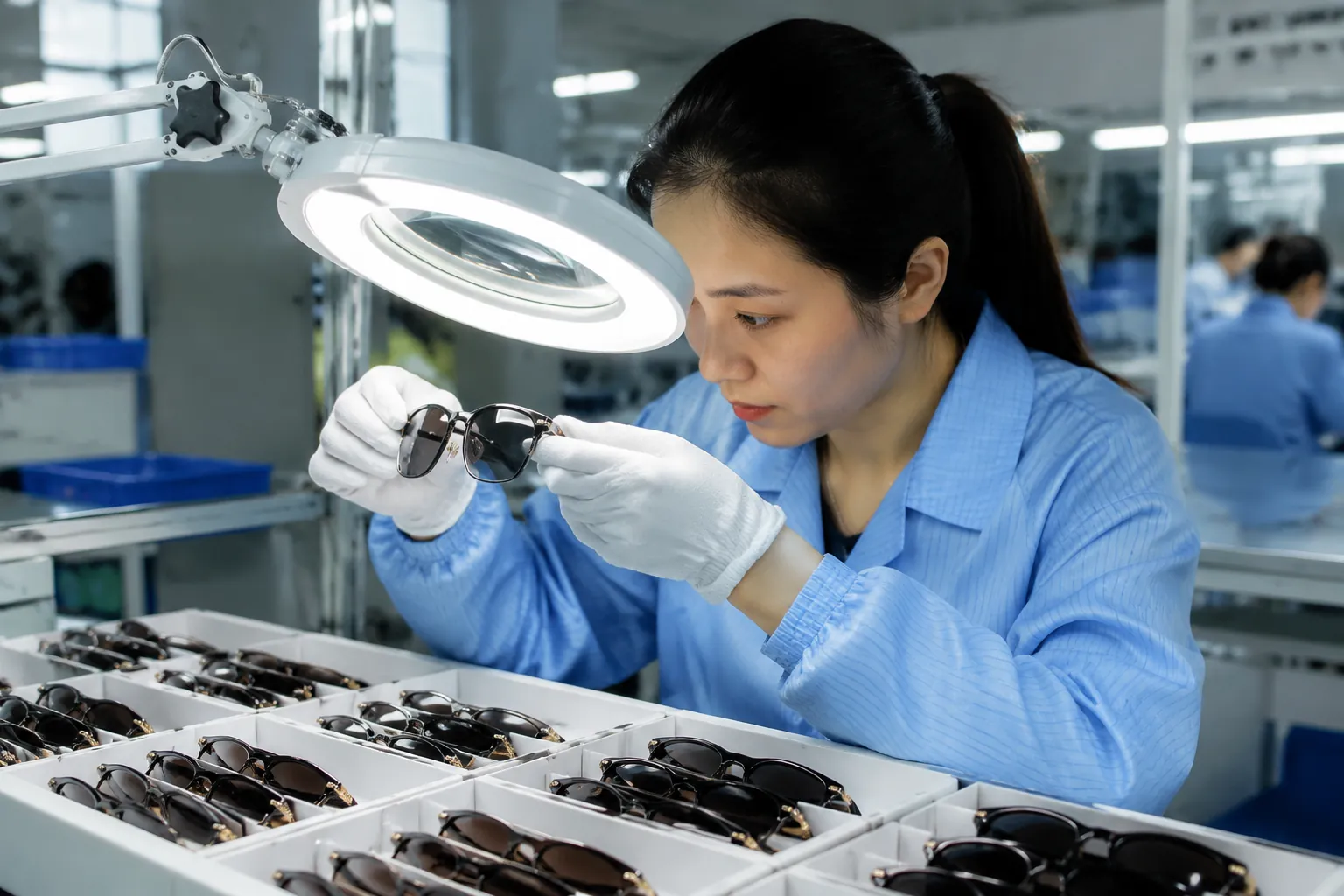
This guide is for importers, brand owners, distributors, and retailers buying custom sunglasses in volume. The goal is not to force credit onto a factory. The goal is to improve cash flow without asking the supplier to carry risk it cannot control. In custom eyewear, payment terms should follow the work: frame materials, lenses, logos, packaging, inspection, and compliance documents.
Start with the factory's real risk
Most payment-term disputes in custom sunglasses start with a simple mismatch. The buyer wants to protect cash. The factory is paying for materials, production slots, labor, QC, and the risk that finished goods cannot be sold to anyone else.
Customization changes the risk fast. A standard black injected frame with common smoke lenses may be redirected to another buyer. A translucent frame in a buyer-only color, with a logo, barcode labels, microfiber pouch, and branded box usually cannot. Not without rework. Not without a discount.
The risk also changes by process:
- Injection-molded styles: lower risk with standard colors and existing molds; higher risk with custom color matching, exclusive inserts, or small-batch color trials.
- Acetate styles: higher up-front exposure because acetate sheets are bought before CNC cutting, tumbling, polishing, hinge fitting, and assembly. Custom sheet colors or lamination patterns can leave dead inventory.
- Lens tinting and coatings: standard smoke, brown, green, and other common colors are easier to reuse; custom gradients, mirror finishes, polarization, or category-specific tint targets are harder to redirect.
- Decoration and packaging: logos, language inserts, barcode labels, retail boxes, and carton marks may be a smaller share of the order value, but they are often the least reusable items.
For a first order, 10% deposit and 90% after arrival is usually a nonstarter. It asks the supplier to carry material risk, production risk, export risk, and buyer-default risk. Better terms are possible. They are earned through approved samples, complete specifications, clear QC rules, fixed review windows, and reliable repeat orders.
Use milestones on the first order
For a first production order, tie payment to proof. Vague language such as we need trust or we pay after we are comfortable does not help. It tells the factory nothing about when payment moves or what conditions must be met.
| Term structure | Typical use case | Buyer cash impact | Supplier risk level |
|---|---|---|---|
| 100% before production | Very small runs, urgent jobs, heavy customization, or buyers with no payment history | Poor | Low |
| 50% deposit, 50% before shipment | Small custom orders near MOQ or orders with high non-recoverable material exposure | Moderate | Low to moderate |
| 30% deposit, 70% before shipment | Common first-order structure when samples and specifications are approved | Good | Moderate |
| 30% deposit, 70% after inspection but before loading | Practical first-order target when final inspection is agreed in advance | Better | Moderate |
| 20% deposit, 80% before shipment | Repeat orders with stable construction and reliable payment history | Strong | Moderate to high |
| 30% deposit, 70% at 15-30 days after B/L date | Established programs with recurring volume, credit approval, and documented payment performance | Very strong | High |
For many overseas buyers placing a first custom sunglasses order, 30% deposit and 70% after passed final inspection, before shipment is a realistic target. The deposit helps the factory buy materials and reserve capacity. The inspection hold gives the buyer a control point before the balance is released.
Write the trigger clearly. Balance should be due only after:
- Approved pre-production sample or sealed reference sample is on file
- Bulk goods are completed and packed for inspection
- Final inspection is performed by the agreed party
- Inspection report is issued and shows a pass result under the agreed standard
- Carton count, shipping marks, barcode format, and packing list are confirmed
- Required compliance documents for the destination market are supplied as agreed
This is easier to manage than a general promise of trust. It gives both sides a date, a standard, and a path to release.
Match the deposit to production cost
If you want a lower deposit, show that you understand what the deposit funds. In eyewear, deposit percentages usually follow early cash outlay and risk exposure. They are not just habit.
Low-MOQ orders carry more pressure. Setup work is spread over fewer units. A small run can still require color matching, logo setup, packaging approval, production planning, and QC preparation. That is why price and payment flexibility often improve when quantities rise and specifications stay stable.
Early-stage deposit money may cover:
- Frame material purchase: injected resin, color masterbatch, acetate sheets, or metal components
- Lens material allocation, tinting, mirror coating, or polarized lens sourcing
- Hardware: hinges, screws, nose pads, wire cores, trim plates, or decorative parts
- Decoration setup: pad-print plates, laser jigs, engraving files, hot-stamping setup, or metal logo tooling
- Custom packaging components: box, pouch, booklet, barcode label, hang tag, insert, or carton marks
- Labor scheduling, line reservation, mold setup, machine changeover, and in-process QC
A practical method is to separate recoverable and non-recoverable items. If frames and lenses are standard but packaging is heavily branded, keep a normal production deposit and tie packaging payment to artwork approval or packaging material release. If the main exposure is custom acetate sheet purchase, the factory has a stronger reason to ask for more money before buying that material.
The rule is blunt. The more your order depends on parts that cannot be reworked, reused, or resold, the less room you have to cut the deposit. A lower deposit is easier to justify with existing molds, standard colors, standard lenses, shared packaging, and proven specifications.
Make inspection holds specific
Inspection holds are useful buyer protection. But only if the clause is tight. Balance after inspection is too loose. The supplier needs to know which inspection applies, who performs it, what standard is used, what counts as a pass, and how quickly payment follows.
A clean sequence is simple: production complete, goods packed, inspection booked, report issued, balance paid within a fixed window, shipment released. A fair review window is usually 1 to 2 business days after a pass report. Longer internal approval time should be disclosed before production starts. Otherwise, it is short-term credit by another name.
For sunglasses, final inspection should cover more than general appearance. It should include:
- Frame color checked against the approved sample under consistent lighting
- Logo position, print clarity, engraving depth, and artwork orientation
- Temple alignment, front symmetry, and frame balance on a flat surface
- Hinge opening and closing consistency, with no binding or excessive looseness
- Screw tightness and stability after repeated opening and closing checks
- Lens fit, lens shade consistency, mirror appearance, and visible coating defects
- Packaging count, barcode readability, retail packaging condition, carton marks, and destination labels
Set tolerances before production. Define logo position tolerance from the approved artwork location. State the inspection distance for visible scratches. Match lens tint to an approved sample range. Agree defect classification before the final inspection. If AQL sampling is used, put the AQL levels and critical, major, and minor defect definitions in the purchase order or inspection protocol.
Keep compliance separate where possible. Product inspection checks the manufactured lot. Compliance documents should usually be confirmed at sample approval or pre-production stage. Late requests for CE EN ISO 12312-1, ANSI Z80.3, AS/NZS 1067, REACH, FDA registration support, ISO 9001, or BSCI documents can delay shipment and create payment disputes.
Lock specs before money moves
Many payment disputes are really specification disputes. If the product file is incomplete, the balance trigger becomes a fight over whether the supplier delivered the right goods.
Before paying any deposit, confirm these points in writing:
- Frame material, mold or model reference, exact color reference, and finish requirement
- Lens material, tint, visible light category target if applicable, polarized or non-polarized status, and mirror requirement if any
- Decoration method: pad print, laser engraving, hot stamping, metal logo plate, or other method, with approved position and artwork file
- Packaging bill of materials, artwork version, barcode format, carton marks, and approval sequence
- Required compliance documents for the destination market
- QC checkpoint timing, inspection party, defect criteria, and pass or fail rules
- Lead-time start point: deposit receipt, sample approval, packaging approval, compliance confirmation, or all approvals complete
The lead-time start point matters. A supplier may quote normal sample and bulk timing, but production usually depends on released artwork, approved lenses, confirmed packaging, and material availability. If logo artwork changes after tooling starts, or carton language changes after packaging is ordered, the shipment can slip even when frame production is on schedule.
Compliance must be tied to the actual product and destination market. If you require CE EN ISO 12312-1, ANSI Z80.3, AS/NZS 1067, REACH, FDA registration support, ISO 9001, or BSCI-related documentation, define the document, the responsible party, the product or factory scope, and who pays if a design change requires new testing or updated paperwork. Generic documents after production are not a substitute for early confirmation.
Use repeat orders to earn better terms
Suppliers rarely improve terms because a buyer pushes harder. They improve terms when the risk drops. Repeat orders can do that.
| Order stage | Suggested term target | Why the supplier may accept |
|---|---|---|
| First order | 30% deposit, 70% after inspection before shipment | No payment history, but clear specifications and release milestones reduce uncertainty |
| Second or third order, same construction | 20-30% deposit, balance before shipment | Approved specs are stable and production surprises are lower |
| Rolling monthly orders | 20% deposit, 80% against copy B/L or short-dated terms | Factory benefits from recurring volume and better capacity planning |
| Annual program with forecast | Material deposit plus periodic settlement | Supplier can plan material purchasing and labor allocation more efficiently |
If you want improved terms, bring evidence. A supplier can assess the request more seriously when you can show:
- On-time payment history on prior orders
- Stable specifications with few last-minute changes
- Forecasted volume over the next production period
- Repeat frame families or shared materials across styles
- Fast sample approvals and disciplined communication
- Clear inspection standards and prompt balance release after passed inspection
Reordering the same injected frame in standard colors with the same lens type and packaging is a lower-risk plan than launching a new acetate frame with custom sheet color, new decoration, and gift-box packaging. Predictability matters. It reduces obsolete materials, line disruption, rework, and delayed cash collection.
Ask in precise commercial language
Some payment requests signal that the buyer does not understand manufacturing risk. The factory may raise price, delay response, shorten validity, or decline the order.
- No deposit on a first custom order: unrealistic unless the product is stock goods or near-stock goods with limited branding.
- Balance after goods arrive at destination: transfers production, export, transit, customs-delay, and buyer-default risk to the supplier.
- Inspection with open-ended internal review time: reads as hidden credit if goods are completed, packed, and passed.
- Chargebacks for undefined minor issues: factories need agreed defect categories, tolerances, and remedies before production starts.
- Late compliance demands: adding CE EN ISO 12312-1, ANSI Z80.3, AS/NZS 1067, REACH, FDA registration support, ISO 9001, or BSCI document requirements after production starts can delay shipment and create cost disputes.
A better first-order script is short and reasonable:
We are ready to place the order after sample approval. Because this is a custom program, we understand you need deposit coverage for materials and production scheduling. Our proposed term is 30% deposit to start production and 70% after passed final inspection, before shipment. We will confirm the inspection date in advance and release the balance within 2 business days after the pass report. If any component requires non-recoverable material purchase, please identify it so we can agree the payment trigger clearly.
For a repeat order, the ask can be stronger:
Our previous orders were paid on time and repeated without major specification changes. For the next run of the same construction, we would like to adjust terms to 20% deposit and 80% before shipment, or 30% deposit with balance against copy B/L. We can provide a forward forecast so materials and capacity can be planned in advance.
If the supplier resists, ask what risk is blocking the request. It may be custom acetate sheet purchase, exclusive hardware, mirrored or polarized lens commitment, custom packaging, buyer-side approval delays, or credit policy. Solve that issue directly. Repeating the same percentage demand will not move the discussion.
Have a custom sunglasses project in mind?
Send us your styles, target market and quantities and we will return a detailed quote with MOQ, lead time and a sample plan.
Get a QuoteWhy source this from Wenzhou with LumiShades
Wenzhou in Zhejiang Province is widely regarded as China’s eyewear manufacturing capital, producing a large share of the world’s sunglasses. That concentration matters to buyers: a deep local supply chain for acetate sheet, hinges, lens blanks, plating and packaging means shorter component lead times, easier color and material matching, and a workforce with decades of eyewear-specific skill. LumiShades has manufactured in this ecosystem since 2009, and our vertical integration — in-house injection molding, acetate cutting, CNC milling, lens tinting, decoration and quality control — means no part of your order is quietly subcontracted to a workshop you cannot audit.
For international buyers, that vertical control translates into accountability. When a single factory owns every step, defects are traced and fixed at source rather than bounced between vendors, and your specifications survive intact from first sample to bulk. We back this with 15+ years of experience, shipments to 60+ countries, more than 5 million pairs produced per year and a 98.5% on-time delivery rate. Our certifications — CE EN ISO 12312-1, FDA registration, ANSI Z80.3, AS/NZS 1067, REACH, ISO 9001 and BSCI audit — mean the compliance documentation your market requires already exists. Explore our manufacturing capabilities and quality control process to see how this works in practice.
Frequently asked questions
What is the most realistic payment term for a first custom sunglasses order? A practical first-order target is usually 30% deposit and 70% after passed final inspection, before shipment. Put the trigger in writing: approved sample on file, goods completed and packed, inspection passed under the agreed standard, packing details confirmed, and balance released within 1 to 2 business days.
Can I ask to pay the balance after the goods arrive in my country? You can ask, but most custom eyewear factories will reject it for a first order. Arrival payment makes the supplier carry production risk, customization risk, export risk, transit delays, customs delays, and buyer-default risk. A more realistic compromise is balance after passed inspection and before shipment, or short-dated terms after several successful orders.
Should inspection happen before I pay the balance? Yes, if it is agreed before production starts. The clean structure is: goods completed and packed, final inspection performed by the agreed party, report issued, pass result confirmed, then balance paid before loading or shipment release. Also define AQL level, defect categories, inspection timing, and the payment deadline after a pass report.
How do repeat orders help me negotiate better terms? Repeat orders reduce supplier risk when they prove that you pay on time, keep specifications stable, approve samples quickly, and release balances as agreed. Use that evidence to request lower deposits, balance against copy B/L, or short-dated terms. Support the request with a forecast and identify which materials or frame families will repeat.
Does heavy customization affect the deposit size? Yes. Custom acetate colors, exclusive frame colors, special lens tints, mirror or polarized lens commitments, metal logo plates, custom packaging, market-specific labels, and unique carton marks increase non-recoverable cost. The more components that cannot be reused for another buyer, the stronger the supplier's case for a higher deposit.
Which compliance documents should be agreed before production starts? Agree compliance documents at sample stage and tie them to the product, market, and order file. Common eyewear-related requests include CE EN ISO 12312-1, ANSI Z80.3, AS/NZS 1067, REACH, FDA registration support, ISO 9001, and BSCI. Confirm whether each document applies to the product, material, factory system, or social compliance requirement, and confirm who pays for testing or updates if the design changes.
Ready to start?
Explore our rimless sunglasses or request a quote — our sales team replies within 12 hours.
Request a Quote