
Plan Custom Sunglasses Orders: 300, 1000, 5000 Pairs
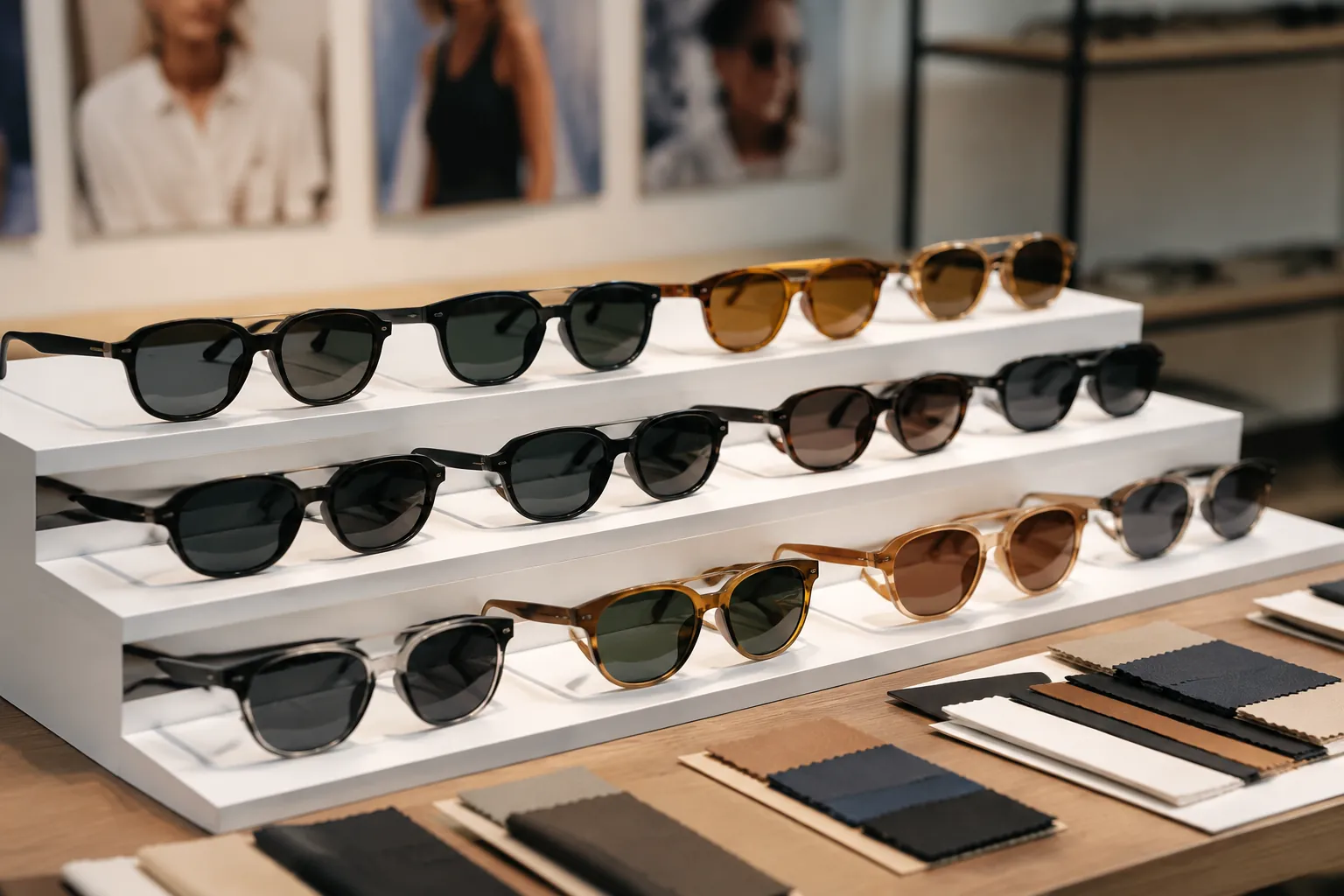
This guide is for overseas brands, importers, distributors, and retailers planning custom sunglasses orders without tying cash to the wrong SKUs. Treat 300, 1000, and 5000 pairs as different buying decisions. Use 300 pairs for market testing, 1000 pairs for a focused first commercial order, and 5000 pairs for proven reorder depth. The real question is not how many pairs you can buy. It is how many frame shapes, colors, lenses, decorations, packaging versions, and market versions the order can support before it becomes too fragmented to quote, inspect, ship, and reorder cleanly.
Start With the Job of Each Quantity Band
A 300-pair run, a 1000-pair run, and a 5000-pair run are not the same order in different sizes. Each band has a different job. Each band also has different production logic. The common mistake is simple: buyers give every color or lens option equal volume before the market has proved anything.
At LumiShades, MOQ starts at 50 pairs per design for suitable projects. That can work for sales samples, retailer previews, influencer seeding, or small private-label checks. But low MOQ is not bulk-production economics. Once demand is grouped into 300, 1000, and 5000+ pairs, the real drivers become clearer: material purchasing, tooling status, machine setup, color changeovers, lens preparation, decoration fixtures, packaging runs, and inspection sampling.
Use 300 pairs to learn which color, fit, and lens direction deserve more money. Use 1000 pairs when the design has been sampled and the range is narrow enough to produce a useful sales signal. Use 5000 pairs only when the frame, color, lens, packaging, destination market, and sales channel are already known. Sunglasses inventory punishes guesswork. Color preference, face fit, and seasonal timing can break a spreadsheet fast.
Build the Order Around SKU Math
| Quantity band | Best use | Recommended SKU structure | Planning note |
|---|---|---|---|
| 50 to 100 pairs | Sales samples, pre-production validation, retailer preview | 1 design or 1 colorway at a time | Useful for feedback, but not a reliable bulk-cost benchmark |
| 300 pairs | Market test, seasonal capsule, first online drop | 1 frame shape, 2 to 3 colors, 1 lens family | 100 pairs per SKU is already a limited read |
| 1000 pairs | First commercial order after approved samples | 1 to 2 frame shapes, 3 to 5 total SKUs | Put the largest share into the safest SKU |
| 5000 pairs | Reorder, distributor program, promotion, core retail line | Proven colors with limited experiments | Buy depth in winners, not equal quantities across every option |
A practical 300-pair split is one hero frame in three SKUs: 120 black frame with smoke lens, 100 tortoise frame with brown lens, and 80 transparent grey frame with smoke gradient lens. That gives enough volume to compare demand while keeping production controlled. Add five frame colors and four lens colors, and the order becomes twenty SKUs. At 300 pairs, that is only 15 pairs per SKU. That is showroom sampling, not a market test.
For 1000 pairs, a stronger structure is often 600 pairs in the safest commercial color, 250 pairs in the second color, and 150 pairs in a higher-risk seasonal color or lens effect. Equal 333/333/334 splits look tidy. Retail sell-through is rarely tidy. For 5000 pairs, the split might be 2500 black smoke, 1250 tortoise brown, 750 crystal grey smoke, 300 seasonal mirror, and 200 retailer-specific packaging. The ratio should follow demand evidence, channel commitments, or reorder history. Not internal preference.
Do Not Confuse Design Count With SKU Count
One frame design can become twelve SKUs quickly. Color A with smoke lens, Color A with brown lens, Color A with mirrored lens, Color B with those same three lenses, plus two packaging versions, can multiply the order before anyone notices. Every SKU needs BOM control, approved sample photos, color references, lens specifications, logo files, packaging labels, carton marks, barcode files if used, and final inspection records.
For injection molded sunglasses, frame color changes require pigment control, machine cleaning, first-piece confirmation, and color comparison under consistent lighting. A small pigment drift can be visible if left and right temples are produced under different setup conditions. For acetate sunglasses, color is tied to sheet availability, cutting yield, lamination quality, polishing, and natural pattern variation. A tortoise acetate sheet can vary by batch and by position on the sheet. Approve an acceptable production range instead of judging every pair against one hand-picked sample.
A cleaner planning order is: frame shape first, material second, color family third, lens option fourth, decoration fifth, packaging sixth, and destination market last for labeling and documents. Starting with attractive color combinations usually creates a wide SKU map with too little volume behind it.
- Frame design: mold or acetate profile, bridge width, lens width, temple length, hinge structure, and face curve.
- Frame color: injected pigment, painted finish, plated metal finish, acetate sheet reference, or transparent tint.
- Lens option: smoke, brown, green, gradient, polarized, mirrored, photochromic, or category-specific tint.
- Decoration: laser engraving, pad printing, hot stamping, metal logo plate, temple logo, lens logo, pouch mark, or box mark.
- Market version: EU, US, Australia/New Zealand, or mixed-market labeling, warning, and test-document requirements.
Where 300 Pairs Makes Sense
A 300-pair order is for learning. It is not the right band for chasing the lowest unit price. Use it to answer specific commercial questions: which color sells first, whether the fit works for the target customer, whether the lens tint feels too dark or too light, whether polarized lenses justify the premium, and whether the packaging survives the sales channel.
At this volume, keep technical choices controlled. A standard injection frame, stock or approved custom color, proven lens tint, simple temple logo, and standard pouch or box will produce cleaner feedback than a product with too many variables. Before bulk production, freeze the frame material, lens specification, logo position, packaging structure, carton plan, barcode or label requirements, and destination-market documents. A fast sample is not a controlled bulk specification.
For 300 pairs, avoid putting three different lens technologies into the same frame unless the order is only for sampling. A polarized version, mirrored version, and gradient version each needs separate approval for appearance and performance. For export markets, the lens is not just a color choice. Europe uses CE alignment with EN ISO 12312-1, the US commonly references ANSI Z80.3, and Australia/New Zealand use AS/NZS 1067. Confirm lens category, visible light transmission target, UV400 claim support, warning text, and labeling before bulk production.
Use 1000 Pairs Without Losing Focus
The 1000-pair band is often the best first serious commercial order. It is large enough to improve production efficiency compared with a small test. It is still small enough to limit damage if one color misses. The buyer should already have approved fit, frame balance, hinge feel, lens color, logo position, and packaging dimensions from physical samples.
A workable 1000-pair plan is narrow: two or three colors, one lens family, one decoration method, and one packaging structure. For example, 600 black smoke, 250 tortoise brown, and 150 crystal grey gradient gives the core SKU enough stock to serve demand while still testing a style color. Another valid structure is 500 pairs in one sampled frame shape and 500 pairs in another, but only if both shapes have been priced, fitted, and approved separately.
At this stage, tolerances and inspection standards should be written down. Common control points include lens width, bridge width, temple length, hinge movement, temple alignment, lens fit, surface finish, logo placement, packaging accuracy, and carton marks. Practical tolerances depend on material, tooling, and construction, so confirm them on the technical sheet. As a starting point, buyers often review small plastic-frame dimensions in fractions of a millimeter for lens and bridge areas and about 1 mm for longer features such as temple length, subject to the confirmed production method. Fix packaging before freight is quoted. Carton size, inner box count, and gross weight change shipping cost.
When 5000 Pairs Is Worth It
A 5000-pair order makes sense when the design has passed a real sales checkpoint: retailer reorder, distributor pre-order, confirmed promotion, or stable online sell-through. A good sample is not enough. At this quantity, the main risk is usually not whether the factory can make sunglasses. The risk is whether the buyer has put volume behind the right SKUs.
At 5000+ pairs, production can usually be planned more efficiently across injection molding, acetate cutting, lens preparation, decoration, assembly, and QC because there is more volume behind the approved specification. Larger runs can reduce changeover pressure, support better material purchasing, and make line scheduling cleaner. That does not make every 5000-pair order cheap. Polarized lenses, custom metal parts, acetate handwork, premium hinges, special coatings, individual boxes, strict documents, or heavy decoration can all increase cost and lead time.
A weak 5000-pair split is 1000 pairs each across five colors because it feels balanced. A stronger split might be 2500 black smoke, 1250 tortoise brown, 750 crystal grey, 300 seasonal mirror, and 200 retailer-specific version. Use 5000 pairs to buy depth in winners. Variety belongs in 300-pair testing. Reorder volume belongs in proven SKUs.
Blunt rule: if you cannot explain why one SKU deserves more quantity than another, you are probably not ready for a 5000-pair assortment.
Separate Cost Drivers Before Quoting
If a supplier quotes one number without asking enough questions, the quote may be incomplete. Sunglasses cost is not driven by quantity alone. It comes from material, mold status, lens type, hinge quality, surface finish, decoration, packaging, inspection level, compliance documents, and the number of SKUs in the order.
Injection frames are usually better for lower unit cost, stable repeat production, and sharper price ladders at volume. Acetate frames can support a more premium position, but cutting, tumbling, polishing, pin fitting, and hand adjustment add time and cost. Metal frames introduce plating quality, soldering points, nose pad parts, and higher surface-finish sensitivity. CNC milling can be useful for precision components and premium acetate or metal details, but specify it only when it improves the product enough to justify the cost.
Decoration has its own process risk. Laser engraving is clean and durable on suitable temple surfaces. Pad printing is economical but needs adhesion checks and rub testing. Hot stamping can look premium on pouches or boxes but requires pressure and foil control. Metal logo plates add part sourcing, placement tolerance, and assembly inspection. Lens logos need special care. A poor print can make the product feel cheap immediately or interfere with the wearer experience if placed badly.
Before asking for a 300/1000/5000 price ladder, send a spec sheet with frame material, size, lens type, lens category target, hinge type, decoration method, logo artwork, packaging, destination market, inspection expectations, and expected SKU split. For compliance planning, relevant references may include CE EN ISO 12312-1, ANSI Z80.3, AS/NZS 1067, REACH, FDA registration, ISO 9001, and BSCI. The destination market and product claim should decide which documents, labels, and tests matter for the order.
Keep Reorders Clean From the First Sample
A good quantity split only helps if the winning SKU can be repeated. Keep a master SKU file from the first sample stage. Record frame code, dimensions, Pantone or material reference, acetate sheet reference if relevant, lens tint reference, lens category, logo position, packaging version, barcode, carton quantity, approved sample photos, and any testing or labeling requirement.
Before mass production, request one approved pre-production sample per SKU or per agreed production version. During production and final inspection, QC should check frame dimensions, hinge movement, screw tightness, lens fit, temple alignment, surface defects, lens tint consistency, polarization if specified, logo position, packaging accuracy, barcode or label accuracy, and carton marks. Small defects are highly visible on sunglasses. A crooked temple, loose hinge, lens gap, rough nose bridge, scratched lens, or off-center logo can make the whole batch feel cheap even when the base material is acceptable.
A sensible path for many buyers is 50 to 100 pairs for sales samples, 300 pairs for market testing, 1000 pairs for first commercial placement, and 5000 pairs for the proven reorder. Not every design should reach the final step. That is the point of disciplined quantity planning: protect cash while demand is uncertain, then give the winners enough volume to improve supply stability and reorder efficiency.
Have a custom sunglasses project in mind?
Send us your styles, target market and quantities and we will return a detailed quote with MOQ, lead time and a sample plan.
Get a QuoteWhy source this from Wenzhou with LumiShades
Wenzhou in Zhejiang Province is widely regarded as China’s eyewear manufacturing capital, producing a large share of the world’s sunglasses. That concentration matters to buyers: a deep local supply chain for acetate sheet, hinges, lens blanks, plating and packaging means shorter component lead times, easier color and material matching, and a workforce with decades of eyewear-specific skill. LumiShades has manufactured in this ecosystem since 2009, and our vertical integration — in-house injection molding, acetate cutting, CNC milling, lens tinting, decoration and quality control — means no part of your order is quietly subcontracted to a workshop you cannot audit.
For international buyers, that vertical control translates into accountability. When a single factory owns every step, defects are traced and fixed at source rather than bounced between vendors, and your specifications survive intact from first sample to bulk. We back this with 15+ years of experience, shipments to 60+ countries, more than 5 million pairs produced per year and a 98.5% on-time delivery rate. Our certifications — CE EN ISO 12312-1, FDA registration, ANSI Z80.3, AS/NZS 1067, REACH, ISO 9001 and BSCI audit — mean the compliance documentation your market requires already exists. Explore our manufacturing capabilities and quality control process to see how this works in practice.
Frequently asked questions
Should I split 300 pairs across several colors or keep one color only? Use one to three main SKUs. One color gives the cleanest read on fit, lens acceptance, and overall style demand. Two or three colors can test a commercial range, but keep the lens family and packaging consistent so the result is not blurred by too many variables. Avoid splitting 300 pairs into more than three main SKUs unless the order is only for showroom sampling or retailer presentation.
Can I get the lowest price at 300 pairs? Usually no. A 300-pair run is mainly for testing and early sell-in. Unit cost is affected by material purchasing, setup time, color changeovers, decoration fixtures, packaging quantity, inspection work, and the number of SKUs. Ask for a 300/1000/5000 price ladder using the same specification so you can see how price changes with volume instead of comparing unrelated quotes.
How long should I allow from sample approval to bulk shipment? Confirm timing against the actual specification before placing the order. As a planning rule, bulk production should start only after the frame, lens, logo, packaging, labeling, carton marks, and compliance requirements are approved. Complex acetate work, polarized or special lenses, custom boxes, metal parts, multiple SKUs, or added testing can extend timing. Build extra time for pre-production sample approval, inspection, freight booking, and destination customs clearance.
Which tolerances should I confirm before production? Confirm tolerances for lens width, bridge width, temple length, frame front alignment, hinge movement, temple opening, lens fit, logo placement, surface defects, lens tint consistency, and packaging. Do not rely on one generic tolerance for every frame. Plastic injection, acetate, and metal constructions behave differently, and tooling condition matters. Put accepted measurement points, visual defect limits, and approved sample photos into the production file before bulk work starts.
Which compliance standards should I mention in my RFQ? State the destination market and product claims. Common references include CE EN ISO 12312-1 for Europe, ANSI Z80.3 for the US, AS/NZS 1067 for Australia and New Zealand, REACH for chemical compliance, and FDA registration for the US context. Also confirm UV400 claims, lens category, visible light transmission target, warning text, user information, labeling, and whether the order needs test reports for the exact lens and frame combination.
Is 5000 pairs too much for a new sunglasses design? Usually yes, unless you already have retailer orders, distributor commitments, confirmed promotional demand, or reliable sell-through data from a smaller run. For an untested design, use 300 pairs to validate the offer and 1000 pairs for a focused first commercial placement. Move to 5000 pairs when the frame, color, lens, packaging, and channel demand are proven.
What details help LumiShades quote the 300, 1000, and 5000 bands accurately? Send a clear RFQ with frame material, dimensions, mold or frame status, lens type, lens category target, colors, hinge type, logo method, artwork files, packaging, carton requirements, destination market, inspection requirements, compliance needs, and the expected order split by SKU. Use the same specification for all three quantity bands so the price ladder reflects volume rather than changes in materials or packaging.
Ready to start?
Explore our cat-eye sunglasses or request a quote — our sales team replies within 12 hours.
Request a Quote