
How to Negotiate Sunglasses Pricing Without Quality Loss
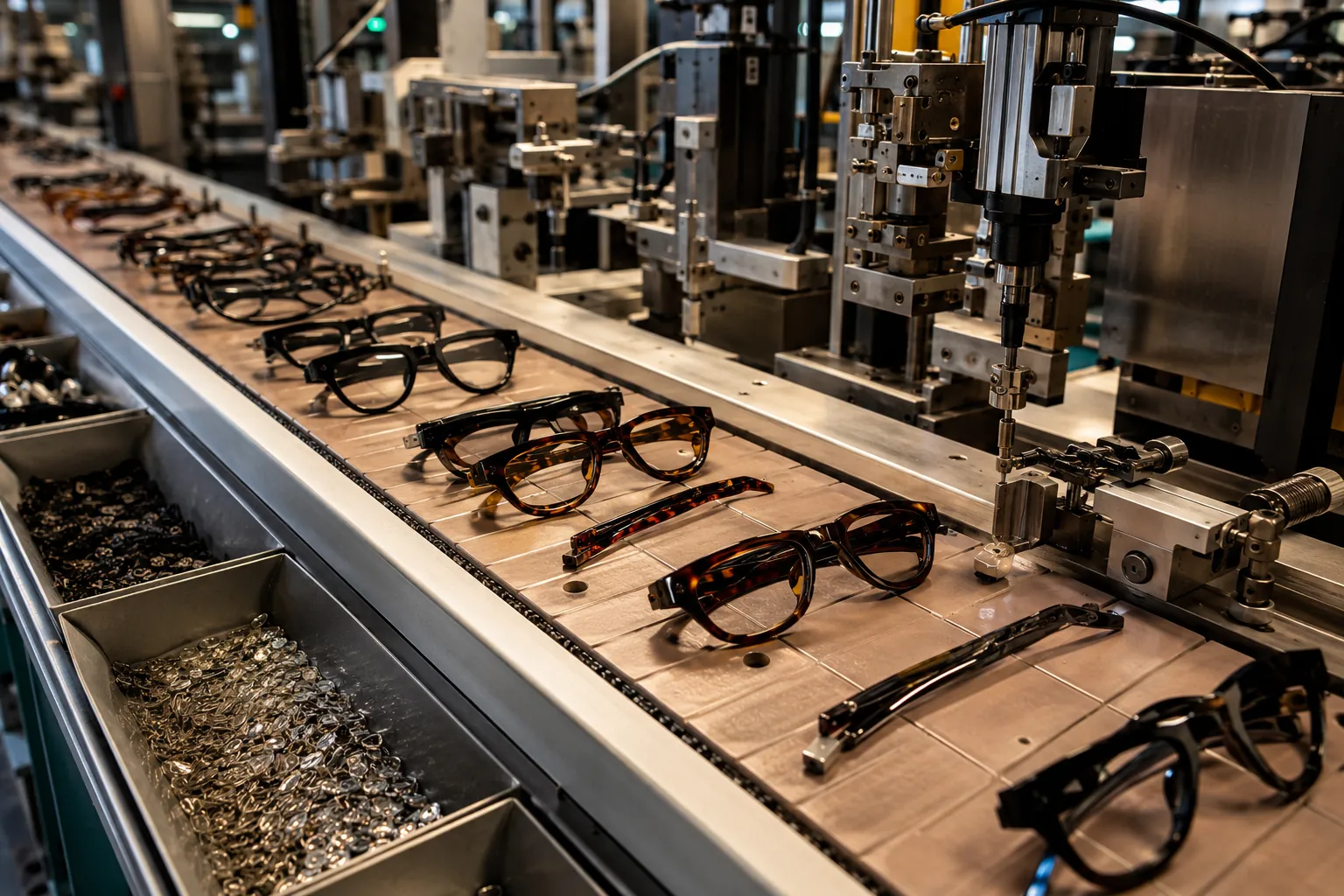
This guide is for brand owners, importers, distributors, and retailers buying custom sunglasses at volume. The goal is simple: lower unit cost without paying for it later in lens failures, color drift, late shipment, or rework. Good negotiation is not about chasing the lowest quote. It is about knowing which cost levers can move before tooling, sampling, and bulk production lock the product down.
Start with cost drivers, not the quoted total
Most price talks go wrong for one reason: the buyer argues over the final number instead of the inputs behind it. In sunglasses, the main cost drivers are frame material, lens material and coating, decoration method, packaging, order quantity, and the number of setup changes the factory has to absorb.
Ask for a breakdown of raw material, labor, decoration, packaging, QC, overhead, and margin. Some suppliers will resist. Ask anyway. Their response often tells you where the real cost sits. An injection-molded frame is usually driven by resin cost and molding time. An acetate style is driven more by cutting, tumbling, polishing, and fitting labor. A metal frame may look similar in a catalog photo, but welding and plating can raise both cost and defect risk.
Negotiate from a specification, not a photo. Be specific. State frame material, lens category, logo process, pack-out, inspection level, target ex-factory price, and required compliance for your market.
Also ask for tiered pricing at the quantities you actually buy. Do not assume "standard" MOQ, sample time, bulk lead time, or price breaks. Those numbers vary by factory and by build. Get them in writing.
Go into the discussion with a costed spec sheet, not just a reference image. Include frame material, lens category, logo process, packaging, inspection level, target ex-factory price, and required compliance such as CE EN ISO 12312-1, ANSI Z80.3, AS/NZS 1067, REACH, or FDA registration where relevant.
Negotiate the spec in layers
Not every spec deserves the same protection. Smart buyers rank requirements before the first price conversation. That way, they know what can move and what cannot.
Use three buckets:
- Non-negotiable: lens performance, fit-critical dimensions, hinge function, compliance, and QC standards.
- Tradable: decoration method, inner print complexity, case style, pouch fabric weight, and color count.
- Optional: gift box upgrades, extra inserts, low-impact cosmetic details, and duplicate packaging steps.
This matters because savings often sit in the least visible parts of the order. Dropping from a rigid custom box to a standard fold carton can save more than fighting over a few cents on frame price. Switching a metal logo plate to a clean pad print may cut labor, assembly time, and reject risk without changing the wearer experience. Simplifying a woven pouch to a standard microfiber pouch can also lower cost without touching product performance.
Be careful with "small" reductions that trigger expensive returns. Thinner lenses, loose tint tolerance, or inconsistent hinge torque can lead to complaints fast. If your brand depends on color accuracy, mirrored finish, or a premium hand feel, say so in writing.
Keep one internal rule: hold lens spec and QC fixed; ask for lower-cost options through decoration, packing, and batch size. That gives the supplier room to help without hiding a quality cut.
For reference, a typical sunglasses spec sheet should include lens category, UV protection requirement, lens base curve if relevant, frame material, temple length, hinge type, logo location, packaging dimensions, and cosmetic tolerance notes. If you leave those fields blank, the factory will fill them with its own cost assumptions.
Use quantity breaks and efficiency to bargain better
Factories do not price small orders the same way they price stable production. Small runs carry setup cost, changeover time, and more planning risk. In sunglasses, each change can mean material prep, color change, mold setup, lens tint matching, logo positioning, and final pack verification.
That is why unit-price pressure alone often fails at low volume. There is not much room. A buyer with one design, two colorways, and a credible repeat forecast is easier to price than a buyer asking for four colors, three packaging styles, and a moving ship date.
- Combine colorways under one design family if tooling and frame geometry stay the same.
- Place a staged order: for example, a small initial run with a committed repeat window if sell-through is confirmed.
- Standardize packaging across SKUs to reduce component sourcing and packing-line changes.
- Ask for price tiers at the quantities you intend to order, rather than one flat quote.
At low volume, setup burden is often the real problem. As quantity rises, raw material buying and line efficiency can improve enough to create a real break. Ask for a matrix with ex-factory price, packaging option, and lead time at each tier.
If you can move from many weak designs to fewer stronger designs, your real cost per sellable unit may improve before the quoted unit price even changes. Less slow stock. Fewer leftovers. Better carton use too.
| Negotiation lever | What it changes | Typical cost effect | Quality risk |
|---|---|---|---|
| Increase order from a small run to a larger run per design | Spreads setup, inspection, and packing labor | Usually a meaningful reduction | Low if the approved spec stays fixed |
| Consolidate 4 colorways into 2 | Fewer changeovers and less component complexity | Moderate reduction | Low to medium if assortment becomes too narrow |
| Switch metal logo plate to pad print | Cuts labor, fastening steps, and reject risk | Small to moderate reduction | Medium if brand value depends on hardware feel |
| Downgrade lens spec or coating | Cheaper raw material or simpler finishing | Small saving on some programs | High due to returns, visual quality, or compliance issues |
The best savings usually come from batching work better, not squeezing the factory on the same work. Big difference.
Protect the parts that fail first in cheapened eyewear
Bulk sunglasses have predictable failure points. If you know them, you negotiate with more precision. You can say exactly where cost pressure must stop.
Start with lenses. Cheap substitutions can cause haze, poor tint consistency, weak scratch resistance, or visual distortion. If the product must meet CE EN ISO 12312-1, ANSI Z80.3, or AS/NZS 1067, put that on the purchase order and the sample approval record. Then ask the supplier to tie the approved lens construction to the bulk production file. A simple control step helps: compare sample and bulk lenses against a master under the same light source before packing.
Next is frame material. Injection-molded frames are usually cost-efficient and dimensionally stable, but resin choice matters. Lower-grade resin can look acceptable in a sample and then turn brittle in transit or during fitting. Acetate gives a different hand feel and a more premium polish, but it adds labor through cutting, CNC work, tumbling, polishing, and fitting. Do not compare injection and acetate quotes as if they are equal builds. They are not.
Decoration is another trap. Laser engraving, pad printing, heat transfer, and metal logo plates each behave differently in wear, alignment, and reject rate. Pad print is often the cheapest and fastest, but it may wear sooner if surface prep is poor. Laser engraving is durable on suitable materials, but depth and contrast depend on the substrate. Metal plates can look premium, but they add placement labor and one more QC failure point.
Then there is assembly tolerance. A frame that opens unevenly, sits twisted, or has sharp temple edges will generate complaints fast. Agree on visual and functional standards during sampling. Define the feel as well as the look: smooth opening and closing, even temple alignment, and no visible binding or twist in normal use.
Basic cosmetic and functional checks should include lens seating, temple symmetry, logo position, nose pad alignment where applicable, and edge finish. If a factory cannot show how it controls those areas, the low price may not hold up.
Write the RFQ so trade-offs stay visible
A vague RFQ gets a vague quote. If you want numbers you can actually negotiate, send a structured request that forces assumptions into the open.
- State target market and required compliance: CE EN ISO 12312-1, ANSI Z80.3, AS/NZS 1067, REACH, FDA registration, as applicable.
- List frame material and finish: injection, acetate, metal, or mixed construction.
- Define lens type, color, filter category, and any coating requirement.
- Specify logo method: laser engraving, pad print, heat transfer, or metal plate.
- Show packaging level: polybag only, pouch, folding box, rigid box, barcode label, carton markings.
- Request quantity tiers: the quantities you want priced, including first-order and repeat-order scenarios.
- Require sample lead time and bulk lead time separately.
- Ask what assumptions the quote excludes, including tooling, packaging changes, testing fees, and rework.
This does two things. It reduces hidden downgrades, and it lets you compare offers on a real basis. If two quotes are far apart, you can see whether the gap comes from lens material, packaging, or labor allocation rather than just deciding one supplier is "expensive."
If the supplier offers testing support, ask which checks are done in-house and which go to a third-party lab. For example, you may keep basic dimensional and visual checks internal but require compliance testing through an accredited lab where the market demands it. Separate those costs. It makes negotiation cleaner.
If you are dealing with a manufacturer that claims to handle injection molding, acetate cutting, CNC milling, lens tinting, decoration, and QC under one roof, ask which steps are actually in-house for your style. That affects lead time, communication, and how much room there is to optimize the order.
Trade certainty for price
Price is not negotiated only through product spec. Commercial terms matter. Factories discount uncertainty poorly and reward clean execution.
If your team takes ten days to approve a pre-production sample and still wants a fixed ship date, the factory is carrying schedule risk. If your artwork files arrive incomplete and logo positions keep changing, you are creating extra setup and scrap risk. That cost goes somewhere.
You can often ask for better pricing if you offer something concrete in return:
- Faster sample approval.
- Cleaner forecasts for repeat styles.
- Fewer last-minute packaging changes.
- Larger repeat runs on approved molds and colors.
- Deposit and balance terms that reduce factory cash pressure, if that fits your risk policy.
Lead time belongs in the same conversation. Sample production and bulk production are separate stages. Treat them that way. If you change packaging after approval, the clock usually resets. If you ask for rush production, expect either higher cost, less QC buffer, or both.
Be direct: If we lock artwork, packaging, and compliance requirements before sample release, what price can you hold at the quantities we need? That is a stronger negotiation than asking for a blind discount. It shows you understand the trade-off between speed, certainty, and cost.
One more point: confirm the date trigger in writing. Does bulk lead time start at deposit, sample approval, artwork confirmation, or packaging approval? Those are not the same. If the start point is vague, the schedule will be too.
Set QC checkpoints before bulk starts
The cheapest sunglasses order is often the one that does not create rework, chargebacks, or dead stock. So tie the agreed price to a control plan.
At minimum, align on three checkpoints: pre-production sample approval, in-process confirmation on color and logo placement, and final random inspection before shipment. For decorated styles, confirm logo position against approved artwork. For tinted lenses, check the approved master sample under the same viewing conditions each time. For acetate, check polish consistency, edge finish, and frame symmetry after assembly.
A practical target for many buyers is AQL-based final inspection, with tighter limits for critical defects than for minor cosmetic marks. The exact AQL levels should match your risk tolerance and product requirements. Define critical, major, and minor defects before production starts. A missing lens coating or severe distortion is not the same as a tiny mark on a case.
Ask what the factory inspects in-house. A manufacturer controlling injection molding, acetate cutting, CNC milling, lens tinting, decoration, and final QC internally has more direct control over variation than one subcontracting half the work. That matters more, not less, when price is under pressure.
Useful rule: do not negotiate away the inspection steps that protect your biggest return-risk components. Save money on pack-out, not on lens verification or final alignment checks.
Put approved tolerances and cosmetic standards into the purchase order or an attachment. Verbal quality agreements are weak. One page of written QC rules can prevent a full round of returns.
A simple framework for the next PO
If you need a fast working method, use this order.
- Freeze the non-negotiables: compliance, lens spec, fit dimensions, hinge function, and core finish quality.
- Request price tiers at the quantities you intend to buy.
- Ask for two cost-down options that do not touch the non-negotiables.
- Review decoration and packaging first for savings.
- Consolidate SKUs where possible to reduce setup waste.
- Trade faster approvals and better forecasts for price stability.
- Attach QC checkpoints to the final agreed price.
Before accepting any lower quote, run one simple test: does it preserve lens performance, frame fit, compliance, and delivery reliability at the agreed quantity? If not, it is not cheaper. It is deferred cost.
The best negotiated price is not the lowest opening quote. It is the lowest repeatable cost that still ships on time and passes inspection. If a supplier can hold your spec, support compliance needs such as CE EN ISO 12312-1 and REACH, and produce reliably at the quantity bands you actually buy, that is the number that matters.
In practice, this usually means paying a little more for the right things and less for the wrong ones. Cut packaging waste. Reduce decoration complexity. Improve order consistency. Protect lens quality, fit, and QC.
If needed, use management-system checks during supplier qualification. ISO 9001 can indicate a documented quality system, and BSCI may matter for social compliance expectations, but neither replaces product testing or buyer-specific QC approval.
Have a custom sunglasses project in mind?
Send us your styles, target market and quantities and we will return a detailed quote with MOQ, lead time and a sample plan.
Get a QuoteWhy source this from Wenzhou with LumiShades
Wenzhou in Zhejiang Province is widely regarded as China’s eyewear manufacturing capital, producing a large share of the world’s sunglasses. That concentration matters to buyers: a deep local supply chain for acetate sheet, hinges, lens blanks, plating and packaging means shorter component lead times, easier color and material matching, and a workforce with decades of eyewear-specific skill. LumiShades has manufactured in this ecosystem since 2009, and our vertical integration — in-house injection molding, acetate cutting, CNC milling, lens tinting, decoration and quality control — means no part of your order is quietly subcontracted to a workshop you cannot audit.
For international buyers, that vertical control translates into accountability. When a single factory owns every step, defects are traced and fixed at source rather than bounced between vendors, and your specifications survive intact from first sample to bulk. We back this with 15+ years of experience, shipments to 60+ countries, more than 5 million pairs produced per year and a 98.5% on-time delivery rate. Our certifications — CE EN ISO 12312-1, FDA registration, ANSI Z80.3, AS/NZS 1067, REACH, ISO 9001 and BSCI audit — mean the compliance documentation your market requires already exists. Explore our manufacturing capabilities and quality control process to see how this works in practice.
Frequently asked questions
Should I negotiate price before or after sampling? Both, but not in the same way. Before sampling, negotiate the quote structure, quantity tiers, assumptions, and exclusions. After sampling, negotiate only against an approved spec so the factory cannot cut cost by changing materials or finish. Put the approved sample number or revision into the PO.
What is the safest area to cut cost on custom sunglasses? Usually packaging and some decoration choices. Simplifying a rigid box, reducing inserts, or switching from metal logo plates to pad print often saves money with less product-performance risk than changing lens or frame material. Keep lens spec, fit, and compliance fixed.
How do I stop a supplier from reducing quality after I push for a lower price? Lock the approved sample to the purchase order, list material and lens requirements in writing, and define QC checkpoints for color, logo placement, alignment, and finish. Make compliance requirements explicit where needed, such as CE EN ISO 12312-1, ANSI Z80.3, AS/NZS 1067, REACH, or FDA registration. Use final inspection and a clear defect standard before shipment.
Is a lower MOQ always better for testing a new style? Not always. A very low MOQ reduces exposure, but it usually comes with a higher unit cost and less room to negotiate. If you already trust the design, a larger run per design often improves pricing and production efficiency. Use a small first order when the style or market is still uncertain.
How much should I rely on lead time promises during negotiation? Treat lead time as part of the commercial deal, not a side note. Ask the supplier to define exactly when the clock starts: sample approval, artwork confirmation, deposit receipt, or packaging approval. Also separate sample lead time from bulk lead time. If packaging or artwork changes after approval, expect the schedule to move.
Ready to start?
Explore our round sunglasses or request a quote — our sales team replies within 12 hours.
Request a Quote