
How to Match Lens Tint, Density, and Market Demand
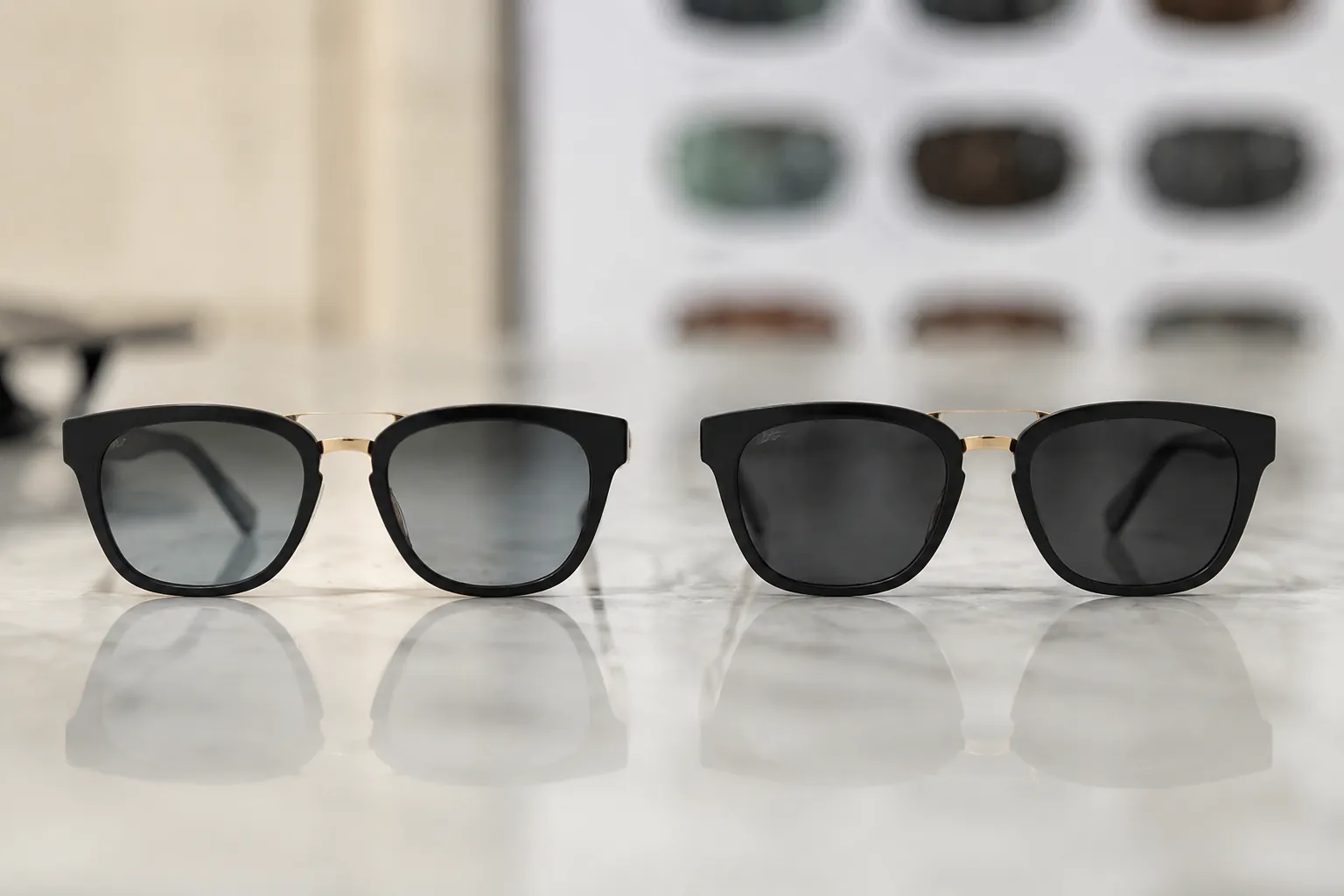
For a brand, retailer, or distributor, lens choice is not a cosmetic detail. It affects compliance, perceived quality, returns, reorder logic, and how much inventory risk you carry into a season. A lens can look right in a sample and still fail in the market if the tint is too dark for daily wear, too light for a bright region, or inconsistent from batch to batch. This guide gives buyers a practical framework for matching lens color, tint density, and demand by region, channel, and price band. It also covers the production details that matter: MOQ logic, sample sequencing, tint consistency, decoration trade-offs, and what should be fixed on the PO before bulk starts. Where relevant, it notes how suppliers with in-house tinting, decoration, and QC can reduce handoff risk.
Start with the market, not the color chip
Many programs go wrong at the first approval. Buyers react to a showroom sample instead of starting with market logic. Better questions come first: who will wear this, in what light conditions, through which channel, and at what retail price? A fashion chain in Spain, a surf retailer in Australia, and a U.S. ecommerce brand may all want the same frame shape. They should not all buy the same lens mix.
Use three filters before approving any lens combination:
- Region: UV intensity, brightness, climate, and local taste.
- Channel: discount retail, chain fashion, independent optical, promo, marketplace, or sport/outdoor. Each channel has a different tolerance for complexity and returns.
- Price band: low-price impulse, mid-tier private label, or performance-led outdoor. As price rises, consistency and feature justification matter more.
In practical buying terms, a weak lens mix creates more stock risk than a conservative frame color. A black frame can often be re-promoted, repackaged, or shifted to another market. An unpopular lens tint is harder to move. Keep first runs tight. For most launches, two or three lens variants per frame are enough.
MOQ logic matters, but it does not prove demand. A factory minimum of 50 pairs per design may be useful for sampling or pilot production. It is still only a test. A practical step-up path is often 50-100 pairs for internal review, 300-500 pairs for limited market testing, then 1,000+ pairs once sell-through is visible. In-house tinting can also shorten the sample cycle by removing a subcontracting step. That saves time when you need to compare multiple lens options fast.
Use tint density as a buying tool
Tint density is a buying variable. Not a style guess. It changes visual comfort, perceived protection, and where the product will actually be worn. In sourcing, it helps to work with clear density bands rather than vague terms like "dark" or "fashion smoke."
A workable buying framework looks like this:
| Tint band | Typical visual effect | Best use case | Main risk |
|---|---|---|---|
| Light | More eye visibility, lighter fashion look | Urban lifestyle, promo, indoor-outdoor wear | Can feel under-protective in bright climates |
| Medium | Balanced shade and broad wearability | Core volume SKUs, ecommerce, general retail | May look too basic for trend-led launches |
| Dark | Stronger sun-shield impression | Outdoor, beach, travel, bright-sun markets | Can reduce everyday appeal in mild-light regions |
| Gradient / flash / mirror | Higher style impact, more visible finish detail | Fashion chains, seasonal capsules | Higher defect visibility and tighter QC requirements |
For many first-time private-label programs, medium grey or smoke is the safest volume lens. It is easy to explain online, easy to merchandise in-store, and less likely to trigger returns for being "too dark" or "not dark enough." Brown is often the next best option because it can read warmer and slightly more premium in some fashion and outdoor channels. Green and amber can work well too, but usually as controlled additions, not launch anchors.
Decorative treatments change the risk profile fast. A plain smoke lens can hide minor variation better than a mirror lens. Mirror finishes expose everything: scratches, coating marks, density shifts. If a program includes mirror or flash coatings, request sample approval under both daylight and indoor white light. Then define rejection points for pinholes, haze, and edge inconsistency.
If you are unsure on density, do not approve one sample and hope. Approve three densities around the target look, then choose the one that works in the real channel. That is cheaper than fixing a bulk run later.
A lens-color matrix by region and channel
The matrix below is a shortcut, not a rule. Demand still depends on brand position, frame shape, and price. But buyers who start with a map like this usually narrow the sample set faster.
| Region / channel | Best starting lens colors | Typical tint density | Why it works |
|---|---|---|---|
| North America / ecommerce | Grey, smoke, brown, green | Medium to dark | Broad use case and easy product-page explanation. |
| Europe / fashion retail | Grey, green, gradient smoke, amber accents | Light to medium | Style matters, but everyday wearability still matters. |
| Australia / outdoor, surf, travel | Grey, brown, mirror smoke | Medium to dark | Higher sun exposure supports darker looks and outdoor positioning. |
| Middle East / lifestyle retail | Smoke, grey, brown, gold mirror | Dark | High-brightness conditions support darker looks and mirror finishes. |
| Promo / corporate gifting | Grey, smoke, blue tint, clear-to-light fashion tints | Light to medium | Broad acceptability and price control matter more than trend precision. |
For chain programs, narrower is usually better. Three core lens colors are often enough for a season: one neutral volume lens, one warmer or fashion-led option, and one darker option for brighter climates. Beyond that, replenishment gets harder. Every extra tint creates more carton splits and more pressure on batch consistency.
If one frame will be sold into multiple countries with different lenses, define the rule early: same frame code, different lens suffix, separate approved sample, and separate compliance file if required. This matters even more when lens tinting is recipe-based. A visually similar color can drift if the material batch, soak time, or coating sequence changes. In-house tinting and QC help because one factory can control recipe records, reference samples, and final packing checks instead of passing work across multiple vendors.
Match lens complexity to channel economics
Not every channel can absorb the same lens specification. That is where buyers often overreach. A premium-looking lens treatment may fit the brand image, but not the cost structure. A simple smoke lens and a mirrored gradient lens may sit on the same frame. They do not carry the same scrap risk, rework cost, or assembly burden.
| Channel | Best lens approach | Risk if overcomplicated | Buying note |
|---|---|---|---|
| Discount retail | Single-color smoke or grey | Too many variants tie up stock and increase picking errors | Keep one lens spec, one logo method, one case option. |
| Mid-tier fashion | Grey, brown, gradient, mild mirror | Returns from style mismatch or inconsistent finish | Test 2-3 shades with buyers before bulk approval. |
| Sport / outdoor | Dark smoke, brown, polarized-ready specs | Performance complaints if optics or tint consistency drift | Ask for tighter QC and the relevant compliance records for the model. |
| Promo / private label | Simple smoke, clear, light tint | Niche looks reduce broad giveaway appeal | Use low MOQ to test, then scale the winner. |
Decoration changes the economics too. Pad printing is usually the most flexible and cost-efficient for basic branding, but it adds alignment and wear-resistance variables. Laser engraving can look cleaner on the right temple material, but contrast depends on the substrate color and finish. Metal logo plates add perceived value, but also add components, assembly time, and another rejection point if placement or adhesion is inconsistent.
Before adding decoration, ask two blunt questions:
- Will the logo method survive the channel's expected handling, especially on open-sell retail walls?
- Will the decoration step slow assembly enough to affect lead time or raise the reject rate?
For lower-cost programs, every extra process matters. If the landed manufacturing target is tight, start simple: one lens color, one decoration method, one packaging format. Add complexity after the reorder proves demand.
Compliance is tied to the exact lens spec
Lens color does not sit outside compliance. It sits inside it. Buyers should not assume that a frame style is approved in general. The tested product is the exact production combination: frame, lens material, tint density, coating, and construction. Change the lens and you may have a different technical product.
Common eyewear and supplier credentials in this category include CE EN ISO 12312-1, ANSI Z80.3, AS/NZS 1067, REACH, FDA registration, ISO 9001, and BSCI. These documents matter. But the buyer still needs to tie them to the exact model and lens specification being ordered.
Ask for these details before placing bulk:
- Test linkage: which model number and lens configuration were tested under which standard.
- Lens construction: material, tint recipe or reference code, and any mirror or flash coating.
- Production control: how the factory confirms left/right lens color match and batch consistency.
- Chemical compliance: REACH-related material controls for EU-bound goods.
- Change control: written approval is required if any lens recipe, supplier, or coating step changes after sample sign-off.
Avoid the phrase "same look." It is too loose. A lens can look close to the approved sample and still differ in density, material behavior, or coating performance. Freeze the spec before mass production. Then make sure the technical file matches the approved production sample, not just the marketing photo.
A sourcing process that avoids slow movers and QC surprises
Good lens programs are built in stages. Fast decisions are not always good decisions. Jumping from a sample image to a large order is how buyers end up with stock that stalls or arrives with avoidable variation.
A controlled process lowers both demand risk and factory risk:
- Define the market and use case. Is this fashion retail, outdoor, promo, or a core ecommerce basic?
- Shortlist 2-3 lens colors. Keep one safe option and one style option. Add a darker regional option only if the market justifies it.
- Set density targets. Approve light, medium, or dark with a physical reference, not just a digital rendering.
- Order comparative samples. Sample 2-3 densities if the final target is unclear. Build in enough time to review them properly.
- Review under actual conditions. Check daylight, indoor light, left/right match, coating cleanliness, and how the lens works with the frame color.
- Run a small pilot if needed. 50 pairs per design is useful for internal sign-off; 300-500 pairs is better for a real market test.
- Freeze the production spec. Lock lens color, density, coating, logo method, packaging, and carton marks.
- Scale by evidence. Move to a larger order only when sell-through or buyer feedback supports the reorder.
Lead time planning is part of the buying decision. If samples take 7-10 days and bulk takes 25-35 days, build the test window backward from the selling season. Do not wait until the final month to decide lens density. That usually leads to rushed approvals or overbuying the "safe" option without enough market proof.
QC checkpoints should happen before packing, not after shipment. At minimum, require checks for left/right lens color match, visible tint banding, coating scratches, print alignment, and mixed lens shades in the same carton. If the program includes mirror or gradient lenses, add a clearer visual acceptance standard. Defects are easier to see and harder to dispute after delivery.
What to lock on the PO before bulk starts
The purchase order should read like a production note, not a brochure line. If the lens affects returns and compliance, write the spec with precision.
A strong PO should include:
- Frame model and frame color code.
- Lens color name plus approved visual reference sample or recipe code.
- Tint density target: light, medium, or dark.
- Finish: plain, gradient, flash, or mirror.
- Lens material if relevant to the program.
- Logo method: pad print, laser engraving, or metal logo plate.
- Target market and compliance standard.
- Packing requirements, barcode labels, and carton marks.
- Explicit defect limits: no left/right color mismatch, no visible tint banding, no coating scratches, no print misalignment, no mixed shades per carton.
For first-time custom sunglasses programs, a lean three-SKU lens mix is often the strongest launch structure:
| SKU role | Lens choice | Reason |
|---|---|---|
| Core volume | Grey smoke, medium density | Broad acceptance and simple reorder logic. |
| Style add-on | Brown or gradient smoke | Adds visual interest without changing the frame tooling. |
| Bright-climate option | Dark smoke or mirror smoke | Supports outdoor and stronger-sun markets. |
This mix is conservative by design. That is not a weakness. Boring often sells. It also reorders better. Once sell-through data shows which lens turns fastest, buyers can add seasonal colors, mirrored versions, or market-specific variants without complicating the first production cycle.
When lens tinting, decoration, and QC sit in the same production flow, handoff risk drops. Fewer transfers between frame maker, lens supplier, decorator, and packing line means fewer chances for color drift, scratched coatings, missed logo placement, or last-minute substitutions.
Buyer checklist before bulk approval
Before you approve bulk, confirm the following:
- The approved sample matches the exact frame, lens, coating, and decoration combination.
- The compliance document matches the ordered model, not just the frame family.
- The lens color is defined by reference sample or recipe code, not only by marketing name.
- The tint density is written as light, medium, or dark and confirmed physically.
- The defect standard covers color mismatch, banding, scratches, print alignment, and mixed shades.
- The packing spec is fixed, including carton marks and barcode placement.
- Any market-specific lens variation is documented as its own approved SKU.
If even one item is still unclear, stop. Do not place bulk yet. Lens programs fail most often when buyers treat a visual sample as if it were a finished production specification.
Have a custom sunglasses project in mind?
Send us your styles, target market and quantities and we will return a detailed quote with MOQ, lead time and a sample plan.
Get a QuoteWhy source this from Wenzhou with LumiShades
Wenzhou in Zhejiang Province is widely regarded as China’s eyewear manufacturing capital, producing a large share of the world’s sunglasses. That concentration matters to buyers: a deep local supply chain for acetate sheet, hinges, lens blanks, plating and packaging means shorter component lead times, easier color and material matching, and a workforce with decades of eyewear-specific skill. LumiShades has manufactured in this ecosystem since 2009, and our vertical integration — in-house injection molding, acetate cutting, CNC milling, lens tinting, decoration and quality control — means no part of your order is quietly subcontracted to a workshop you cannot audit.
For international buyers, that vertical control translates into accountability. When a single factory owns every step, defects are traced and fixed at source rather than bounced between vendors, and your specifications survive intact from first sample to bulk. We back this with 15+ years of experience, shipments to 60+ countries, more than 5 million pairs produced per year and a 98.5% on-time delivery rate. Our certifications — CE EN ISO 12312-1, FDA registration, ANSI Z80.3, AS/NZS 1067, REACH, ISO 9001 and BSCI audit — mean the compliance documentation your market requires already exists. Explore our manufacturing capabilities and quality control process to see how this works in practice.
Frequently asked questions
How many lens colors should I launch with for a new sunglasses line? Usually 2 to 3. Start with one neutral volume lens, one style option, and one darker or regional variant only if the market supports it. More than that increases inventory complexity and makes reorders harder to manage.
Should I choose grey or brown lenses first? Grey is usually the safer first choice because it is broadly accepted across ecommerce, retail, and promo channels. Brown is often a strong second option, especially when you want a warmer or slightly more premium look.
Can the same frame be sold with different lens colors in different markets? Yes, but document each frame-lens combination as its own approved production specification. Keep the lens suffix, approved sample, and compliance record aligned so production does not drift between markets.
What lead time should I plan for samples and bulk? A practical planning range is 7-10 days for samples and 25-35 days for bulk production, assuming the specification is clear and no tooling change is required. Add time if you are comparing multiple tint densities or approving mirror finishes.
What should I ask a supplier to prove before I place a volume order? Ask for the compliance standard tied to the exact model, the final lens specification, the QC checkpoints for color consistency and coating quality, and confirmation that the production sample matches the approved sample in both appearance and construction.
Does a darker lens always sell better in sunny markets? No. Darker lenses often suit bright climates better, but sell-through still depends on local taste, frame style, channel, and everyday wear comfort. Test first rather than assuming dark means more commercial.
Ready to start?
Explore our cat-eye sunglasses or request a quote — our sales team replies within 12 hours.
Request a Quote