
How to Design a Better Sunglasses Unboxing
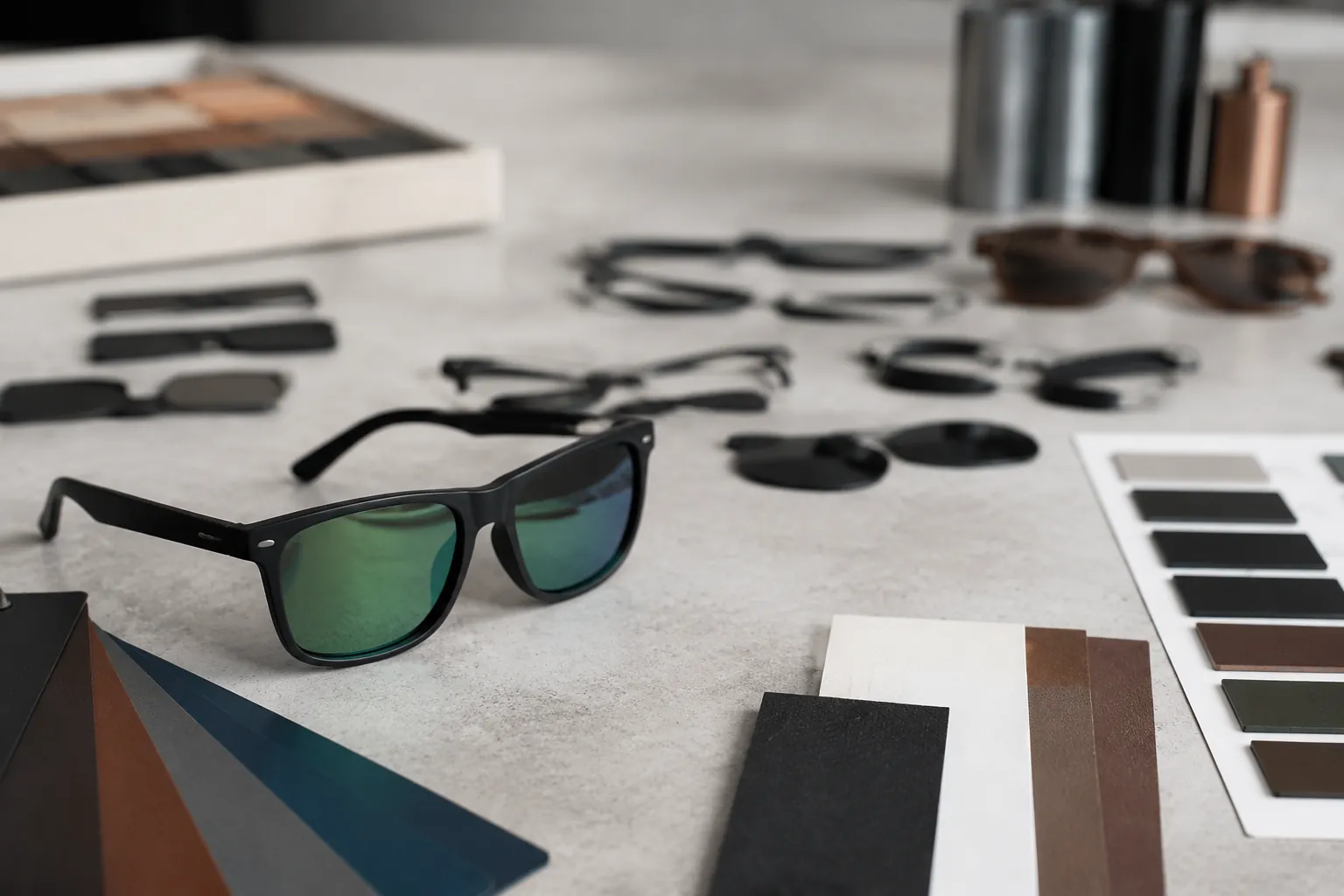
This guide is for brands, importers, distributors, and retailers buying custom sunglasses in volume. The goal is simple: improve perceived value in the customer's first moments with the product without changing the core frame or lens build. In many programs, the biggest gains come from coordination, not engineering. A consistent logo treatment, the right frame finish, a properly sized pouch or case, a matching microfiber cloth, and stable pack-out can improve shelf appeal, giftability, and presentation while helping control MOQ, tooling exposure, and lead time. Treat the unboxing experience like a production system, not a packaging mood board.
Start with the first 20 seconds
Most first impressions form before the customer judges lens clarity, hinge feel, or long-term comfort. They see the carton, remove the sunglasses, touch the pouch or case, unfold the temples, and decide whether the branding feels deliberate. If the temple logo, lens tint, pouch print, cloth color, and carton finish do not read as one system, the product feels assembled, not designed.
For B2B buyers, that makes unboxing a commercial decision first. Ask a better question: which details are most visible, most repeatable in production, and most likely to support the target selling price? In low- to mid-cost eyewear, the best upgrades are usually decoration, finish, lens color, pouch or case choice, cloth, and pack-out structure. Not frame re-engineering.
A practical sequence is to lock four touchpoints in order:
- Frame appearance at first glance: front color, gloss or matte level, lens tint, and logo position.
- Primary protection item: microfiber pouch or hard case sized to the frame width and folded temple shape.
- Cleaning accessory: microfiber cloth with a size, weight, and print that match the rest of the set.
- Outer presentation: carton, sleeve, sticker, or insert that keeps the product stable in transit and consistent at handoff.
If these four elements work together, buyers often do not need to change hinge construction, lens geometry, or mold structure just to make the product feel more considered. That matters. Structural changes can add tooling cost, extend sampling, and create more approval risk.
Pick value signals customers notice
Not all custom options carry the same weight. Some are obvious the moment the box opens. Others look good in a presentation deck and do little at handoff. On a controlled budget, prioritize details that are easy to see, easy to feel, and realistic to repeat in bulk.
- Surface finish: a matte or low-gloss finish can look cleaner and more deliberate than standard high gloss, depending on frame style and target market.
- Logo execution: laser marking, metal logo plates, and pad printing create different impressions; the right choice depends on frame material, artwork complexity, and target price.
- Color-matched pouch and cloth: when the accessory set sits in the same color family, the product usually feels more coordinated.
- Carton with insert: even a simple carton with an insert can reduce movement in transit and present better than a loose pack.
- Lens tint aligned to positioning: smoke, green, brown, gradient, and mirrored lenses send different market signals, so the tint should fit the intended channel and brand image.
There are common failure points. Decorative finishes can scuff in transit if the material choice does not match the shipping method. Soft-touch surfaces can mark if packed before they fully cure. Light prints on dark temples may show variation if process control is weak. Mirrored lenses reveal small abrasions fast under retail lighting, so internal protection matters more on those builds.
Ask suppliers which decoration and packaging steps they handle in-house and which they outsource. If the frame, logo, pouch, and carton come from different vendors, color matching, placement consistency, and approval control usually get harder.
Use a cost ladder before fancy packaging
Many buyers overspend on the outer box and underspend on the product set inside. That is backwards. If the frame looks generic and the accessories feel unrelated, a rigid gift box will not fix the value problem. Build in layers: frame first, then protection item, then presentation layer.
| Option | Typical MOQ impact | Typical added cost per pair | Lead-time effect | Commercial note |
|---|---|---|---|---|
| Temple pad print logo | Often available at relatively low MOQs | Varies by artwork, color count, and factory setup | Usually limited if artwork is approved | Practical for promotional or entry retail programs with simple artwork |
| Laser engraving on temple | Often available at relatively low MOQs | Varies by material, logo size, and production method | Usually limited if placement is straightforward | Useful for understated branding, especially on darker or matte surfaces |
| Metal logo plate | Usually more efficient at higher volumes | Varies by plate material, finish, size, and attachment method | Often adds sampling and fit review time | Can raise perceived value, but placement tolerance must be controlled |
| Printed microfiber pouch | Often workable on small to mid-size runs | Varies by fabric, print method, and quantity | Commonly manageable within standard accessory timelines | One of the most visible low-complexity upgrades |
| Hard fold case with logo | Usually more efficient at higher volumes | Varies by case construction, material, and branding method | Often requires additional sourcing and fit checks | Useful for gift-oriented retail, but increases shipping volume |
| Rigid gift box with insert | Usually more efficient at higher volumes | Varies widely by board, finish, structure, and insert type | Often adds development and packing time | Works best when the inner product set is already coordinated |
Actual pricing depends on volume, frame material, lens specification, decoration method, accessory construction, and destination requirements. Do not assume one upgrade always pays off. Ask for a line-by-line quote that separates the sunglasses, decoration, pouch or case, cloth, insert, and outer box. In many first runs, the safest test is one stronger decoration method plus one coordinated accessory, not a full premium packaging stack.
Match decoration to frame material
The same logo treatment does not behave the same way on every frame. Material affects edge sharpness, adhesion, durability, and visual depth.
Injection-molded frames are common in volume programs because they support consistent color and efficient output. Depending on the resin and surface treatment, they may work with pad printing, laser marking, or other approved methods. Matte finishes can look more refined, but some matte surfaces also show rub marks more easily in rough handling. Ask for a production-representative sample.
Acetate frames often create a richer visual effect because of material depth, polish, and layered color options. They can pair well with laser branding and small metal plates when the design allows it. But acetate has natural variation in pattern and polish, so approvals should rely on physical samples, not artwork alone.
Metal logo plates can send a stronger value signal, but they also add execution risk. If a plate is visibly off position, the mistake is obvious. Buyers who care about presentation should define logo position, finish, edge quality, and attachment method in the approval record. If the plate is glued, ask what validation the supplier uses for adhesion after curing and handling.
At RFQ stage, ask three direct questions: which decoration steps are done internally, what sample sign-off controls final placement, and whether bulk production is checked against a retained master sample.
Keep packaging tied to compliance and protection
Good presentation should not create compliance or damage problems. Sunglasses sold into regulated markets still need to meet the agreed lens and product standards no matter how good the packaging looks. Depending on destination market, relevant standards may include CE EN ISO 12312-1, ANSI Z80.3, and AS/NZS 1067. Chemical compliance such as REACH can also matter for frame materials, coatings, inks, adhesives, pouch treatments, and carton finishes. FDA registration may come up in U.S. import discussions, but it does not replace product performance requirements.
Factory management credentials can also matter during supplier review. Buyers may ask whether the supplier maintains systems such as ISO 9001 or social compliance programs such as BSCI. Those credentials do not guarantee a strong unboxing result, but they can support overall due diligence.
Protection details matter just as much. A premium-looking box means little if lenses arrive scratched or the frame shifts in transit. Before approving bulk pack-out, confirm the following:
- The frame is bagged or otherwise protected before going into the pouch or case when the lens surface is sensitive.
- The microfiber cloth is suitable for the lens surface and does not create avoidable contamination during packing.
- The insert supports the frame without forcing the temples into a stressed position.
- Metal trims, hinges, or other hard components cannot rub against the lenses in packed condition.
- Printed cartons and finished packaging materials are packed only after the relevant curing or drying process is complete.
Ask for a transit-ready pack-out photo, a packed sample review, and a basic drop or handling check using the actual product configuration. This is simple process control. It is also where many presentation programs fail.
Build the timeline backward from approval
Custom unboxing programs often slip because packaging gets treated as a late add-on. That leads to mismatched colors, inserts that do not fit the folded frame, or accessory parts that arrive after the sunglasses are already approved.
A more reliable sequence looks like this:
- Approve product positioning: promotional, entry retail, fashion, sport, gift, or another defined channel.
- Lock frame material, lens category, colorway, and logo method.
- Approve one packaging concept with real dimensions, not only artwork.
- Sample the full set together: sunglasses, pouch or case, cloth, box, insert, and any card.
- Freeze pack-out instructions before bulk production starts.
Actual lead times vary by factory capacity, accessory sourcing, decoration method, and shipping schedule. A hard case, custom insert, or metal logo plate may add development time compared with a pouch-only build. A late change in logo method or packaging structure usually creates another sample loop, so buyers should align artwork, color references, compliance requirements, and internal dimensions as early as possible.
For repeat orders, ask the supplier to retain a signed master sample and a packaging assembly reference that shows the final fold, bagging sequence, accessory placement, and carton orientation. That record helps reduce reorder disputes and keeps later production closer to the approved standard.
Three unboxing builds that often make sense
Not every channel needs the same pack-out. A distributor serving promotional campaigns works with different economics than a fashion retailer or a private label e-commerce brand. Spending should follow selling price, freight sensitivity, and reorder probability.
Entry retail build: printed temple logo, microfiber pouch, basic branded cloth, and folding carton. This is often a practical balance for tighter budgets and lower MOQs because the product still feels complete without adding too much packing complexity.
Mid-tier fashion build: upgraded frame finish, laser logo or small metal plate, printed pouch, higher-spec cloth, and fitted carton insert. This build often gives a strong return for brands that need a better shelf story without moving into heavy gift packaging.
Gift or premium e-commerce build: upgraded frame decoration, hard case, branded cloth, rigid carton, insert card, and tighter pack-out control. This can make sense when presentation is part of the sales promise and the target retail price can support the added packaging and handling cost.
For many buyers, the mid-tier build is the best answer. Hard cases and rigid boxes can improve presentation, but they also increase cube, storage needs, and handling cost. If the target retail price stays near entry-level bands, cleaner coordination usually performs better than heavier packaging.
What to include in the RFQ
A weak RFQ leads to vague pricing and missed expectations. If you want the unboxing experience quoted properly, specify the full set, not just the sunglasses frame.
- Frame spec: material, finish, color references, lens tint, logo method, and target market compliance standard.
- Accessory spec: pouch or case type, cloth size, cloth material, branding position, and any card requirements.
- Packaging spec: carton style, internal dimensions, board type, surface finish, insert structure, barcode, and sticker needs.
- Pack-out spec: polybag use, lens protection method, unit packing order, carton quantity, and shipping mark format.
- Commercial targets: MOQ, target price band, sample deadline, bulk deadline, and requested quantity breaks.
To compare suppliers properly, request separate pricing for the sunglasses, decoration, pouch or case, cloth, insert, and outer box. Also ask which certifications or management systems they can document, such as ISO 9001 or BSCI if relevant to your sourcing requirements, and which product compliance tests they can support for your market. Without that breakdown, it is hard to see whether the main cost driver is the frame, the accessory set, or the presentation layer.
A good unboxing experience is not about adding the most parts. It is about making every visible part work together, survive transit, and still fit the intended retail price.
Have a custom sunglasses project in mind?
Send us your styles, target market and quantities and we will return a detailed quote with MOQ, lead time and a sample plan.
Get a QuoteWhy source this from Wenzhou with LumiShades
Wenzhou in Zhejiang Province is widely regarded as China’s eyewear manufacturing capital, producing a large share of the world’s sunglasses. That concentration matters to buyers: a deep local supply chain for acetate sheet, hinges, lens blanks, plating and packaging means shorter component lead times, easier color and material matching, and a workforce with decades of eyewear-specific skill. LumiShades has manufactured in this ecosystem since 2009, and our vertical integration — in-house injection molding, acetate cutting, CNC milling, lens tinting, decoration and quality control — means no part of your order is quietly subcontracted to a workshop you cannot audit.
For international buyers, that vertical control translates into accountability. When a single factory owns every step, defects are traced and fixed at source rather than bounced between vendors, and your specifications survive intact from first sample to bulk. We back this with 15+ years of experience, shipments to 60+ countries, more than 5 million pairs produced per year and a 98.5% on-time delivery rate. Our certifications — CE EN ISO 12312-1, FDA registration, ANSI Z80.3, AS/NZS 1067, REACH, ISO 9001 and BSCI audit — mean the compliance documentation your market requires already exists. Explore our manufacturing capabilities and quality control process to see how this works in practice.
Frequently asked questions
What is the lowest-risk way to improve perceived value on a tight budget? Start with one frame decoration method and one coordinated accessory. In practice, that usually means confirming the logo treatment on the frame, then adding a branded microfiber pouch or cloth that matches the product's color direction. Ask the supplier for a fully packed sample and a line-item quote so you can compare the impact of each upgrade before adding a case or rigid box.
At what volume does upgraded packaging usually make more sense? There is no fixed threshold because it depends on the packaging type, the supplier's setup cost, and the target selling price. As a buying rule, ask for quotes at your trial quantity and at least one higher break so you can see when hard cases, metal logo plates, or rigid cartons become more efficient. Then compare the added unit cost against the sales channel, freight impact, and likelihood of repeat orders.
Should I sample the sunglasses and packaging separately or together? Together. A full-set sample lets you check color match, folded fit, insert clearance, logo alignment, and whether any hard parts can touch the lenses during packing. Ask the supplier to send the product exactly as it will ship in bulk, including pouch or case, cloth, insert, and outer carton, and keep that approved sample as your production reference.
Can packaging changes affect compliance? Yes. Packaging does not replace compliance, and some packaging materials can create extra review points. The sunglasses still need to meet the agreed market standard, such as CE EN ISO 12312-1, ANSI Z80.3, or AS/NZS 1067 where applicable, while materials such as inks, coatings, adhesives, and accessory fabrics may need to align with REACH or other requested chemical requirements. If you sell into a regulated market, include both product compliance and packaging material requirements in the RFQ and purchase order.
How much lead time should I allow for a custom unboxing program? Allow enough time for at least one full-set sample round before bulk production, then confirm the supplier's production window based on the exact build. Programs with custom inserts, hard cases, metal logo plates, or late artwork changes usually need more time than pouch-only builds. The practical approach is to ask the supplier for a dated timeline covering sample preparation, approval, accessory sourcing, bulk production, and ship-ready packing so you can spot the component most likely to delay the order.
Ready to start?
Explore our square sunglasses or request a quote — our sales team replies within 12 hours.
Request a Quote