
Retail-Ready Sunglasses Starter Kits for First Runs
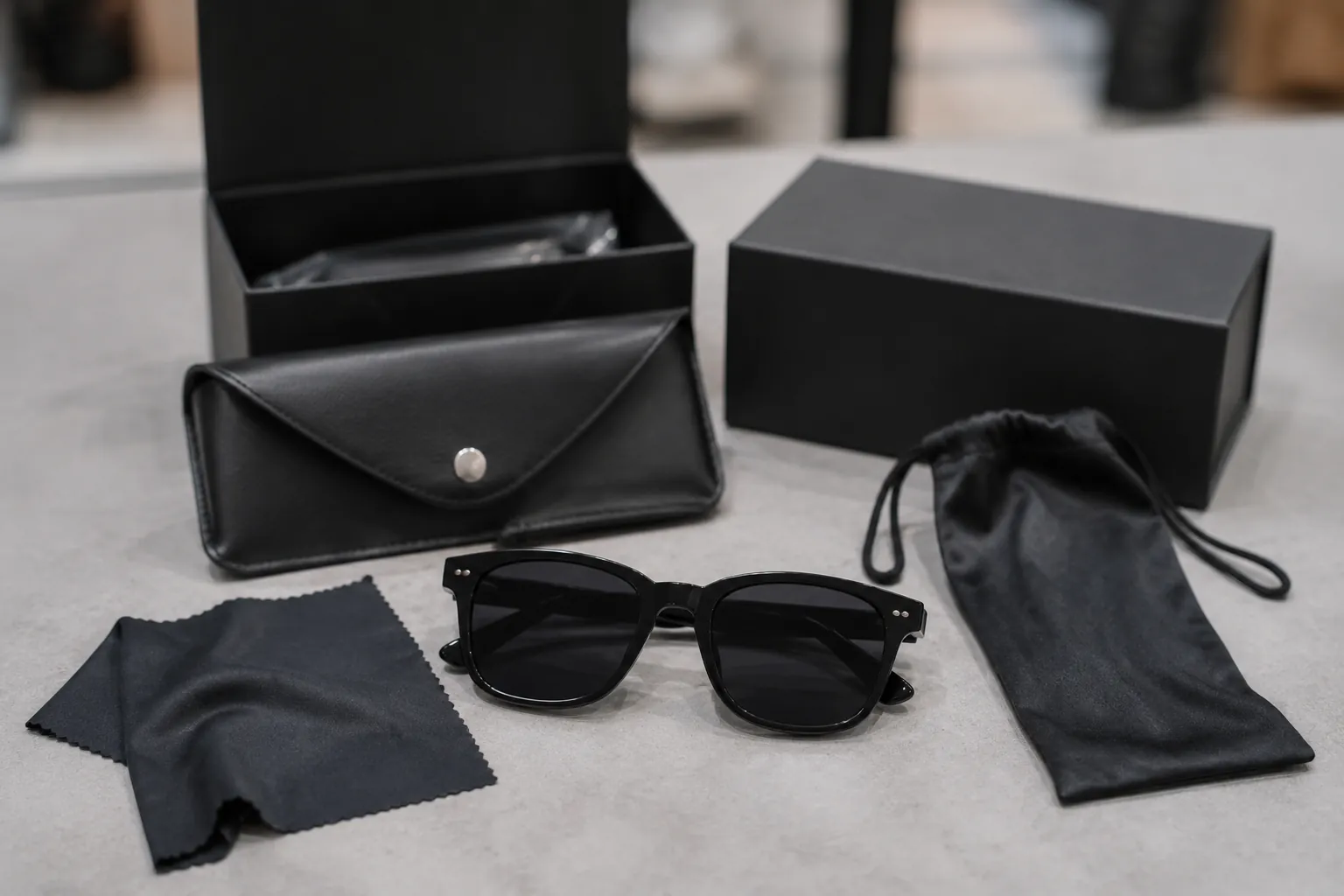
This guide is for brand owners, importers, distributors, and retailers planning a first production run of custom sunglasses. On a first order, the frame is only part of the job. SKU count, labeling, barcode logic, packaging fit, compliance text, and carton control often decide whether the launch ships cleanly or gets stuck in revisions. This is a practical starter-kit framework based on how sunglasses are usually sampled, decorated, packed, tested, and shipped. It is written for buyers managing cash, lead time, and retail presentation at the same time, especially on smaller first orders where every added option shows up in cost.
Start With the Launch Format, Not the Frame
Many new brands start in the wrong place. They debate temple shape, lens tint, or logo position before deciding how the first units will actually be sold. That flips the logic. A starter kit for direct-to-consumer ecommerce, a boutique wholesale launch, and a chain-store pilot are not the same build, even if the frame is identical.
Decide first where the first production run will go. That choice affects packaging depth, barcode requirements, carton labeling, replenishment strategy, and how many SKUs you can support without thinning inventory too far. It also changes the packaging standard. Ecommerce can tolerate a simpler pack if transit protection is solid. Physical retail usually needs cleaner shelf presentation and tighter label consistency.
| Launch format | What the buyer actually needs | Packaging level | Practical first-run SKU count | Main risk |
|---|---|---|---|---|
| Direct-to-consumer online | Low return friction, clean unboxing, dependable transit protection | Microfiber pouch, branded folding box, care card | 2 to 4 SKUs | Too many color options and weak stock depth per SKU |
| Boutique wholesale | Giftable pack, consistent brand story, simple reorders | Pouch or hard case, outer box, swing tag | 3 to 6 SKUs | Retailers reject packaging that feels incomplete or inconsistent |
| Chain retail pilot | Scannable labels, pack-out consistency, carton compliance | Retail box, barcode label, required inserts, master carton marks | 1 to 3 SKUs | Packaging errors cause intake rejection or retailer penalties |
| Event or promo program | Low unit cost, fast output, simplified branding | Polybag or pouch, basic label | 1 to 2 SKUs | Product reads as giveaway rather than retail merchandise |
If you are new, keep the first run narrow. Two or three strong SKUs with one packaging structure usually beat a scattered launch with too many low-volume variations. More lens colors will not fix weak planning.
Build the Kit Around Three Layers
A retail-ready sunglasses starter kit has three working layers: product, pack, and shelf support. If one layer is weak, the whole program can look unfinished even if the frame itself is fine.
- Product layer: frame material, lens specification, hinge type, logo application, size marking, compliance marking, and final cleaning standard.
- Pack layer: pouch or case, retail box, barcode label, care card, warning or compliance insert where required, and master carton markings.
- Shelf layer: countertop display, tester policy, mirror, or at minimum a printed merchandising card that tells the retailer how the product should be presented.
For many first orders, the safest commercial mix is simple: a straightforward frame construction, a microfiber pouch, a folding paper box, and one printed card carrying the model name, color code, lens category, and country-of-origin information where required. That is usually enough to look complete without overbuilding the pack.
Hard cases are where startup budgets often drift. They add material cost, create another approval cycle, increase shipping volume, and reduce units per carton. A soft pouch is usually easier to source and can still support a clean retail presentation if the box is sized correctly.
Control matters here. If frame production, lens finishing, logo decoration, and packaging approvals are split across multiple vendors, sample cycles tend to slow down and mismatch risk goes up. A more consolidated workflow helps, especially when temple branding, pouch print, and box artwork all need to match one approved brand file.
Choose SKUs Like a Buyer
The common mistake is confusing design options with sellable SKUs. A sellable SKU is not just a frame front. It is one frame shape, one frame color, one lens color, one packaging specification, and one barcode or item code. Change any one of those and you create a separate inventory line with its own stock count, label control, and reorder logic.
For a first production run, use a simple SKU structure built around a core option, a support option, and at most one controlled test option.
- Core SKU: black, dark tortoise, or another broad-appeal frame with a neutral lens such as grey, smoke, brown, or G15-style green.
- Support SKU: a controlled variation such as crystal brown, champagne, olive, or a soft translucent frame with a brown or gradient lens.
- Test SKU: one more directional color or lens finish that adds range without taking over the order.
This structure lets the buyer hold depth in the best-selling colorway while still showing some brand character. It also makes packing easier for the factory and sell-through easier to read later.
MOQ language needs discipline too. A factory may quote a low minimum per design, but that is only a production threshold. It does not mean a wide SKU spread is smart. Once the order gets split into too many micro-runs, each SKU brings its own barcode label, stock count, carton breakdown, and chance for error. For most first launches, one shared packaging structure across all SKUs, with only barcode or color-sticker changes, is the cleaner setup.
Match Branding Method to Material
Branding on sunglasses looks easy until the decoration method does not fit the substrate. Then the problems show up fast: print spread, weak adhesion, uneven metal parts, or logos that sit differently from left to right.
| Material / area | Typical branding method | What it does well | Risk to control |
|---|---|---|---|
| Injection-molded temple | Pad print | Low setup complexity, efficient for simple one-color logos | Thin lines can lose definition; poor curing can reduce rub resistance |
| Acetate temple interior | Laser engraving | Clean, durable, premium appearance | Overburn can affect surface clarity or legibility on dark colors |
| Temple exterior | Metal logo plate | Strong retail presence, visible branding | Recess depth, alignment, and adhesive control must be consistent |
| Pouch or box | Silk print, foil, or one-color print | Extends branding through the package | Complex finishes increase setup cost and approval time |
Injection-molded frames often take pad printing well on the inner or outer temple if surface prep and curing are controlled properly. Keep the artwork simple. Very fine strokes that look sharp on screen can soften in production, especially on textured or curved surfaces.
Acetate and acetate-look programs can support a more premium finish, but they also need tighter process control. Laser engraving on the temple interior is durable and avoids ink wear. Metal logo plates can look stronger at retail, but only if recess formation and placement are consistent. If not, the result looks sloppy.
A sensible first-launch branding stack is usually enough: one visible outer branding method, one standardized inner temple information line, a one-color pouch print, and matching logo proportions on the box and card. Consistency matters more than stacking every decoration option into run one.
Finish Compliance Before Packaging Print
This is where many first-time buyers lose time and money. They approve retail packaging before locking required markings, lens category, importer details, and market-specific wording. Then the box has to be reprinted. That cost is real.
For sunglasses, the product and packaging need to match the target market and the standard being used. Common references include CE EN ISO 12312-1, ANSI Z80.3, AS/NZS 1067, and REACH for applicable chemical compliance requirements. Depending on the market path and importer structure, buyers may also need to confirm FDA registration status where relevant to the program. The rule is simple: do not print symbols, claims, or compliance language unless the product file and target market support them.
At sample stage, confirm these items before final artwork release:
- Which market the goods will be sold into first
- Which standard or standards the program is being tested or declared against
- Lens category and visible light transmission classification where required
- UV protection claim wording and where it will appear
- Permanent markings required on the frame, label, or packaging
- Country-of-origin statement and importer or responsible-party details where required
- REACH scope or other chemical compliance documentation needed by the buyer
Lens color is not just a style choice. Dark fashion tints, mirrored coatings, and gradients all need review against the intended market claim and labeling path. If a lens darkens after coating or finishing, that can change the category or the wording allowed on-pack. Catch that during sampling and test review, not after printed packaging is finished.
Blunt truth: packaging reprints caused by late compliance changes are one of the most common avoidable costs in first sunglasses launches.
Budget the Kit by Component
Many buyers focus only on pair price and miss how fast support items add up. Retail-readiness is built from line items. Each one has its own setup requirement, approval cycle, and freight effect.
| Component | Typical role in first run | Cost pressure point | Buyer note |
|---|---|---|---|
| Frame and lenses | Main product cost | Material, hinge, lens specification, decoration | Ask for a clear quotation split by frame, lens, branding, and assembly so cost drivers are visible |
| Microfiber pouch | Protection and branding | Fabric weight, print coverage, stitching | Often the best value for first launches and ecommerce |
| Hard case | Premium presentation | Tooling, material choice, shipping volume | Add only if target margin and retail price can support it |
| Paper box | Shelf presentation and barcode surface | Print finish, insert fit, low-volume setup | Keep one structure across all SKUs to reduce packing errors |
| Cards and labels | Retail information and compliance | Version control mistakes and reprint risk | Lock text only after compliance review is complete |
| Display materials | Store sell-through support | Low-quantity print economics | Simple countertop support is usually enough for the first run |
Lead times vary by construction, factory load, decoration complexity, and whether packaging is custom or stock-based. Samples often move faster than bulk, but buyers should ask for a written timeline covering sampling, artwork approval, packaging approval, production, inspection, and shipment rather than relying on a generic estimate.
If the calendar is tight, remember this: every extra custom component adds another chance for delay. One extra insert card, one foil-stamped box finish, or one alternate pouch color may sound minor. In practice, each one creates another approval point and another place for version control to break down.
Lock the Sample Sequence Before Bulk
Retail-ready kits often fail because approvals happen in the wrong order. A strict sequence protects both the timeline and packaging accuracy.
- Confirm product specification: frame material, lens color, hinge, branding method, and target-market compliance path.
- Approve the pre-production sample: check fit, finish, logo position, hinge feel, lens appearance, and whether the glasses physically fit the planned pouch or case.
- Freeze packaging artwork: only after compliance text, barcode structure, and country-of-origin details are confirmed.
- Approve a packaging dummy or white sample: verify fit, folding behavior, insert depth, and whether the packed set closes without pressure marks on the lenses.
- Run bulk production: monitor first-article output, lens consistency, decoration alignment, and pair matching.
- Inspect packed goods: verify assortment count, barcode accuracy, carton marks, and basic transit-readiness before release.
Different factory processes move at different speeds. Injection molding, acetate machining, lens finishing, pad printing, and package printing do not all finish on the same schedule. Lens approval can hold assembly. Packaging print can hold final pack-out. A quoted production window only works if approvals are returned quickly and in the right order.
Ask for actual packed-set photos before shipment. Do not rely only on polished marketing images. The useful shots are line-side or carton-side photos showing the pair, pouch or case, box, card, barcode label, and master carton marks together. That is where barcode mismatches, wrong stickers, and missing inserts usually get caught in time.
What a Sensible First Kit Looks Like
For most new launches, the strongest starter kit is disciplined, not elaborate.
- 2 to 3 core SKUs
- One packaging structure across all SKUs
- One visible frame logo method
- One pouch format
- One retail box size
- SKU-specific barcode labels or color stickers
- Simple countertop display only if wholesale accounts require it
- Compliance text finalized before packaging print approval
A practical example is a three-SKU launch for boutique and ecommerce channels: black with smoke lens, tortoise with brown lens, and crystal olive with gradient lens. All three use the same folding paper box, the same microfiber pouch, the same care card, and the same outer carton configuration. Decoration is limited to one interior information treatment and one visible exterior logo treatment. That is enough to feel retail-ready without turning the first run into a packaging-heavy project.
The best first kits stay commercially disciplined. They give the customer a complete branded product and a clean shelf presentation, but they do not burn margin on upgrades the market has not yet proved it will pay for. Establish reorder velocity and packaging reliability first. Add more expensive presentation elements later, once the sales path is clearer.
Have a custom sunglasses project in mind?
Send us your styles, target market and quantities and we will return a detailed quote with MOQ, lead time and a sample plan.
Get a QuoteWhy source this from Wenzhou with LumiShades
Wenzhou in Zhejiang Province is widely regarded as China’s eyewear manufacturing capital, producing a large share of the world’s sunglasses. That concentration matters to buyers: a deep local supply chain for acetate sheet, hinges, lens blanks, plating and packaging means shorter component lead times, easier color and material matching, and a workforce with decades of eyewear-specific skill. LumiShades has manufactured in this ecosystem since 2009, and our vertical integration — in-house injection molding, acetate cutting, CNC milling, lens tinting, decoration and quality control — means no part of your order is quietly subcontracted to a workshop you cannot audit.
For international buyers, that vertical control translates into accountability. When a single factory owns every step, defects are traced and fixed at source rather than bounced between vendors, and your specifications survive intact from first sample to bulk. We back this with 15+ years of experience, shipments to 60+ countries, more than 5 million pairs produced per year and a 98.5% on-time delivery rate. Our certifications — CE EN ISO 12312-1, FDA registration, ANSI Z80.3, AS/NZS 1067, REACH, ISO 9001 and BSCI audit — mean the compliance documentation your market requires already exists. Explore our manufacturing capabilities and quality control process to see how this works in practice.
Frequently asked questions
How many SKUs should a new sunglasses brand launch with? For most first launches, start with 2 to 4 SKUs, with 2 to 3 usually being the safest range. That gives enough choice to present a brand without spreading inventory too thin. To decide, list each SKU as a full inventory line: frame color, lens color, packaging spec, and barcode. If one SKU will have very shallow stock, cut it before production.
Is 50 pairs per design a good starting MOQ for a retail launch? It can work as a factory minimum or as a concept test, but it is not automatically a good retail structure. Before accepting that split, ask whether each 50-pair SKU needs its own barcode label, carton breakdown, and packaging version. If the answer is yes, the program may be harder to manage than the low MOQ suggests. A better first step is to request the minimum per design, the recommended production quantity, and the price breaks at higher consolidated volumes, then compare margin and stock depth.
What is the safest packaging setup for a first run? For many first runs, the safest setup is a microfiber pouch, one folding paper box, one care card, and SKU-specific barcode labels. It controls cost, reduces packaging complexity, and still looks retail-ready for ecommerce and many boutique accounts. Before approving it, verify three things with the supplier: the packed glasses fit without lens pressure, the barcode label location is fixed across all SKUs, and the packaging leaves enough space for required compliance or importer information.
How long should I allow from sample to shipment? There is no single number that fits every factory or construction, so treat generic lead times cautiously. Ask for a written calendar that separates pre-production sample timing, packaging artwork approval, packaging sample approval, bulk production, inspection, and shipment booking. Then add buffer for custom packaging, multiple decoration methods, and any testing tied to CE EN ISO 12312-1, ANSI Z80.3, or AS/NZS 1067 if those standards are part of your market plan.
When should compliance text be finalized? Before packaging goes to print. No exceptions. During sampling, confirm the target market, the standard being used, lens category or classification where required, permanent markings, country of origin, importer or responsible-party details, and any REACH-related documentation expected by the buyer. Ask the supplier to provide the exact wording and placement for review on both the product and the packaging artwork so nothing is guessed at the final print stage.
Ready to start?
Explore our aviator sunglasses or request a quote — our sales team replies within 12 hours.
Request a Quote