
Consolidate Sunglasses and Packaging on Schedule
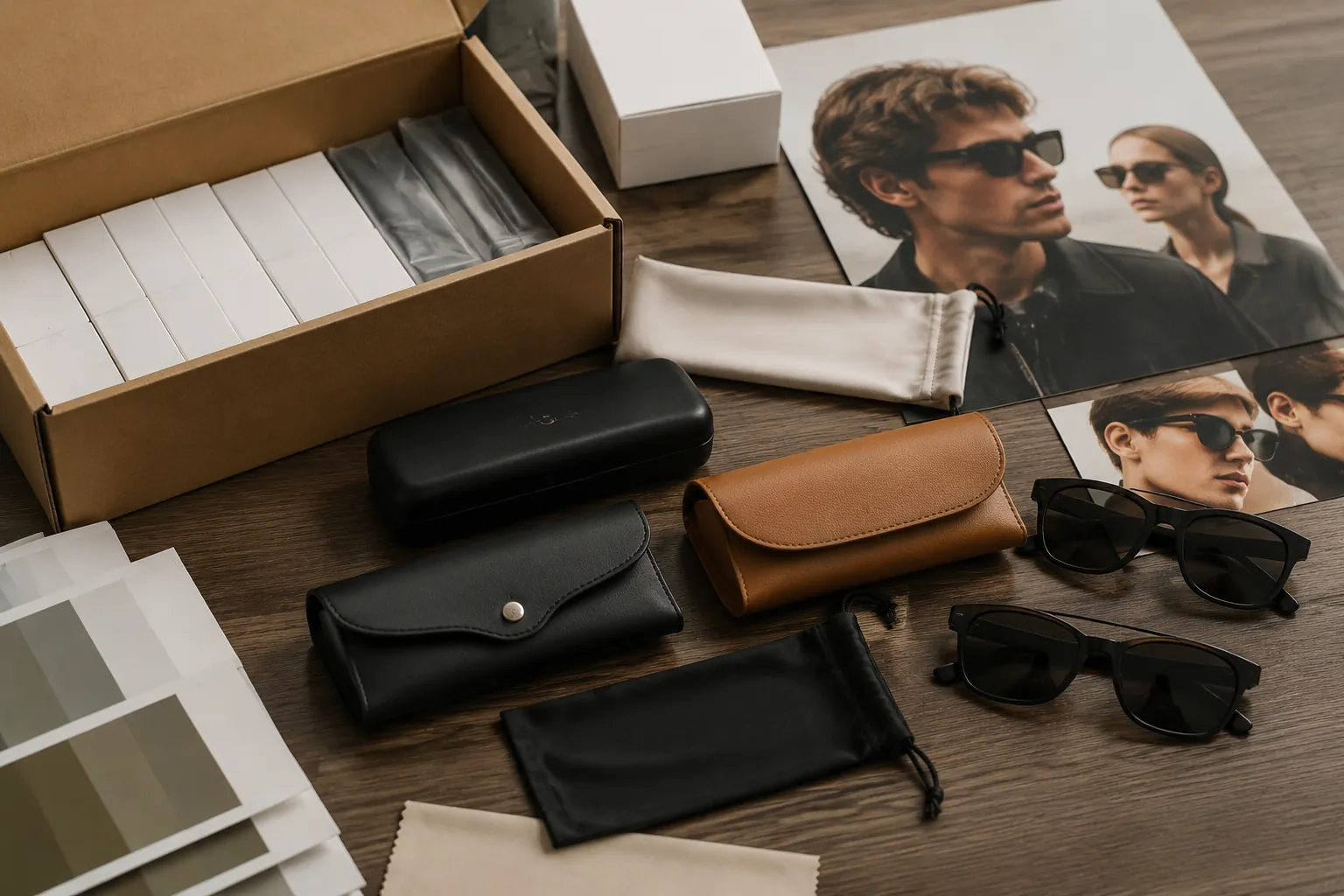
This guide is for eyewear brands, importers, distributors, and retailers sourcing sunglasses in China while buying cases, pouches, cloths, and retail packaging from separate suppliers. The goal is not just to combine cargo. It is to ship one retail-ready order on time, with correct labeling, fit, protection, and carton counts. The most common planning mistake is to treat pack-out as a warehouse task at the end. It is not. Final assembly is its own production stage, with its own lead time, quality risks, and approval gates. If you are buying custom sunglasses in volume, this is the step that protects your launch date and keeps finished frames from sitting still because a pouch is late, a barcode is wrong, or a retail box does not conform.
Start with the real bottleneck: mismatched supplier clocks
Most delays blamed on consolidation do not begin at the forwarder or port. They begin earlier, when the sunglasses factory, packaging printer, and accessory suppliers are all working to different calendars. If those timelines are not tied to one planned pack-out date, the highest-value item often finishes first and then waits. That means extra storage, more handling, and more pressure on final QC.
The fix is simple. Define final pack-out as a separate milestone with a target date, then build backward from it. Do not ask each supplier for a generic lead time and hope the dates line up. Give each supplier a required arrival window at the assembly point. That window must leave enough time for incoming QC, count reconciliation, and fit checks before assembly starts.
For buyers using a Wenzhou eyewear manufacturer, factory pack-out is often easier to control because the factory already manages the product with the highest inspection burden. Sunglasses usually pass through multiple production and QC steps before they are ready to ship. Packaging and accessories often fail for more basic reasons: artwork drift, wrong dimensions, or late domestic delivery.
One rule matters more than the rest: do not let the accessory supplier define the critical path. The sunglasses completion date should stay the anchor. Cases, pouches, cloths, insert cards, labels, and retail boxes should be scheduled around that anchor.
Choose the consolidation model before sampling starts
There are three standard ways to combine sunglasses, accessories, and packaging. The right model depends on whether you need true retail assembly or only a cargo merge.
| Model | How it works | Main advantage | Main risk | Typical added time | Best use case |
|---|---|---|---|---|---|
| Factory pack-out | Cases and packaging are delivered to the sunglasses factory, then packed into retail-ready units there | Best control over fit, SKU accuracy, and final AQL | Late accessories can block finished sunglasses | Low if planned early | Most branded eyewear programs |
| Forwarder consolidation | Suppliers send finished master cartons to a warehouse for cargo merge only | Simple and low-touch if no repacking is required | No practical control over unit-level assembly or labeling errors | Usually short if cargo is ready together | Bulk-packed orders with no retail set assembly |
| Third-party pack-out house | All components move to a separate kitting facility for assembly and relabeling | Useful for many SKUs across multiple factories | Extra transport, extra handling, split accountability | Higher because of added transfer and handling | Large multi-brand or mixed-product programs |
For most custom sunglasses programs, factory pack-out is the safest option. The factory can check the details that matter in actual use: whether the folded frame fits the pouch without stressing the hinge area, whether lenses rub against rough inner seams, whether the insert card catches temple tips, and whether the barcode on the box matches the frame color inside.
Address MOQ mismatch early. Sunglasses, printed boxes, pouches, and hard cases often have different minimum order quantities. If the sunglasses order is smaller than the packaging supplier's MOQ, you need a plan for leftover packaging, version control, and future replenishment. That is a sourcing decision. Not a minor packaging note.
Build one backward schedule with hard approval gates
Time slips fast when approvals are informal. A workable consolidation schedule needs fixed gates, named owners, and file version control.
- Day 0: Confirm frame construction, lens material, colorways, logo positions, unit pack method, carton standard, and shipment mode.
- Day 1-3: Issue one packing specification sheet to all suppliers. Include folded frame length, widest front width, temple stack height, target unit weight, case inner dimensions, box outer dimensions, barcode format, and units per master carton.
- Sample review stage: Review sunglasses samples before releasing any size-dependent packaging. Do not release final packaging artwork if frame dimensions or branding positions may still change.
- Packed-set approval: Approve one production-intent packed-set sample: frame, pouch or case, cloth if included, insert, box, and labels.
- After final approval: Release all packaging artwork and carton marks. This is the true start point for accessory production tied to approved files.
- Before sunglasses completion: Require accessory suppliers to send completed-goods photos, packing lists, carton counts, and domestic dispatch dates.
- Before pack-out: Receive accessories at the sunglasses factory and run incoming QC before assembly starts.
- After pack-out: Run final AQL on finished retail sets, confirm carton counts, then release shipment booking.
Add buffer where variability is highest. A standard printed folding carton is usually easier to correct than a molded case with custom tooling, hardware, or color-matched parts. The longer the remake path, the earlier the approval should happen.
If you are adding pad print, laser engraving, foil stamping, or metal logo parts, lock artwork and placement early. Those details affect more than one supplier at once. One late logo revision can reset the clock for both accessories and packaging.
Control fit, tolerance, and damage before full accessory production
Approving accessories from drawings alone is a common cause of rework. A frame can pass eyewear QC and still fail final pack-out because the pouch opening is too tight, the case collapses under load, or the insert board scuffs the lens.
Check the physical stack-up, not each item by itself.
- Folded frame size: Measure folded length, widest front point, and temple stack height. Make sure the approved pouch or case fits the actual production-intent sample, not just the drawing.
- Lens protection: Coated, mirrored, and wrap lenses need smooth contact surfaces. Check for rough seams, exposed stitching, sharp insert edges, and paper dust transfer risk.
- Case compression: Soft cases and EVA cases should be checked under realistic carton stacking conditions so pressure does not transfer to the frame or lenses.
- Board strength: Folding cartons and inserts should match the actual packed weight and handling method. If the packed set is heavier than expected, board grade may need to change.
- Decoration rub resistance: Check pad print, foil logos, and plated or painted accessories after repeated insertion and removal cycles.
Ask for one real packed set before bulk accessory production begins. Not separate samples. One assembled retail unit with the production-intent frame, case or pouch, cloth, insert, labels, and box. Then test it the practical way: open, close, insert, remove, shake, stack, and run low-height handling checks. If temple tips snag on a die-cut or hardware touches the lens edge, the fix is still relatively cheap.
Material behavior matters too. Some frame types are more dimensionally consistent than others, while hand-finished materials may vary slightly at hinge areas, end tips, or front thickness. Packaging should be designed for the production range, not only for the best-looking sample.
Keep compliance, claims, and labeling tied to the final retail set
Consolidation is not only physical assembly. The finished retail pack must carry consistent claims across frame markings, insert cards, labels, retail packaging, and shipping documents. For sunglasses, buyers commonly work to destination-market requirements such as CE EN ISO 12312-1, ANSI Z80.3, or AS/NZS 1067. Chemical or material compliance requests may also include REACH. Some U.S.-bound programs ask for FDA registration details where applicable, along with importer-specific labeling instructions. At the factory-management level, buyers may also ask suppliers about quality or social compliance systems such as ISO 9001 or BSCI, but those do not replace product-specific compliance requirements.
The biggest errors are usually simple:
- Retail box shows one lens category while the insert card shows another.
- Barcode file is linked to frame color, but cartons are packed in mixed assortments without clear outer carton marks.
- Country-specific warning language is approved for the sunglasses but omitted from the retail box artwork.
- Packaging supplier prints compliance references from an outdated file version before buyer sign-off.
Use one master artwork checklist and one file release point. If the sunglasses factory is handling final pack-out, send the same approved text set and artwork version to the eyewear factory and every packaging supplier at the same time. One obsolete file can delay shipment as easily as a late pouch supplier, especially if relabeling has to be done by hand.
If there is any doubt, verify the exact legal and labeling requirements for the destination market with your compliance team, importer, or testing partner before artwork release. Do not assume wording from a prior project is still valid.
Run incoming QC on accessories before assembly starts
Many buyers inspect sunglasses closely and treat accessories as low risk. That is a mistake. Incoming QC on cases, pouches, cloths, labels, inserts, and boxes is what keeps final assembly from turning into a manual sorting job.
At the assembly point, incoming checks should cover:
- Quantity: physical count against the packing list, including any agreed spare quantity for labels, inserts, or replacement units.
- Size and fit: random checks of case inner dimensions, pouch opening width, box die-line accuracy, and insert fit against the approved sample.
- Print quality: logo position, spelling, approved color reference if specified, barcode readability, and carton mark accuracy.
- Function: zipper operation, magnetic closure strength, shell hinge resistance, drawstring durability, and adhesive bond on labels.
- Cleanliness: dust, glue marks, odor, loose fibers, rough edges, and any transfer risk to lenses.
Then run a packed-set audit. Open random completed sets and confirm that the correct frame color is packed into the correct box with the correct insert, sticker, and barcode. This sounds basic because it is. It is also one of the most common failures in consolidated eyewear orders.
If accessories arrive too late for proper inspection, most of the correction window is already gone. That is the point. Incoming QC only works if the goods arrive early enough for you to act.
Understand the cost decisions that quietly extend lead time
Small savings on accessories often create longer total cycle time. Judge the decision against delivered timing, issue response speed, and rework exposure, not line-item price alone.
| Decision | Short-term saving | Hidden cost | Typical lead-time impact |
|---|---|---|---|
| Use a cheaper inland box supplier | Lower unit carton price | Extra trucking, weaker coordination, more file-version risk | Can lengthen the schedule if corrections are needed |
| Approve accessories from photos only | Saves sample freight and review time | Rework if fit, print, or material feel is wrong | High risk of delay if the first physical unit fails |
| Book shipment before pack-out completion | May secure vessel space | Roll-over risk or expensive shipment changes if one component slips | Can cause missed sailings or rushed freight decisions |
| Split suppliers across distant regions | More sourcing options | Longer domestic transit and slower corrective action | Adds variability to every order |
MOQ and price-break logic matter here too. Packaging does not always scale the same way as sunglasses. If you buy fewer sunglasses than the packaging supplier's minimum print run, you may carry excess boxes or labels into the next order. That creates exposure if your logo, barcode map, legal text, or assortment plan changes before replenishment.
The cheaper option is not always the lower-cost option once you include remake risk, domestic transfer, storage, and ship-date delay.
Create a repeatable operating model after the first shipment
The first consolidated order should produce more than one shipment. It should produce a working operating file for the next one.
That file should include the approved frame specification, lens specification, folded dimensions, accessory drawings, artwork files, barcode map, carton configuration, inspection checkpoints, approved golden-sample photos, and the schedule offsets that actually worked. For example: how long after sample approval artwork was released, how many days before pack-out accessories had to arrive, and when finished-set inspection was completed before ex-factory release.
For repeat programs, ask the sunglasses factory to retain one approved golden sample of the packed retail set. That sample becomes the reference if you later change pouch fabric, board grade, lens coating, logo supplier, or carton quantity. It is much easier to compare a new batch against an approved physical set than to reconstruct old decisions from email threads.
If your supplier can manage core frame production and final pack-out under one roof, keep final accountability there when possible. Fewer handoffs usually mean clearer responsibility for schedule, fit, labeling accuracy, and final QC.
Practical rule: the party controlling final pack-out should receive every approved artwork file, carton standard, barcode list, and delivery date in one controlled document. Once those details are scattered across separate email chains, the risk of delay rises fast.
Have a custom sunglasses project in mind?
Send us your styles, target market and quantities and we will return a detailed quote with MOQ, lead time and a sample plan.
Get a QuoteWhy source this from Wenzhou with LumiShades
Wenzhou in Zhejiang Province is widely regarded as China’s eyewear manufacturing capital, producing a large share of the world’s sunglasses. That concentration matters to buyers: a deep local supply chain for acetate sheet, hinges, lens blanks, plating and packaging means shorter component lead times, easier color and material matching, and a workforce with decades of eyewear-specific skill. LumiShades has manufactured in this ecosystem since 2009, and our vertical integration — in-house injection molding, acetate cutting, CNC milling, lens tinting, decoration and quality control — means no part of your order is quietly subcontracted to a workshop you cannot audit.
For international buyers, that vertical control translates into accountability. When a single factory owns every step, defects are traced and fixed at source rather than bounced between vendors, and your specifications survive intact from first sample to bulk. We back this with 15+ years of experience, shipments to 60+ countries, more than 5 million pairs produced per year and a 98.5% on-time delivery rate. Our certifications — CE EN ISO 12312-1, FDA registration, ANSI Z80.3, AS/NZS 1067, REACH, ISO 9001 and BSCI audit — mean the compliance documentation your market requires already exists. Explore our manufacturing capabilities and quality control process to see how this works in practice.
Frequently asked questions
Should I ask the sunglasses factory or my freight forwarder to handle consolidation? If the order requires retail-ready assembly, use the sunglasses factory or a qualified pack-out facility, not the freight forwarder. A forwarder is best for cargo consolidation at carton level. Ask one question first: does the job require unit-level checks such as frame-to-case fit, barcode matching, insert placement, or final AQL on packed sets? If yes, the work should be done where QC and assembly can be controlled. Confirm in writing who is responsible for incoming accessory inspection, packed-set audit, carton marks, and final shipment release.
How much buffer should I allow for cases and printed boxes? Set the buffer based on remake difficulty, not just on supplier promises. Printed folding boxes are usually easier to correct than molded EVA cases, PU cases with hardware, or any item with custom tooling, debossing, or metal logo parts. As a buying rule, require accessories to arrive at the assembly point early enough for incoming QC and corrective action before pack-out starts. In your PO and production calendar, define a latest acceptable arrival date at the assembly point, not only a supplier completion date.
Can I start packaging production before sunglasses samples are approved? Only for truly generic items with no size, logo, artwork, or compliance dependency. If folded dimensions, lens curve, branding position, warning text, barcode map, or insert layout may still change, wait until the production-intent sample and packed-set sample are approved. A practical approach is to separate packaging into two groups: generic components that can start earlier and size- or artwork-dependent components that must wait for final sign-off.
What documents should every accessory supplier receive? Each supplier should receive one controlled document package: the packing specification, approved artwork files, barcode map, carton standard, destination labeling requirements, approved sample reference, target arrival date at the assembly point, shipping mark format, and the domestic delivery contact. Make sure each file carries a clear revision number or date. If the supplier is producing printed items, require them to confirm the exact file version used before mass production starts.
What is the biggest QC miss in consolidated eyewear orders? Mixed-SKU packing error is one of the most damaging and easiest-to-miss failures: the wrong frame color in the right branded box, or the right frame in the wrong labeled box. Prevent it with three controls: incoming accessory QC against the barcode map, line-clearance checks when assembly switches SKUs, and random audits of completed retail sets before shipment. On mixed-color or mixed-style orders, ask the factory to keep a live packing record by SKU and carton number so any error can be traced and isolated quickly.
Ready to start?
Explore our shield & oversized sunglasses or request a quote — our sales team replies within 12 hours.
Request a Quote