
How to Set Sunglass Lens VLT for Real-World Use
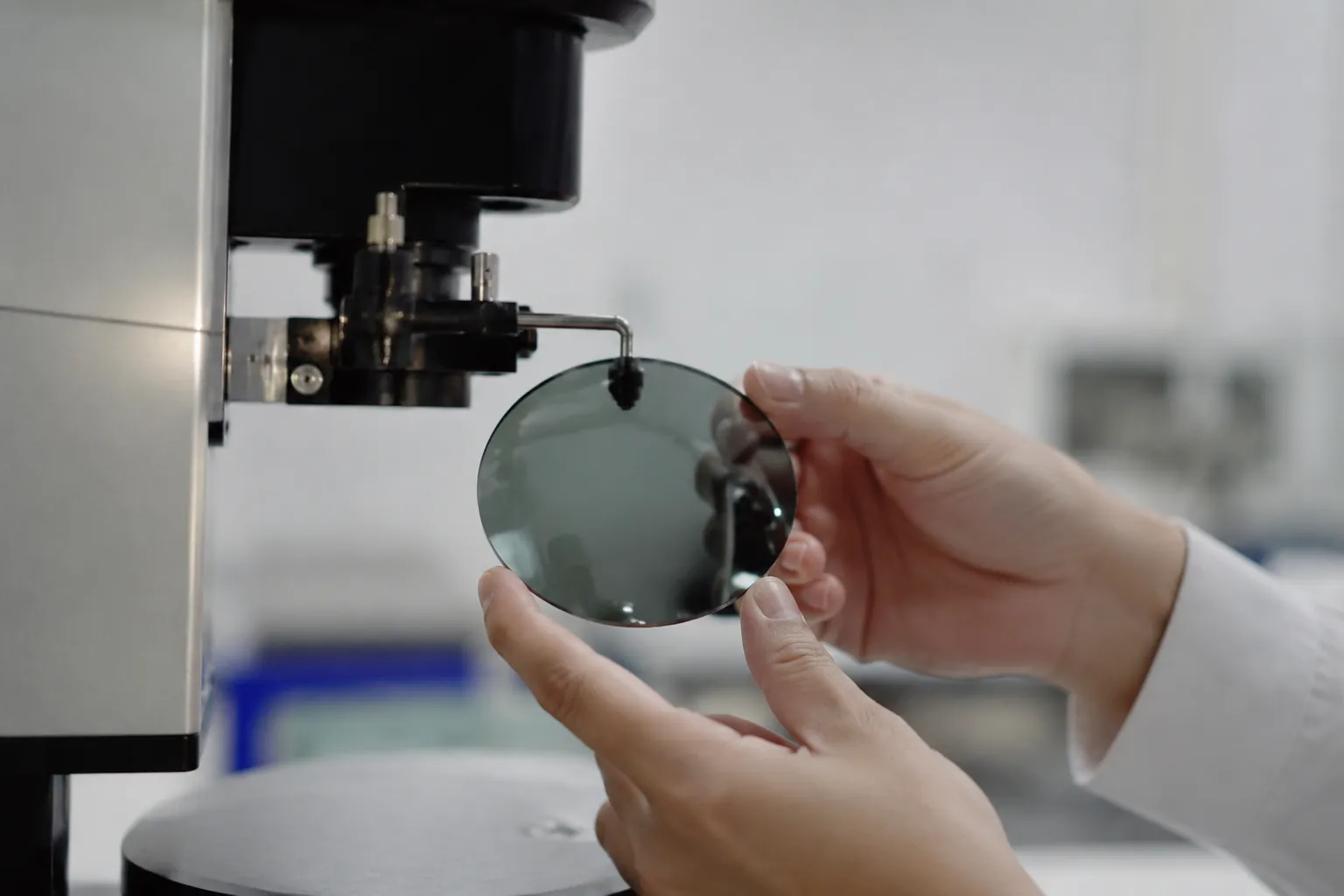
This guide is for brand owners, importers, distributors, and retail buyers sourcing sunglasses in volume. It explains how to set visible light transmission, or VLT, targets that fit the real use case, sales channel, and price tier. The goal is simple: avoid buying lenses that are darker than needed or specs that look good on paper but create reject risk in production. It also shows where lens material, tint method, decoration, MOQ, lead time, and compliance checks overlap, so approved samples are more likely to hold up in bulk production and repeat orders.
Start with visible light transmission, not color
Visible light transmission, or VLT, is the percentage of visible light that passes through the lens. A 12% VLT lens is darker than a 25% VLT lens because it lets in less light. For sourcing teams, that number matters more than color names alone. A smoke, grey, or brown lens can be made at very different transmission levels, and two lenses that look similar on a sample tray can perform very differently outdoors.
That has direct commercial impact. VLT affects wearer comfort, market fit, and test outcome. A lens that seems fine under showroom lighting may feel too light in beach retail. A lens that looks premium-dark in product photos may be too restrictive for mixed city light. So start with a VLT band, then narrow the brief to tint family, mirror finish, or gradient effect.
On the factory side, control depends on base lens material, tint formulation, immersion time or coating density, and the variation allowed from lot to lot. On basic custom sunglass programs, a practical tolerance is often around ±2% to ±3% VLT for standard tints. Push into very dark targets, tight color matching, flash mirror, or gradients, and consistency gets harder. Reject risk goes up.
Be specific. Ask suppliers for a numeric target such as 15% VLT with an agreed range, for example 13% to 17%, rather than asking for dark smoke or medium grey. That gives QC something measurable and cuts arguments before shipment.
Use the end use to choose the VLT band
The quickest way to narrow lens transmission is to group the product by actual use case. Sports, fashion, and promotional sunglasses do not need the same optical brief because the wearer expects different things. If the product could serve more than one scenario, set the VLT for the main selling environment, not the edge case.
| Use case | Typical VLT band | Common lens material | What it does well | Main risk if mis-specified |
|---|---|---|---|---|
| Outdoor sports in strong sun | 10% to 18% | PC or nylon-style sport lens | Controls glare and squinting in bright exposure | Too dark can reduce visibility when moving into shade, trees, or late afternoon light |
| General fashion sunglasses | 12% to 25% | TAC, PC, or CR-39 style lens depending on program | Balances familiar sunglass appearance with all-day wearability | Too light may feel weak on shelf or in product reviews |
| Promotional giveaway sunglasses | 18% to 35% | Basic PC or acrylic-type entry lens depending on spec | Keeps cost and process complexity under control | Too light can trigger quality complaints in hot, sunny markets |
| Urban commuting or light sports | 20% to 35% | PC or TAC | Works better in changing sun and shade | Too dark becomes uncomfortable in mixed light conditions |
Sports programs often get pushed too dark for cosmetic reasons. That is a common mistake. A cycling shield used at noon on open roads is not the same as a running frame worn under trees or between buildings. Many successful sports models sit in the middle of the dark range, not at the lowest VLT a factory can produce.
Fashion programs shift more by region. In high-UV resort markets, darker lenses around 12% to 18% often match consumer expectation. In urban or cooler-climate channels, 18% to 25% is often easier to wear and easier to sell. Promotional programs are different again. They are usually short-wear, cost-sensitive, and event-driven, so stable appearance, acceptable comfort, and low scrap rate matter more than aggressive lens styling.
Match transmission to market and sales channel
Transmission should follow how the product is sold. A resort retailer, an online fashion brand, a sporting-goods distributor, and a corporate promotions buyer are not buying the same lens, even if they all ask for black sunglasses. The channel changes both user expectation and complaint pattern.
- Resort, beach, and travel retail: usually works best with darker lenses, commonly around 10% to 18% VLT, because customers try the product in direct sun and expect immediate comfort.
- Urban fashion and department store channels: often sell well around 15% to 25% VLT, where appearance and daily wearability stay in balance.
- Mass promotional programs: commonly use 18% to 35% VLT because the goal is acceptable protection, clean cosmetics, and margin control across large quantities.
- Sports specialty retail: needs a tighter brief by sport, time of use, and terrain; one generic dark lens is rarely the right answer.
Channel also changes return risk. Online shoppers cannot try the lens before purchase, so product photography and actual VLT need to match. If a lens looks deeply dark in edited images but arrives noticeably lighter, refunds follow. In store-based retail, buyers have more room because customers can try the frame outdoors or near a storefront window.
If the same frame is sold into several channels, it is often smarter to standardize the frame and split into two lens options. Do not force one compromise VLT across every market. In sourcing terms, one extra approved lens spec is often cheaper than dealing with repeated customer mismatch.
Keep lens specs aligned with price tier and MOQ
Many sourcing mistakes start here. Buyers ask entry-price products to carry premium lens complexity. That rarely ends well. A low-price promotional program should first meet landed cost, appearance consistency, and required compliance. Nothing more.
At small MOQ, every extra requirement matters. A factory may accept custom work from around 50 pairs per design, but that does not make every specification efficient at that level. Standard smoke, brown, or green tints are easier to control at low volume than a very low-VLT mirror lens with tight visual color matching. As volume rises, setup cost spreads better and unit pricing usually improves. On larger repeat programs, pricing depends on frame construction, lens material, decoration, packaging, and the supplier's process control.
| Order level | Typical sourcing goal | Practical lens approach | Commercial logic |
|---|---|---|---|
| 50 to 299 pairs | Sampling, pilot launch, market test | Use standard tint families with moderate VLT ranges such as 15% to 25% or 20% to 35% | Keeps development cost and rework risk low |
| 300 to 999 pairs | First commercial run | Refine VLT by channel and add one cosmetic extra only if it supports retail value | Improves shelf appeal without destabilizing yield |
| 1000 to 4999 pairs | Established SKU or distributor program | Split lens options by market if demand is proven | Better fit by channel while maintaining production efficiency |
| 5000+ pairs | Repeat seasonal or annual business | Lock a tested VLT standard, visual master, and negotiated tolerance window | Supports lower pricing and more repeatable quality |
A practical buying sequence is straightforward: set the retail or distribution price target first, choose lens material and tint family second, define a workable VLT band third, and only then decide whether mirror, gradient, polarization, or premium coatings add real sales value. That order protects margin. It also reduces avoidable rejects.
Choose materials and tint methods that fit the program
VLT is not controlled by tint alone. Material matters too. Polycarbonate lenses are common in sports and promotional programs because they are impact-resistant and easy to produce at scale, but they can show color depth differently from CR-39 style lenses or TAC polarized constructions. TAC polarized lenses add a layered build, which can improve glare control but also changes cost, thickness feel, and supply planning. Nylon-style sport lenses can perform well in wrap shapes, but they are usually not the low-cost option for a promotion project.
Decoration and lens cosmetics also affect yield. A plain solid smoke lens at 18% VLT is usually easier to repeat than a blue flash mirror over a dark grey base at 12% VLT. Gradient lenses add another control point because top and bottom density must look balanced, not just meet one numeric reading. Mirrored finishes can also make small lot-to-lot differences easier to spot.
Frame decoration adds another layer of planning. Injection-molded and acetate frames may also carry pad printing, laser engraving, hot stamping, or metal logo plates. If lens tinting is delayed because the shade needs correction while temple decoration is already complete, assembly can stall. On a 25 to 35 day production schedule, a few lost days matter.
- Standard solid tint: best for stable output, faster approval, and lower reject risk.
- Gradient tint: useful for fashion looks, but needs stronger visual control in sampling and bulk.
- Flash or mirror coating: adds shelf impact, but can magnify color variation and cost pressure.
- Polarized construction: useful for glare-sensitive retail segments, but should be justified by price tier and channel.
Control variation from sample to bulk
A buyer-approved sample only matters if the supplier can reproduce it. Lens transmission can drift because of raw material lot differences, tint bath timing, temperature, immersion depth, coating consistency, curing conditions, or weak internal inspection. In-house tinting helps because the factory can compare first-off production lenses directly against the approved master instead of waiting on outsourced corrections.
For many sourcing programs, sample lead time is around 7 to 10 days and bulk production around 25 to 35 days, depending on quantity and decoration complexity. That is enough time for proper checkpoints if the buyer asks for them early. It is not enough time for a factory to guess the target from a photo after mass production starts.
Use a simple control plan during development:
- Reference sample: sign off on lens color family, target VLT band, mirror effect if any, and overall cosmetic appearance.
- Material confirmation: lock the base lens material and tint method before pre-production.
- Tolerance agreement: define a practical VLT window, often around ±2% to ±3% for standard programs, wider only when justified.
- Pre-production check: inspect first-off lenses under consistent lighting against the approved sample.
- Final QC: verify transmission, cosmetic defects, lens matching left to right, decoration alignment, and assembly quality before packing.
Do not overlook left-right pairing. Even when single-lens readings are within tolerance, a pair can still look mismatched if one lens sits near the dark side of the band and the other near the light side. Buyers should ask factories to control both absolute VLT range and pair consistency in finished units.
Know where compliance intersects with transmission
VLT is not only a comfort spec. It also sits inside compliance review. Buyers selling into different markets should confirm that the final sunglass construction fits the destination requirements. Depending on market and positioning, relevant frameworks may include CE EN ISO 12312-1, ANSI Z80.3, AS/NZS 1067, REACH, and FDA registration or listing considerations where applicable.
The practical lesson is simple: do not separate cosmetics from compliance. Very dark lenses, unusual tints, mirrored combinations, and aggressive marketing claims need to be reviewed together. A lens may look right in a showroom and still be the wrong choice if the sales market, labeling claim, or user scenario does not match the tested result.
REACH focuses on chemical compliance rather than optical transmission, but it still matters because the buyer needs material control across frames, lenses, coatings, inks, and metal trims. ISO 9001 and BSCI are not lens standards, yet they still matter in vendor qualification because repeatability, documentation, and corrective action discipline help reduce quality drift across repeat orders.
Ask for test support tied to the final product or an equivalent construction, not a generic report from an unrelated model. If the frame material, lens material, mirror finish, or decoration package changes, confirm that the supporting documentation still matches what you are buying.
Write a buying brief the factory can use
Most lens mistakes start with vague language. Terms such as dark but wearable, sporty fashion, or premium look at promo price do not translate into production settings. A short technical brief works better than a long subjective one.
A useful buyer brief should state the end use, destination market, main sales channel, preferred lens color family, target VLT band, lens material if already decided, required compliance scope, and approval method. Be direct. If the product is for sports, name the sport. If it is for promotion, explain whether it is for a beach event, festival giveaway, souvenir retail, or a general brand campaign. Those details change both the right VLT and the right process choice.
- End use: running, cycling, beach fashion, commuter wear, kids retail, festival promotion, or resort souvenir.
- Target VLT: specify a band such as 12% to 18% or 18% to 25%, not just dark grey.
- Lens build: standard tinted PC, TAC polarized, mirror over base tint, or gradient.
- Price tier: pilot launch, entry retail, mid-tier private label, or high-volume distributor program.
- Compliance scope: destination markets and required standards.
- Approval method: signed sample, lab data if needed, and pre-production plus final QC checkpoints.
Keep it short. Keep it measurable. Buyers who treat VLT as a controlled sourcing parameter rather than a last-minute color decision usually get faster approvals, fewer production disputes, and more repeatable reorders.
Have a custom sunglasses project in mind?
Send us your styles, target market and quantities and we will return a detailed quote with MOQ, lead time and a sample plan.
Get a QuoteWhy source this from Wenzhou with LumiShades
Wenzhou in Zhejiang Province is widely regarded as China’s eyewear manufacturing capital, producing a large share of the world’s sunglasses. That concentration matters to buyers: a deep local supply chain for acetate sheet, hinges, lens blanks, plating and packaging means shorter component lead times, easier color and material matching, and a workforce with decades of eyewear-specific skill. LumiShades has manufactured in this ecosystem since 2009, and our vertical integration — in-house injection molding, acetate cutting, CNC milling, lens tinting, decoration and quality control — means no part of your order is quietly subcontracted to a workshop you cannot audit.
For international buyers, that vertical control translates into accountability. When a single factory owns every step, defects are traced and fixed at source rather than bounced between vendors, and your specifications survive intact from first sample to bulk. For procurement review, buyers can request process records, approved samples, quality checkpoints and project-specific compliance files before placing a bulk order. Required testing and documentation are confirmed against the destination market and product specification rather than assumed from a generic certificate list. Explore our manufacturing capabilities and quality control process to see how this works in practice.
Frequently asked questions
What VLT range is safest for a general fashion sunglass program? For broad fashion use, 12% to 25% VLT is usually the safest commercial range. It gives a recognizably dark sunglass look, works across many daylight conditions, and is easier to sell across mixed retail channels than an extremely dark lens. If you sell in both resort and urban channels, ask the factory for two approved VLT options instead of one compromise spec.
Should promotional sunglasses use the same dark lenses as sports sunglasses? Usually not. Promotional programs are more cost-sensitive and often worn casually for shorter periods, so 18% to 35% VLT is often more practical. Sports products more often sit around 10% to 18% when designed for bright outdoor use. The right choice depends on whether the wearer will face direct sun, mixed shade, or fast movement through changing light.
How should I specify lens transmission to a factory? Give a numeric VLT target or band, preferred tint family, intended use, target market, lens material if known, and required compliance standards. A practical brief might say: smoke lens, 15% to 18% VLT, beach retail in the EU market, standard solid tint, sample to be approved against a signed visual master. If you need polarization, mirror, or gradient, state that separately so the supplier can quote it correctly and control it in production.
Does darker always mean better sun protection for buyers? No. Darker changes comfort and appearance, but the right lens depends on where and how it will be worn. A lens that is too dark for mixed light can create wearability complaints, especially in urban, shaded, or late-day use. If you need stronger sun protection, define the use case and ask the supplier for the relevant compliant construction, not just the darkest tint available.
How do lens choices affect lead time? Standard tint programs are usually easier to keep within typical sample timing of 7 to 10 days and bulk timing of 25 to 35 days. Special tint matching, gradient control, mirror combinations, and tighter VLT tolerances can add development time, increase QC checks, and raise the chance of correction loops before shipment. If timing is tight, approve the simplest lens build that still fits the channel and compliance target.
Ready to start?
Explore our square sunglasses or request a quote — our sales team replies within 12 hours.
Request a Quote